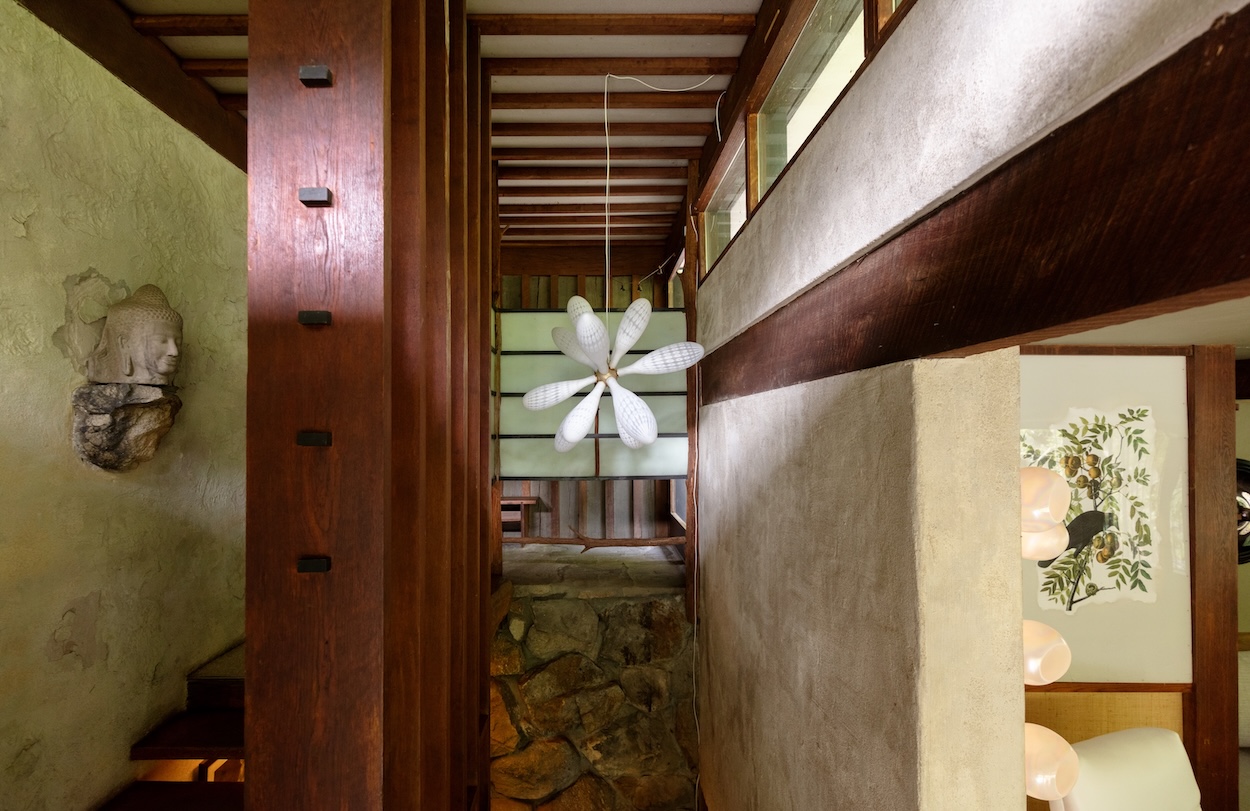
To visit Dragon Rock, the beguiling glass house and studio of lauded industrial designer Russel Wright, is to become enveloped in the vision and ideologies of one highly influential individual. And yet, Dragon Rock, much like Wright’s “American Modern” porcelain dinnerware and household items, is a complex vessel forever engaging with purpose, place, and the people within. It’s with this in mind that Manitoga / The Russel Wright Design Center has continued to invite artists and designers to place their work in concert with Dragon Rock. The latest invitation, an installation in partnership with R & Company entitled “Glass Light Nature” finds wondrous, vine-like pieces by glass artist Jeff Zimmerman lending an organic sensibility that speaks to the surrounding 75-acre compound (also designed by Wright).
A Trio of Design Developments from MANITOGA / The Russel Wright Design Center
From Jeff Zimmerman's "Glass Light Nature" installation at Dragon Rock to a consignment of the designer's work for the Cold Spring storefront, and the debut of 'Old Hickory by Russel Wright: The American Craft Collection' at High Point Market
BY DAVID GRAVER October 10, 2025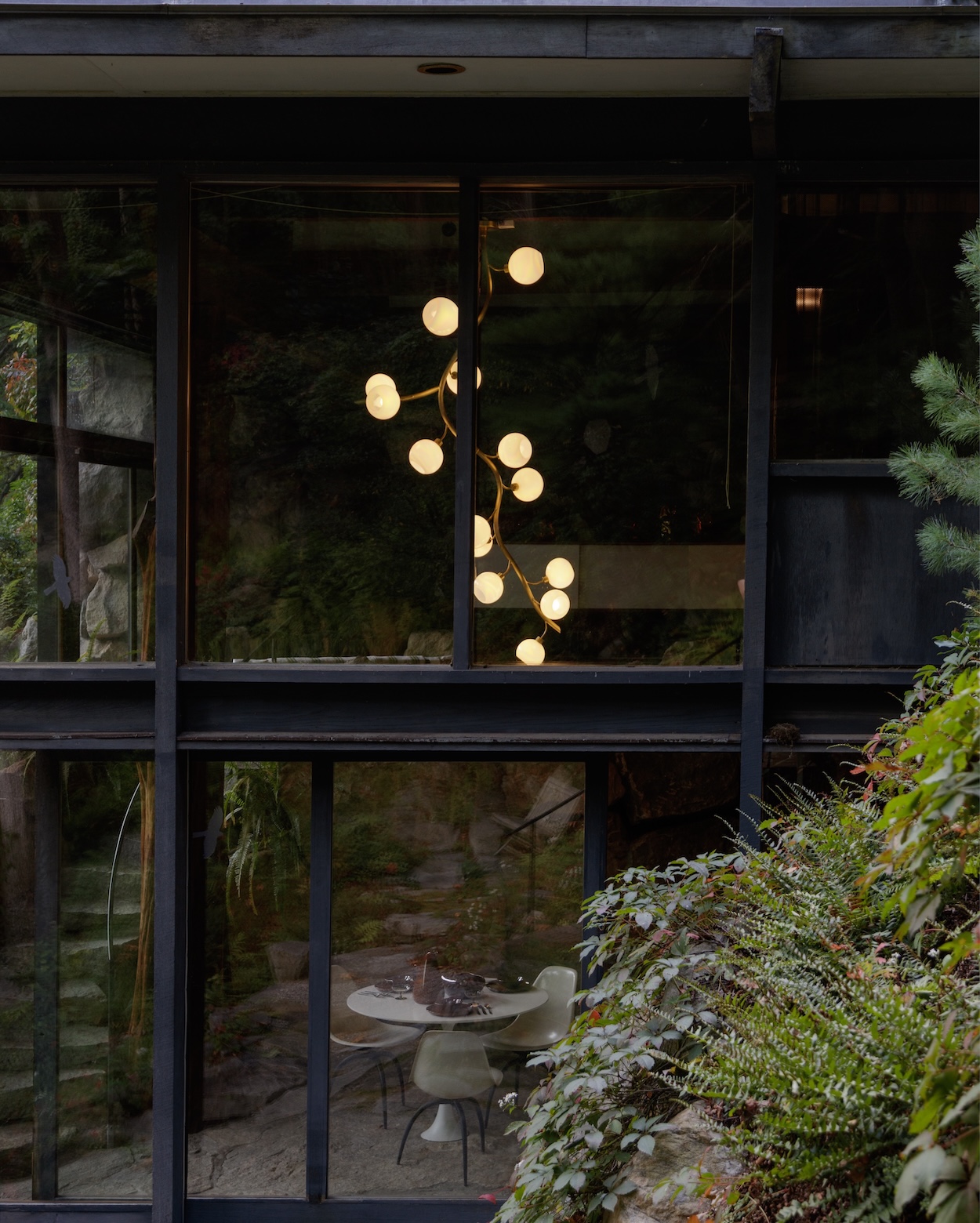
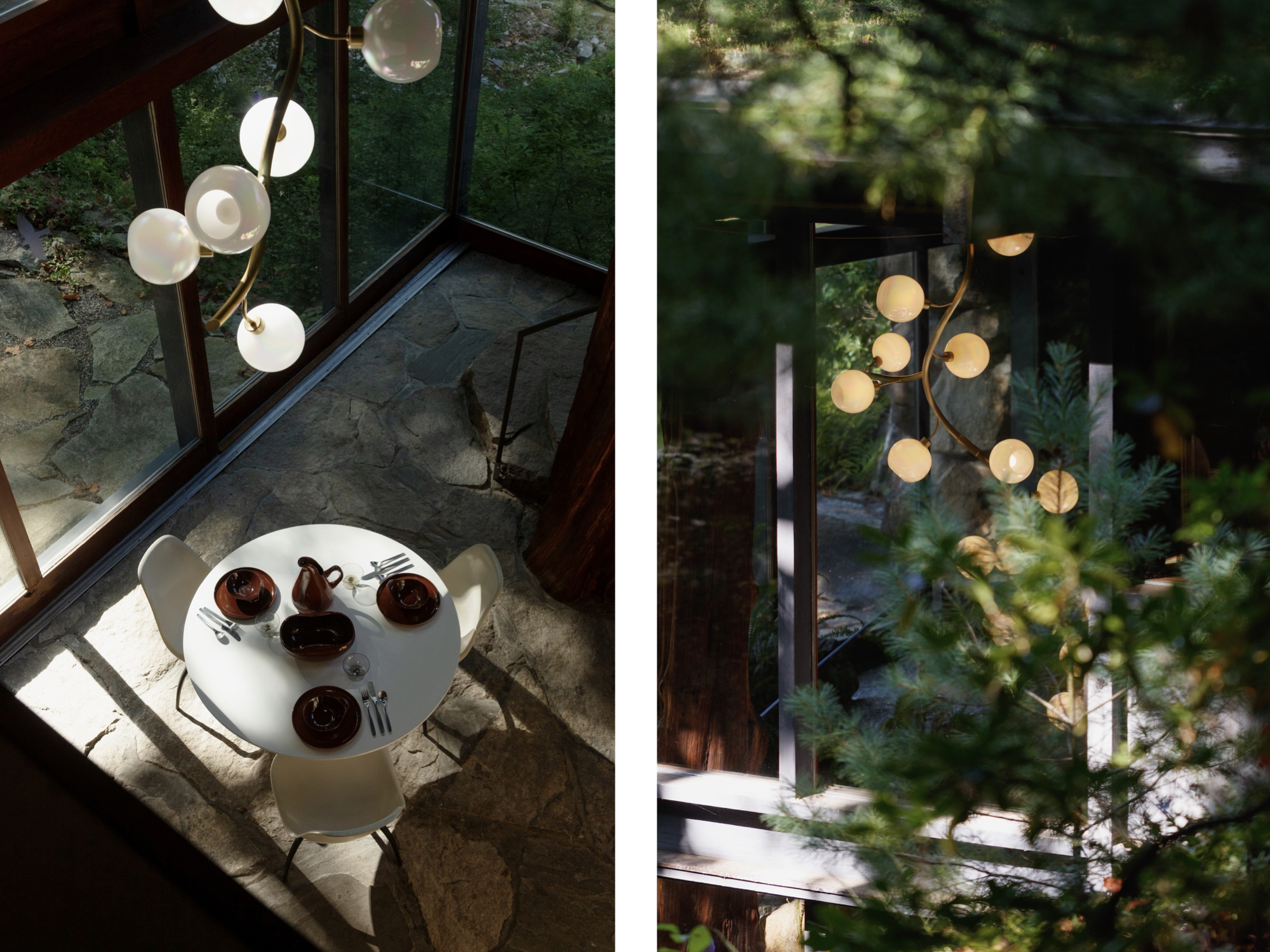
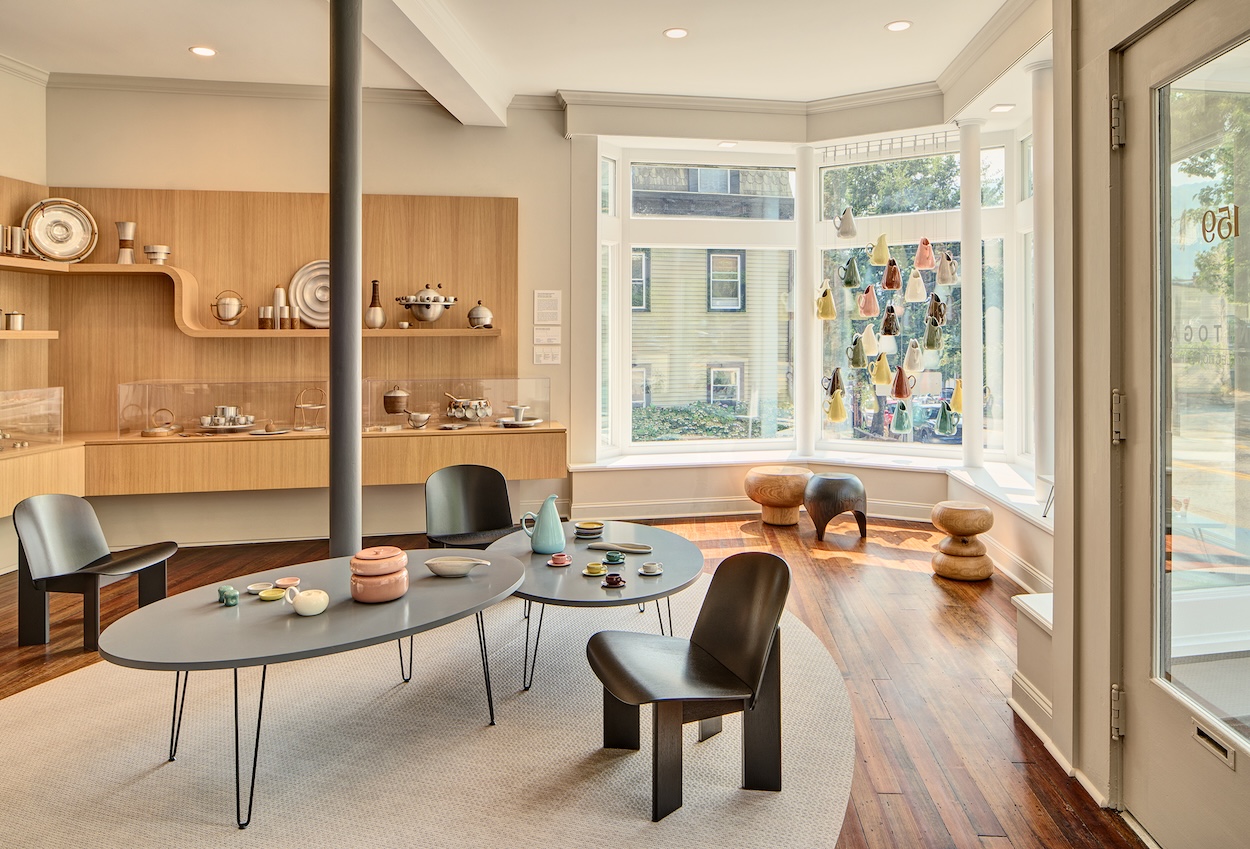
On Main Street in Cold Spring, New York, moments from Dragon Rock House and Studio, the Manitoga Design Collection + Shop provides both an additional footprint for Russel Wright’s legacy, as well as a more centrally located gateway into Manitoga’s mission. It also features whimsical work from Zimmerman—including a limited edition item inspired by Manitoga’s landscape. In High Point Market this October, another Wright collaboration will return to life: a furniture series produced by the craftsmen of Central Indiana’s heritage house Old Hickory.
This trio of developments acts as a mission statement for the future of Manitoga / The Russel Wright Design Center. For anyone unfamiliar with the specificity of the name, Manitoga is the name of the property upon which Dragon Rock perches; Manitoga / The Russel Wright Design Center is the name of the organization that stewards it. “When I arrived in 2013,” Allison Cross, the nonprofit’s executive director, shares with Surface, “I asked, what does it mean to be a design center? At the time we did not own a design collection. First, our responsibility was to protect the assets of the property and the buildings—but we set into motion the strategy to build a definitive design collection, and then we were going to commit to displaying those items.”
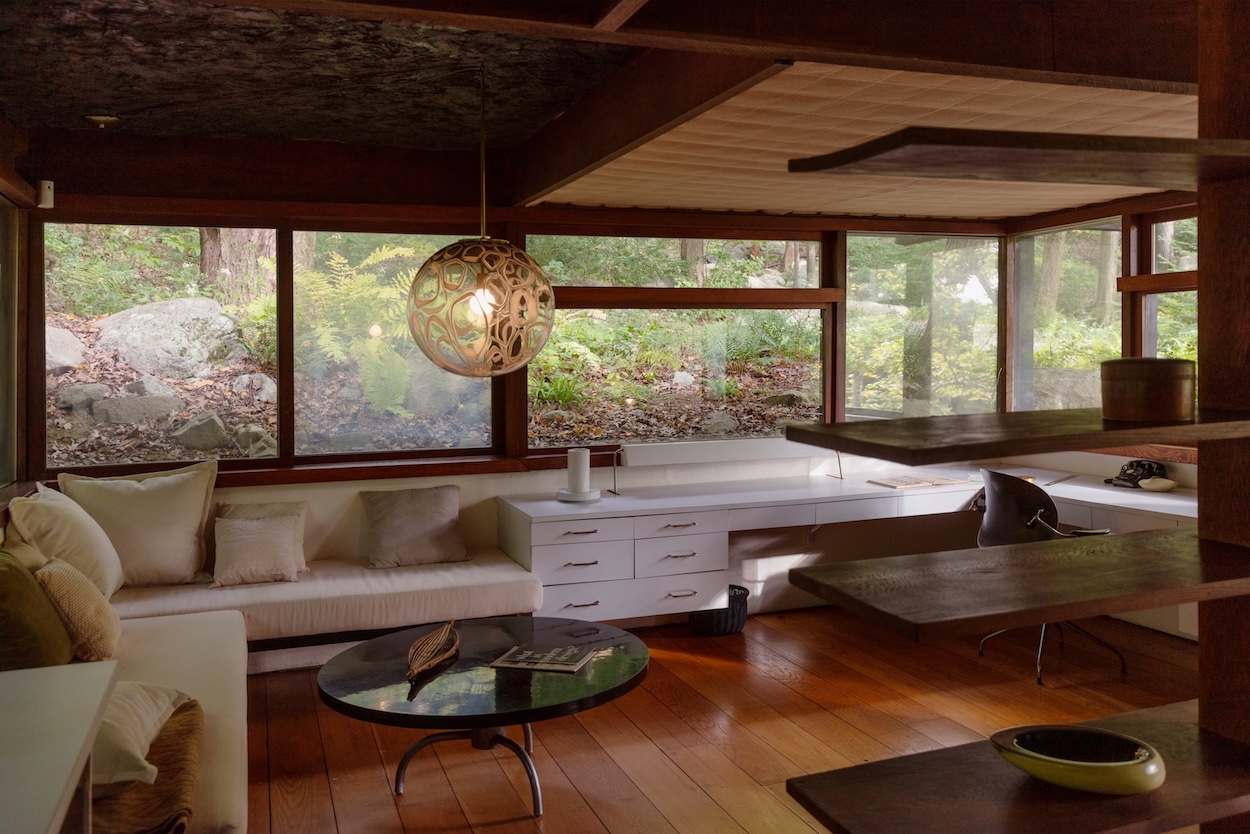
In 2021, The Russel Wright Design Gallery—designed by Studio Joseph—opened inside of Dragon Rock House. Once a bedroom, the space had been turned into offices over the years, until it found new life as a home for Wright’s industrial design products. One year later, Manitoga welcomed an installation from design studio Formafantasma, in partnership with the neighboring museum Magazzino Italian Art. It was a turning point for site-specific interventions. “It was the first time we mounted objects of design,” Cross says. “It opened up the idea of using Dragon Rock House and Studio as a framework to show current work in dialogue with Manitoga.”
“Last year, we acquired the intellectual property and trademarks of Russel and Mary Wright from their daughter, Annie Wright,” Cross continues. “That cemented our ability to shepherd the legacy and opened up opportunities for new products—or reissuing lines that had not been done before, of course, all in support of our mission at Manitoga.”
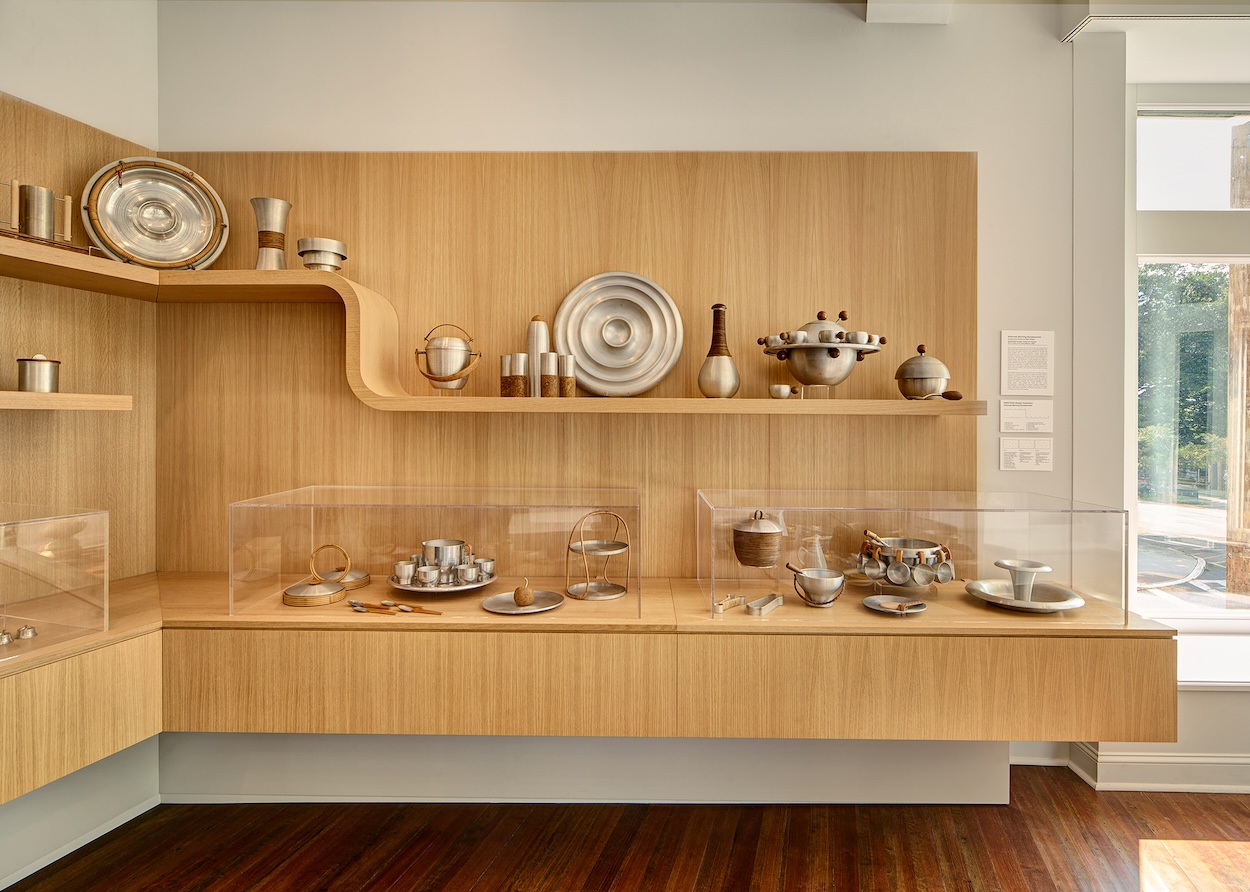
Though the on-site design gallery is an exquisite addition to Dragon Rock, its footprint is small in comparison to Wright’s legacy. From this discrepancy, the Cold Spring storefront was born as an interim step—and also designed by Studio Joseph. “It’s called Manitoga Design Collection + Shop,” Cross explains, “because one part is a display of the permanent collection. We opened it with spun aluminum so that visually it ties back to Manitoga, the place, with the same blond wood and curved shelving. But then we launched by selling vintage American Modern pieces, which we’ve not done before.”
The consignment happened organically. “We decided that we would offer objects on consignment by artists and designers who have been part of our installations at Manitoga,” Cross says. “It began with Kieran Kinsella and Rodger Stevens. Kieran made tables from a fallen tree at Manitoga. This year we have Jeff Zimmerman; he has these Serpentine candle holders and had just issued this beautiful green color, which ties it back to Manitoga. We have the purple ones on site at Dragon Rock, but we have white and green offered at the shop.”
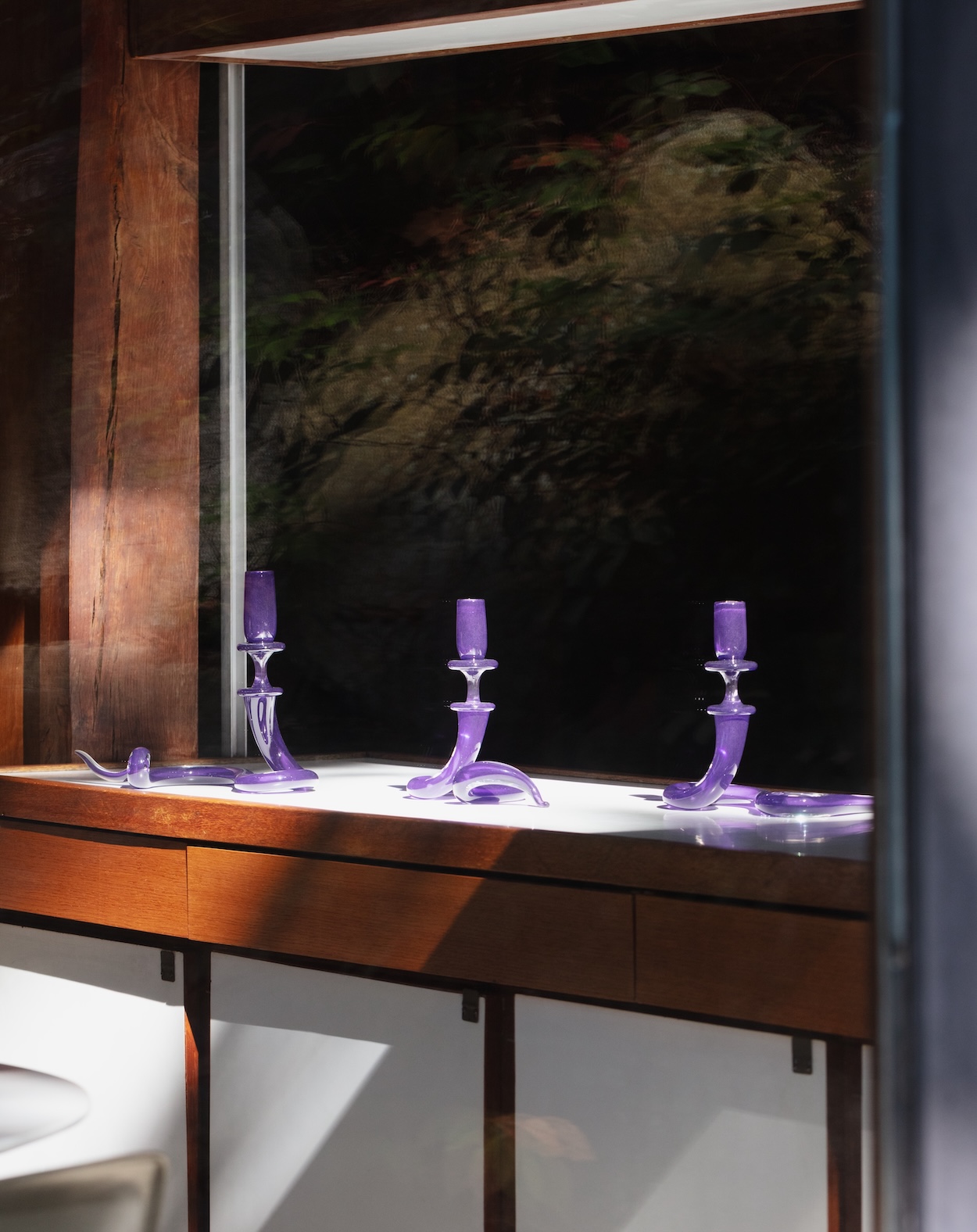
“Jeff Zimmerman’s work in glass has always been experimental,” Cross says of why he was an ideal fit. “He’s pushing materiality and how one works with glass. And part of the dialogue with Russel Wright and of Manitoga is that Dragon Rock is an experimental home. He and Mary, at the time, were leading innovators in form, in color glazes, in mix and match.” In addition, Cross appreciated the idea of incorporating light fixtures that could illuminate the interiors and highlight the materials and the volume.
Cross sees the interventions and the shop in the same light. “If we go back to what Wright intended, the property and the home were his muse for over 34 years,” Cross continues. “When I first visited the site and I walked through it, everyone just responded so strongly. It inspired them. My thinking was, it needs to continue to be a muse—to be a conduit for creatives. The younger generations don’t know Russel Wright—but what I’ve found in the shop is it’s starting to inspire—having the vintage pieces there—new collectors. We have some young couples coming back every so often to acquire a few more pieces as they build their sets.”
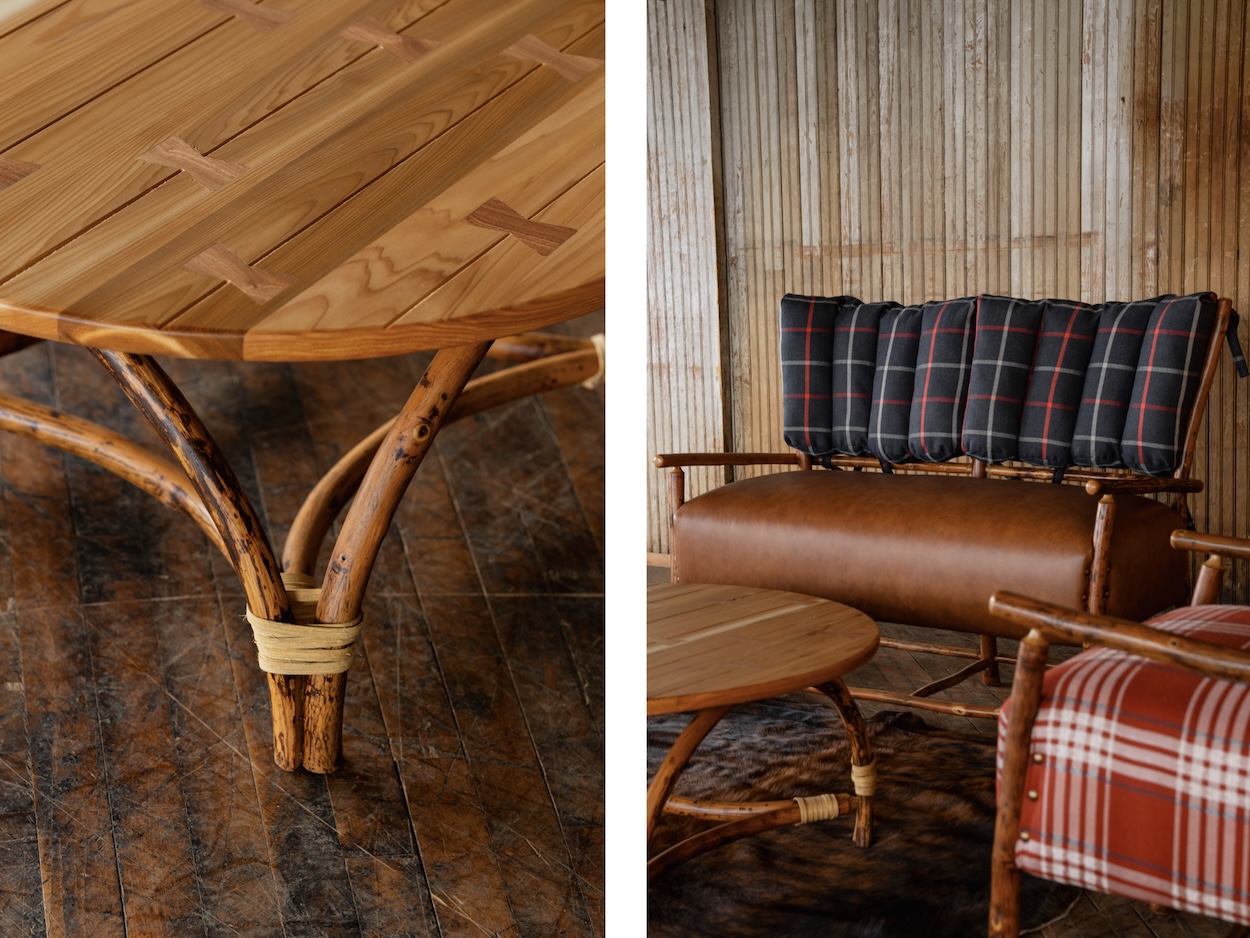
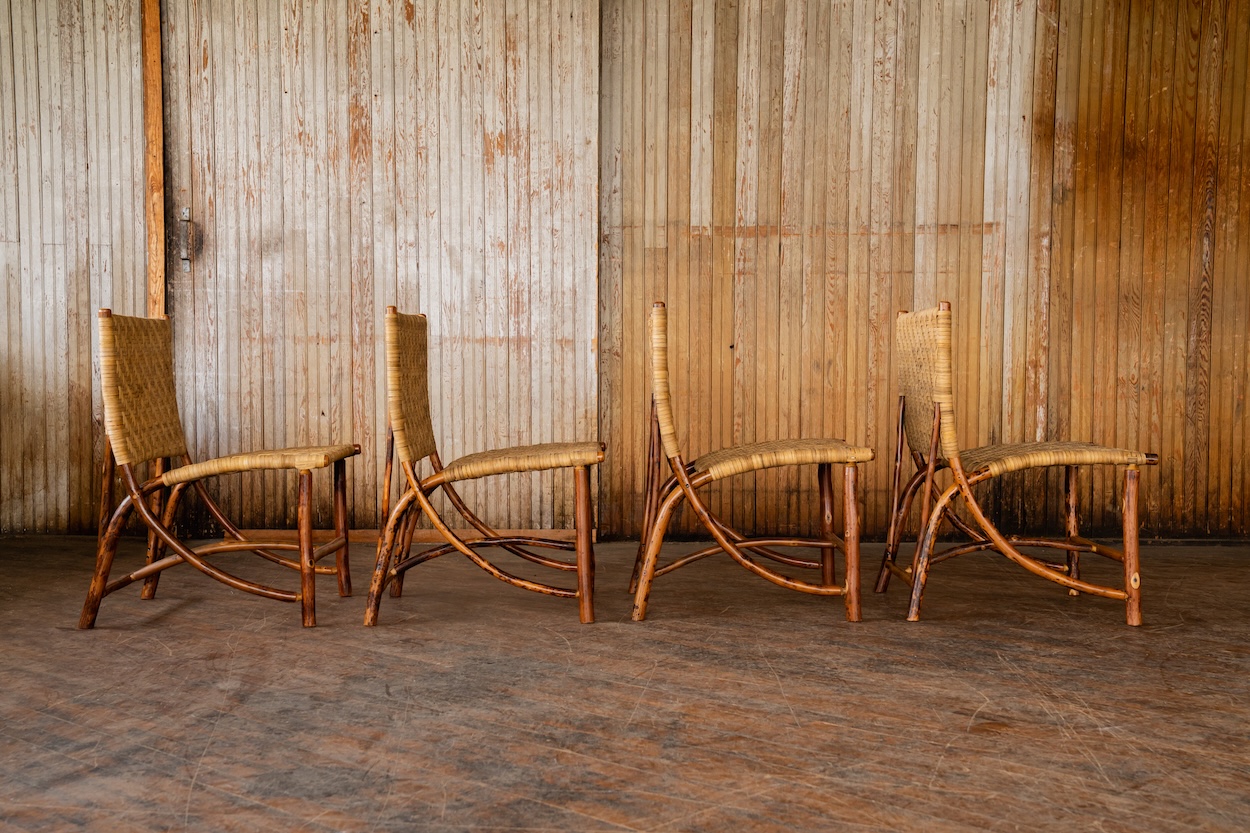
A sense of discovery underscores the Old Hickory by Russel Wright: The American Craft Collection. A German architecture and design studio, Original in Berlin, contacted Cross about Wright’s original collection with Old Hickory. Original in Berlin also reached out to Old Hickory directly. “We all came together to discuss, and loved it,” she said. “We don’t think there are any original pieces—that we know of—still in existence,” she says. The line was designed in 1941. It was later exhibited at The Met. Though a lot of the details—how long it was in production, whether it was a commercial success—are unknown, the original drawings were uncovered in the Wrights’ Syracuse archives.
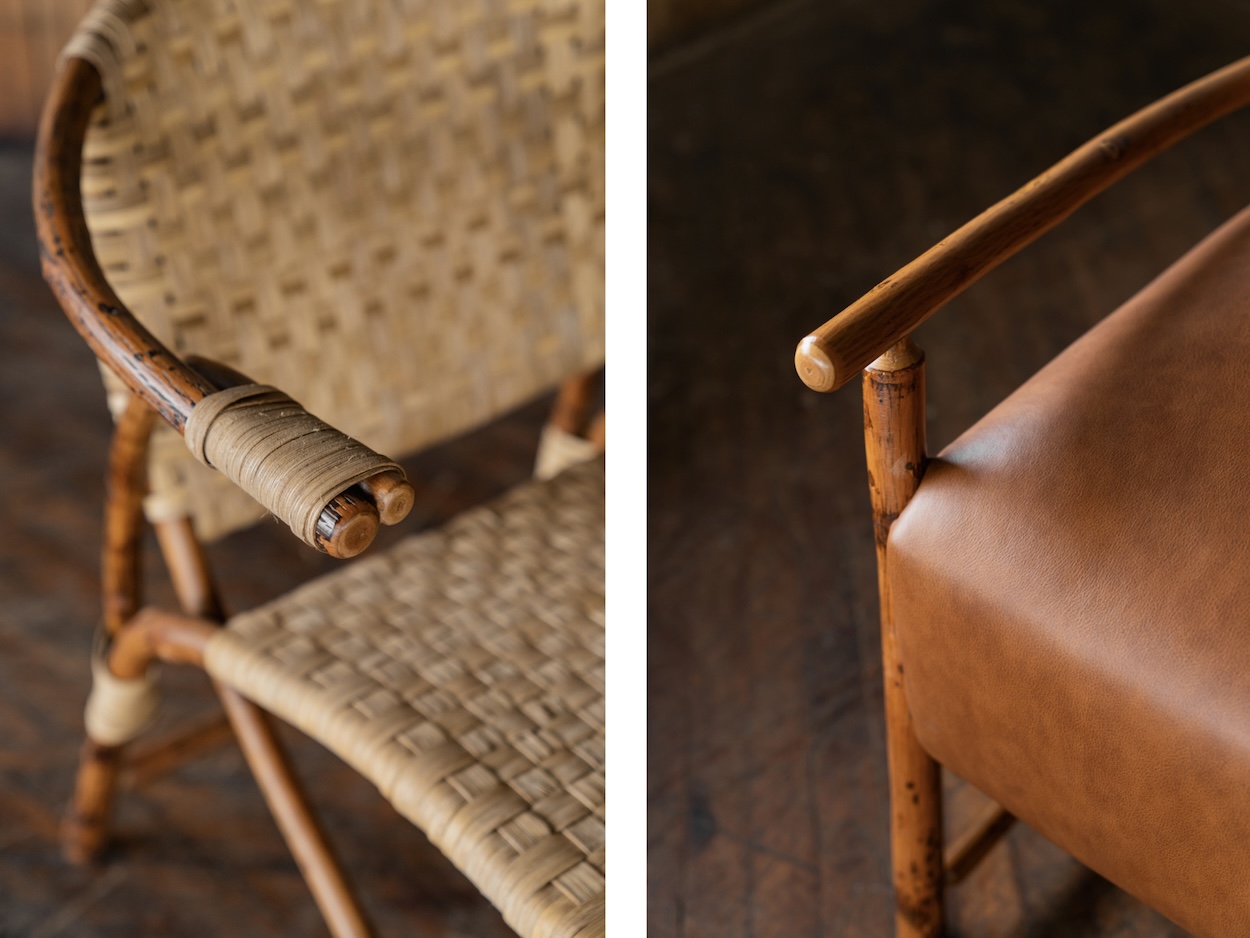
For this reissue, Old Hickory worked from these same drawings. They produce each piece today as they did in the ‘40s, from bending the hickory to caning by hand. The chairs are just some of what will be presented in Old Hickory’s new showroom at IHFC Building during High Point Market. Proceeds from the collection will also support Manitoga / The Russel Wright Design Center. From High Point, North Carolina to Cold Spring and Garrison, New York, Russel Wright’s legacy is finding the greater visibility it deserves.