MVRDV to build a seven-rock landmark on Rotterdam’s Maas riverbank.
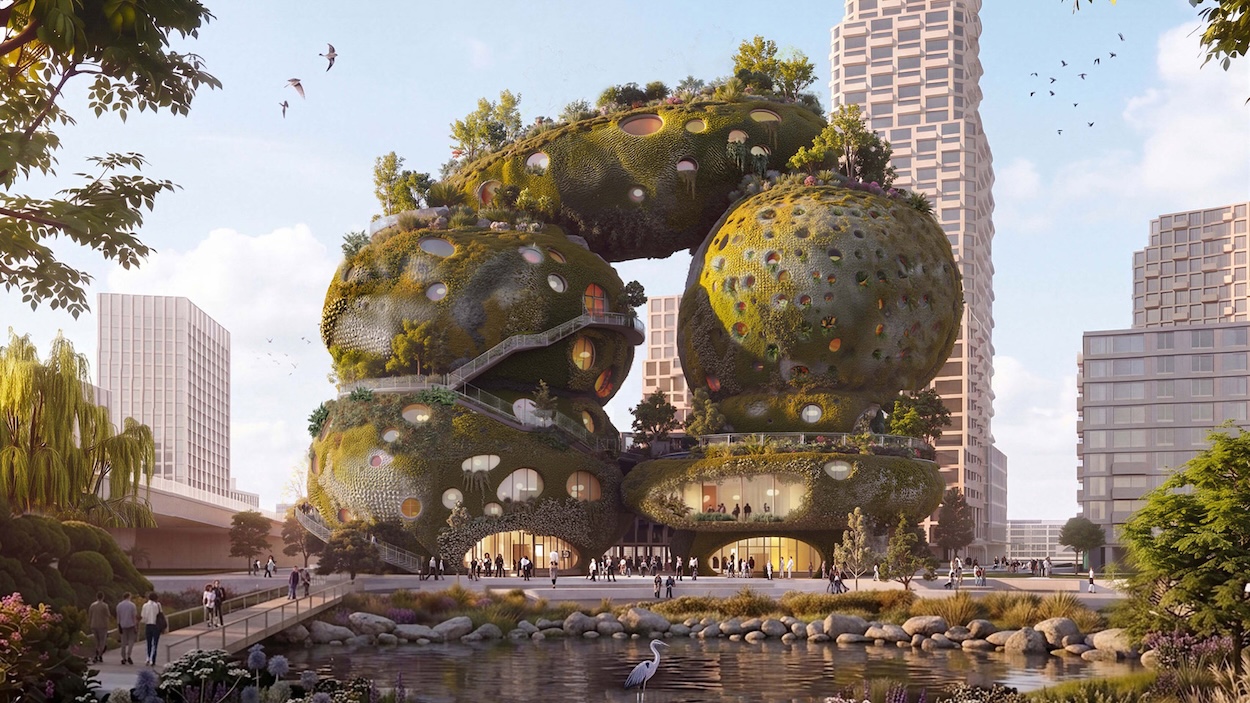
MVRDV, a Rotterdam-based architecture and urban design practice, has won Shift’s competition to design a €240 million landmark in Rotterdam. The studio’s winning proposal, Rotterdam Rocks!, takes the form of seven giant stacked rocks along the river Maas, incorporating terraces, exhibition spaces, and greenery. The competition, launched in 2025 with cultural agency DVDL, called for a “new world wonder” designed to motivate action on climate and biodiversity. The 30,000-square-meter building will include immersive exhibitions, a hotel, a conference center, and a food court, arranged around circulation routes and a series of “caves.” An exterior route will offer additional exhibition space and a city-view terrace. The building will anchor Rotterdam’s upcoming Waterkant district, which is set to include 3,500 homes alongside schools, transit, and cultural space.
Ferran Barenblit to curate the 16th Shanghai Biennale in 2027.
Argentinian curator Ferran Barenblit has been named chief curator of the 16th Shanghai Art Biennale, set to open in November 2027 at the Power Station of Art in Shanghai’s Huangpu district. He succeeds Kitty Scott, whose 2025 edition, Does the flower hear the bee?, explored human and nonhuman intelligence across more than 250 works by 67 artists and collectives. Born in Buenos Aires and now based in Barcelona, Barenblit brings over three decades of curatorial experience, including directorships at MACBA, Centre d’Art Santa Mònica, and CA2M in Madrid, plus a stint at New York’s New Museum under Marcia Tucker. He most recently curated Ecuador’s 16th Cuenca Biennial, focused on democracy and conflict in Latin America. Of his upcoming edition, Barenblit said he wants the biennale to remain “demanding and legible, accessible and complex,” creating space for dialogue between local histories, global conversations, and forms of art “that have not yet found a form.”
35 Vienna galleries band together to launch Astoria Artshow this September.
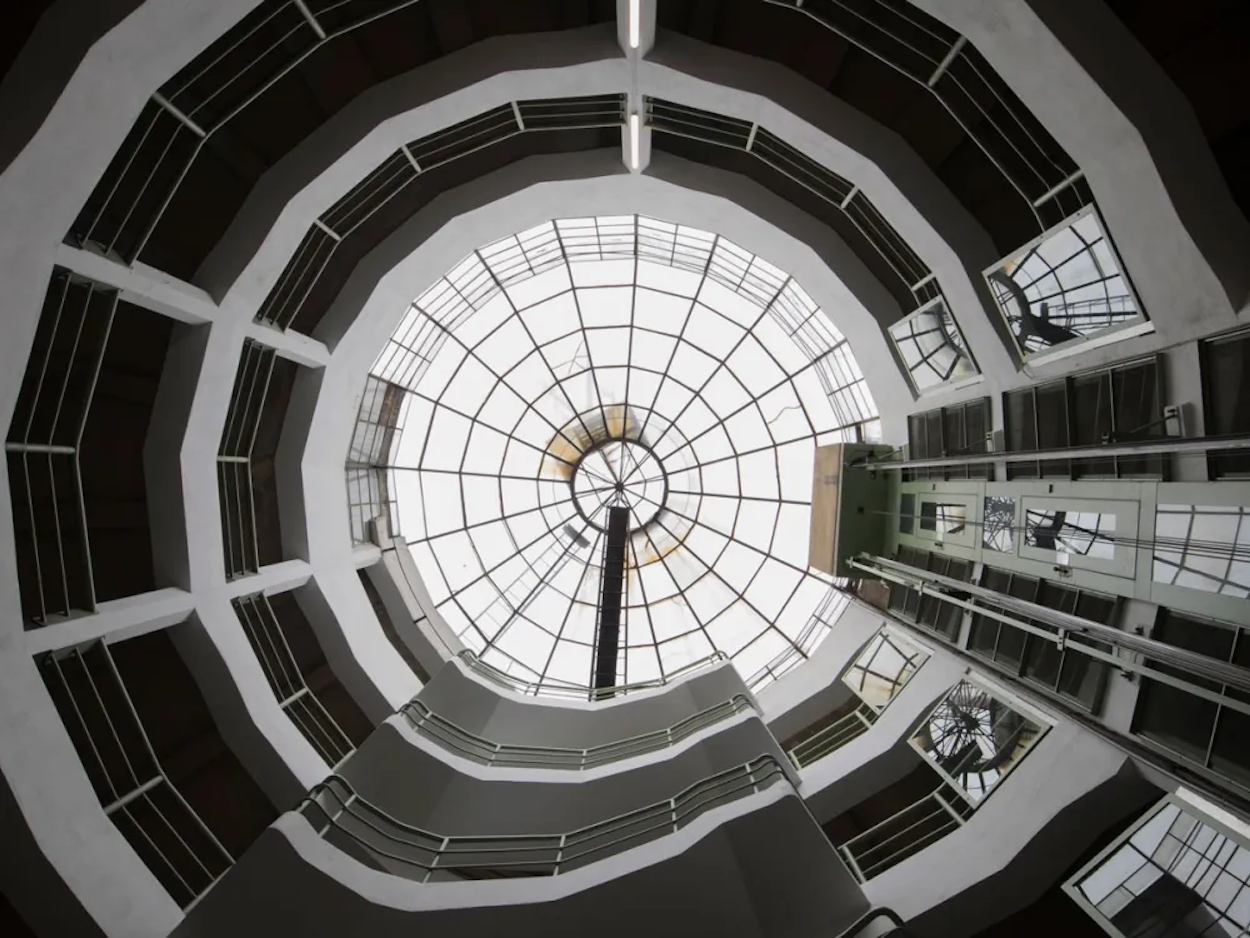
A coalition of 35 Vienna galleries has launched a new art fair, Astoria Artshow, following the cancellation of the city’s two main fairs earlier this year. Organized by VAU, Vienna Art United, a group whose board includes gallerists Markus Peichl, Thomas Krinzinger, and Karoline Bartosch-Hilger, Astoria Artshow will run September 10–13 at the Astoria Garage, a 1923 building in Vienna’s 8th District hosting an art event for the first time. The inaugural edition will feature around 70 Austrian and international galleries, serving as a lead-up to a more formalized 2027 edition. The fair has secured funding from the City of Vienna and Austria’s Federal Ministry for Housing, Art, Culture, Media and Sport, and will use a “solidarity participation model,” scaling fees to galleries’ revenue and size rather than booth space.
Chile is slowly uncovering a mural buried by Pinochet 50 years ago.
A historic mural by Chilean artist Julio Escámez, believed destroyed after Augusto Pinochet’s regime ordered it erased in 1973, is slowly reemerging in Chillán’s city hall. Restorers from the Municipality of Chillán’s Heritage Unit are in the third phase of removing 12 layers of white paint by hand, a process expected to finish in December 2027. Commissioned in 1969 and completed over two years, the mural, “Beginning and End,” once spanned 452 square feet and depicted the triumph of people over oppression. It was praised by Salvador Allende and described by Pablo Neruda as containing “the most extraordinary essences of creation.” After Pinochet’s coup, the work was widely believed demolished, until a 2021 analysis revealed it had simply been painted over. Restorers have since found the mural is larger than previously known, and now believe the title may refer to two connected works: one depicting class struggle, the other a scene of quiet contemplation.
The E.U. pulls $2.3 million from Venice Biennale after Russia rejoins.
The European Union has withdrawn roughly $2.3 million in funding from the Venice Biennale, following through on a threat issued after Russia’s return to the event this year. European Commission spokesperson Thomas Regnier said taxpayer money should support cultural events that “safeguard democratic values, foster open dialogue, diversity, and freedom of expression”—values he said “are not respected in today’s Russia.” Russia’s participation, announced in March after a four-year absence, drew sharp backlash, including a boycott from Italy’s own culture minister, Alessandro Giuli. Biennale organizers defended the decision, saying they “reject any form of censorship in culture and art.” The E.U. had previously warned that continuing the pavilion risked violating sanctions barring platforms for individuals who support Russian aggression against Ukraine.
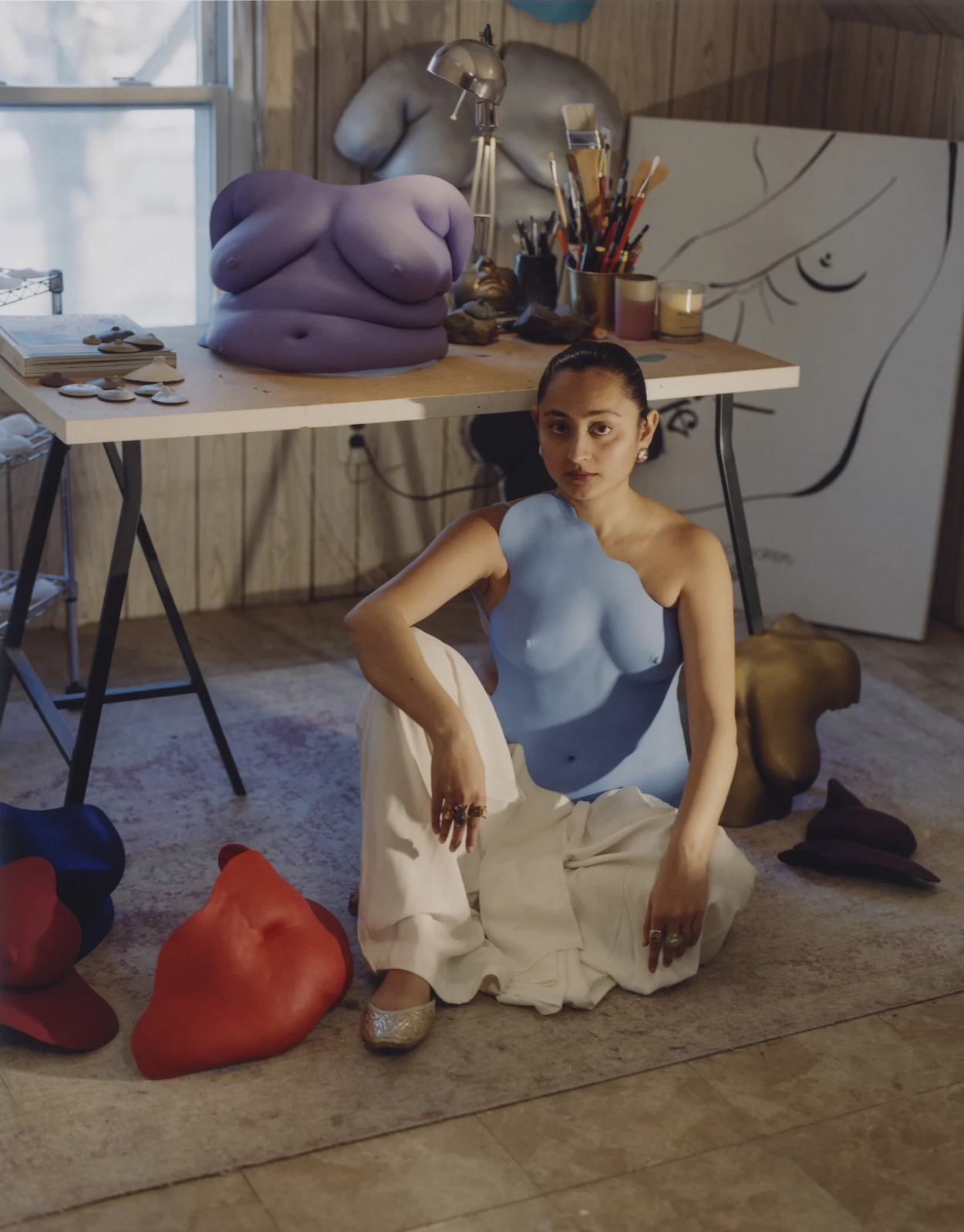
Pakistani artist Misha Japanwala dresses Lupita Nyong’o in Christopher Nolan’s “The Odyssey.”
How Ghana’s hand-painted movie posters became sought-after art.
Montreal studio Supersystème turns type into a language of its own.
Yves Piaget’s love of roses shaped the maison’s design legacy.