Serpentine’s new fellowship connects artists and emerging technology.
Serpentine Galleries has launched its inaugural Future Art Ecosystems R&D Fellowship, selecting four fellows from nearly 1,000 applicants to participate in a six-month program exploring the intersection of art and artificial intelligence. Each recipient—artists Alice Bucknell, Alfredo Salazar-Caro, and Auriea Harvey, along with designer and researcher Reina Mun—will receive a £10,000 cash prize and access to mentorship, seminars, and in-person intensives in London. The program, five years in development, operates through a three-year partnership with the Glass Castle Foundation and includes a major annual commission. Serpentine CEO Bettina Korek said the fellowship aims to build “connective tissue between art and emerging technology, so they develop together rather than in sequence.”
BIG’s first completed art museum opens as a village of 12 pavilions in Suzhou, China.
Bjarke Ingels Group has completed its first-ever art museum, the Suzhou Museum of Contemporary Art, a 60,000-square-meter complex on Jinji Lake. Now open to the public, the museum comprises 12 interconnected pavilions unified beneath a continuous, ribbon-like roof, drawing on the spatial logic of Suzhou’s historic gardens. Central to the design is the lang, the traditional Chinese covered corridor, reinterpreted as a circulation spine linking galleries, gardens, bridges, and public spaces. From above, the looping roof forms a shape BIG likens to an infinity knot, while partner Catherine Huang compared it to papercut patterns framing the gardens below, a nod to the Ferris wheel that overlooks the site. The museum’s inaugural programming includes BIG’s own “Materialism” exhibition, alongside a Picasso show and a survey of contemporary Chinese art.
Galerie Nordenhake marks its 50th anniversary with a new Berlin gallery.
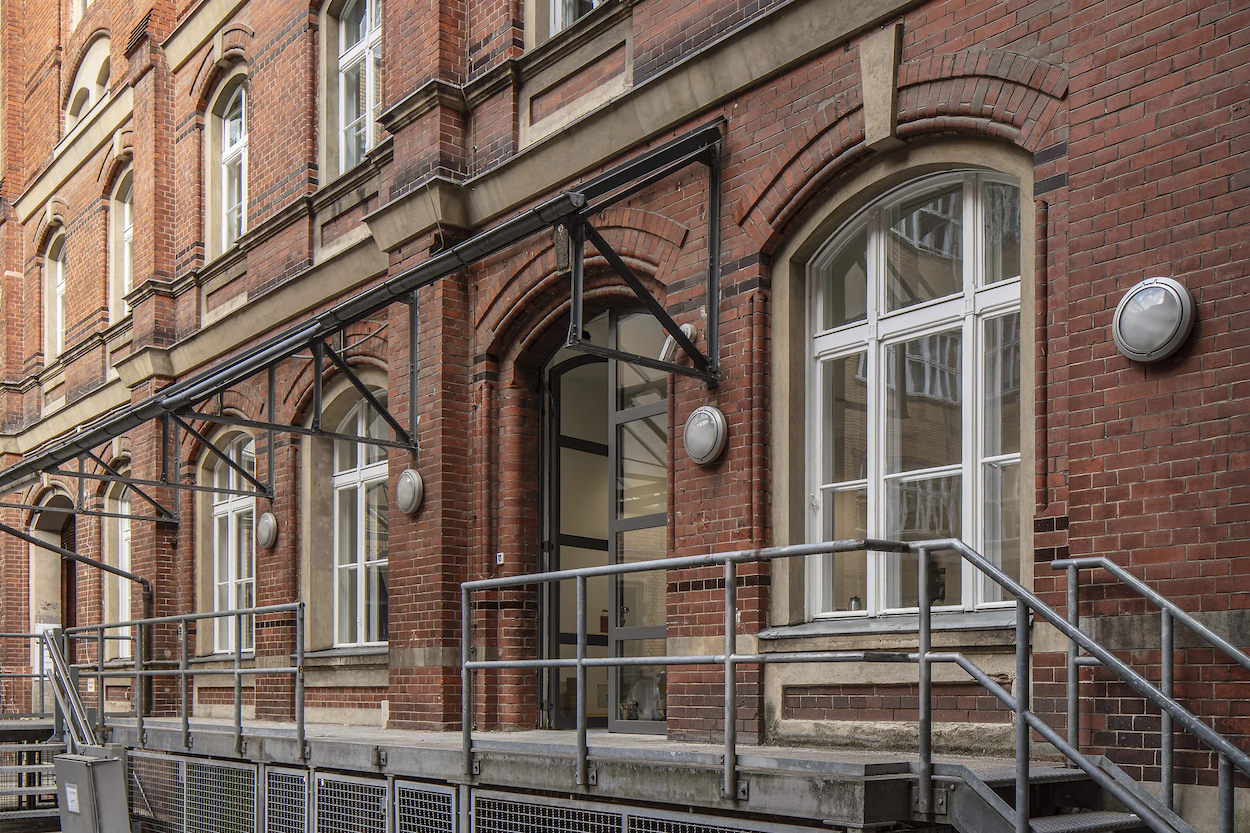
Galerie Nordenhake is opening a larger Berlin location in Charlottenburg, debuting September 10 with a reception timed to Berlin Art Week. The address at Goethestraße 2–3, a 19th-century former post office building designed by Wilhelm Tuckermann, previously housed Galerie Max Hetzler. The move follows a year of 50th-anniversary programming across the gallery’s Berlin, Stockholm, and Mexico City locations. The inaugural show, “Symptoms,” gathers 16 artists working across collage, photography, sculpture, and paint, including Mirosław Bałka, John Coplans, Ann Edholm, and Not Vital. The exhibition frames their work around subtle signs of underlying conditions, exploring unease through fragmented bodies, unstable pictorial space, and hybrid materials.
France begins charging ultra-fast fashion fees aimed at Shein and Temu.
France has begun charging environmental fees on ultra-fast-fashion retailers, aimed at Chinese-founded platforms Shein and Temu. The charges start at roughly 30 cents for small items like socks and climb to about $14 for coats, with a path to nearly $23 per garment by 2030. Notably, France is the first country to base such penalties on a scoring system weighing how many styles a company lists and how repairable its garments are. Shein’s IPO filing reportedly shows it releases about 4,700 new styles daily, far outpacing traditional fast-fashion players like Zara and H&M, which face separate EU recycling-funding obligations instead of these fines.
Lenepveu heir seeks to reveal the 19th-century painting beneath Marc Chagall’s Paris Opera mural.
A descendant of 19th-century French painter Jules-Eugène Lenepveu is reviving a decades-old dispute over the ceiling of the Paris Opera, where Lenepveu’s 1869 painting has remained hidden beneath Marc Chagall’s 1964 mural since its installation. Arnaud Carayon, Lenepveu’s great-great-great-great-grandnephew and president of the Friends of Lenepveu Society, has written to French president Emmanuel Macron and is considering legal action to bring the original work back into view. Architect Charles Garnier commissioned Lenepveu to paint the Opera’s dome directly onto its copper plates in the 1860s. Nearly a century later, culture minister André Malraux commissioned Chagall to create a new work over it, a move that drew criticism at the time for disrupting the building’s Second Empire harmony. Chagall, working for free, designed his piece to be removable, ensuring Lenepveu’s painting remained intact underneath. Some favor restoring Lenepveu’s work, others suggest rotating artists each generation, while a former Chagall assistant has warned that removing it could hurt tourism. Carayon has proposed alternating the two ceilings every decade.
Attractive Distractions:
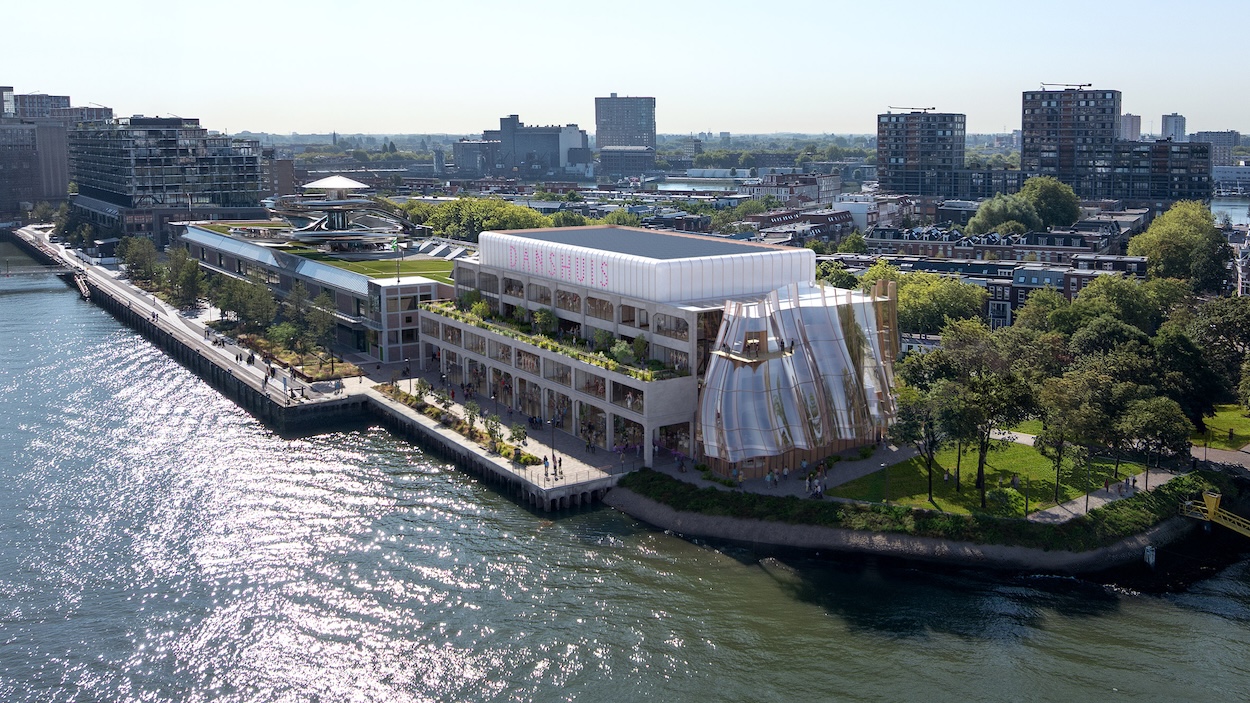
MAD unveils a rippled glass extension for Rotterdam’s Danshuis Dance Center.
Florence Welch and McQueen built a festival-ready gothic look.
David Lynch’s photographs reveal his lifelong fascination with L.A. light.
Thom Browne heads to Scotland for a quiet and moody Fall 2026 campaign.