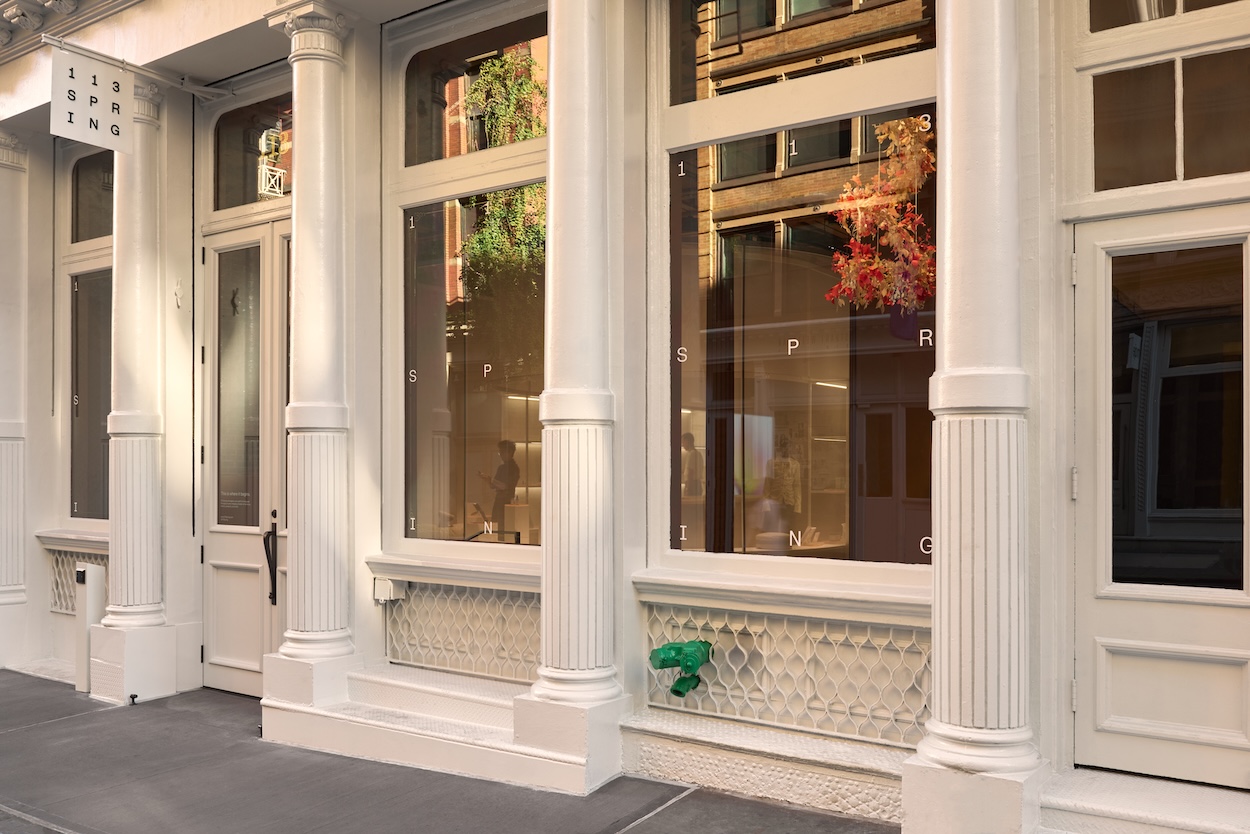
Named after its New York City address—which encompasses 3,000 square feet within a 150-year-old, cast-iron Soho structure—113 Spring represents a new wellness concept, balancing carefully selected products with stimulating services and thoughtful experiences. Designed by Snøhetta, awash in white oak floors, pops of soothing color, and theatrical divisions, every design decision was based upon a material’s lifespan and impact. To step inside is to be invited on a journey into a place of discovery, underscored by flexibility.
Snøhetta's Warm, Futuristic Vision for Wellness at 113 Spring
Channeled through circularity and sustainability, the multidisciplinary studio’s new Soho project piques curiosity and maps out a plan for the industry to follow
BY DAVID GRAVER October 03, 2025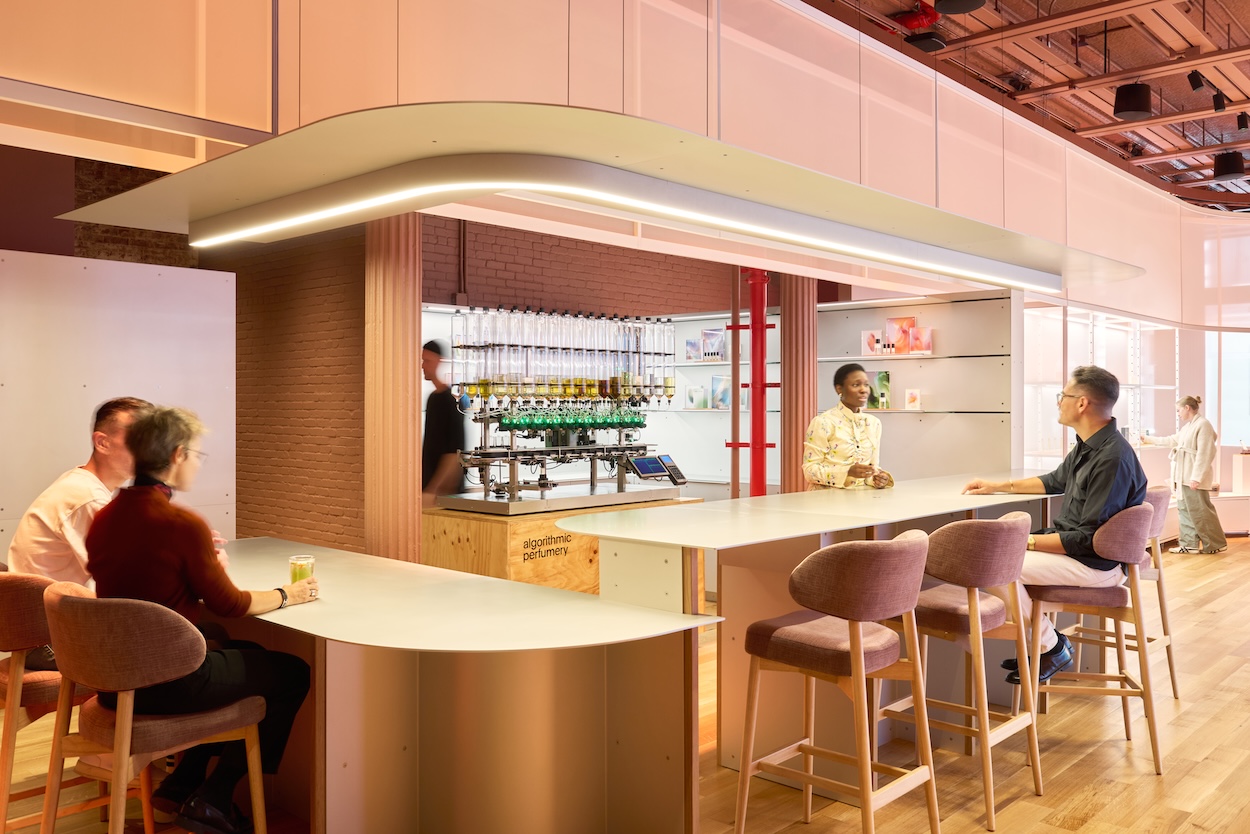
Courtesy of 113 Spring
…
Courtesy of 113 Spring
…
Passing through the historic facade, visitors enter into Snøhetta’s world—from beautiful, broad swooping design language in public spaces to private areas designed for comfortable, controlled sensory stimulation. “We are multidisciplinary, yes, and we work with our own product designers, graphic designers, industrial designers, and architectural interior designers,” Marc-Andre Plasse, Snøhetta’s director in New York, tells Surface of their comprehensive approach to the space.
Courtesy of 113 Spring
…
For the studio, a project begins with substantive dialogue. “We love to have workshops with the client very early on where we try to define keywords that will support the design of the space,” he continues. “Through these discussions with the client, we came up with two words that were important: one was fluidity and the other ephemerality. These two concepts seem to capture the essence of what they wanted to do.”
Courtesy of 113 Spring
…
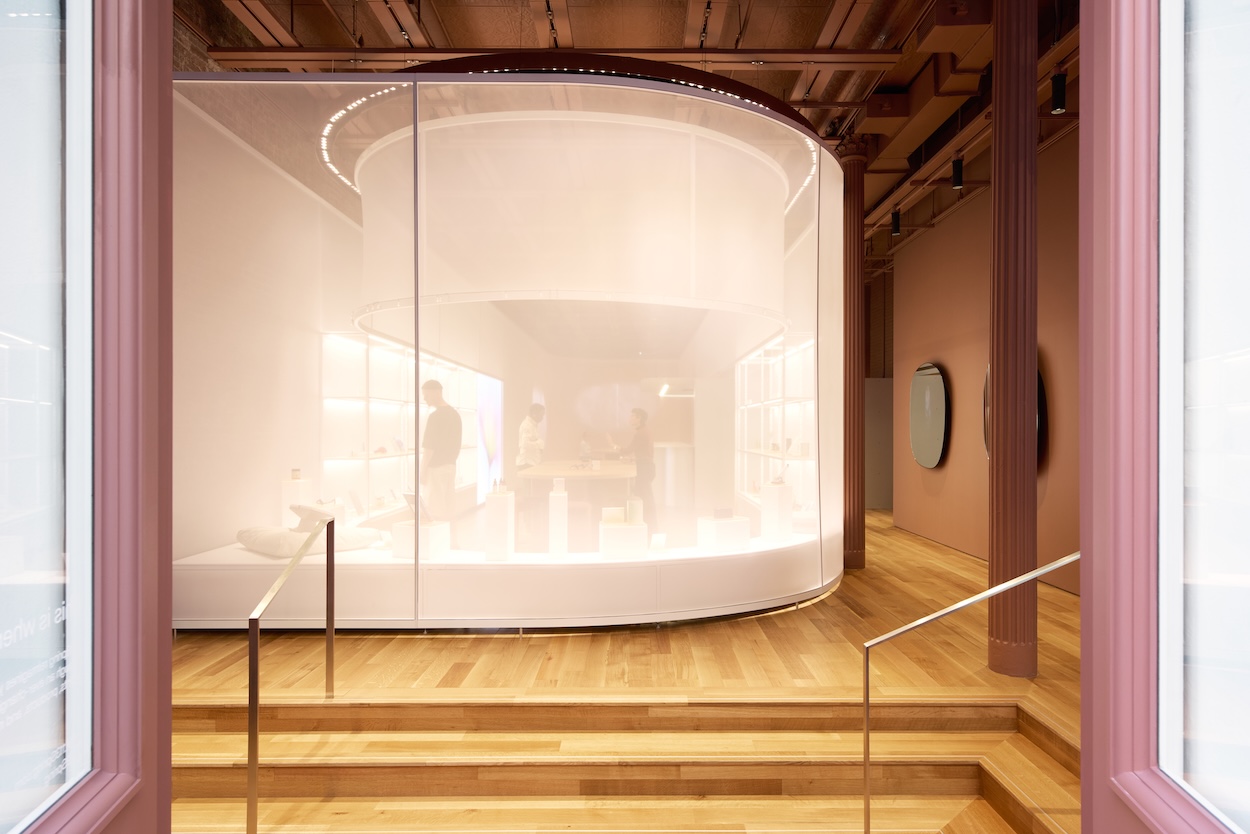
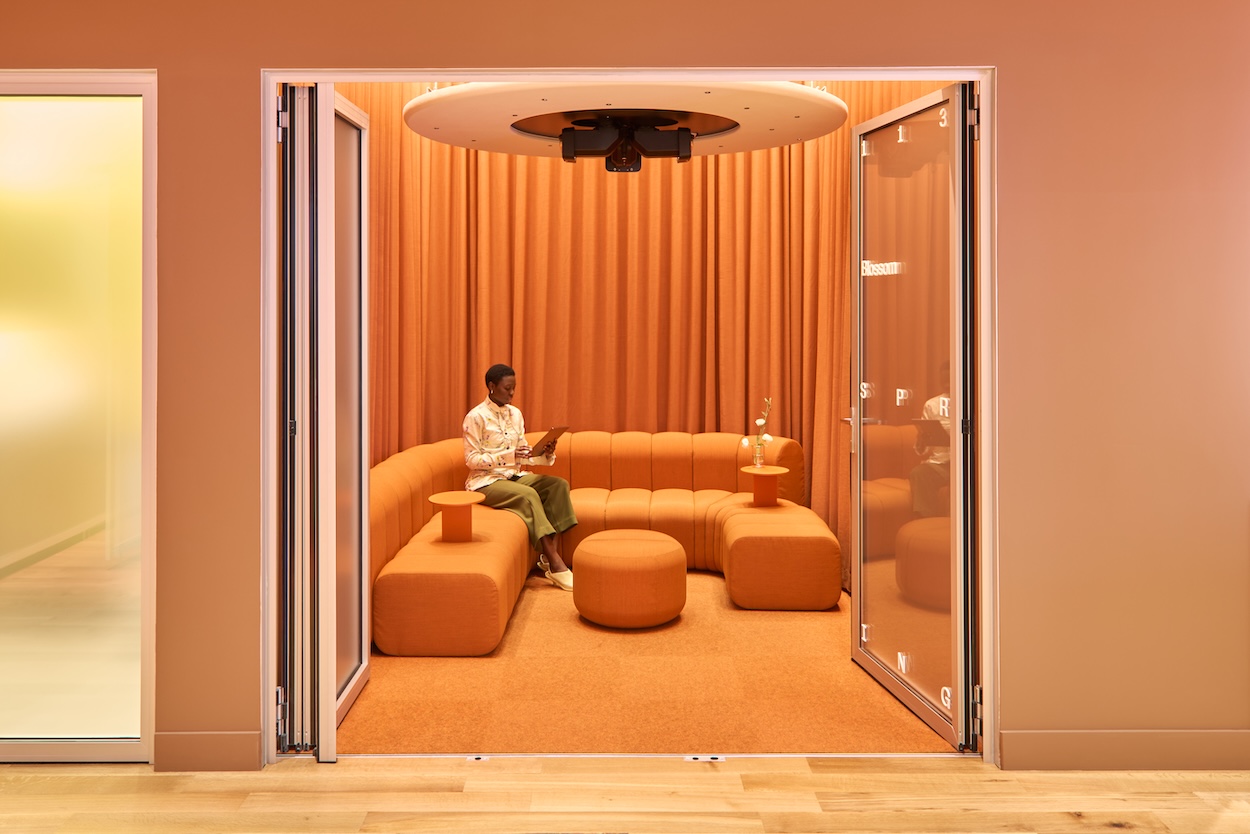
As a starting point, Plasse developed a passage for visitors who arrive from the busy streets of Soho into a place where calmness and curiosity are rewarded. He and the Snøhetta team used a transparent veil, both reusable and recyclable, to allude to what’s merchandised beyond. Not only does it establish intrigue but this partition requires guests to step in and around. Further, the screen acts as a platform for sensory manipulation—changing colors, glowing with morning light.
Courtesy of 113 Spring
…
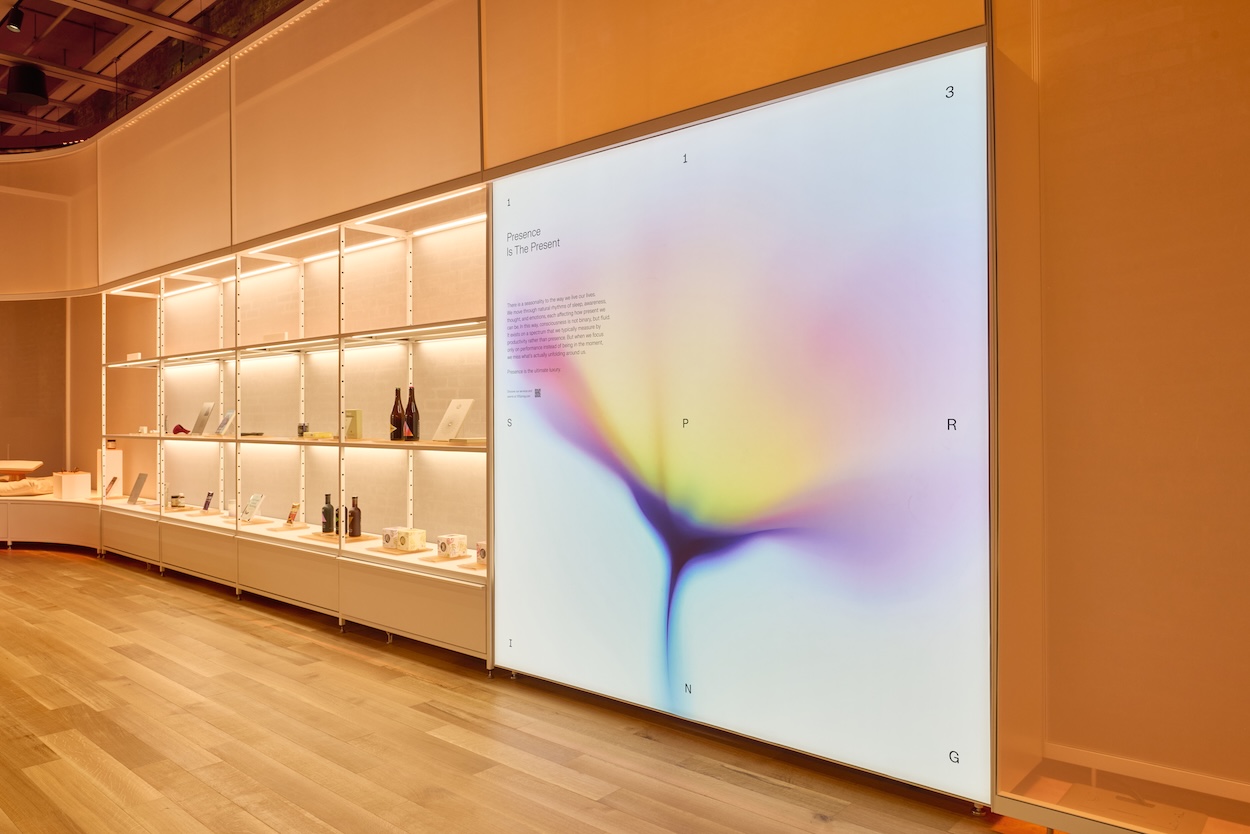
“In the brief and throughout the workshops, the client asked: how can you bring nature and people together?” Anne-Rachel Schiffmann, Snøhetta’s New York-based Discipline Director and Interior Architecture Senior Architect, shares with Surface. “People think you can just throw a bunch of plants in a space. We didn’t want to do that. We wanted to learn—to look at nature and have qualitative aspects. We wanted to represent the cycling of nature.” To do so, Schiffmann ruminated on the ideas of paths and discovery, reinforcing attributes of the project.
Courtesy of 113 Spring
…
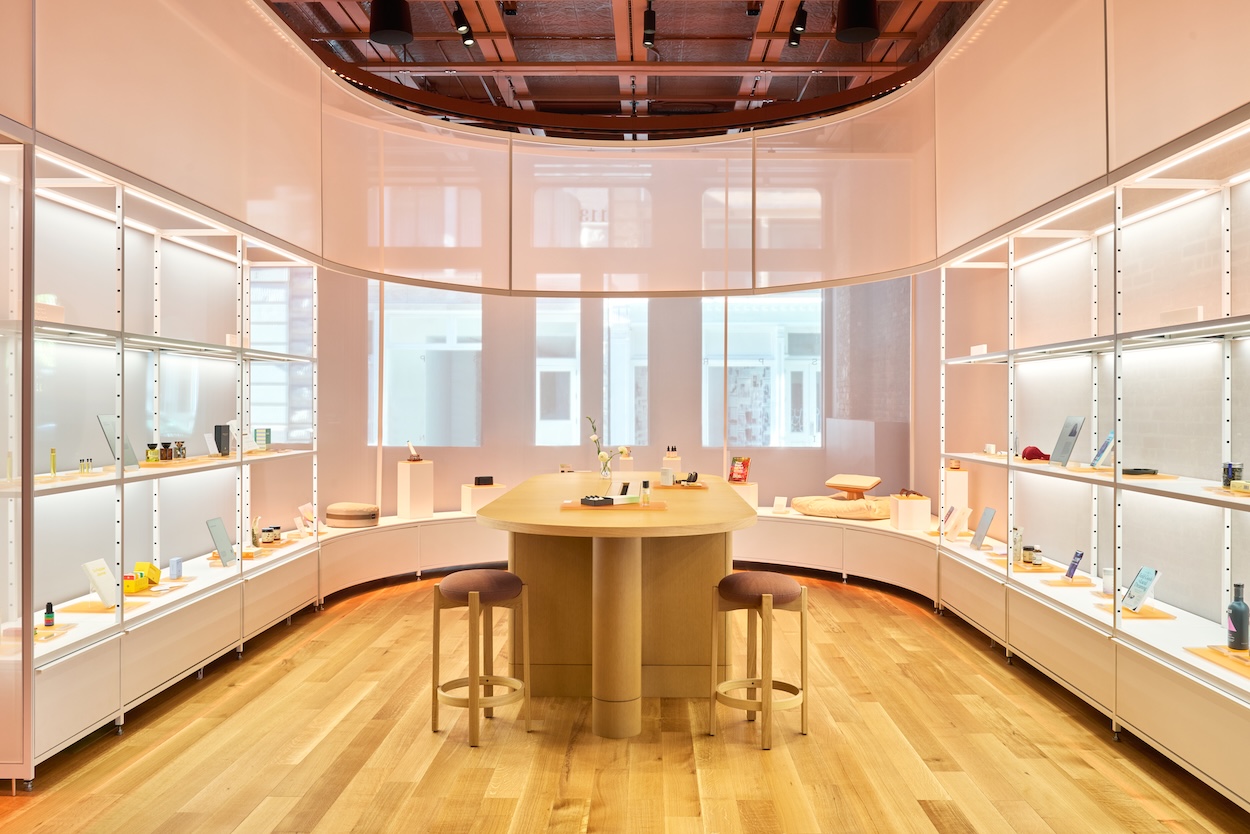
The 113 Spring client tasked Snøhetta with optimizing the current space but understanding that retail tends to have a shorter lifespan. This ethos informed everything from flexible display cases to the floor system, which is clipped in. There is no glue, and no nails were used. “Frequently these spaces last a decade,” Plasse explains, “but a floor can last so much longer. We tried to make sure that everything we put in can have a second life. This floor can last for 40 years. At the end of its life, we can unclip it all and replace it—or someone can use it elsewhere.”
Through their structural decisions, Snøhetta makes clear that the 113 Spring space isn’t just about messaging. It’s about pushing materials forward. “The furniture is designed for disassembly,” Plasse notes. “They can be taken apart very easily to give them a second life. Regarding our use of mineral paint, latex paint is one of the main culprits for microplastics. By using mineral paint first, we prevent that. That’s one of the experiments here. It’s not used in retail spaces that much, mineral paint. We wanted to test it.”
Courtesy of 113 Spring
…
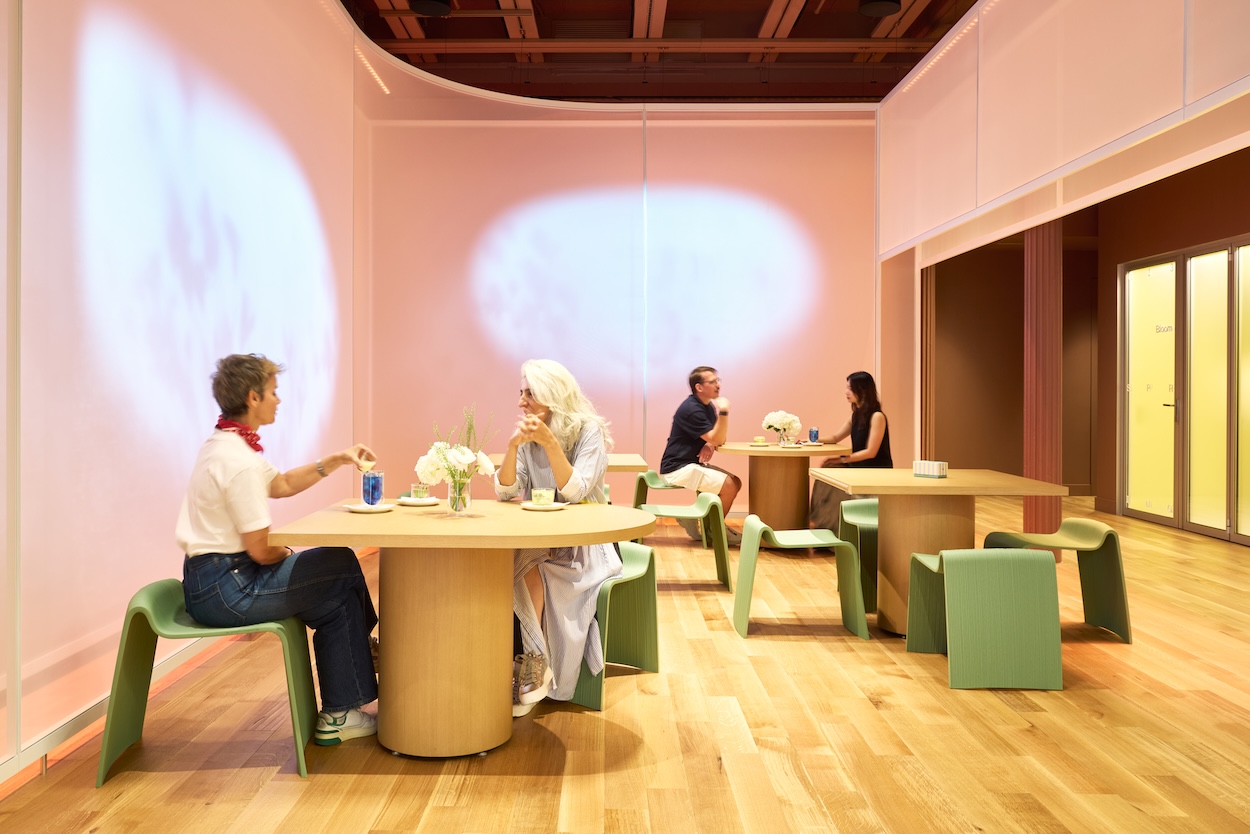
While all the mission behind the vision has meaning, the space itself simply feels good to enter. There’s something mesmerizing about the soundtrack and the scent of 113 Spring, and all the attributes seem to work toward harmony. “Every element, every design decision, was governed by the impact it will have in order to make the space evolve for the community,” Schiffmann concludes, “and reduce any harmful impact on the environment for years to come.” Perhaps the finest example: 18 moss green chairs that Snøhetta designed and 3D-printed in Holland that divert 20,000 plastic bottles from landfill or the ocean.