From the Opéra de Paris, the Palace of Versailles, and even Venice Immersive at the 82nd Venice International Film Festival, Virtual Reality experiences are opening doors for cultural institutions to reach new audiences.
Credit: GEDEON Experiences Small Creative Vive Arts, Chateau de Versailles.…
The grandeur demanded by the Palace of Versailles was always its own kind of theater. After all, it was Louis XIV, the “Sun King” who understood that architecture could be performance, and that gardens, like stages, could orchestrate power. Visitors to his court did not merely see a palace; they walked through carefully arranged perspectives, avenues, and fountains that proclaimed his rule as natural, inevitable, and eternal. But much of that history has disappeared. The labyrinth of intricate fountains designed by landscape architect André Le Nôtre and inspired by Aesop’s Fables was dismantled in the late eighteenth century. The palace’s Menagerie, where ostriches, elephants, and exotic birds once lived, is long gone. Even the gardens themselves bear little resemblance to their seventeenth-century forms.
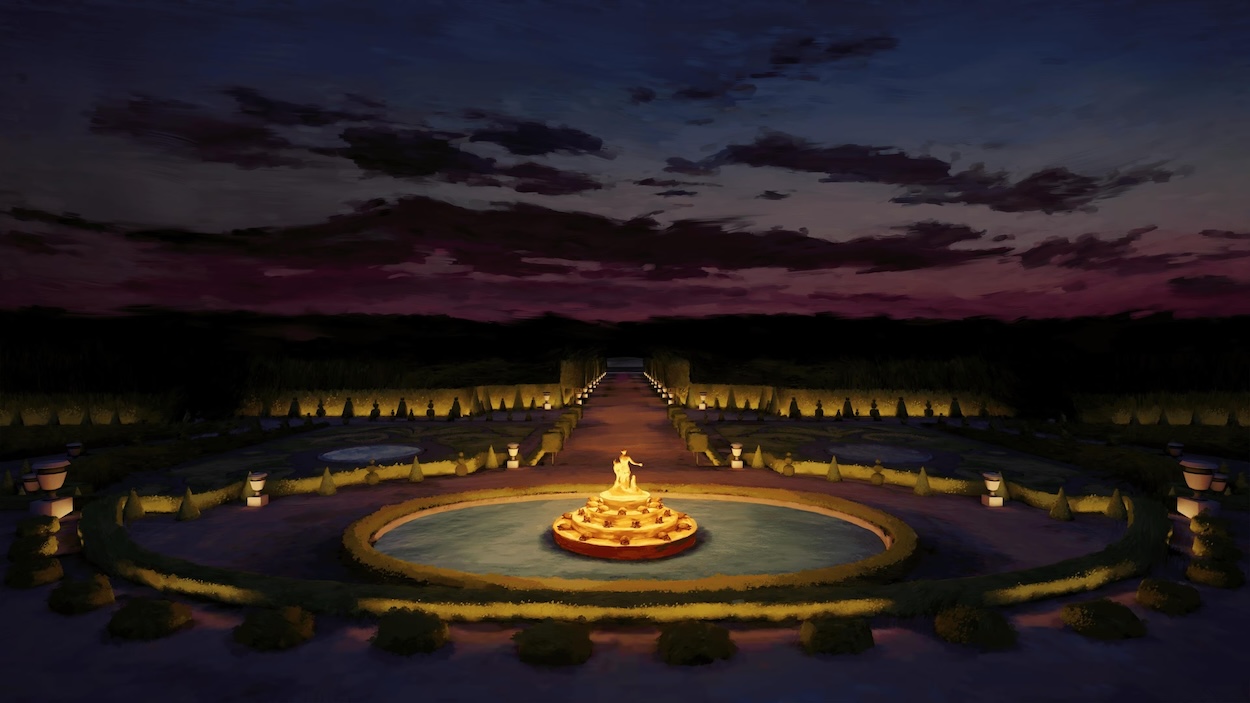
A new project attempts to reconstruct that vanished Versailles—not in stone or marble, but in pixels. Versailles: Lost Gardens of the Sun King, co-produced by Vive Arts, Gedeon Experiences, Small Creative, and the Château de Versailles, uses virtual reality to guide visitors through elements of the palace grounds as they stood in 1682, the year Louis XIV formally moved his court to the site. Through a 25-minute headset experience, visitors can walk freely with others across three lost spaces: the Royal Menagerie, the Labyrinth Grove, and the Grotto of Tethys. The project draws on archival documents— engravings, archaeological remains, and historical testimony—to recreate spaces erased by time and successive regimes.
Credit: Chateau de Versailles…
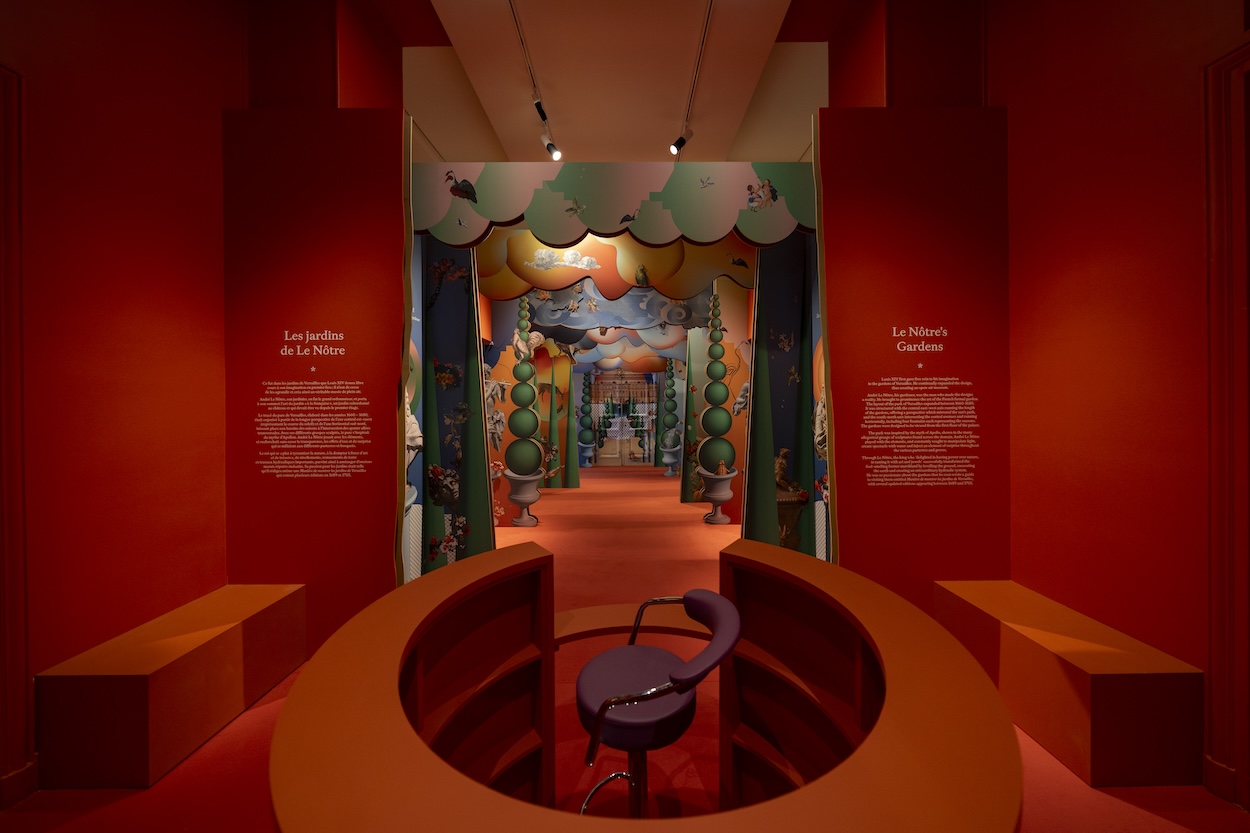
Guided virtually by Le Nôtre, visitors bear witness to architectural relics wielded as instruments of royal power. The Menagerie underscored dominion over the natural world, housing creatures imported from distant lands and bequeathed as diplomatic gestures from foreign powers. The Labyrinth Grove transformed moral fables into a promenade of waterworks and sculpture. The Grotto of Tethys, with its shimmering pools and mythological figures, celebrated both artistic craftsmanship and divine allegory. By walking these spaces in VR, audiences glimpse how the Sun King staged Versailles not only as a residence but as a projection of world order to his court of nobility.
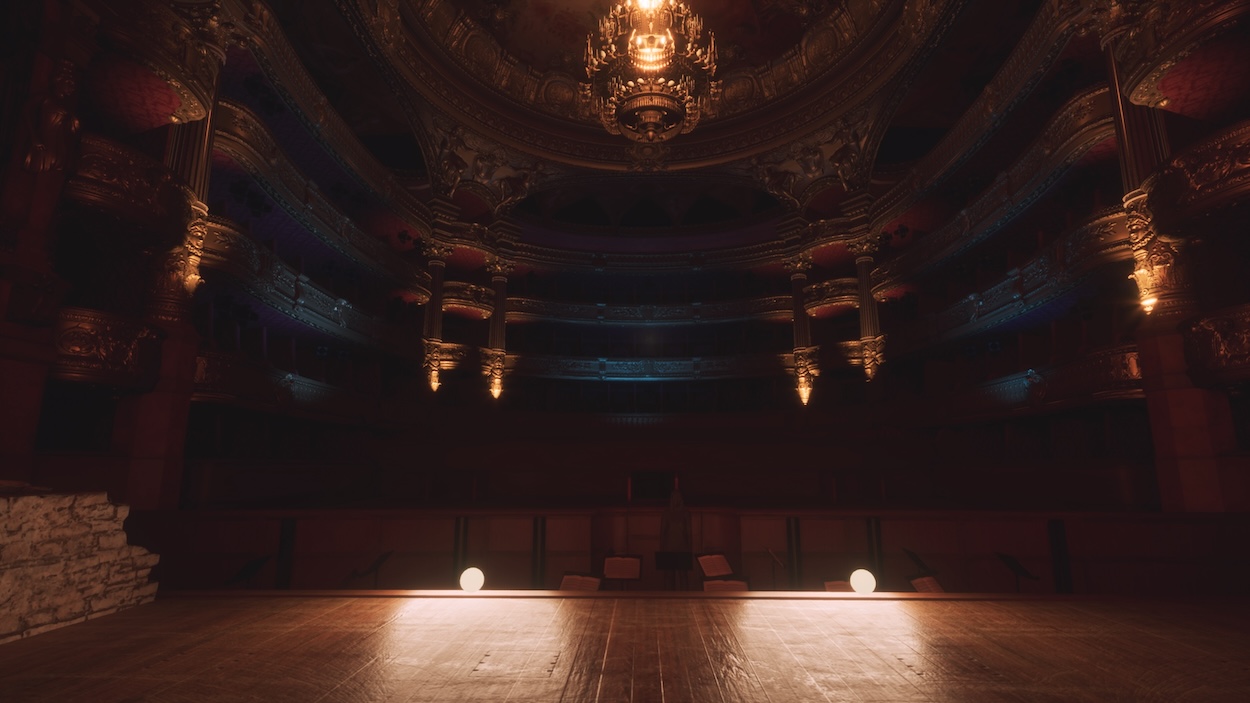
The project situates Versailles in the midst of a growing cultural experiment in which the legacy of heritage sites is reframed through the lens of immersive technologies. Versailles is the latest in a succession of venerated opera houses, museums, and historical sites adopting VR as a valuable tool for education and audience development. At the Palais Garnier, La Magie Opéra translates the formidable art form of opera into an all-ages interactive adventure led by a luminous character named Céleste, weaving excerpts from Puccini and Bizet into dreamlike tableaus. Both initiatives push beyond the confines of traditional formats, inviting audiences to move within their narrative worlds.
Credit: Back Light…
The shift is strategic as well as symbolic. Institutions, under pressure to diversify audiences and sustain relevance see VR as an opening. The Paris Opera and Versailles carry imposing reputations—grand, encoded with etiquette, and, some might even say, demanding of an artistic education to fully appreciate. Immersive storytelling lowers those barriers. A child unable to sit through a performance of Carmen can explore it with their family as a playful, visual adventure. A gaggle of walking tour-weary visitors daunted by Versailles’ scale can approach its vanished groves in an intimate, narrated walk. The technology reframes participation from passive observation to active exploration.
Producers emphasize that accuracy and scholarship anchor the experience. Gedeon, known for documentary storytelling, mined archives and consulted historians to ensure precision in its reconstruction of the palace’s lost gardens. VIVE Arts positioned the experience within its broader program of collaborations with museums and artists worldwide—from La Palette de Van Gogh at the Musée d’Orsay to immersive projects with Tate Modern, the Venice Biennale, and the Louvre. Visitors move through the VR world together, able to point, comment, and reflect in real time, turning a moment in history into a lived experience. For now, the appetite for VR is clear. Visitors to Versailles can enter its Lost Gardens through January 2026, while La Magie Opéra continues to travel internationally—most recently as a “For Consideration” selection at Venice Immersive: the Venice Biennale’s XR showcase.