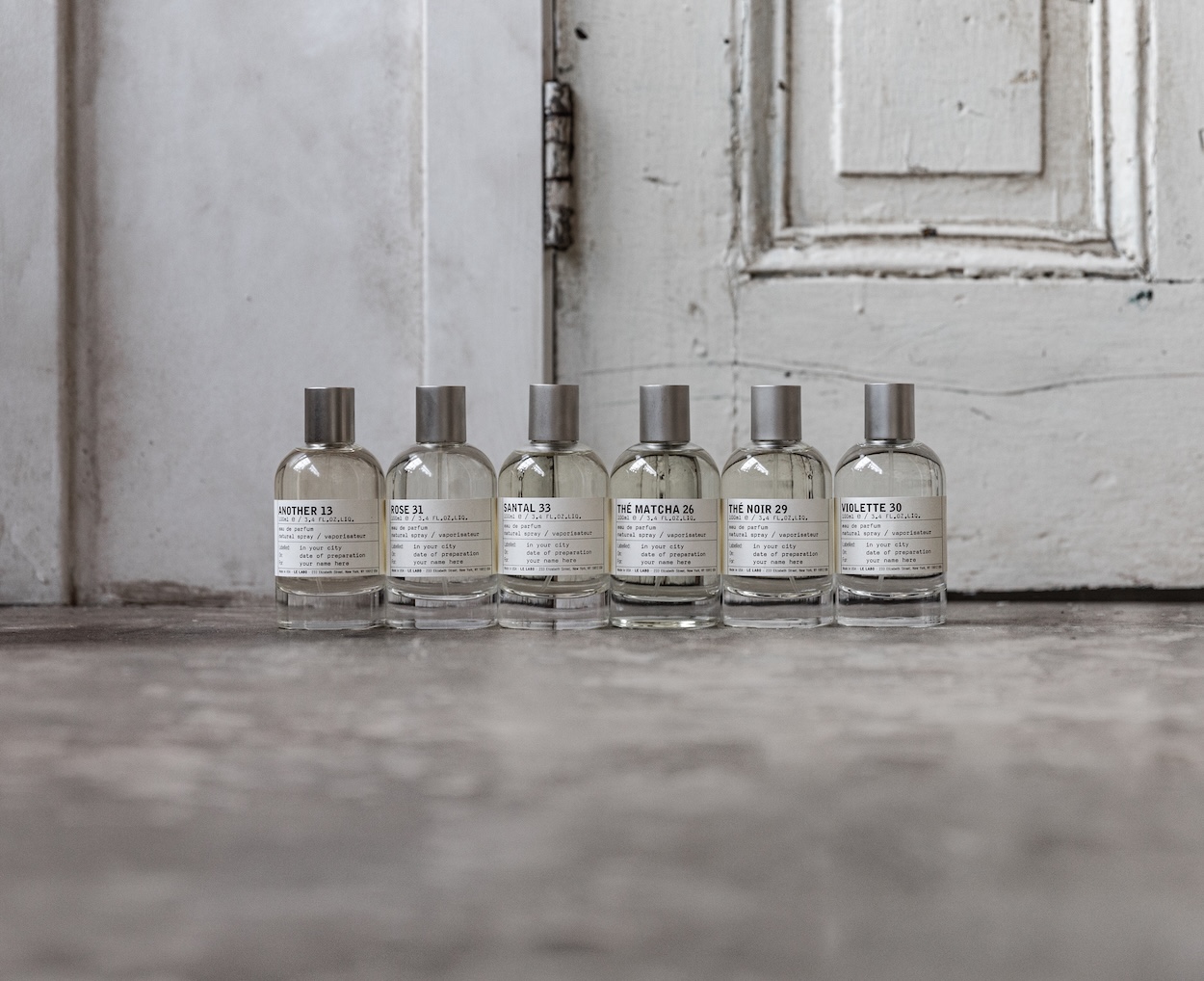
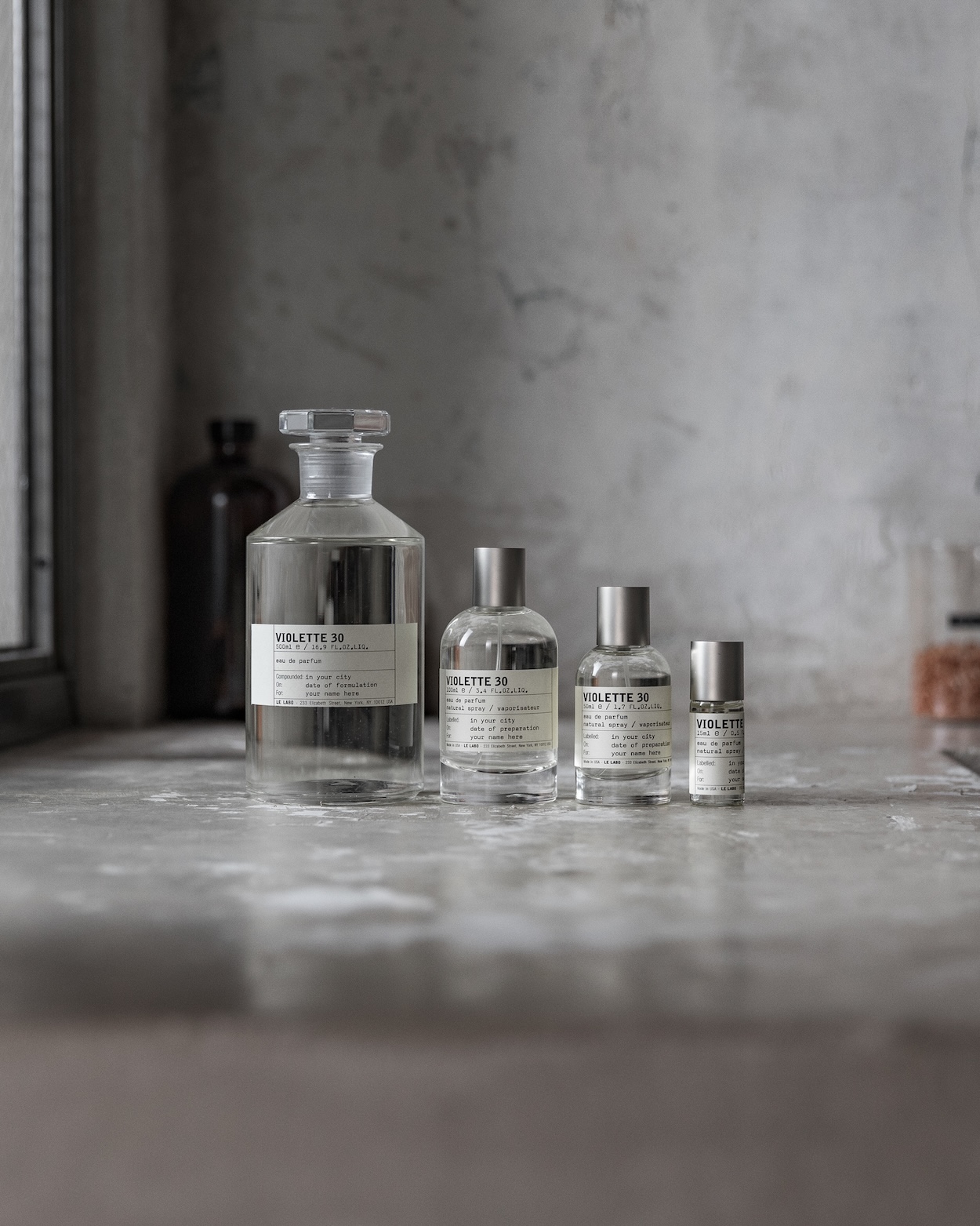
If there’s anyone we have to thank—or begrudge—for santal, the French word for sandalwood, entering the cultural lexicon, it’s probably Fabrice Penot and Eddie Roschi. In 2006, the duo launched the indie fragrance label that’s since been acquired by Estée Lauder with one sandalwood-scented product: a home candle, Santal 26. Four years passed before Santal 33 was launched and sandalwood-struck New Yorkers were able to stop spritzing themselves with Le Labo’s Santal 26 room spray.
Since, Santal 33’s omnipresence has been known to push more intrepid fragrance enthusiasts to widen their horizons. Le Labo’s Gaiac 10, exclusive to Tokyo, has been in circulation since 2008, offering a creamy, tobacco and palo santo-drenched alternative, but in February the brand launched a white violet scent that might be a true successor to Santal 33.
Courtesy of Le Labo…
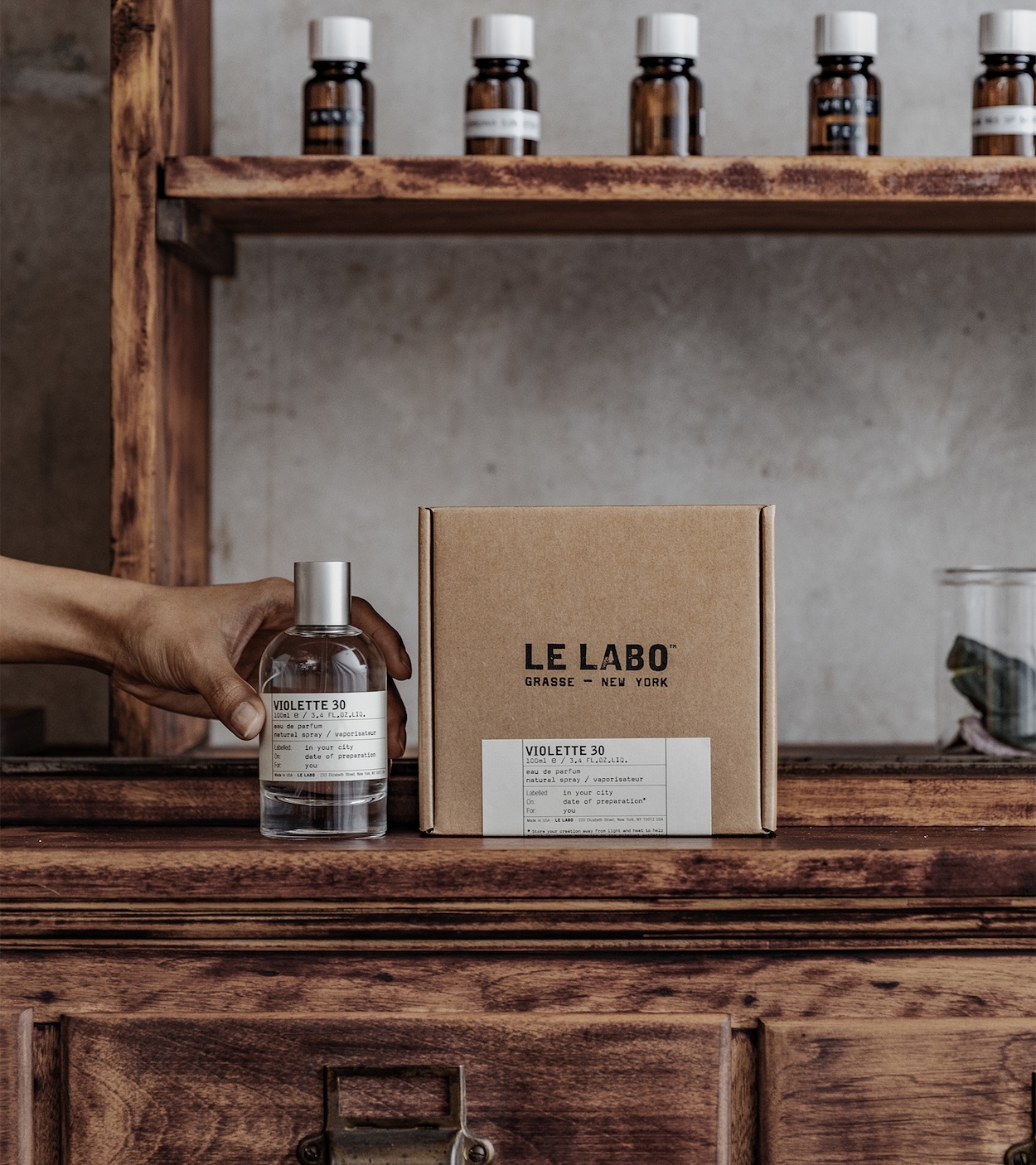
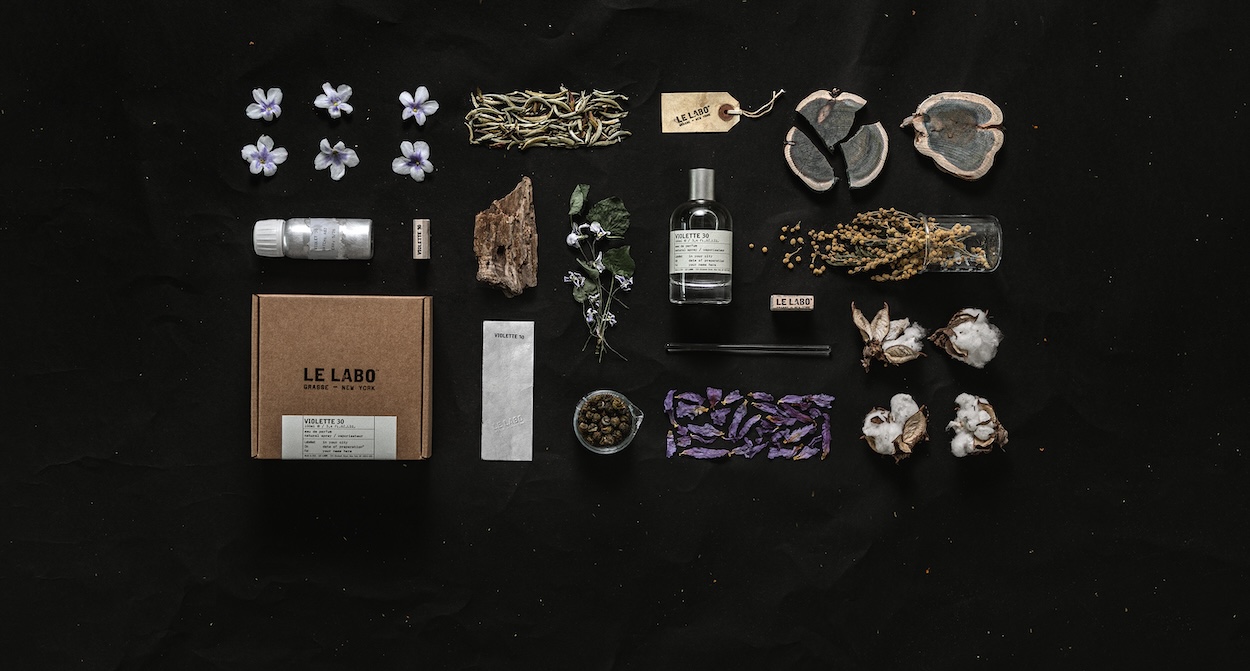
Violette 30—with its notes of white tea, cedar wood, and guaiac wood—is based on the rare white violet instead of its more common purple varietal. As such, Violette 30 thwarts expectations for a floral-named fragrance with its melange of smoky, woody, and green vegetal notes that balance out the deeper profile. “What we’ve observed,” says Deborah Royer, Le Labo’s Global Brand President and Creative Director, “is how Violette 30 arrives on an entirely different register and opens up something unexpected.”
In the following interview, Royer—the steward of this compelling new era of Le Labo—speaks on the elusive flower that inspired the label’s newest cult fragrance and shaking off a scent’s “inherited associations.”
Courtesy of Le Labo…
What were you looking to evoke when developing Violette 30?
The violet has always resisted a single reading. Across history it has carried many contrasting meanings simultaneously—standing for passion and restraint, strength and fragility—without resolving the tension between them. There was something in those juxtapositions that rang true to the ways we often experience ourselves: rarely one thing, never fixed, always becoming. Violette 30 emerged from exploring that space between the familiar and the unknown.
Courtesy of Le Labo…
What does Violette 30 contribute to the lineup that was previously missing?
We don’t create to fill a gap. Rather, every fragrance we release has to find its own completeness first, and we allow it to take the time it requires to feel whole. With Violette 30, the white violet was both the starting point and the sustained inquiry. We kept returning to its emotional dimensionality until the composition found its own form: a distinct crystalline stillness, and a presence that honors the flower’s contradictions without dramatizing them.
Courtesy of Le Labo…
Tell us about the decision to center the fragrance around the white violet.
The white violet grows in shade, rarely in full view. Botanically it is much rarer than the more common purple varietal, and its scent is cooler and more elusive. Here, we wanted the composition to allow space for the white violet to fully be itself, pairing it with white tea and green florals to surround it in an aerial openness, and grounding it with cedar and guaiac wood.
How has Violette 30 been received? And what does it achieve, sensory-wise, that no other fragrance does in the same way?
As a fragrance, violet can carry many inherited associations: powdery, nostalgic, knowable. What we’ve observed is how Violette 30 arrives on an entirely different register and opens up something unexpected. Sensorially, the closest analog I can offer isn’t another fragrance. It’s closer to the experience of hearing a piece of music before you’ve placed it; when your body recognizes the song before your mind does. It’s familiar enough to draw you in, and distinct enough that you keep listening.