IWC Schaffhausen Introduced a Spaceflight Wristwatch in Partnership with Vast
The Pilot’s Venturer Vertical Drive underwent rigorous testing by the watch brand's aerospace partner, which is currently developing the world’s first commercial space station.
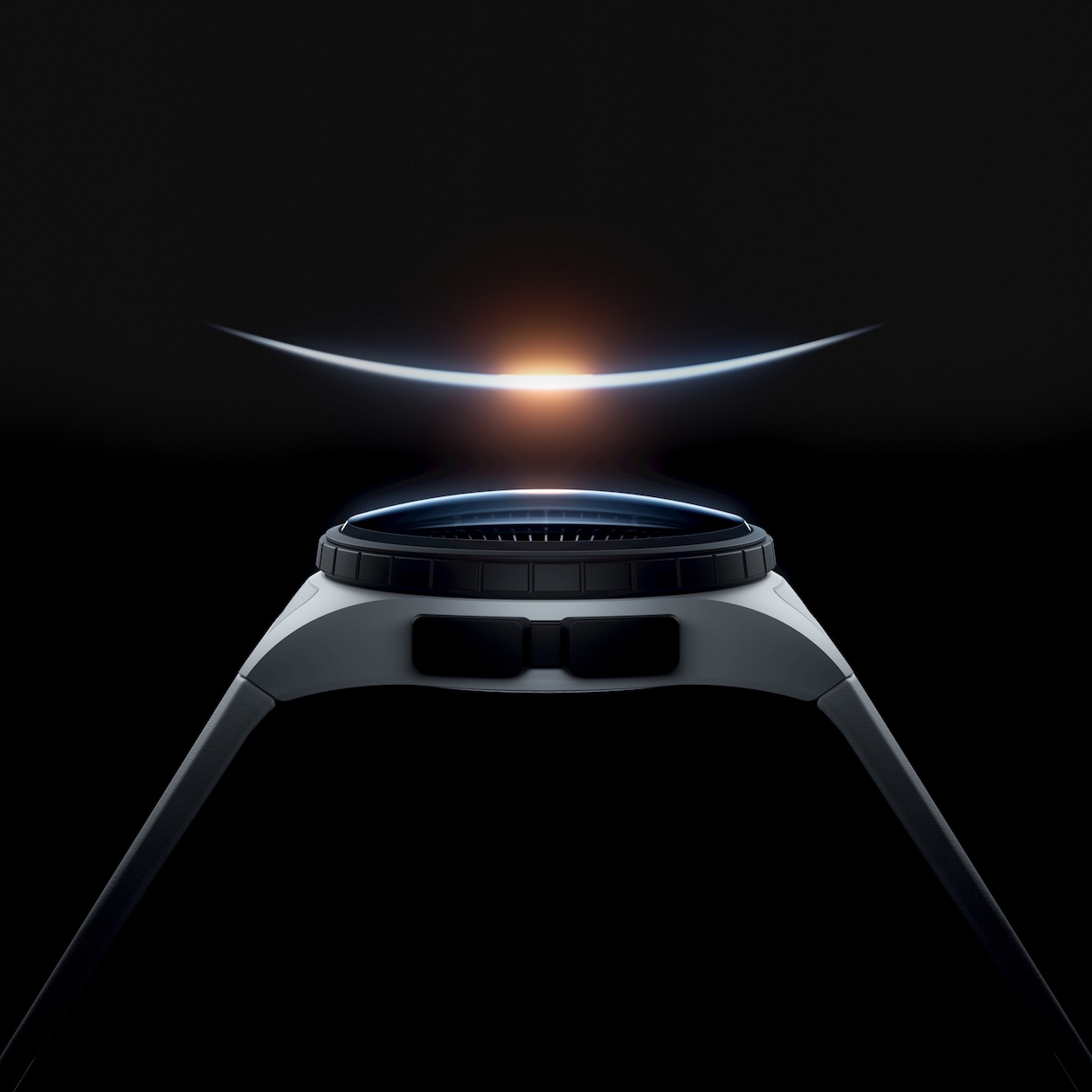
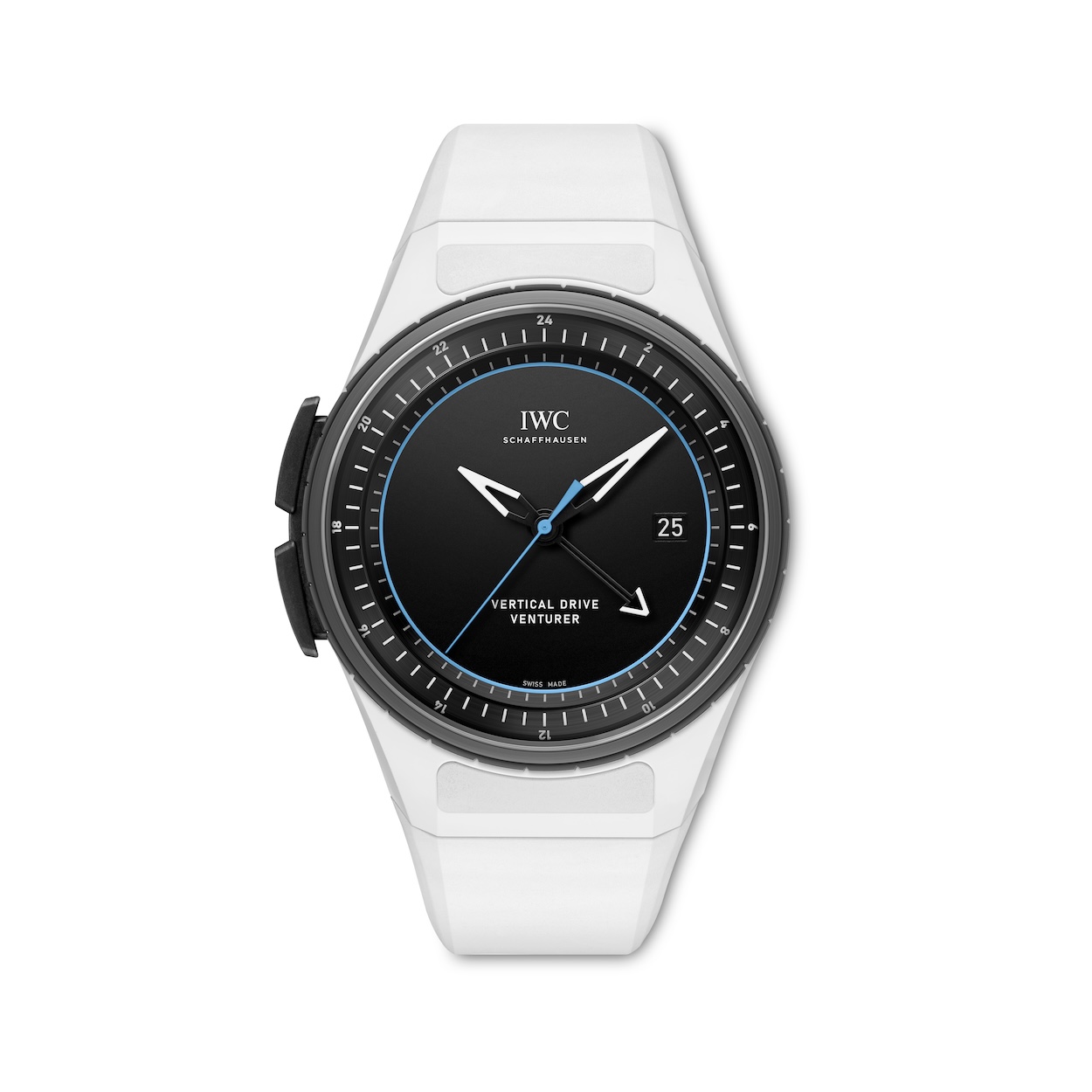
Today in Geneva, at the prestigious Watches and Wonders exposition, IWC Schaffhausen introduced its first-ever timepiece specially designed, engineered, and certified for human spaceflight. Composed of lightweight white zirconium oxide ceramic and proprietary Ceratanium, the futuristic tool watch—named the Pilot’s Venturer Vertical Drive—features a rotating bezel system that forgoes a crown. With a 24-hour display, its optimized, intentional design language enhances legibility and functionality.
In the control room of aerospace organization Vast, which is currently building the world’s first commercial space station, known as Haven-1 (which it intends to launch in the first quarter of 2027), Surface had an early introduction to the Pilot’s Venturer Vertical Drive. It was with Vast that the wristwatch, large enough to be worn over a spacesuit and operated while wearing gloves, underwent the rigorous testing necessary to make it flight-ready.
Courtesy of IWC…
“In spaceflight, there’s the concept of hardware qualification,” Kris Young, Chief Operating Officer at Vast, tells Surface. “Before you fly, you want to prove you’re capable of flying. What we care about is exposing all of our hardware to environments that are more stressing than what we’ll actually see in flight. That’s the only way we can guarantee that it will perform properly.” For the collaboration, Vast put the Pilot’s Venturer Vertical Drive through vibration testing, thermal cycling, static loads, and exposure to different atmospheric pressures.
In September 2025, it was first announced that IWC would be the official timekeeper for Vast. Young affirms the gravity of such a partnership. “Time is the most important resource in everything we do,” he explains. “That doesn’t start the day of launch. It starts in the days, weeks, and months prior. As the chief operating officer, I am responsible for executing this very audacious goal we have in front of ourselves—designing our space station, building it on time, getting it through the test campaign, bringing it down to the launch site, and, of course, launching it. For this, time is managed on a second-by-second basis.” Of course, timekeeping is also essential in space for both accuracy and redundancy reasons.
Courtesy of IWC…
Young—who spent 14 years at SpaceX across engineering, integration, and mission operations, and who led the engineering, full-scale integration, and testing of the SpaceX Dragon spacecraft—views both the watch and the space station as the sum of successes that went into their development. “Having launched a lot of rockets before, there’s always that moment where you are sitting on the console and the time is counting down to lift off,” he says. “It’s a quintessential moment. You are nervous. You start to feel like your heart is beating faster. But the reality is, success on launch day is the product of all the days that led up to it. It’s all the teams putting in good work and applying the excellence necessary to be safe every day.”
Courtesy of IWC…
A shared vision and a set of values link the Pilot’s Venturer Vertical Drive and Vast. “We don’t just design and build things,” Young continues. “We bring along humanity. What I care about is opening up access to space and inspiring the next generation of astronauts.” For Vast, human-centric design is vital to this. “I’ve seen previous space station designs that work. They function. But they are not optimal for people. When I think about how we improve access to space, how we get better results from scientific discovery and space manufacturing, we’ve got to do what’s best for the people who are working and living there every day.”
This sentiment is furthered by Hillary Coe, Chief Design and Marketing Officer at Vast, who previously helmed visual strategies for SpaceX’s human spaceflight for NASA’s Commercial Crew program. “It’s been scientifically proven that connecting people to natural environments—like gathering at a communal table to eat and having natural wood grains, or the circadian rhythm in the light cycles on the station—makes us feel comfortable and safe,” she tells Surface. Coe sees this sense of designing for feeling as a way of tethering space travelers back to Earth, and as a way of furthering their capabilities.
Courtesy of IWC…
Evident in the designs for both the Pilot’s Venturer Vertical Drive and Haven-1 is a language that bridges science fiction and scientific fact. “Sometimes it’s easy to latch onto,” Coe explains. “I love that science fiction has informed so much of what aerospace has done and continues to do.” But, she adds, “I think it’s more about looking beyond the dystopian narratives, the tension that needs to happen when you are writing a film or a book, and ask ‘what is the future of humanity that we all want to see exist in space?’ That’s at the core of our design ethos.”
The Pilot’s Venturer Vertical Drive is a departure from previous aerospace watches in the IWC repertoire, like those from the Inspiration4 and Polaris Dawn human spaceflight missions, which were terrestrial watch adaptations. Here, “IWC did not just take an aviator’s watch and say, ‘how do we edit this, or morph this into something that can be used in space?’ They really took the approach from the ground up and asked, ‘what are the problems that this design can solve?’” Coe says. Though aesthetically and technologically futuristic, the Pilot’s Venturer Vertical Drive’s pared-back design is grounded in necessity.
Courtesy of IWC…
“I’ve worked in this industry for quite some time, and especially on this commercial space station, I’ve come to realize and appreciate just how important the science and the research is,” Coe says. “That’s not necessarily something that designers always want to hear but it’s true. The kind of benefit that designing for space allows, the democratization of space, is that if I can design a space station that is useful for anyone—a scientist, a researcher, the average person—and they can be comfortable and feel like they can tackle a mission at hand, there is a greater benefit to life on Earth and our future in space.”
Both Coe and Young return to the idea of Vast as a place that produces inspiration in addition to spacecraft. IWC’s Pilot’s Venturer Vertical Drive channels this methodology. “It embodies our vision of a modern space watch and carries IWC’s tool watch legacy into the 21st century,” says Christian Knoop, Creative Director at IWC Schaffhausen. And thanks to Vast’s stamp of technical approval, it will soon venture where few have gone before.