A moment unmoored from place and time, French-born, NYC-based artist and designer Sébastien Léon’s “Inca City” exhibition would be equally at home in an archaeological display on a distant world as it is on the gallery floor of Ralph Pucci New York. Within the presentation, Léon balances function with experimentation, often disguising elements or materials through future-forward processes. Each of the pieces were developed during his residency in Ralph Pucci’s sculpture studio, an incubator for technical experimentation, and most were produced on site.
Sébastien Léon’s Inimitable “Inca City” Exhibition
The French-born, NYC-based artist and designer developed an experimental collection through his residency in Ralph Pucci’s sculpture studio
By David Graver May 14, 2026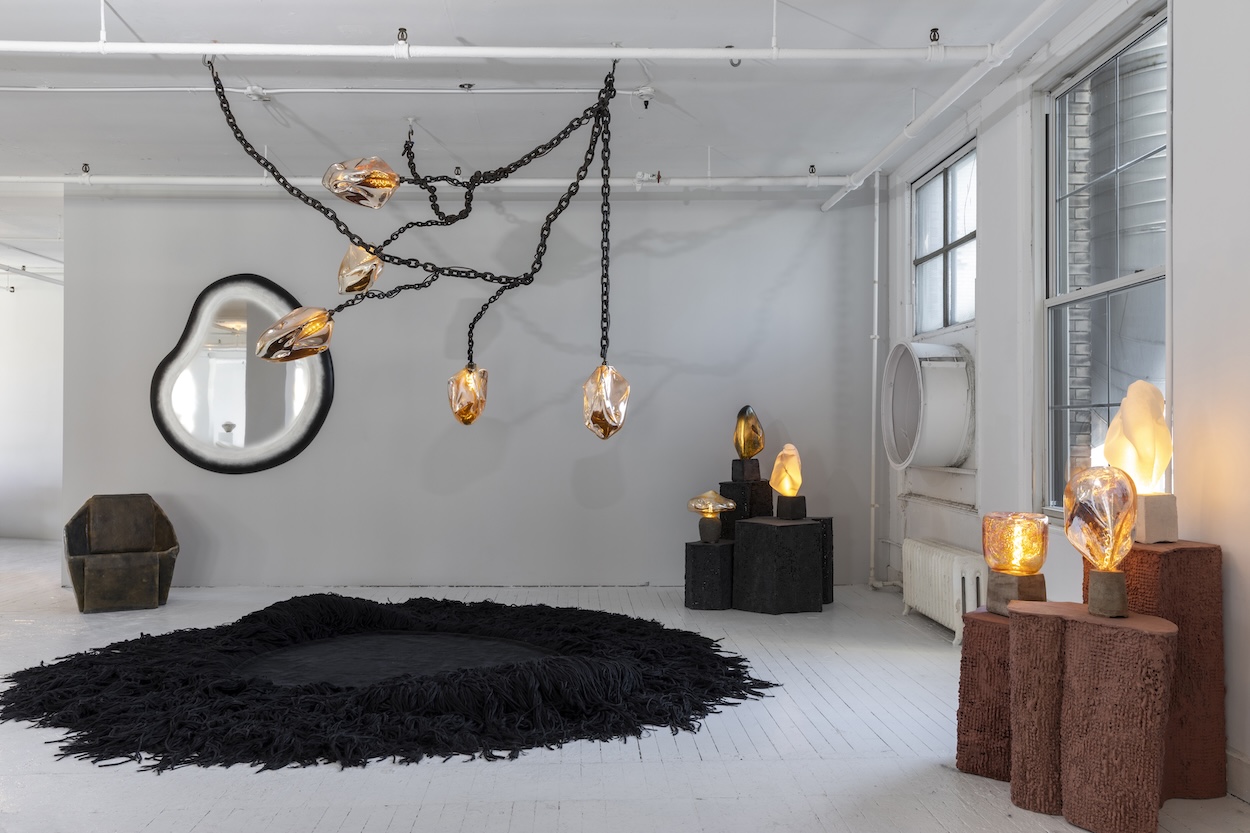
Photo courtesy of Ralph Pucci
…
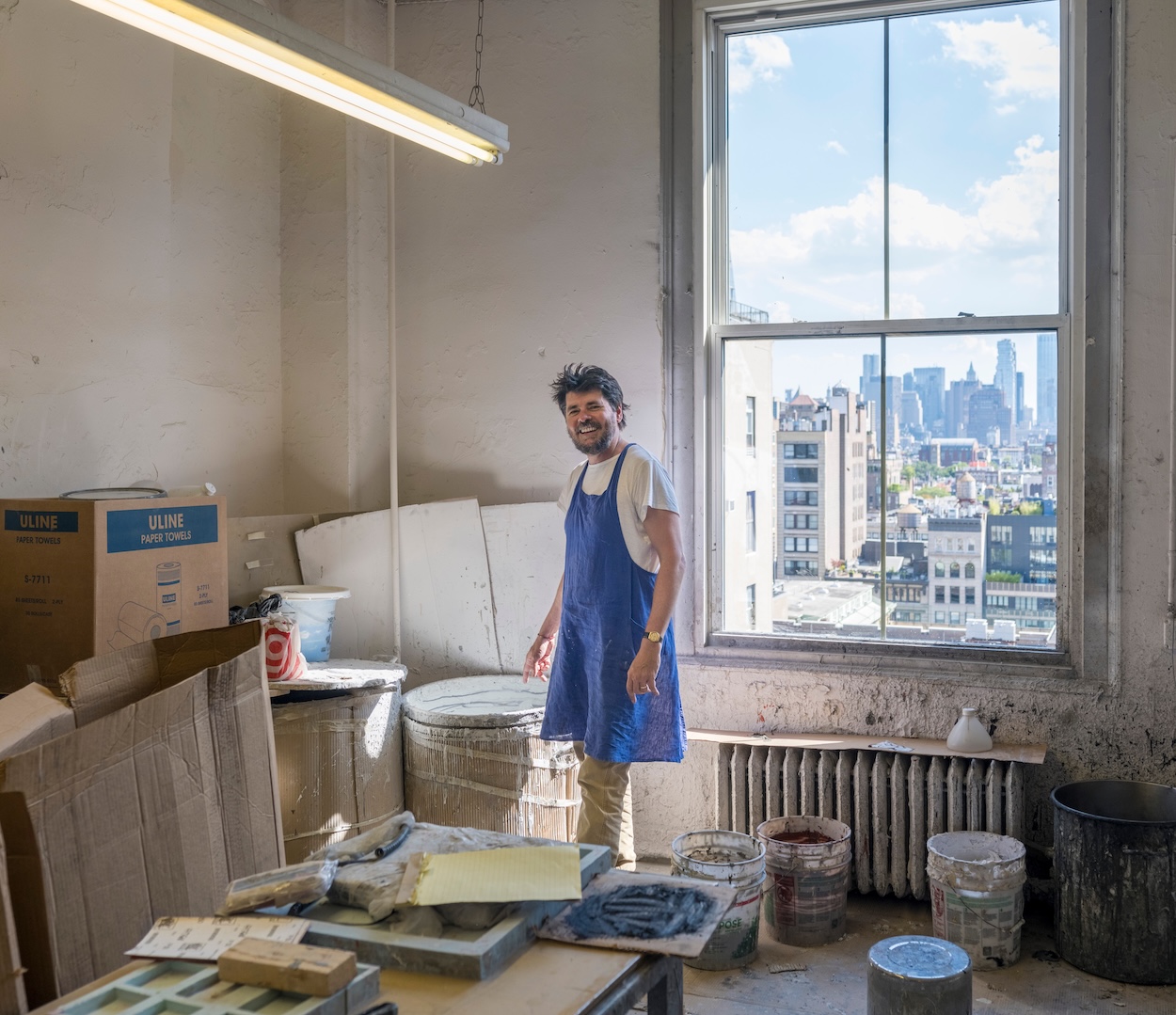
Image courtesy of Lev Rukhin
…
“I do not come from the world of furniture design. I do not know the codes behind how everything is made,” Léon tells Surface from the floor of the exhibition, which is set to an otherworldly soundscape. This offered a position of creative liberation. “I approach everything like a sculpture,” he adds. “My language is all about experimentation. I’ve been lucky to be surrounded by all of the artisans in Ralph’s studio to help me explore materials.”
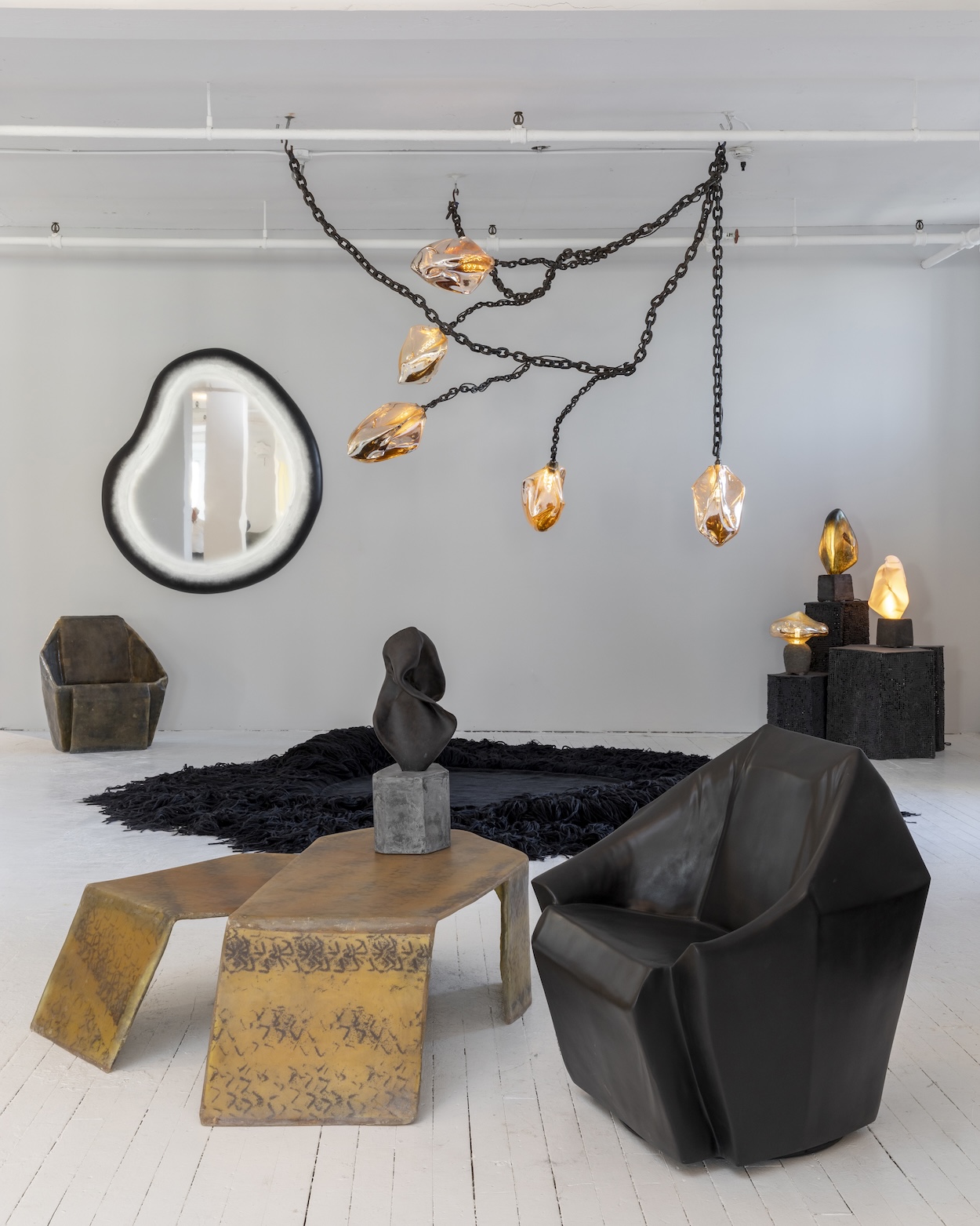
Photo courtesy of Ralph Pucci
…
“The whole atmosphere of my aesthetic is very science fiction. It’s very extraplanetary,” Léon continues. This is made evident through the collision of aesthetics and actuality. For example, the sofa collection, Codex, is composed of hand-painted cardboard that’s been coated in fiberglass. Léon’s Plasterglass Chairs are hand-sculpted to evoke the look and feel of stretched leather. The marble-like Mirage collection is actually composed of glass. Léon spent two years developing these design works, which harmonize throughout the exhibition.
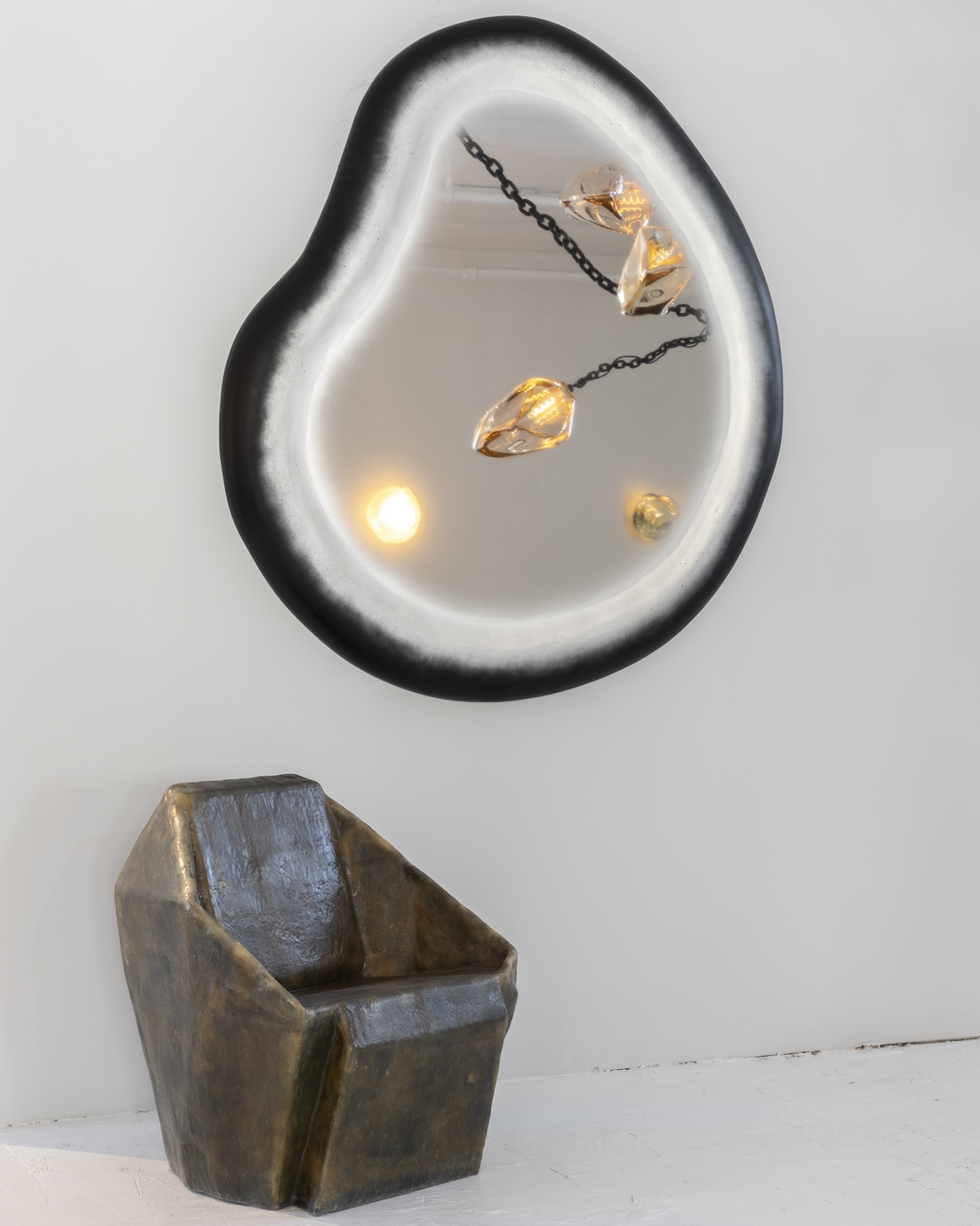
Photo courtesy of Ralph Pucci
…
A conceptual and material standout, the Ouroboros collection encompasses three handwoven Nepalese rugscapes, developed in collaboration with Carini Lang carpets. “Each is a rug with cushions,” Léon explains of the lounge-like combination, which seems to sink through the floor. “We design the center. The fringes are in wool. It takes four months to make one.”
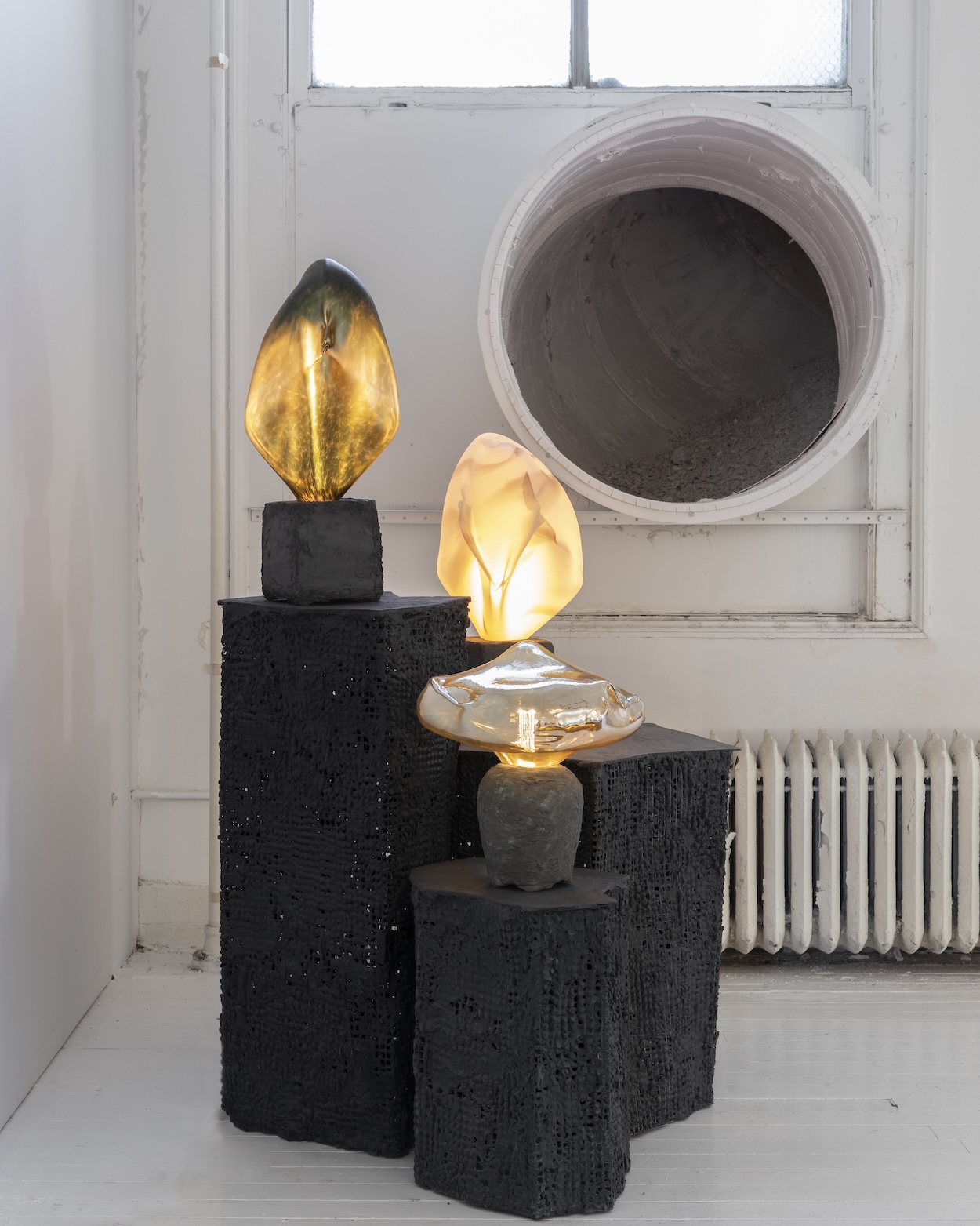
Photo courtesy of Ralph Pucci
…
“I started working with Ralph Pucci International more than two years ago,” Léon continues, touring Surface through Ralph Pucci’s workshop and sculpture studio near Union Square in Manhattan. “First, they represented my silver glass tabletop pieces, and then shortly after a show, Ralph and [his son] Michael were like, ‘you have to come and work in our studio. We have so much going on. You could develop things with us.’”
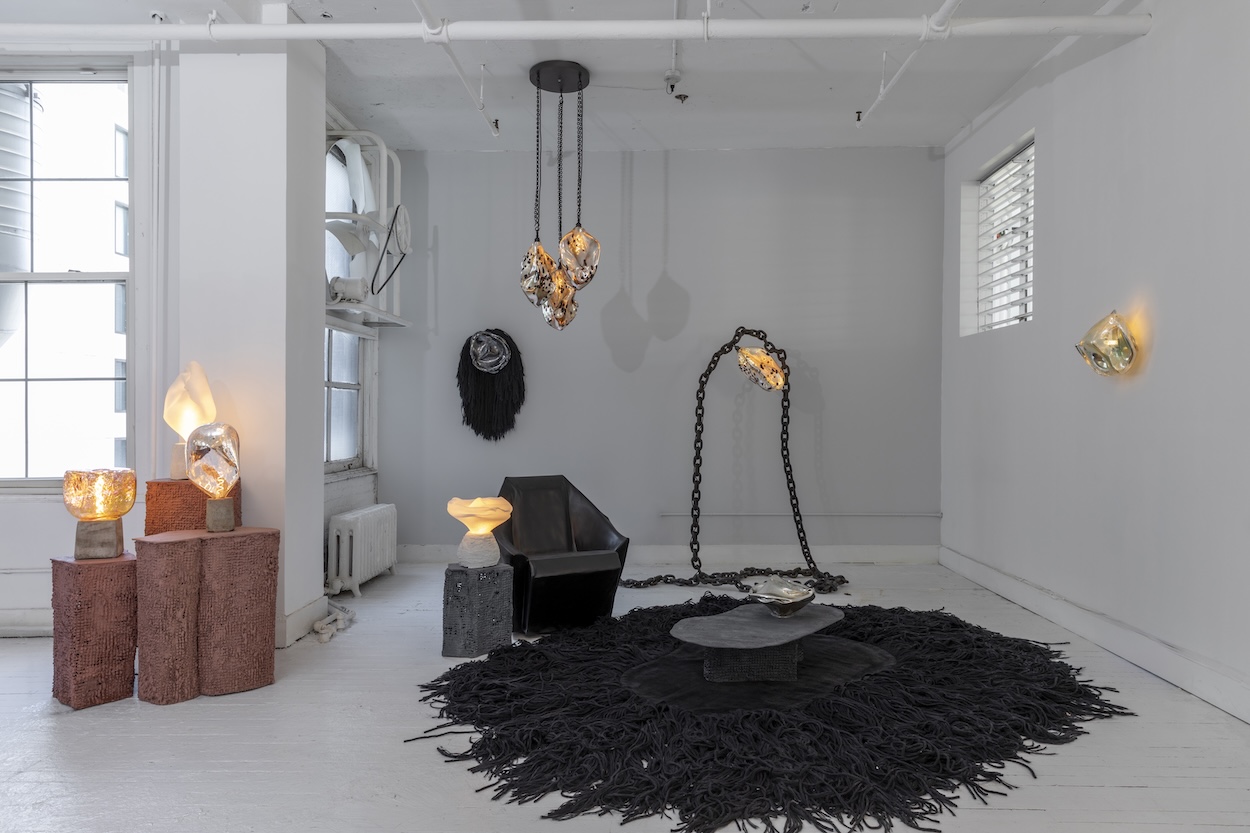
Photo courtesy of Ralph Pucci
…
Suspended several floors up, flush with an abundance of natural light and quiet in the afternoon (after some of the early-morning fabricators left), the workshop holds Léon’s molds. It’s here that he explores shapes in clay in one corner, and then casts them in various materials in another. There’s even a sanding and finishing station. Léon devised and perfected many techniques here, including a process of pushing resin through metal wire mesh.
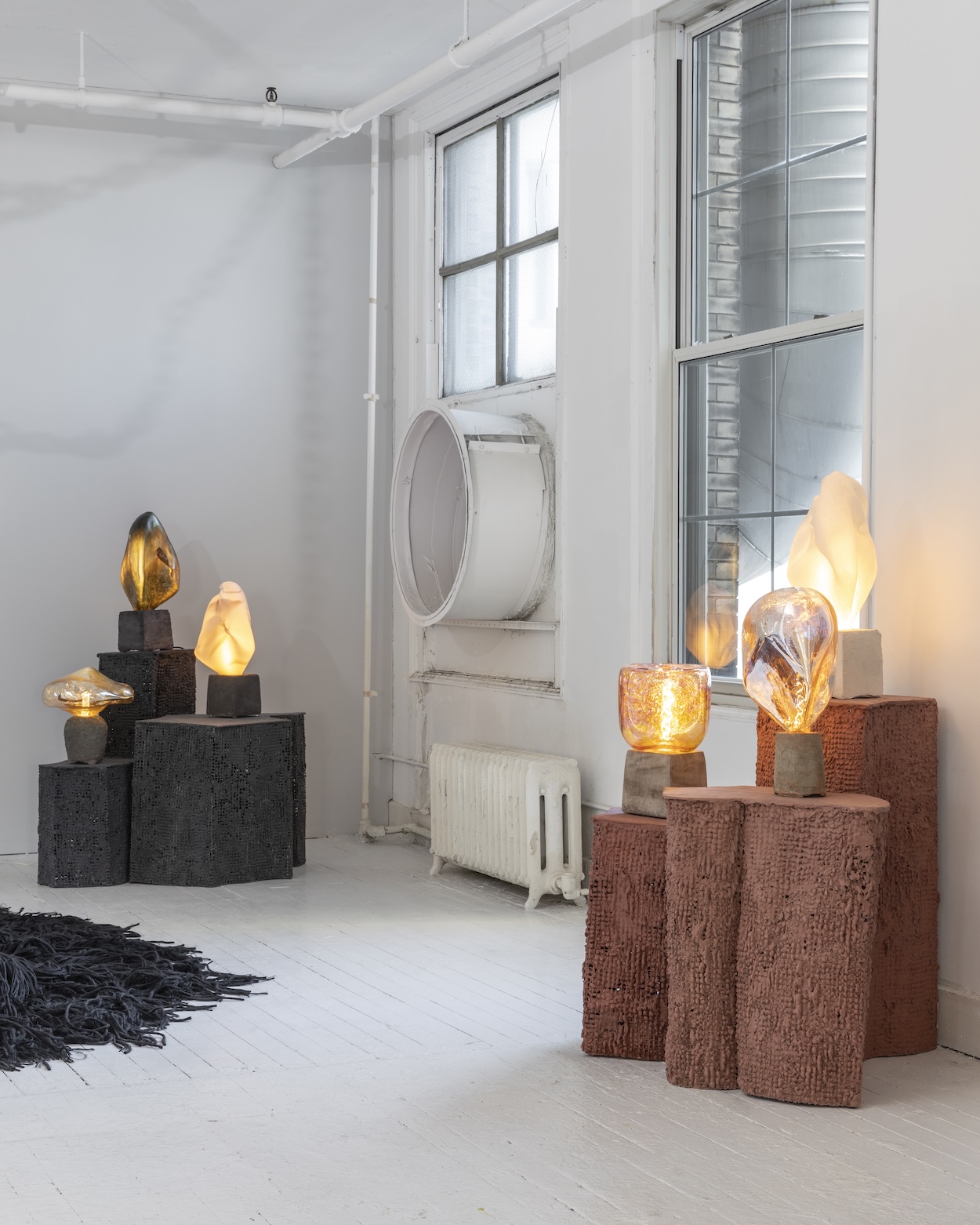
Photo courtesy of Ralph Pucci
…
“A designer has to be original—has to have an original voice,” Pucci tells Surface. “We knew we had something with Sébastien. He pushed to see where the process and materials could go.” From his serpentine Sapera sculptures of welded chain and blown glass to his Memento cast-metal mirrors, everything plays with perception—and together presents a vision of a speculative civilization excavated entirely by the designer.