Image by Clément Pascal. Artwork by Justin Bradshaw.…
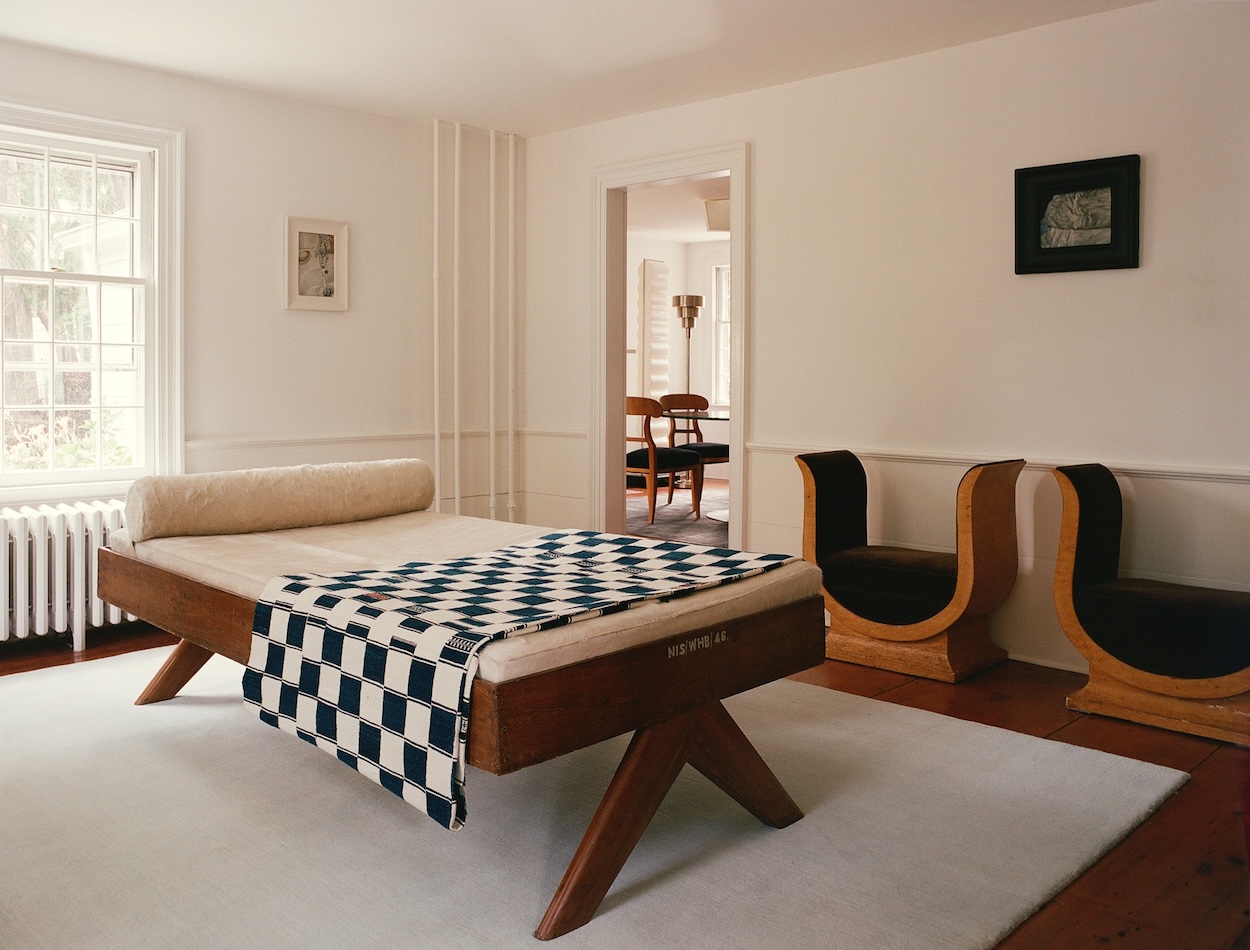
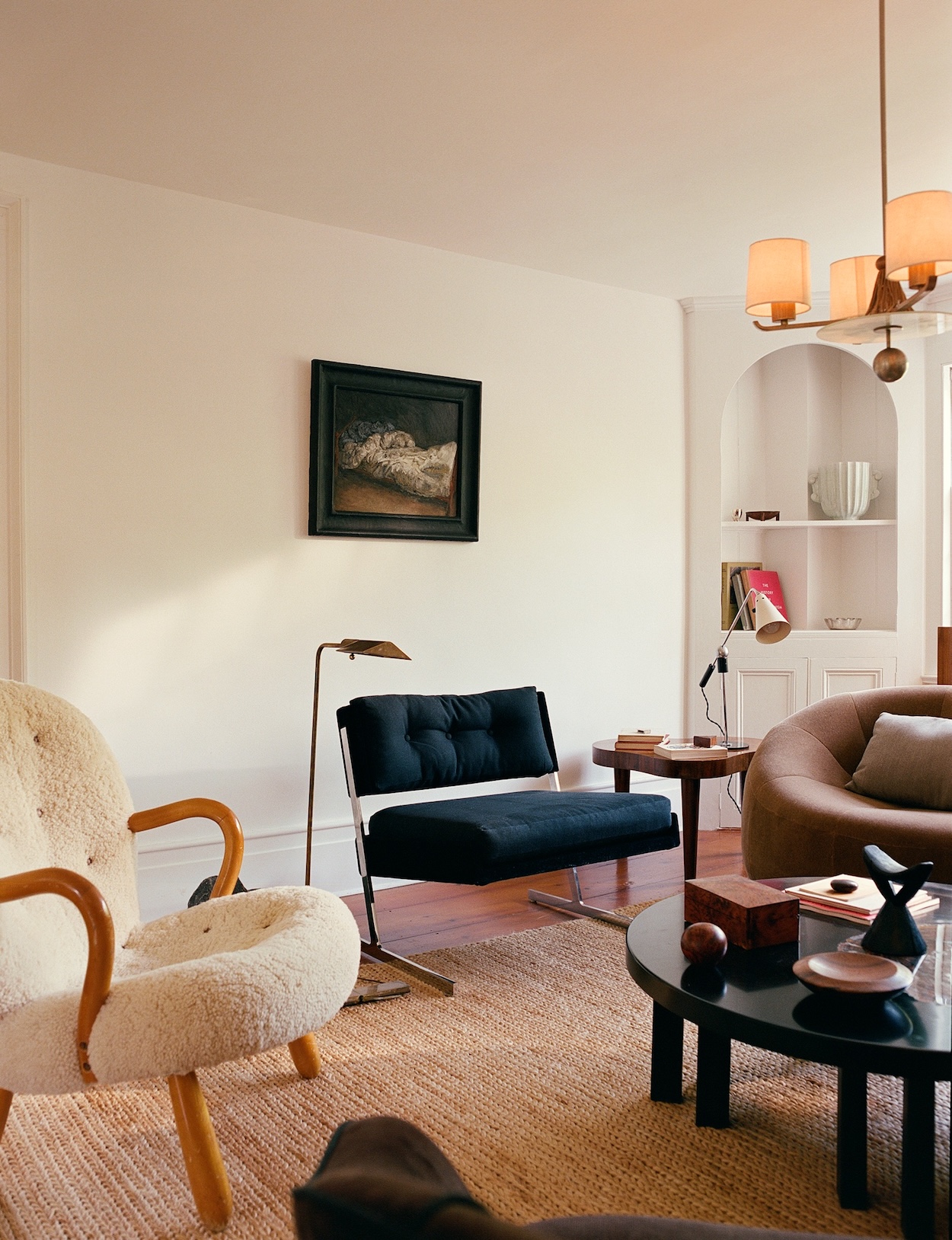
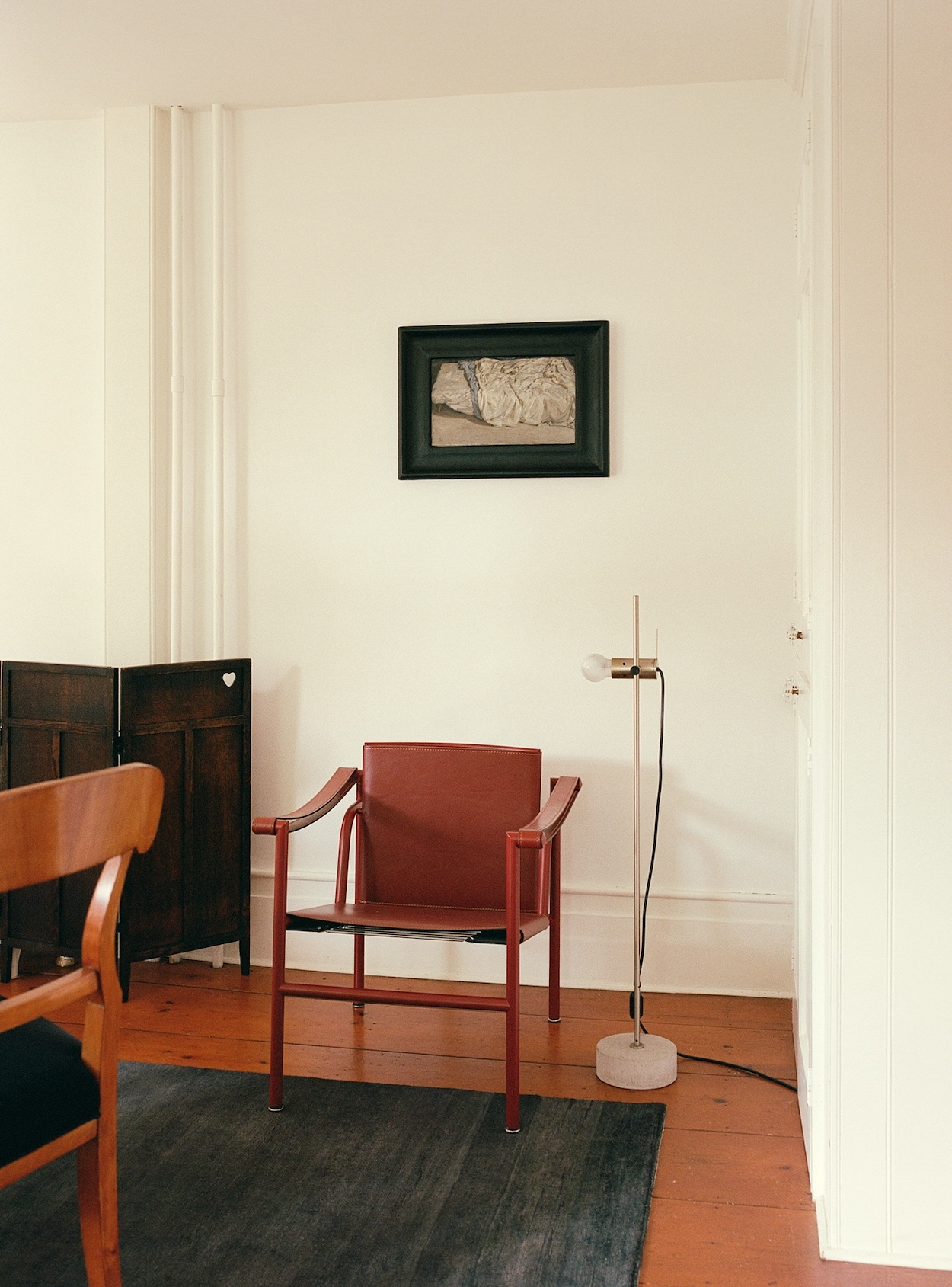
Galerie Sardine’s seasonal Amagansett location, an 18th-century farmhouse, is awash in layers of history. This summer, under founder Valentina Akerman’s direction, the curatorial artist project space gains further patina through a partnership with Alan Eckstein of Somerset House, the gallery, staging, and interior design studio. Eckstein is furnishing the farmhouse with vintage and antique pieces pulled from Somerset House’s Long Island City showroom. The pairing is an extension of Galerie Sardine’s longstanding interest in art, architecture, object, and atmosphere, treating furniture as its own form of curation.
As the season unfolds, the interiors will shift alongside Galerie Sardine’s three-part exhibition program: “There, When,” bringing together New York-based artists Kritika Manchanda and Rafael Prieto; a pairing of ceramicist Jane Yang-D’Haene and painter Allan Gandhi; and a closing show of paintings by Susumu Kamijo alongside ceramics by married artists Sam and Erin Falls. Among the pieces Eckstein has chosen to anchor the space are a Pierre Jeanneret daybed, a Pierre Chapo tête-à-tête, a 1920s Poul Henningsen pendant for Louis Poulsen, and a 17th-century pre-Baroque Italian end table.
To gather insight on their creative process and how the collaboration came together, we sat down with Akerman and Eckstein.
Image by Clément Pascal. Artwork by Justin Bradshaw.…
How did you approach selecting objects to display in an 18th-century farmhouse?
Alan Eckstein: It started with an intentional dialogue between Valentina and I. This is her third summer in the space and she knows very well what works for her and her program. I knew that if Valentina had a strong reaction to something, it was worth trying. When I approach a space I always start with what I like, or in this case, what Valentina and I are both really into right now. From there, it’s all about making the puzzle work. Because the house is so rich in original 18th-century details, we wanted to layer in a more modernist foundation. For example, in the entrance/foyer we placed a Hans-Agne Jakobsson prototype that has this incredible ’70s shape. The interplay between the 18th-century floorboards and molding details, contrasted with the Martian-looking pendant, produces the feeling Valentina and I wanted from this space. However, we avoided letting modernism completely dominate the space.
This is Galerie Sardine’s third season in Amagansett, how does this residency build on or shift the space’s identity from previous summers?
Valentina Akerman: From the beginning, I wanted to build something that reflected the interests I have been cultivating for over thirty years. I knew I wanted to present painting, ceramics, and sculpture, but in a setting where they felt approachable, lived with, and genuinely part of everyday life. The traditional white cube has its own power, but it can also feel detached from the rhythms of living. Works are often suspended in spaces that are intentionally stripped of context. I wanted the opposite. I wanted people to sit, linger, have a cup of tea, and spend time with the work. I wanted the gallery to feel comfortable and beautiful—to have a sense of intimacy, warmth, to smell of incense.
Architecture, furniture, light, and objects have always been as important to me as the artworks themselves because they shape the way we experience them. Furniture and collectible design have therefore always been intrinsic to Galerie Sardine’s identity. This collaboration with Alan doesn’t represent a departure so much as a deepening of that vision, it allows us to curate the house with an even greater level of richness. It expands the conversation between art, design, architecture, and daily life exactly as I imagined.
Image by Clément Pascal. Artwork by Justin Bradshaw.…
How does Somerset House balance sourcing across such different traditions while keeping a cohesive point of view?
Eckstein: I source everything I’m attracted to without heavily filtering the process. We source every day from all around the world—it’s something of an addiction and as I gain more experience procuring pieces, the history develops and I understand more and more what works for me and Somerset House. I get to try things out, have fun with these pieces, and in turn find out what works for our aesthetic.
Is there a particular piece in this rotation you’re most excited about?
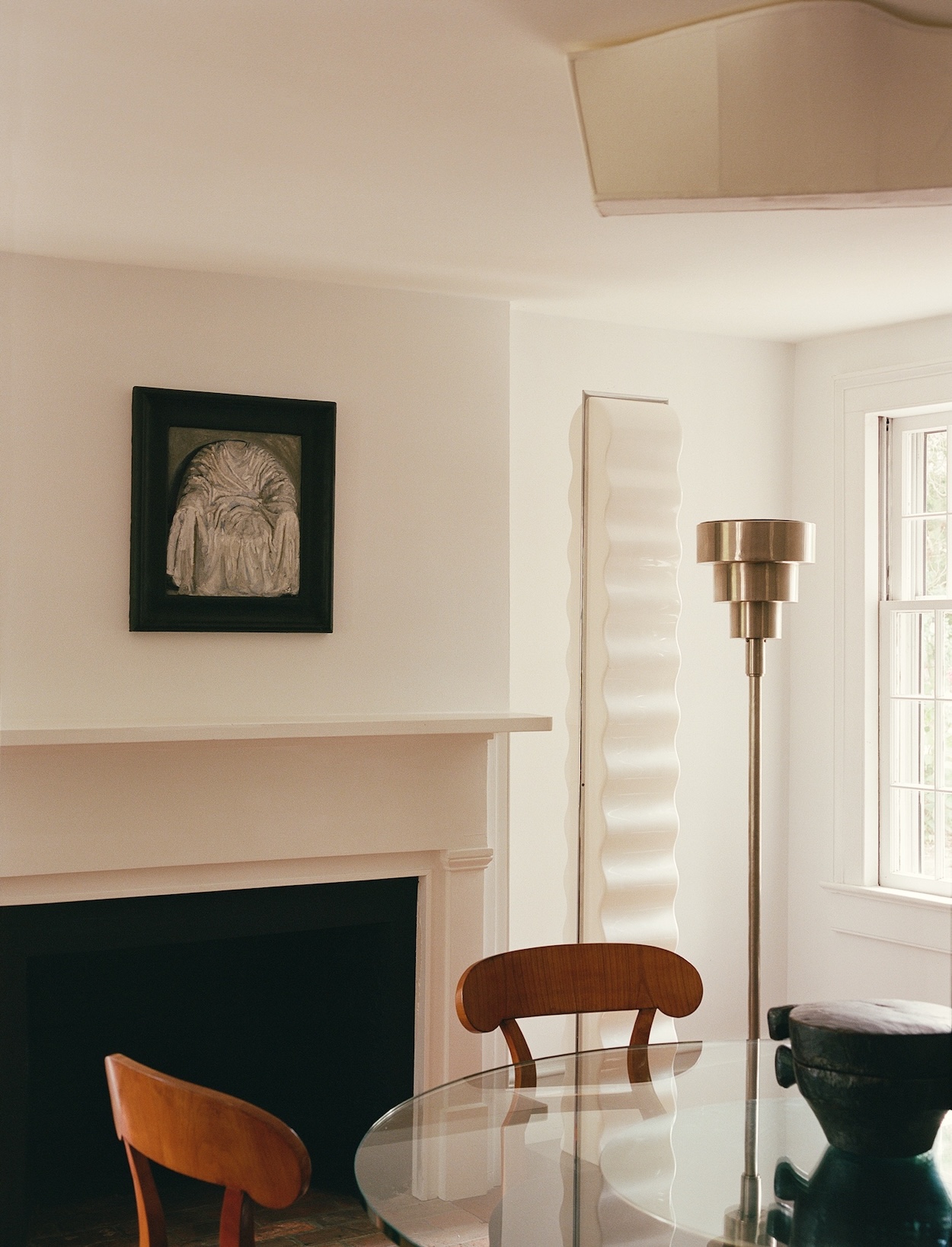
Eckstein: The Ettoree Sotsass “Cometa” floor lamp and a set of 4 Beidemeier “Shovel” dining chairs are highlights for me. The Cometa lamp is very tall—80.5 inches to be exact—and the ceiling height is not much more. The lamp takes over a corner in this house in the best way, producing a radiant warm light that signals you are in a curated but relaxed space. The house lacks much overhead light which is almost ideal, but a light source is necessary, and the lamp provides the only glow needed for the entire room. The Beidemeier dining chairs are simple, high craft and high quality chairs with modern lines, originating from the early 1800s. This set of chairs has a certain shiny cherry like hue that complements the house’s white walls. I find the chairs to be very understated-quiet luxury and always chic.
What specifically drew you to Somerset House’s collection as a complement to this season’s exhibitions?
Akerman: What drew me most to Somerset was the opportunity to build richer relationships between the artworks and the objects surrounding them. I have a very determined spirit when it comes to creating conversations within a space, and Alan has given me the freedom to curate different furniture and objects into each exhibition to heighten its atmosphere and deepen its narrative. We’ve already completed three entirely different furniture installations, and we’re only halfway through the summer! What has made the collaboration so rewarding is that it has remained wonderfully fluid. Alan has an extraordinary instinct for proportion and layering while I feel very fluent in composing exhibitions and creating an emotional rhythm through a space. Those instincts have proven remarkably complementary.
We speak constantly—on the phone, over video calls, through voice notes and many texts. There is a genuine ease to the dialogue. We also respond to feedback with complete trust. I joke that we became “married in friendship” almost immediately after we met, but there is truth in it. We are both deeply independent people who are perfectly comfortable working on our own, yet somehow our collaboration has felt entirely natural. It has made the work not only stronger but also more joyful and deeply fulfilling.
Image by Clément Pascal. Artwork by Justin Bradshaw.…
How do you decide which pieces rotate alongside each of the three exhibitions this season?
Eckstein: The way we decide which pieces rotate with each exhibition is very much based on the work itself—size, shape, colors, textures—and we work out from there. The exhibition comes first, and then we bring in the mentality of play to make the spaces come alive. As Valentina mentioned, we want the dialogue between the art and design to be fluid and fun.
What do you each hope visitors take away from experiencing art and objects together in this way
Akerman: More than anything, I hope people leave feeling moved. I want to create moments of genuine emotion and connection through beauty. I have always been intensely curious and deeply rigorous in my work, and the many interests I have cultivated over the years have all found a home in Galerie Sardine. Nothing exists in isolation for me, everything I bring into the project contributes to the experience of looking and feeling more fully. A truly aesthetic experience has immense power. It can slow us down, sharpen our attention, and remind us of what it means to be fully present.
We are an extraordinarily small team, yet through commitment, persistence, and immense care, we have been able to create exhibitions that feel generous, engaging, and deeply considered. Every detail matters because every detail shapes the experience. I hope people leave Sardine in delight and curiosity, with a renewed sense of how art can inhabit everyday life. But I also hope they feel compelled to support what they have experienced. Galleries like ours only exist because people choose to believe in artists and invest in their work. That support allows us to continue taking risks, creating ambitious exhibitions, and, most importantly, enabling artists to keep making the work that enriches our lives. I truly believe that great art makes being alive more meaningful, and everything we do at Galerie Sardine is in service of that belief.