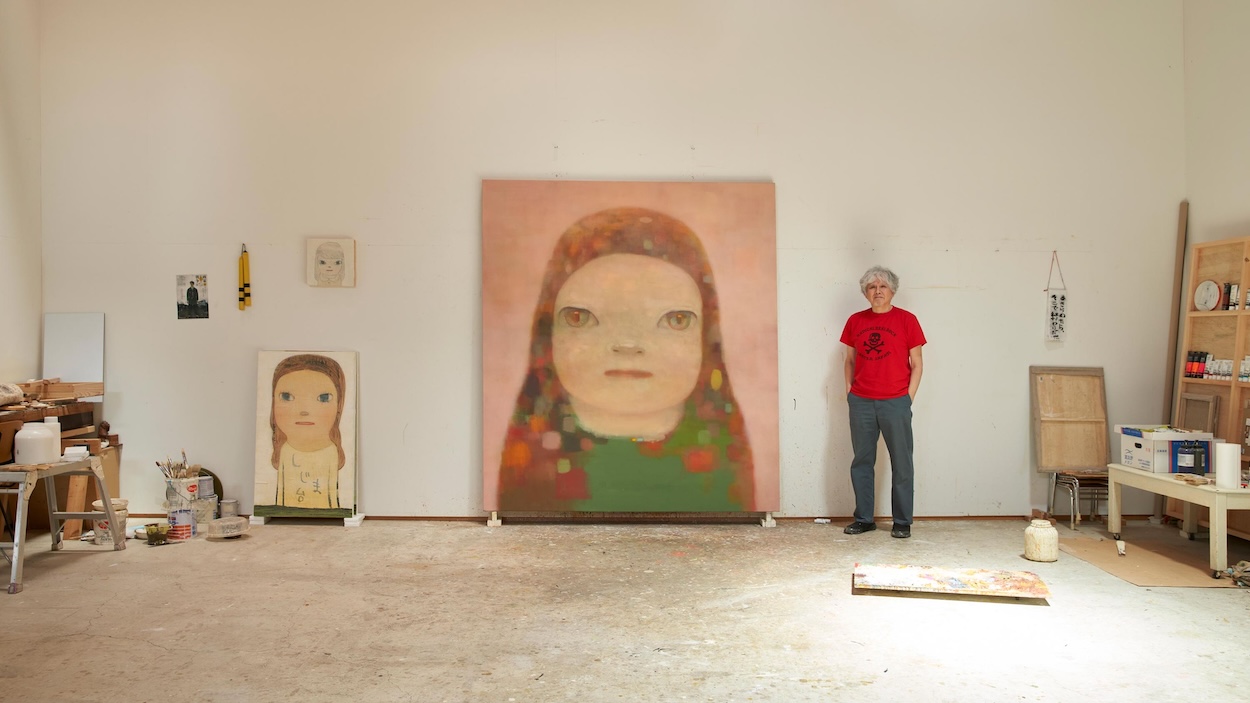
David Zwirner will host a Yoshitomo Nara exhibition across its two Chelsea locations.
Japanese artist Yoshitomo Nara will present his first solo exhibition with David Zwirner and his first major New York exhibition in nearly a decade when it opens across the gallery’s Chelsea locations on October 29, 2026. Spanning more than 40 years of practice, the exhibition will pair new paintings, monumental drawings, sculptures, and large-scale bronze works with early pieces selected by the artist, tracing the evolution of his distinctive visual language from the 1980s to today. The presentation coincides with the inauguration of David Zwirner’s Annual West Lawn Series, featuring three monumental white bronze sculptures based on Nara’s iconic clay heads, underscoring the artist’s enduring exploration of childhood, memory, vulnerability, and emotional complexity.
Frederik Berner Kühl has won Denmark’s largest fashion prize.
Danish menswear designer Frederik Berner Kühl has won the 2026 Wessel & Vett Fashion Prize, Denmark’s largest and Northern Europe’s leading independent fashion award, receiving €40,000 (DKK 300,000) to support the growth of his label after each of the four finalists was also awarded €10,000. Founded in 2019, Berner Kühl’s eponymous brand was recognized for its refined approach to Scandinavian minimalism, precision tailoring, and long-term commitment to craftsmanship, with the jury praising its clear design language and sustainable business vision. This year marked the first time the prize was presented during Copenhagen Fashion Week, with the jury also introducing a new selection process that included studio visits to each finalist, while previous winners have included Cecilie Bahnsen, Saks Potts, and Nicklas Skovgaard.
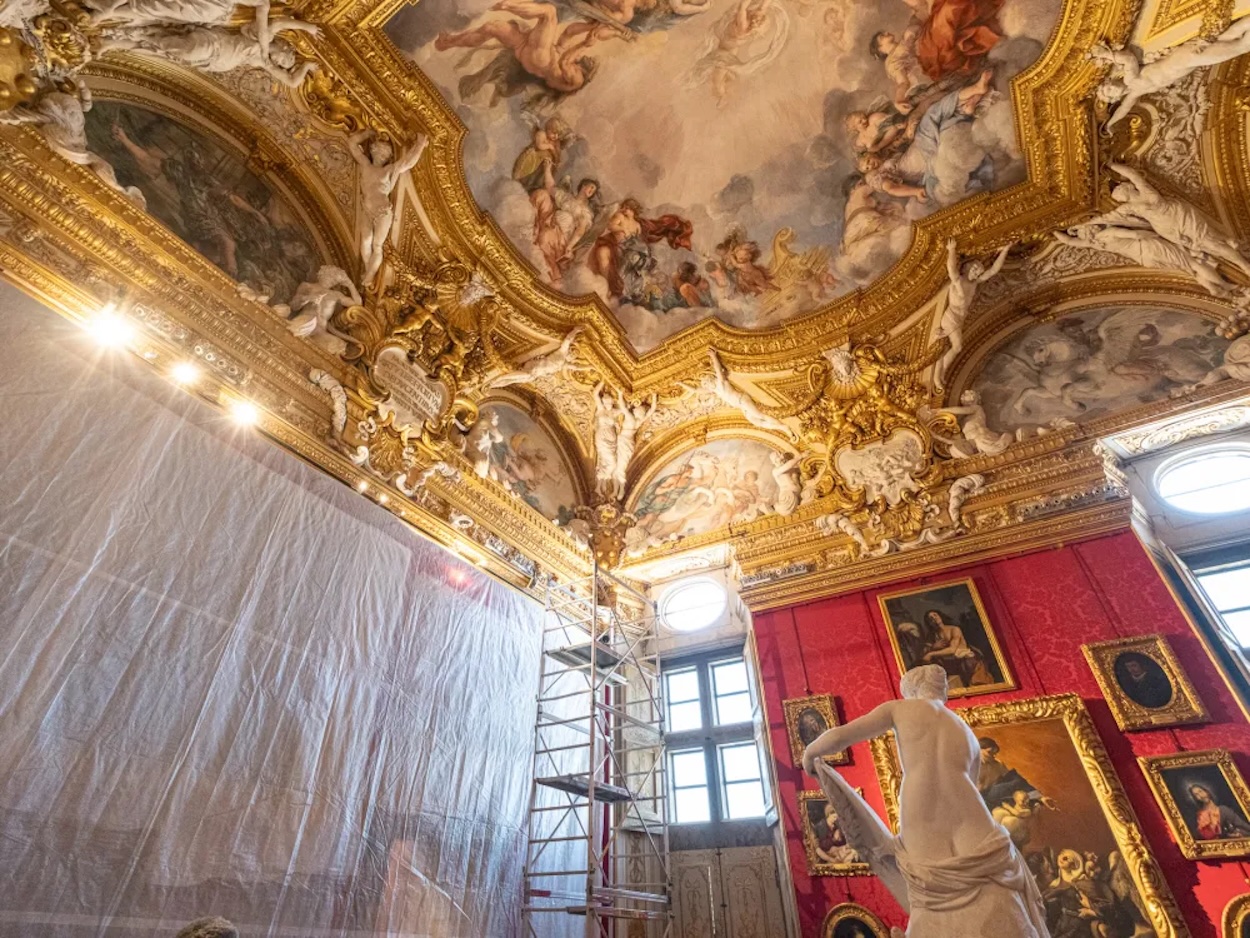
The Uffizi Galleries revealed the extent of its ongoing €50 million renovation.
The Uffizi Galleries have revealed the extent of a €50 million, two-year renovation program that will modernize Florence’s landmark museum while keeping it open to the public, marking the most ambitious phase of director Simone Verde’s broader overhaul of the institution. The project will upgrade galleries, visitor circulation, accessibility, climate control, lighting, and conservation infrastructure, while restoring historic spaces and creating new exhibition areas as part of a long-term effort to improve both the museum experience and the display of its collections. The renovations follow a series of recent transformations at the Uffizi—including the reopening of the Vasari Corridor and the redesigned Botticelli Rooms—and reflect the museum’s strategy of balancing preservation with contemporary museum standards for one of the world’s most visited cultural institutions.
Decoy Font makes use of an optical illusion to trick A.I. chatbots into misreading messages.
Developer and Mixfont founder Eric Lu has created Decoy Font, an experimental typeface that displays one message to human readers and a different, decoy message to A.I. image-recognition systems by embedding two overlapping letterforms within each character. Distributed as a standard TTF font, Decoy Font uses the optical principle of hybrid images—combining sharp, high-frequency outlines with blurred, low-frequency forms—so A.I. models such as ChatGPT and Gemini tend to read the foreground decoy text, while humans can reveal the intended message by stepping back or squinting. Lu describes the project as an exploration of typography, perception, and A.I. rather than a foolproof security tool, noting that more advanced vision models or targeted decoding techniques could eventually overcome the illusion, while suggesting potential applications in privacy, anti-scraping, CAPTCHAs, and A.I. benchmarking.
LiDAR analysis has revealed more than 20,000 monumental pre-colonial earthworks under the Amazon.
A new Nature study using airborne LiDAR has revealed that the pre-colonial Aquiry civilization occupied a far larger swath of the southwestern Amazon than previously understood, identifying evidence for more than 20,000 monumental earthworks hidden beneath the rainforest canopy across present-day Brazil, Bolivia, and Peru. Researchers documented 432 geometric ceremonial sites—including circles, squares, octagons, embankments, ditches, and road networks—across a 4,500-square-kilometer survey area, then combined the data with satellite imagery to estimate that the civilization extended across roughly 183,000 square kilometers and supported 1.25 to 3 million people between 100 and 300 CE. The findings challenge the long-held view of the Amazon as an untouched wilderness, suggesting instead that complex societies practiced sustainable agroforestry, cultivated crops such as maize and squash, and engineered large ceremonial and political gathering spaces while maintaining the rainforest ecosystem.
Attractive Distractions:
In A24’s Tony, costume designer Chloe Karmin offers a glimpse into the development of Anthony Bourdain’s signature style.
A rare Leonardo da Vinci work is now on view at the Met—and no one seems to be talking about it.
Instead, everyone is listening to the ‘80s hits on The Shards’ soundtrack.
In London, Ms. Lauryn Hill curated a Lauren Halsey commission.