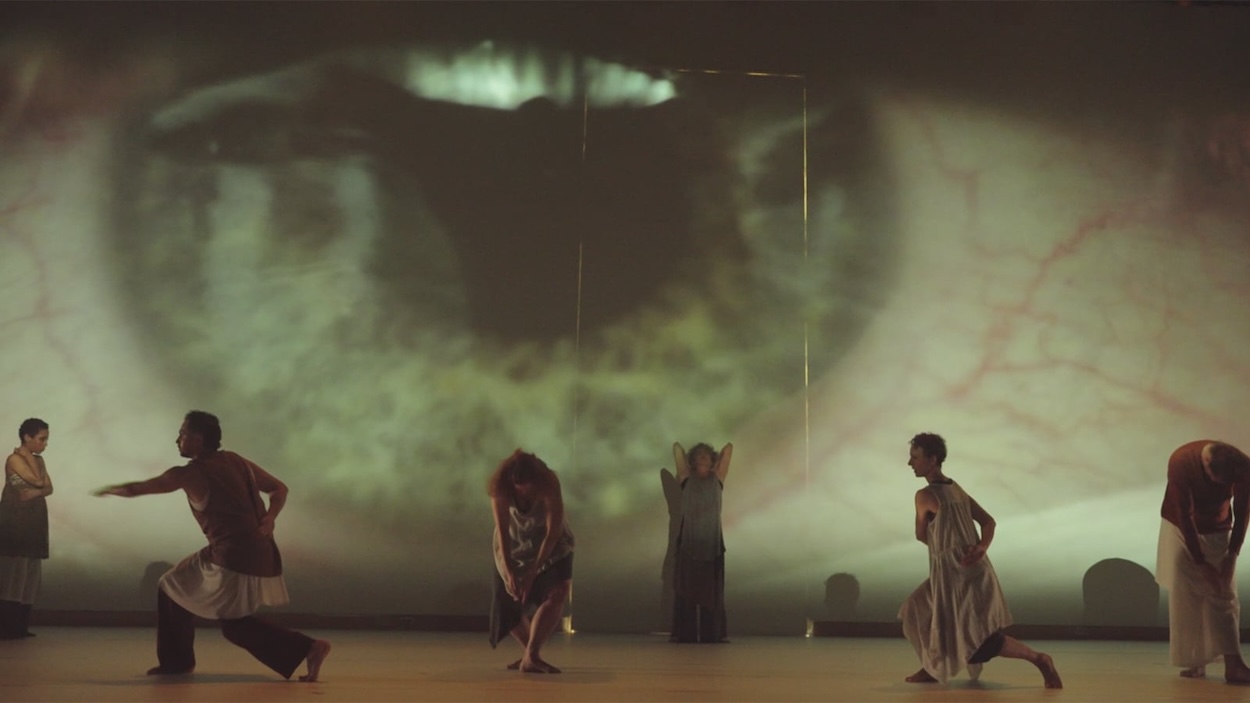
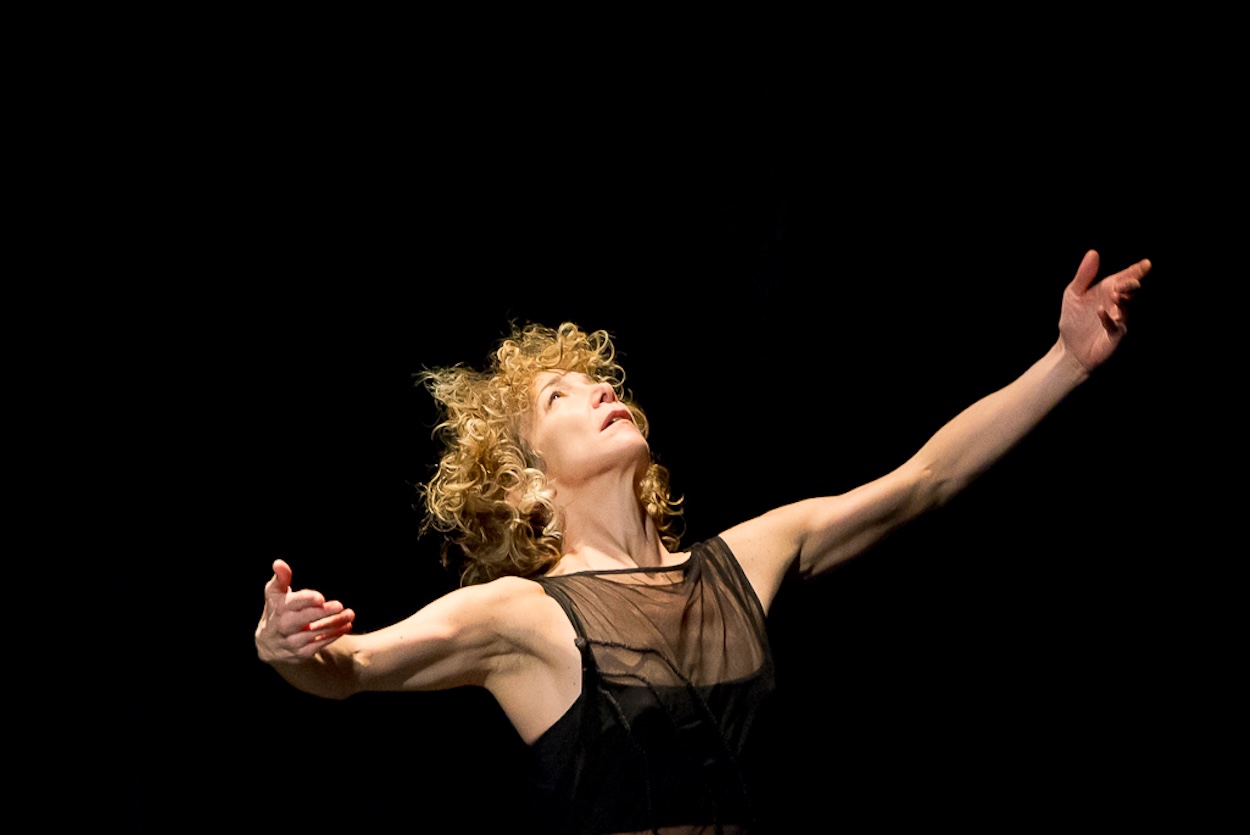
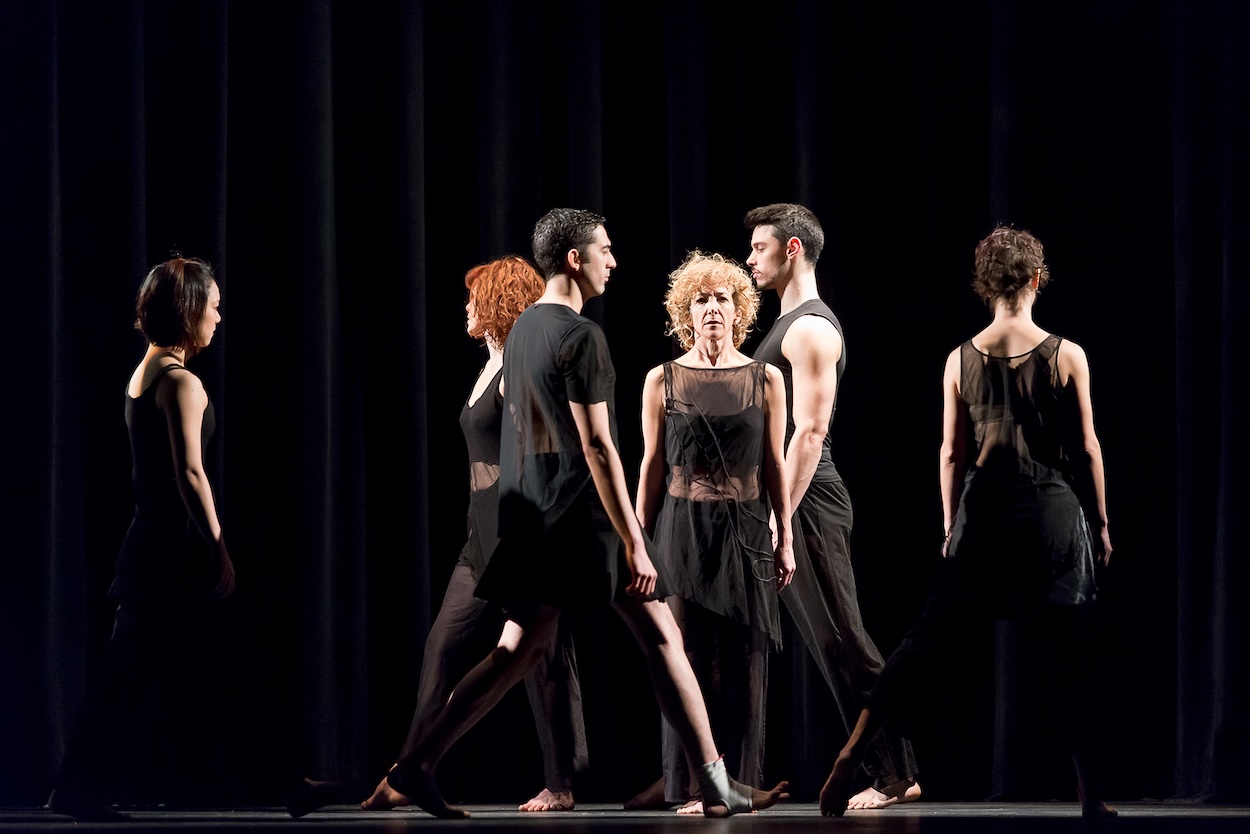
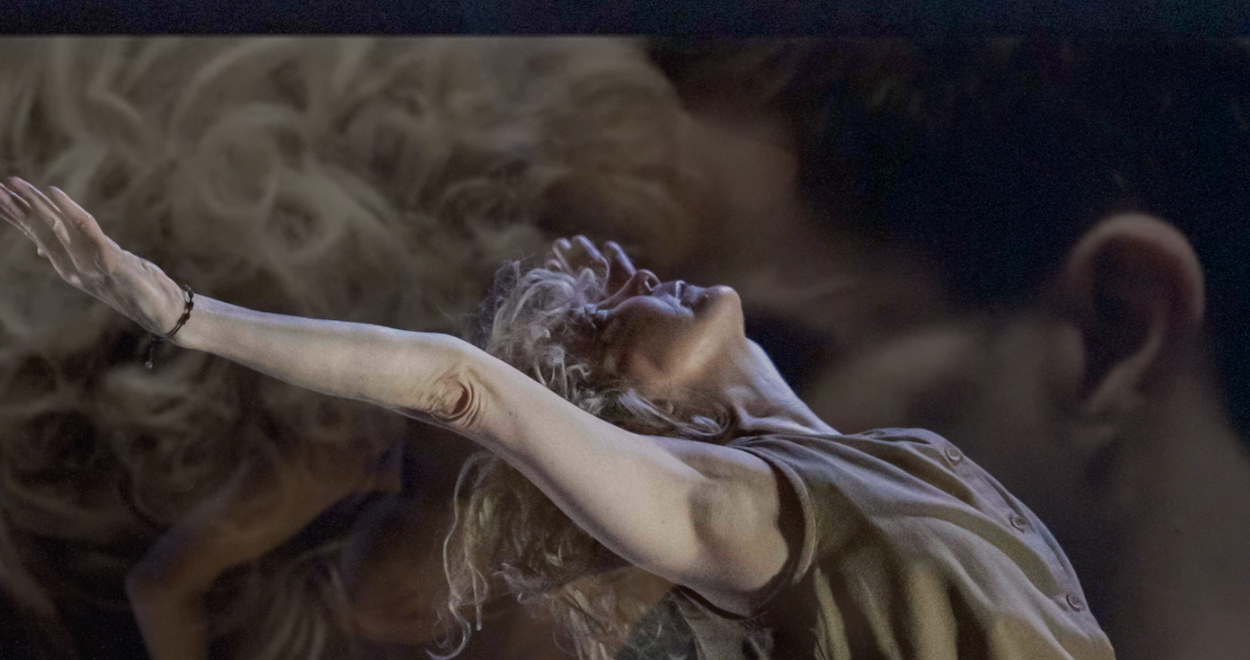
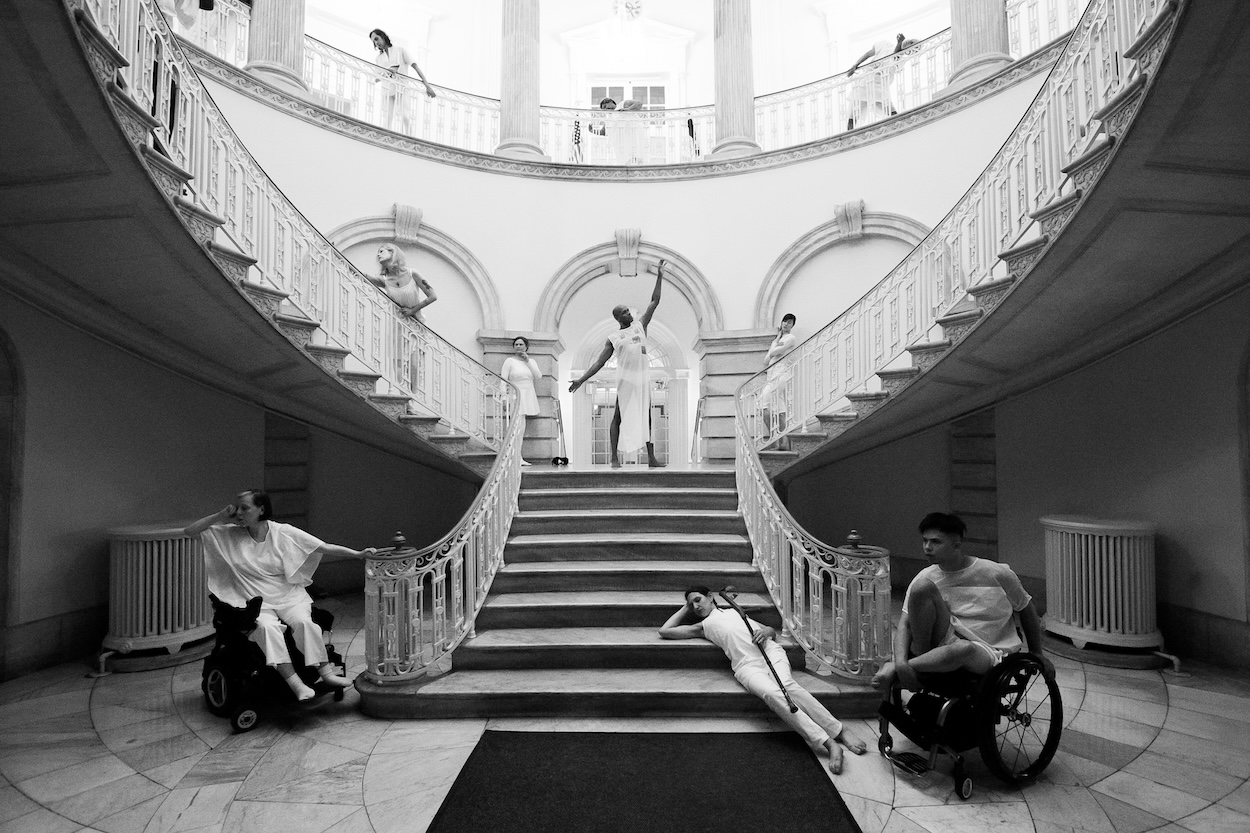
On January 9, 2027, Lincoln Center will host the world premiere of Heidi Latsky Dance’s Days of Awe. Company founder, artistic director, and choreographer Heidi Latsky will be joined by nine other dancers in the work, which expresses the beauty and complexity of disruption and upheaval. Presented as part of the Lincoln Center Contemporary Dance Festival, the stirring, striking piece is a Lincoln Center commission and the latest in Latsky’s body of transformative works.
Though it is not about her, there are parallels in the hour-long performance with what Latsky and her mother went through: the discovery of a brain tumor and the ensuing confrontation with a non-visible disability. “That was the genesis,” she tells Surface. “The fact that eight of us have non-apparent disabilities, that’s part of the backstory but it is not the piece. It makes the piece stronger because we all have identities outside of this.”
Image by Darial Sneed…
Originally, the piece was titled Tracking Parallel, a reference to the similarities with her mother. Following brain surgery, Latsky gathered dancers and asked them to perform old pieces from her repertoire. “I couldn’t dance, so I would sit in rehearsal and watch them,” she says. “Then I brought in people who had similar experiences to me.” Latsky wanted to hone in on this.
“I just started obsessing,” she continues. “I wanted to make a beautiful piece, with these people, and me, expressing upheaval but in an abstract way. The idea was that we are looking back to move forward. We are relentlessly going forward. None of us will stop.” The name change occurred when Latsky realized it was no longer just about her and her mother; it was about this surreal world and the emotions populating it and connecting us all.
Image by Darial Sneed…
Latsky designed the filmic backdrop, as well as the piece’s score. In the latter, she manipulated MRI sounds, not to medicalize the experience but to reference a sense of discovery and change. “It’s a non-linear narrative, an abstract collective experience,” she says. “I want attendees to be in their body and in their heart. It’s a slow burn. We took three years to make this piece. It’s not perfect and that’s OK. We all have scars. We’re all carrying our experiences. I am hoping that people will be moved. I hope that they let it wash over them.”
Latsky has almost always infused passion and personality into her work. Though, her earliest days were shrouded in shyness. After a move from Montreal to Ottowa, while studying psychology, she discovered disco. “I was very shy but when we were going to the clubs, I had a dance partner who was so good,” she says. “He would twirl me and dip me and throw me over his shoulder. Everyone would watch us. I couldn’t look at anyone but him.” This played into her favor. Judges mistook the shyness for love with her partner. They kept on winning.
Courtesy of Heidi Latsky Dance…
After university, Latsky decided to take a year off from academics and began to train in Montreal. Ultimately, Latsky got a scholarship at Les Ballets Jazz. “I was so flexible that people thought I had a lot of training but I didn’t,” she explains. Upon seeing the work of Twyla Tharp, she knew she needed to move to New York City. She auditioned and was denied, time and time again, except for a few episodes on the TV show “Fame.” That was, until she began to dance for Donald Byrd and Keith Young.
“Then I got into Bill T. Jones and Arnie Zane,” she says. “That was revelatory. They were socio-political. I didn’t know dance could be that. I wanted to save the world and here I was in this company that was doing all of this controversial work for a really good reason.” Latsky was part of the company both before and after Zane’s death. She watched the work rise in (and remain) significant. It was during this time she also transitioned from a shy person to, as she describes, “a loud mouth.”
Courtesy of Amro Arida…
“I learned from Arnie the beauty of stillness. I learned from Bill the virtuosity of movement and how that can be so impactful,” she says. “That’s what I’ve tried to carry on as a choreographer.” Before forming Heidi Latsky Dance in 2001, she collaborated with Lawrence Goldhuber. Then, she took time to find her voice. “It took years of experimenting and making very weird work. Then I didn’t want to make weird work anymore. My next huge transition was into disability,” she says.
When her mother died in 2004, Latsky made a piece called Disjointed and partnered with brain tumor organizations in the process. Around that time met Lisa Bufano, a visual artist and bilateral amputee. Latsky choreographed a solo for her. “I started asking the community how I could contribute,” she says.
With The Gimp Project, an integrated contemporary dance piece choreographed for four professional dancers and four dancers with physical disabilities, Latsky drew widespread critical acclaim. And found a platform with Lincoln Center, as well. On Display, a site-specific human sculpture exhibit is another ongoing project. Now, with Days of Awe, Latsky will continue to push artistic traditions.