Artist Statement

Artist Rina Banerjee Turns History Into Multisensorial Assemblages

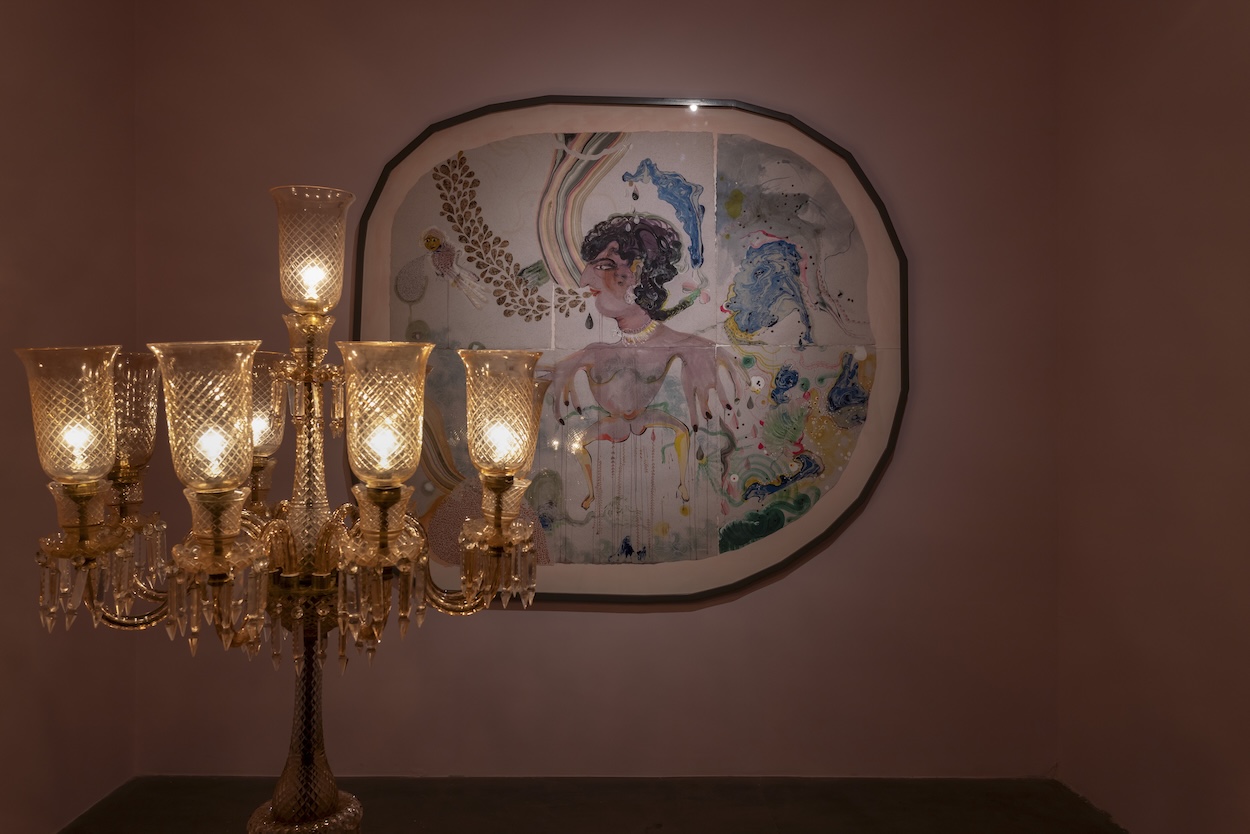
One of Rina Banerjee’s latest pieces, “Discriminating taste, hallucinations of the tongue” depicts a figure that speaks, thinks, and feels all at once. For the artist, being alive means a constant exchange with other people and with nature, a state of connection and transformation rather than isolation. That sense runs throughout Banerjee’s practice, wherein she builds her works from found objects and interrogates colonialism’s lasting effects on immigration, race, and gender, often centering women and marginalized communities.

"Discriminating taste, hallucinations of the tongue" by Rina Banerjee. Image courtesy of the artist and Vadehra Art Gallery. …

Bio: Rina Banerjee is a multimedia artist who often combines found objects into complex, multisensorial assemblages. Born in Kolkata, India, she lived briefly in Manchester and London before immigrating to New York where she has lived and worked since the 1960s. Banerjee earned a degree in polymer engineering from Case Western University in 1993 and an MFA from Yale University in 1995. She has participated in 14 biennials around the world, including the 55th and 57th Venice Biennale. In addition to the widely celebrated mid-career retrospective, Banerjee’s work has also been included in important group exhibitions, including at the Centre Pompidou, National Taiwan Museum of Fine Arts, Kiran Nadar Museum of Art, Whitney Museum of American Art, and Metropolitan Museum of Art, among others.

Title of work: Discriminating taste, hallucinations of the tongue

Where to see it: At Vadehra Art Gallery in New Delhi, on view until November 18

Three words to describe this work:  Awake, aware, searching.

What was on your mind at the time: A body that leaks, speaks, thinks, and feels, all at once. Thinking and feeling are intertwined. Women have often been told to ignore their feelings, even though these are an essential part of how we experience and understand life. We are not separate from the world around us. Our bodies, minds, and emotions are connected to other people and to nature. To be alive is to be in a constant exchange with the world, giving and receiving, changing and being changed. We are not made for isolation or a static existence, but for connection and continual transformation.
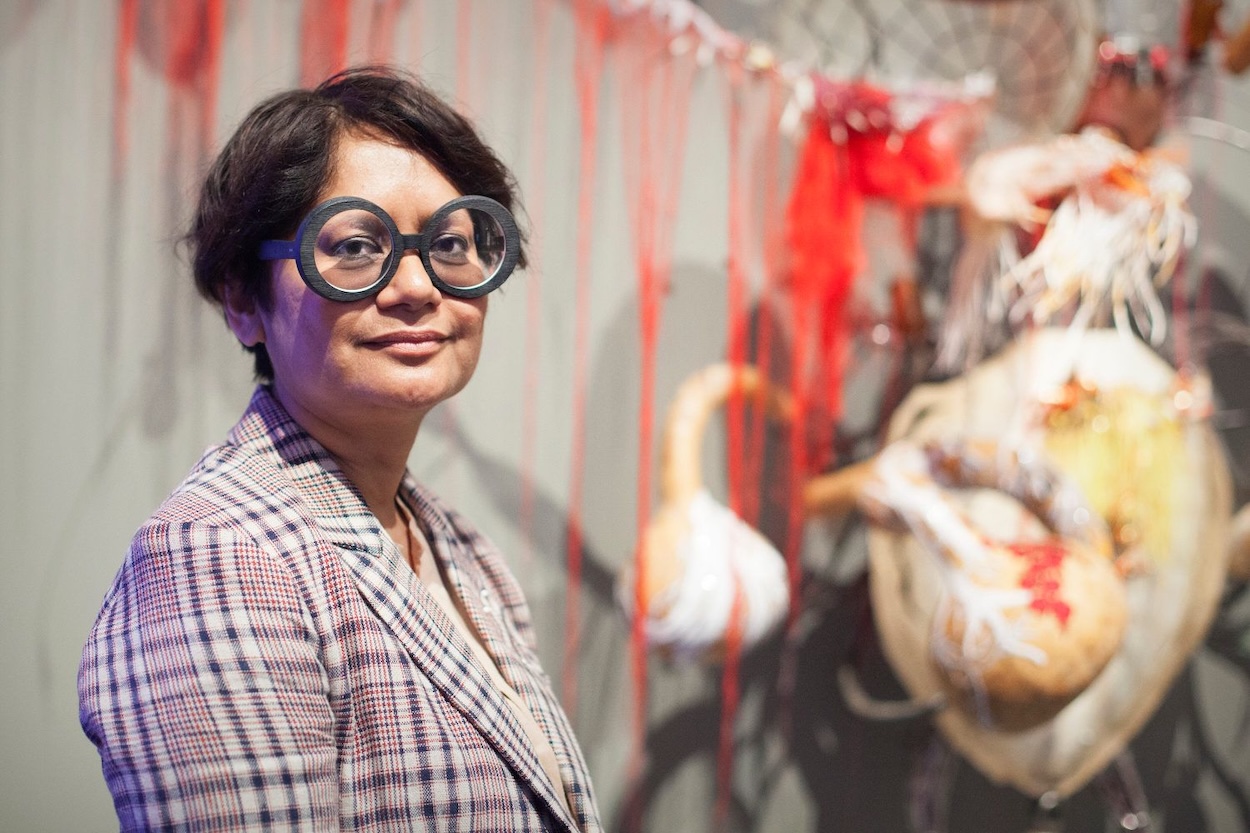

Portrait of Rina Banerjee. Photo by Italo Rondinella. …

An interesting feature that’s not immediately noticeable: A written blurb, a kind of hidden message, is embedded in the work but remains indecipherable. I am interested in the space between what is visible and what cannot be seen or translated.

How the work reflects your practice as a whole: In my practice, I resist singular definitions of identity in favour of a fluid, transnational sense of self. My fantastical figures are constantly transforming, and I think of identity in much the same way: always shifting, never entirely fixed or at home.

One song that captures the work’s essence: “False Start” by Emily King. I think of patriarchy and the clannish divisions we have created between ourselves as a kind of false start: a way of organizing the world that has separated us from one another. After all, we are all human and animal, sharing a common ancestry with all living things. Our shared home is water, land, and air.

All Stories