For all the classic glamour and cinematic tradition that descends upon the Lido each year for the Venice International Film Festival, some of its most pioneering storytelling unfolds a three-minute boat ride away. On the island of Lazzaretto Vecchio, Venice Immersive has spent the past decade expanding the parameters of what cinema can be, inviting artists and audiences to step into virtual and mixed realities, immersive installations, and digital worlds. Now celebrating its 10th anniversary, the program brings together 68 projects (30 in competition) from 26 countries, offering an expansive survey of the ever-advancing extended-reality medium. The following five projects reflect the depth and dimension of this year’s slate, accessible to all 83rd Venice International Film Festival accreditation pass holders, and make a compelling case that the future of storytelling is on display within Venice Immersive.
Venice Immersive Storytelling at the 83rd Venice International Film Festival
Five highlights from this year's slate of extended-reality film projects
David Graver August 28, 2026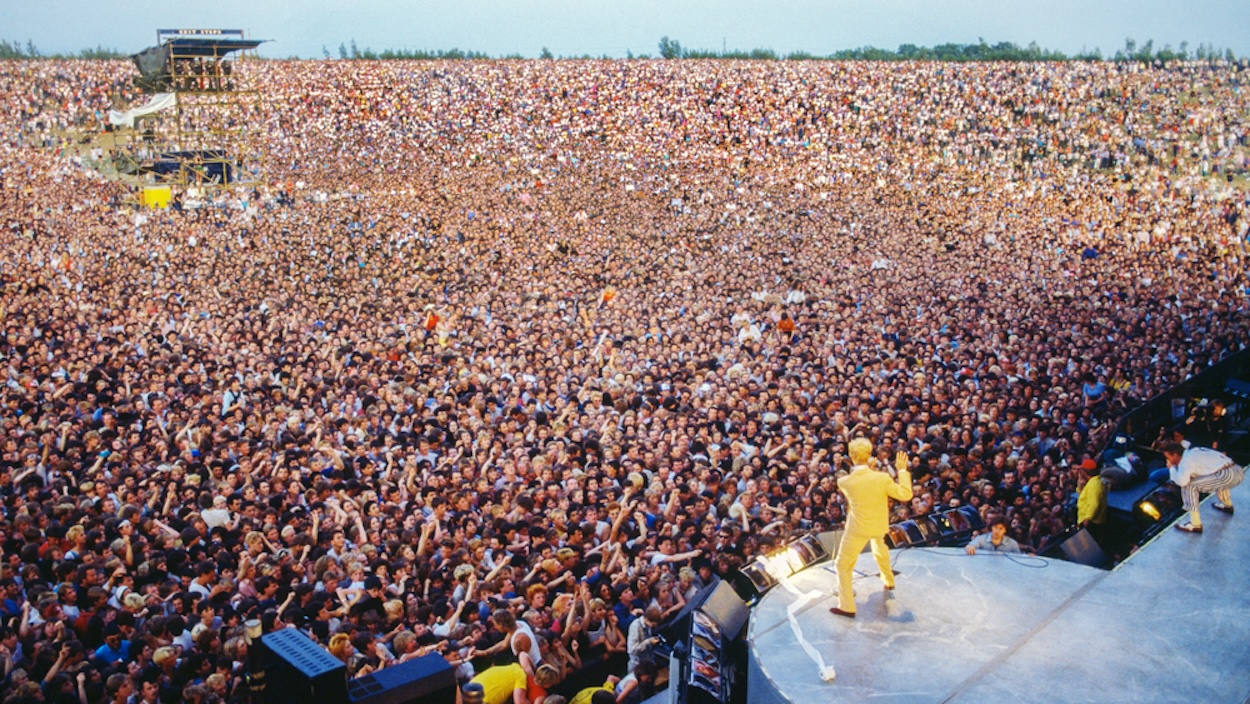
ULRICA
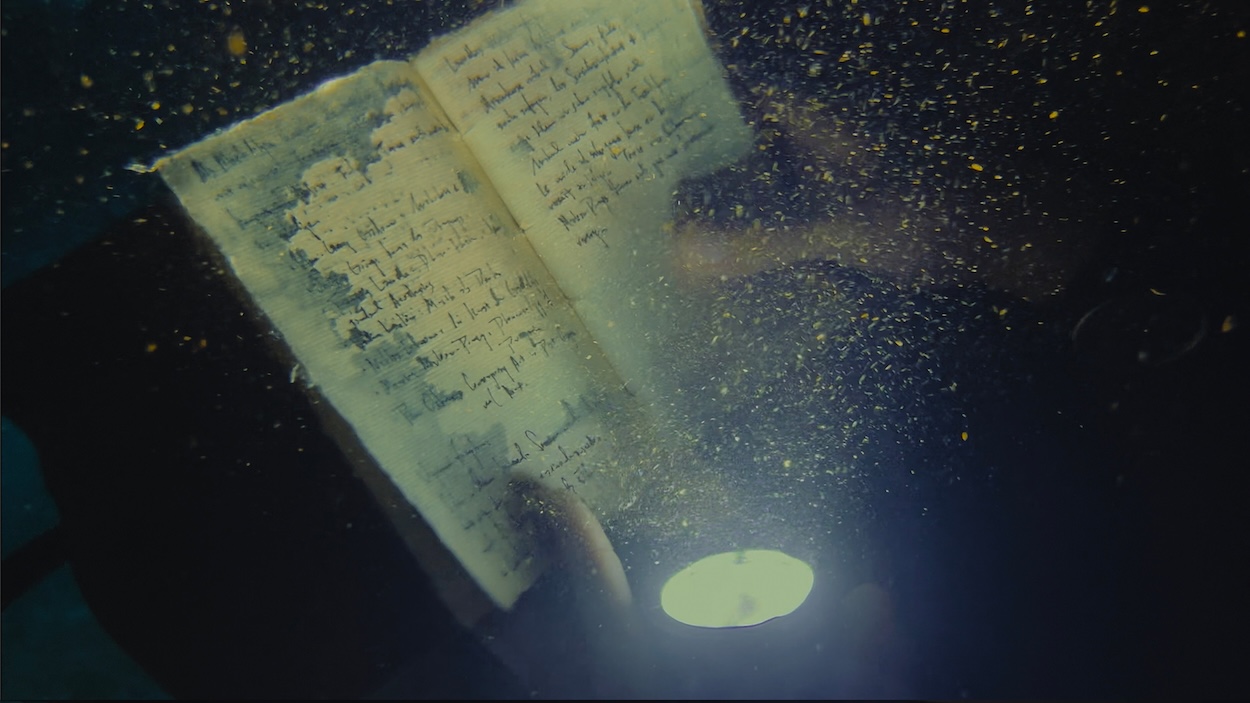
Written and directed by Hongbo Cai, the 20-minute, in-competition work ULRICA addresses the sensorial and spiritual threshold water provides—as a wartime submariner escapes his sinking vessel and descends into the ocean. “Sharing ULRICA in Venice is emotionally significant to me because it marks the recognition of an independent, underfunded docufiction project made largely through curiosity, improvisation, and belief in an idea long before there was any guarantee that it would ever be seen,” Cai shares with Surface. “While, in stereotype, immersive work is often associated with extensive technological support and large-scale production, I hope to propose through ULRICA a more elastic understanding of the form, one rooted as much in passion, invention, and the communication of human feeling as in any particular technology.”
For Cai, “immersion is ultimately about how we form intimacy with a profoundly distant time, space, or being, and how, through that encounter, each world begins to recognize something of itself in the other,” he adds. “That reciprocity lies at the experience of ULRICA: formally, in its attempt to reconstruct an underwater audiovisual world inside an island venue; narratively, in imagining a kinship in suffering between a person in crisis, a soldier from another time, and an animal equally stranded; and emotionally, in discovering the possibility of healing in the midst of flight, within a place that seems least capable of sustaining human life.”

Galápagos: The Last Eden
A 25-minute filmic journey, produced by Anthony Geffen and narrated by Margot Robbie, Galápagos: The Last Eden was shot in an immersive, emotionally engrossing 16K 3D resolution. “I’m most excited for audiences to discover Galápagos in a completely new and personal way,” Geffen tells Surface, “not simply watching the story unfold, but exploring the islands, interacting with the world around them, and following their own journey through this extraordinary place. From the volcanic forces that created the islands to its remarkable wildlife, and even a conversation with a digital Charles Darwin, it offers a new way to experience one of the most extraordinary places on Earth.” The work is both educational and inspirational.
Finding Frida
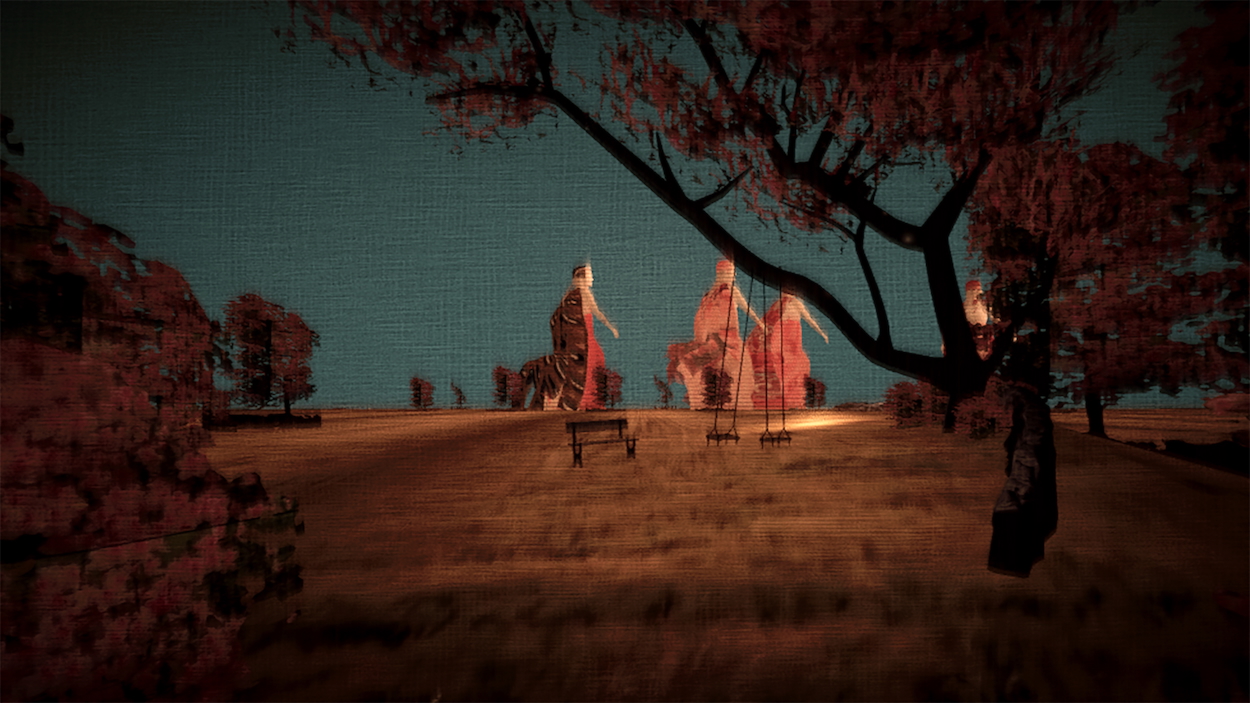
Directed by Hilde Kjøs, the 41-minute, in-competition documentary VR experience Finding Frida invites viewers into the visual world of Frida Hansen, once an internationally acclaimed Norwegian textile artist, though largely forgotten today. “We have worked particularly hard to develop a visual style that reflects the remarkable work of Frida Hansen,” Kjøs tells Surface. “I’m especially excited for audiences to experience this journey not only inside the VR headset, but also through the immersive installation that welcomes them into her universe. We hope the experience creates a sense of presence, intimacy, and connection that stays with audiences long after they leave the little island of Lazzaretto Vecchio.”
Empire At Sea
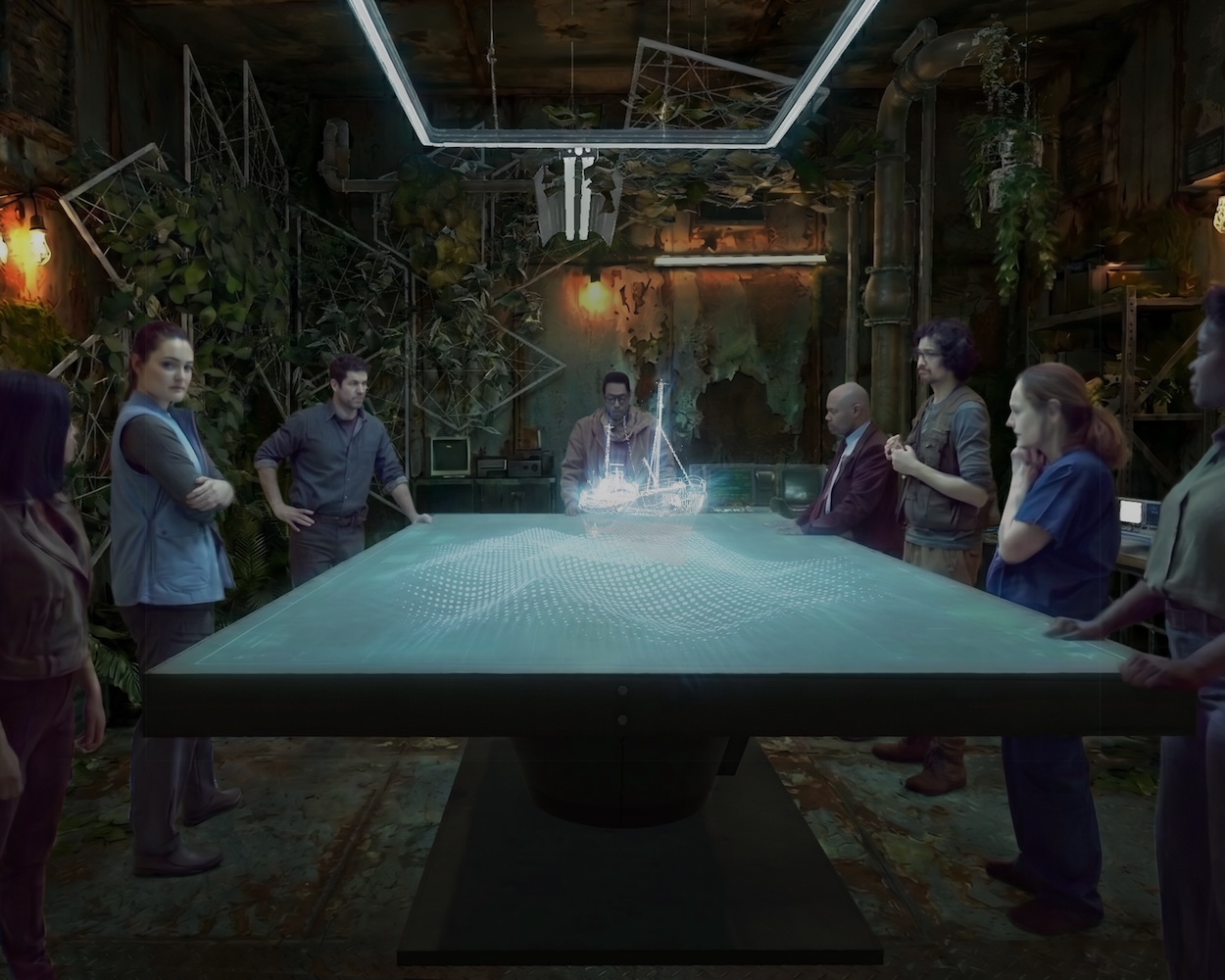
Directed by Peter Flaherty, the augmented-reality, solarpunk drama Empire At Sea uses the power of technology to communicate climate urgency. The central narrative of the 22-minute, in-competition project follows the story of climate scientists who move to a remote oil rig in an attempt to establish a sustainable city at sea. “Climate science has a communication problem,” Flaherty tells Surface. “The data is clear, the models are precise, and the urgency is beyond dispute—yet the public understanding of what climate change means for human communities, relationships, and survival remains dangerously abstract.” Flaherty developed this film to bridge the gap.
“Using breakthrough holographic technology, it makes climate science emotionally immediate for the audience who needs it most: the younger generations who will live with the consequences of inaction,” he adds. “Halfway through the summer in our story, the big one hits and wipes out the mainland. Unable to make contact with anyone, our intrepid group of scientists must fend for themselves. The immersive, holographic format is not incidental to the mission—it is central to it. In a digital media landscape increasingly defined by atomized, screen-based consumption, Empire At Sea models a different possibility: people together, in space, moved by a story.” What better place to premiere such a project, Flaherty asks, than the floating city of Venice?
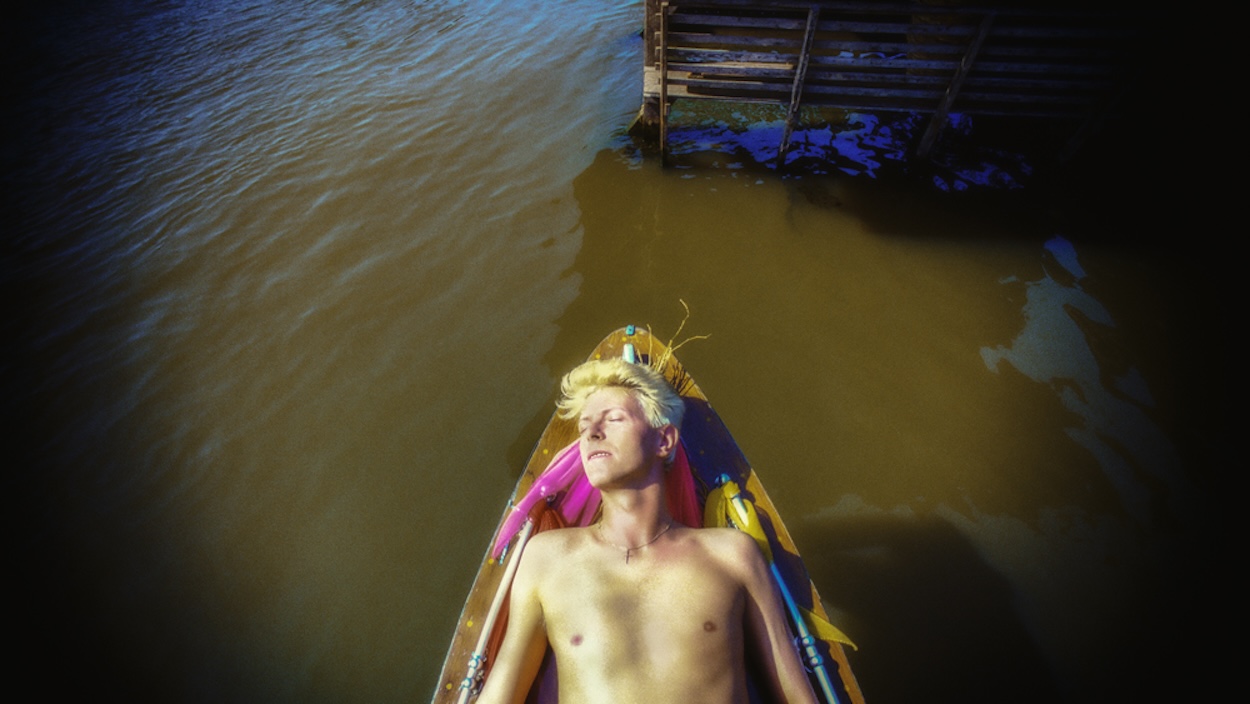
Bowie: Unseen | Unheard
Directed by legendary music photographer Denis O’Regan alongside Nick Ryan and Joe Crossley, and developed by audio technology company L-Acoustics, Bowie: Unseen | Unheard is a first-of-its-kind audio-visual immersion that brings O’Regan’s archive—featuring more than 800 images of David Bowie—to life. “Presenting Bowie: Unseen | Unheard in Venice feels particularly meaningful because this project sits at the intersection of photography, music, design and technology—and invites audiences to experience an artist’s legacy in an entirely new way,” producer Amber Mundinger shares with Surface.
“Denis O’Regan’s photographs give us an extraordinary visual archive of Bowie, but through Nick Ryan’s sound design, Joe Crossley’s visual work and L-ISA spatial audio, those images become something you can actually inhabit,” she continues of the in-competition project. “We’re especially excited for audiences to hear Bowie’s music in a way it has never been experienced before, with the tracks in L-ISA spatial sound. For L-Acoustics, this is really about what happens when technology becomes an enabler of artistic collaboration—when sound doesn’t simply accompany an image, but changes your relationship to it. Venice is the perfect place to explore that idea, and we can’t wait for people to step inside the work rather than simply view it.”