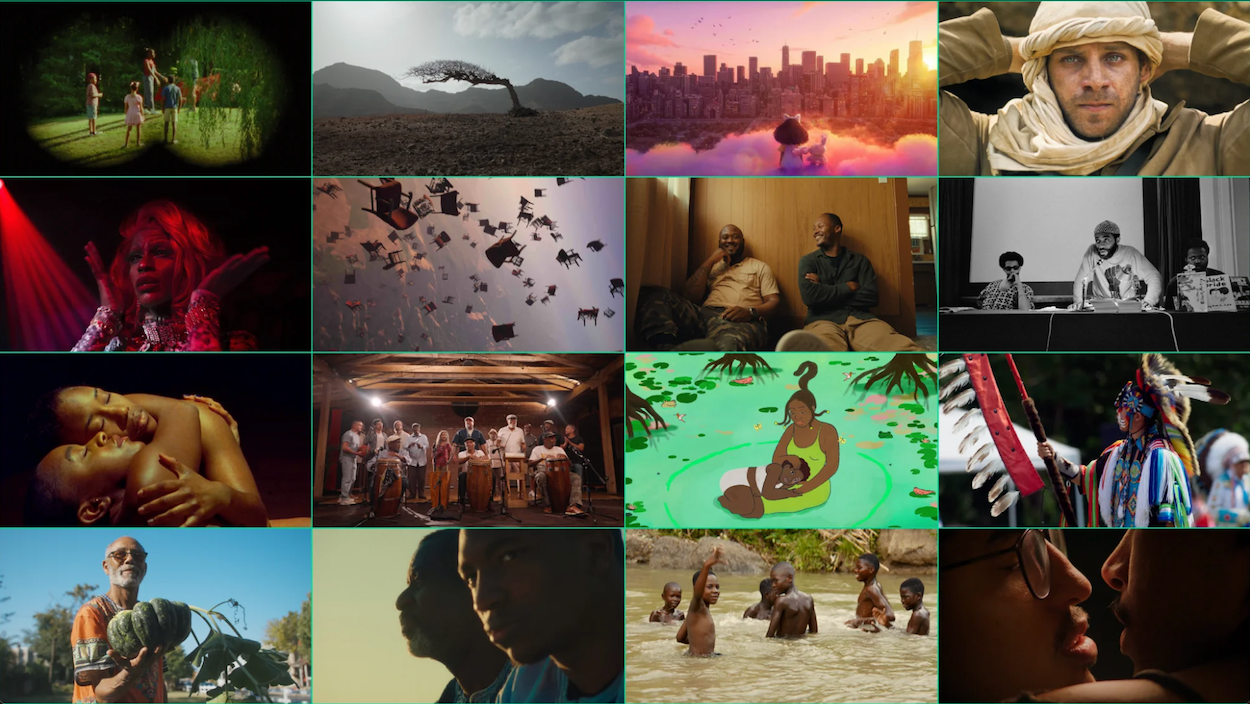
Fifteen years ago, BlackStar Film Festival started with a simple but radical proposition: that the visual and storytelling traditions of the global majority deserved a stage of their own. Today, that premise has grown into one of the most vital gathering points in independent film, a festival where Black, Brown, and Indigenous filmmakers aren’t the exception to the program, but the whole point of it. This year’s 15th anniversary edition, running from August 6-9, will feature 91 films from more than 30 countries.
What’s kept BlackStar essential for a decade and a half is the infrastructure it’s built around the festival itself, with an itinerary spanning screenings, exhibitions, a filmmaker seminar, a film production lab, and a journal of visual culture, all designed to give artists working outside the confines of genre a sustainable path forward, with real connections to collaborators, funders, and distributors.
We sat down with Festival Director Nehad Khader to talk about what fifteen years of building that infrastructure has taught her, and where BlackStar goes from here.
Courtesy of BlackStar Film Festival.…
When you were building this year’s program, were there themes or questions that emerged organically across the submissions, or did you find yourself intentionally curating around certain ideas?
We always allow topics and themes to emerge organically from the submissions, without trying to force our own ideas. This year we did manage to program more cohesively across the different genres and in the final curated schedule. In other words, the films are speaking to each other across the full festival. There’s a lot about the complexities of parenting and being parented; skepticism and spirituality; and people’s resistance across the world and throughout time.
Every festival reflects thousands of decisions that audiences never see. Could you walk us through your selection process? What are you looking for beyond technical excellence, and what qualities make a film feel unmistakably “BlackStar” to you?
Honestly! Technical excellence is less important to us than the attempt. Sometimes a film is less than excellent, technically, but it’s presenting us with something different that we feel compelled to present. We open submissions in January, and our wonderful and global team of screening fellows and programmers, as well as myself and Sydney Alicia Rodriguez on BlackStar staff are watching and discussing until May. This year our colleague Nyla Daniel joined us in programming short narrative films too. We whittle down, watch and re-watch, engage in respectful disagreement, and make decisions until the final minute. It’s a tough process because we love so much work that we simply can’t present because we are limited to four days and three theaters. Ultimately, we want to build a cohesive program that is presenting new ideas, different ways of seeing, and maybe breaking something along the way. That feels “BlackStar” to us.
Courtesy of BlackStar Film Festival.…
What conversations do you see unfolding across the program, and what do they say about where filmmakers are right now?
Resistance to state violence is one of the biggest themes that emerged in the program this year, both historically and contemporarily, and across the world. I’m not sure if I’m able to blanket say something about where filmmakers are right now. Maybe there’s a hunger among both audiences and makers to learn about how our elders and ancestors persisted, pushed back, and ultimately survived, as well as the continuum of oppression and resistance over time.
Programming a milestone edition like a 15th anniversary comes with its own set of expectations. Did this year’s festival feel different from previous editions, either in the submissions you received or in the way you approached shaping the final program?
This year’s 15th anniversary edition felt as different as every edition feels. We are always trying to challenge our methods and process as a team, while holding onto the aspects that make the BlackStar program unique. We’re interested in the meta-narrative of the program, we’re interested in filmmaker experience, and we’re interested in audience care. BlackStar has long championed artists who challenge conventional documentary and narrative forms.
Courtesy of BlackStar Film Festival.…
How do you balance introducing audiences to emerging voices while continuing to showcase filmmakers who have grown alongside the festival over the past 15 years?
This is a delicate balance. We love emerging voices and first-time filmmakers, and simultaneously our alumni are prolific and making new work all the time. We have to be intentional about this when we look at the final slate, as well as the balance of the genres represented, the diversity of tone among the films we’re presenting, the languages, geographic spread, and more.
After audiences leave this year’s festival, what conversations or feelings do you hope stay with them? Is there something you think this particular edition of BlackStar captures about this moment in cinema, or in the world more broadly, that feels especially important?
Different BlackStar team members might have different answers to this question. I always wonder what the purpose of our work is in times of catastrophe. For me, I want people to build community among others who share their values. If this shared experience of watching meaningful and maybe even unexpected cinema can empower us as individuals and as a collective to truly build together, then we’ve done something. I hope our audience and filmmakers feel more connected to the causes and issues they care about, that they’re able to bring something to space and take something from it, and that it rejuvenates them to keep working towards the future we want to live in. Ultimately, down the line, I hope we can look back and find that BlackStar contributed something valuable to the field by way of discourse, critique, practice, or politics.