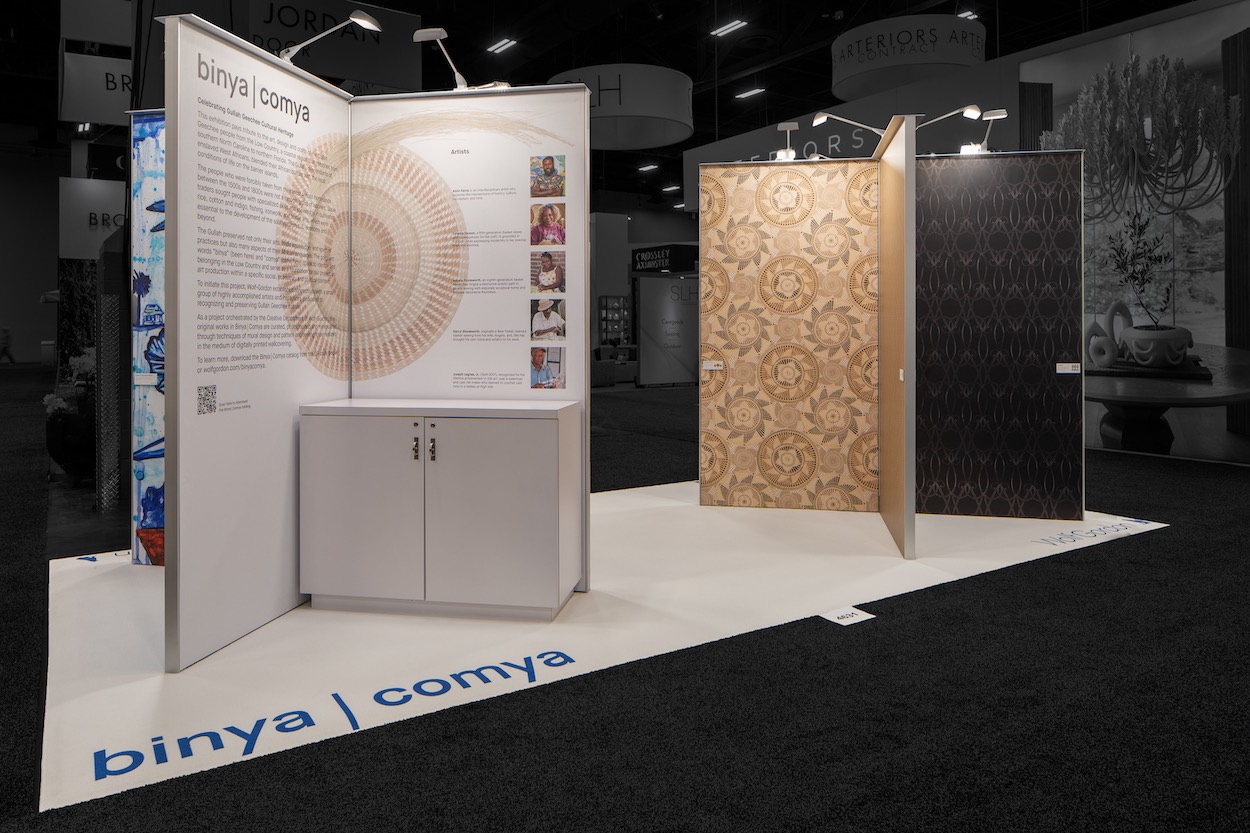
Exhibition view: Binya Comya at HD Expo. Courtesy of Wolf-Gordon…
On a research trip through the Lowcountry of the American South, Wolf-Gordon’s Marybeth Shaw found herself tracing stories through materials—cast nets strung with precision, iron gates worked into quiet geometry, baskets coiled with purpose. More than handmade objects, they held memory, labor, and resilience, folded into their very forms.
That experience became the catalyst for Binya Comya, a concept-driven collection of wallcoverings that honors the artistry and cultural legacy of the Gullah Geechee people ( the descendants of enslaved people brought against their will to the region from West Africa), whose ancestral skills have shaped the Southeastern U.S. and beyond for more than three centuries. “The collection focuses on the multi-layered history and artistic ingenuity of the Gullah Geechee people,” says Shaw. “It demonstrates just how vital and relevant that legacy still is.”
Named for two Gullah Geechee terms—“Binya,” meaning ‘born of the island,’ and “Comya,” meaning ‘one whose ancestry is not of the island’—the collection reframes traditional Lowcountry craft through a contemporary lens, looking at how its language and visual culture have filtered through the region over the course of generations. Shaw developed the project with Erik Brown, Wolf-Gordon’s Acoustical Products Manager and co-curator of the series, whose own Gullah Geechee lineage brought a personal dimension to the project.
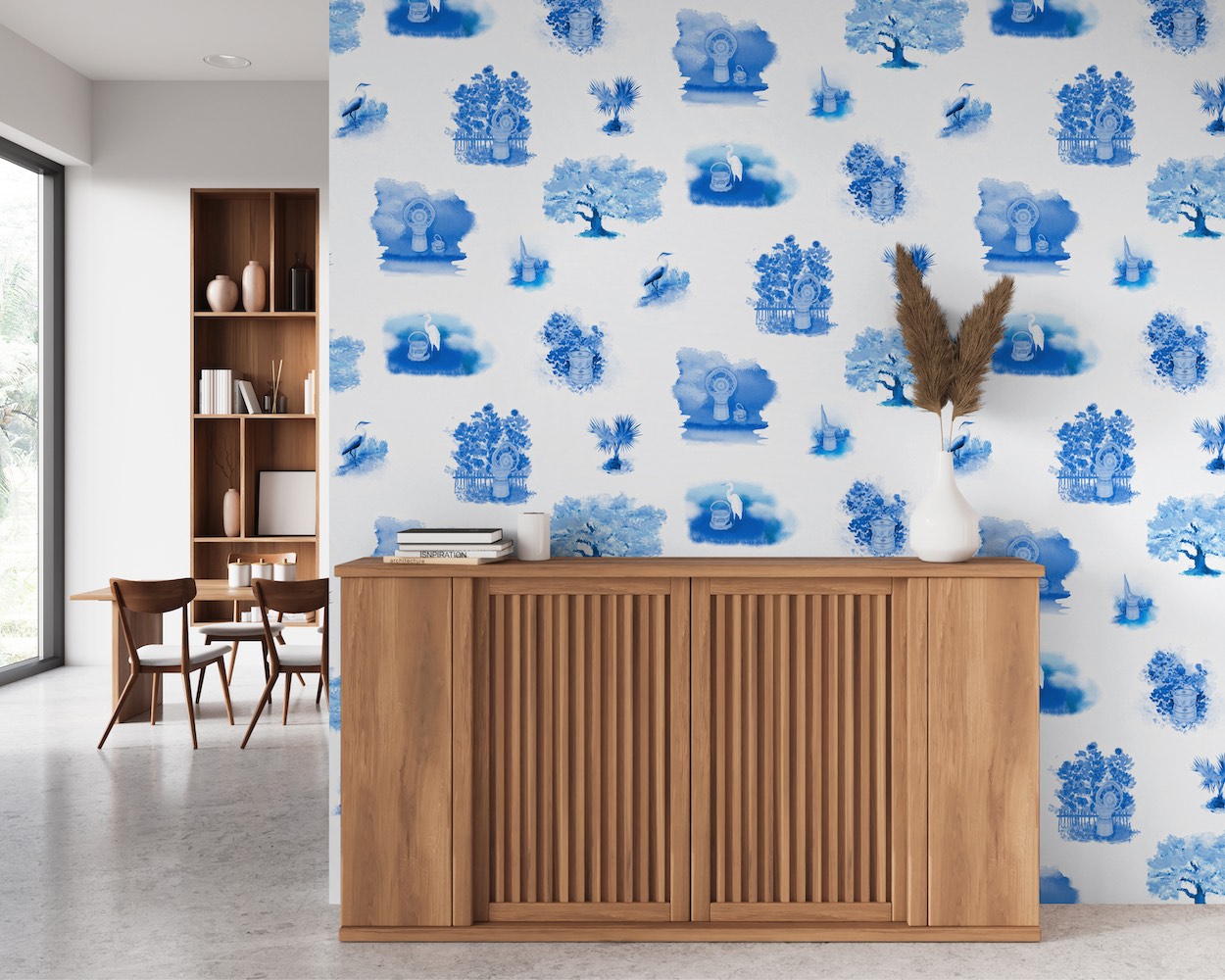
Princess & Queen by Angela and Darryl Stoneworth…
Their collaborative process emphasized direct engagement with artists’ processes, perspectives, and oeuvre. The resulting collection—which includes the works of late cast net master Joseph Legree Jr., basketmakers Angela and Darryl Stoneworth, artist Lynette Youson, and artist Amiri Farris, among others—reads like a tactile archive. In Cast, Legree Jr.’s intricately crocheted shrimp net stretches nearly eight feet wide, shot against black to evoke both gravity and grace. Sown, inspired by Youson’s rice fanner baskets, rotates its structure 90 degrees to create a clean vertical repeat—a nod to material resilience as much as design.
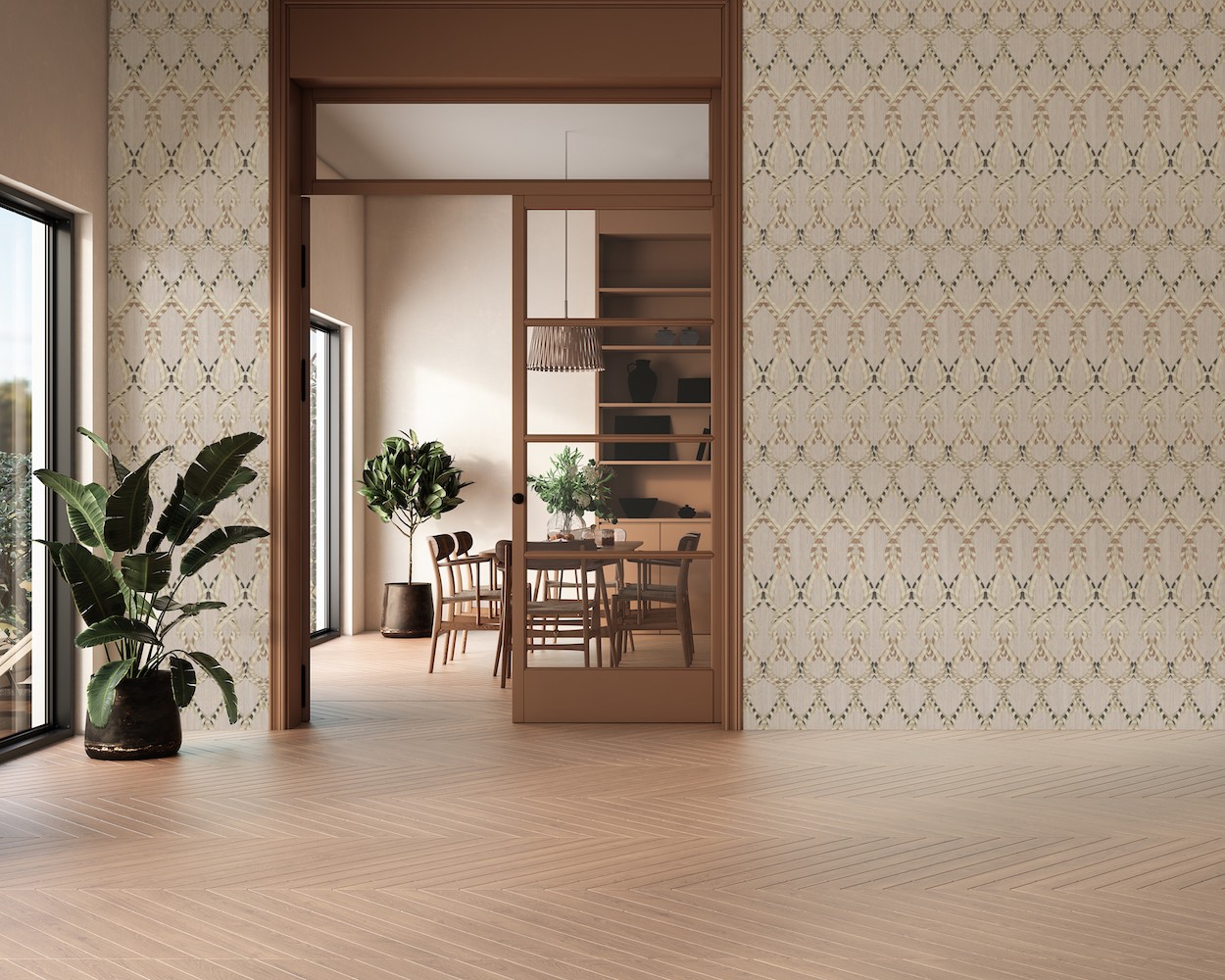
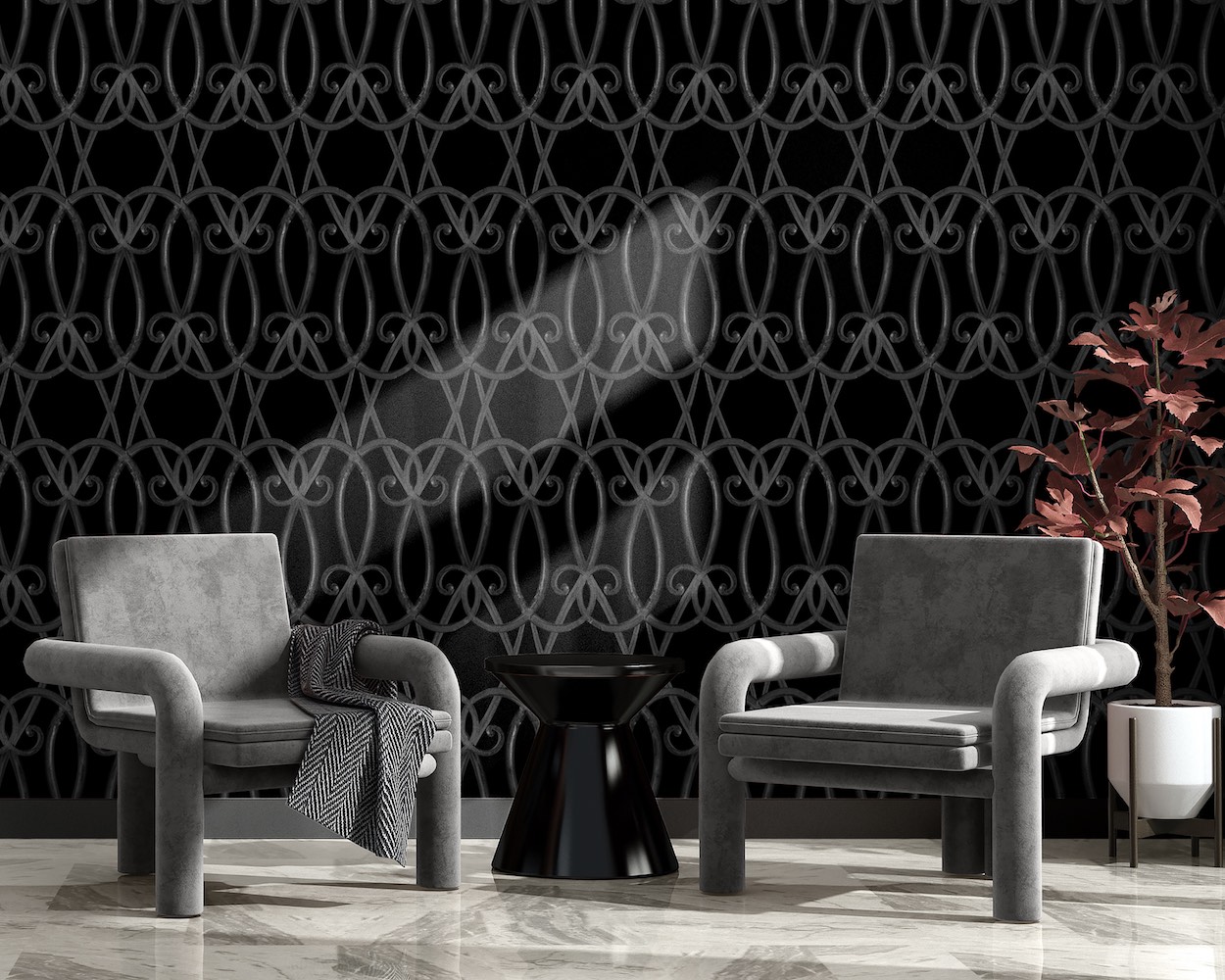
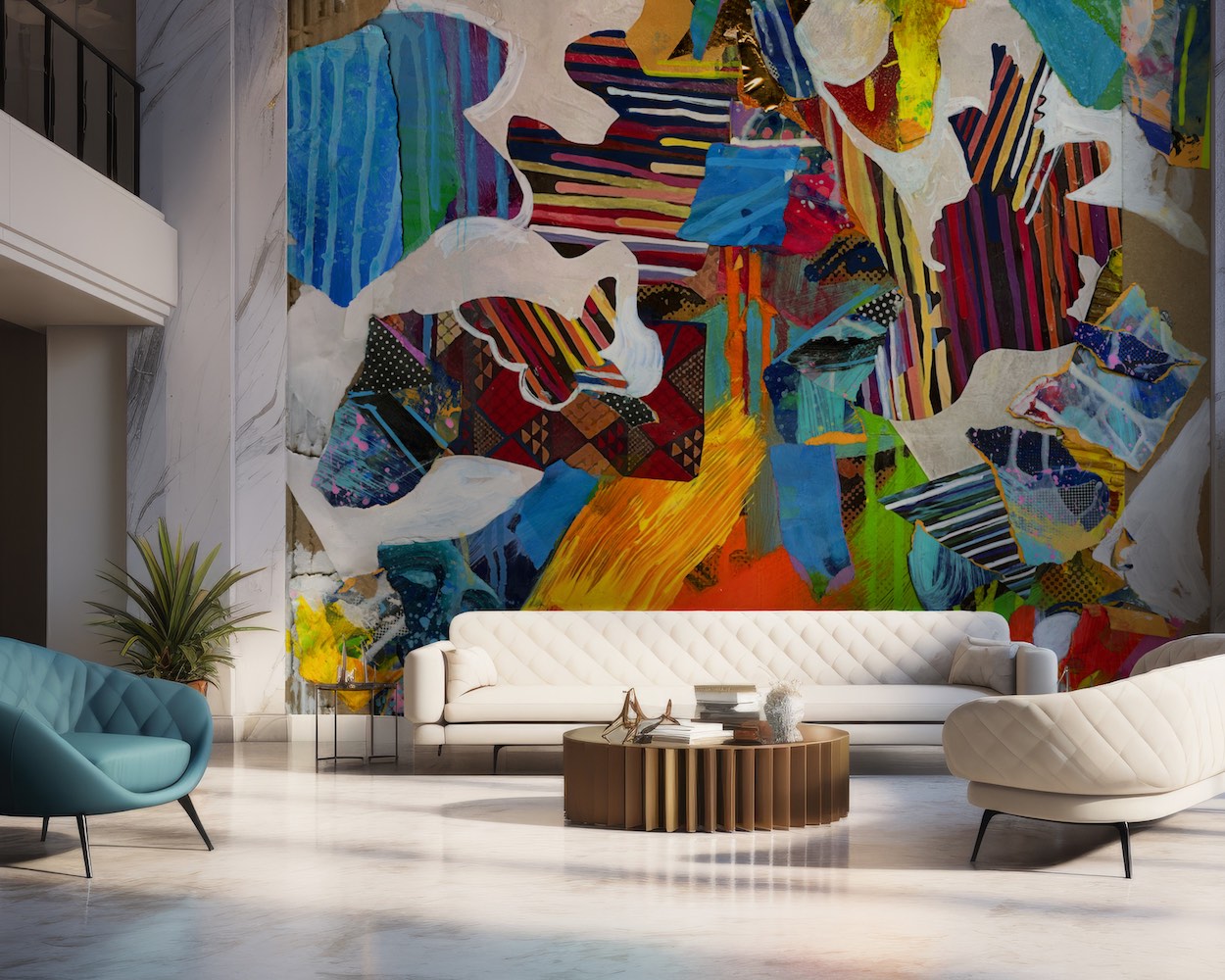
Each wallcovering tells a different kind of story. Pinwheel Fannas renders Darryl Stoneworth’s triad of pinwheel baskets at full scale, preserving their original coloration and stitchwork. Its deft mastery of craft combines aesthetic ornament with visual substance.The same goes for Princess & Queen, a toile-style design that frames Angela Stoneworth’s sculptural works within lush vignettes of palmettos, Spanish moss, and graceful marsh birds. The landscape isn’t merely a backdrop—its vibrancy commands the eye’s focus. In Shadowmaker, [which] Stoneworth’s basket rims and local ironwork are distilled into architectural motifs, then printed on Wolf-Gordon’s flax-based Rampart fiber to heighten the natural texture. And for Rhythms in the Tapestry of Time, Amiri Farris layers paint, symbols, and abstract movement into a visual language he calls “color rhythms,” grounding the work in Gullah Geechee cosmology while leaning into a distinctly contemporary expression of abstraction.
Net by Joseph Legree, Jr. …
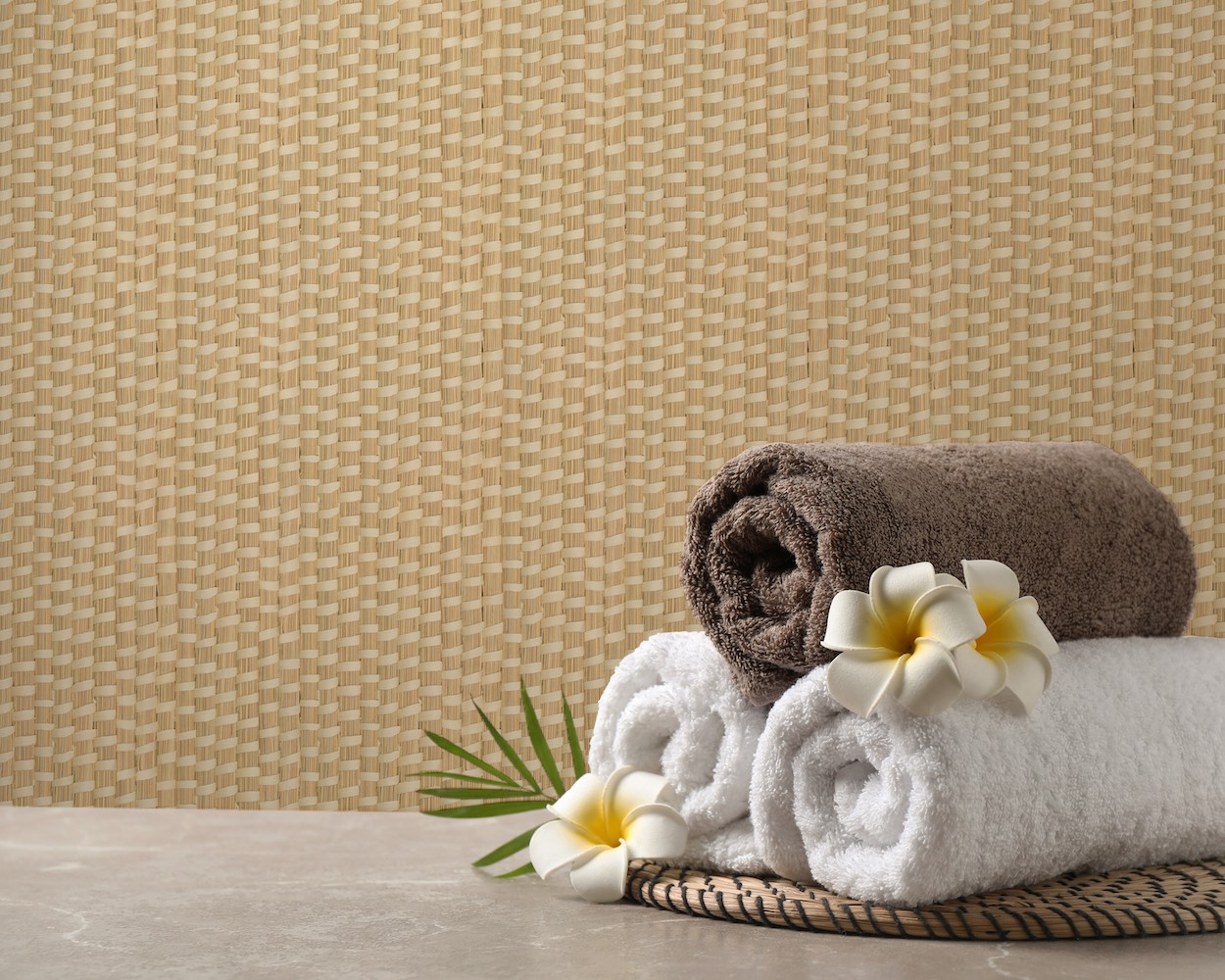
Throughout the collection, which debuted as an exhibition at the HD Expo trade show, material choice plays a quiet but pivotal role. As with previous conceptual collections, Shaw and her team developed the works to live across a variety of substrates—PVC-free wallcoverings, Mylar, felt, even protective materials like Rampart—ensuring the visual integrity of each design carries into real-world environments. But what setsBinya Comya apart isn’t just production agility or aesthetic impact. Through deeply collaborative research, tactile translation, and reverence for its subjects, Binya Comya refuses to treat heritage as ornament. Instead, it insists on heritage as a structural imperative—woven, stitched, forged, and cast into the walls themselves.