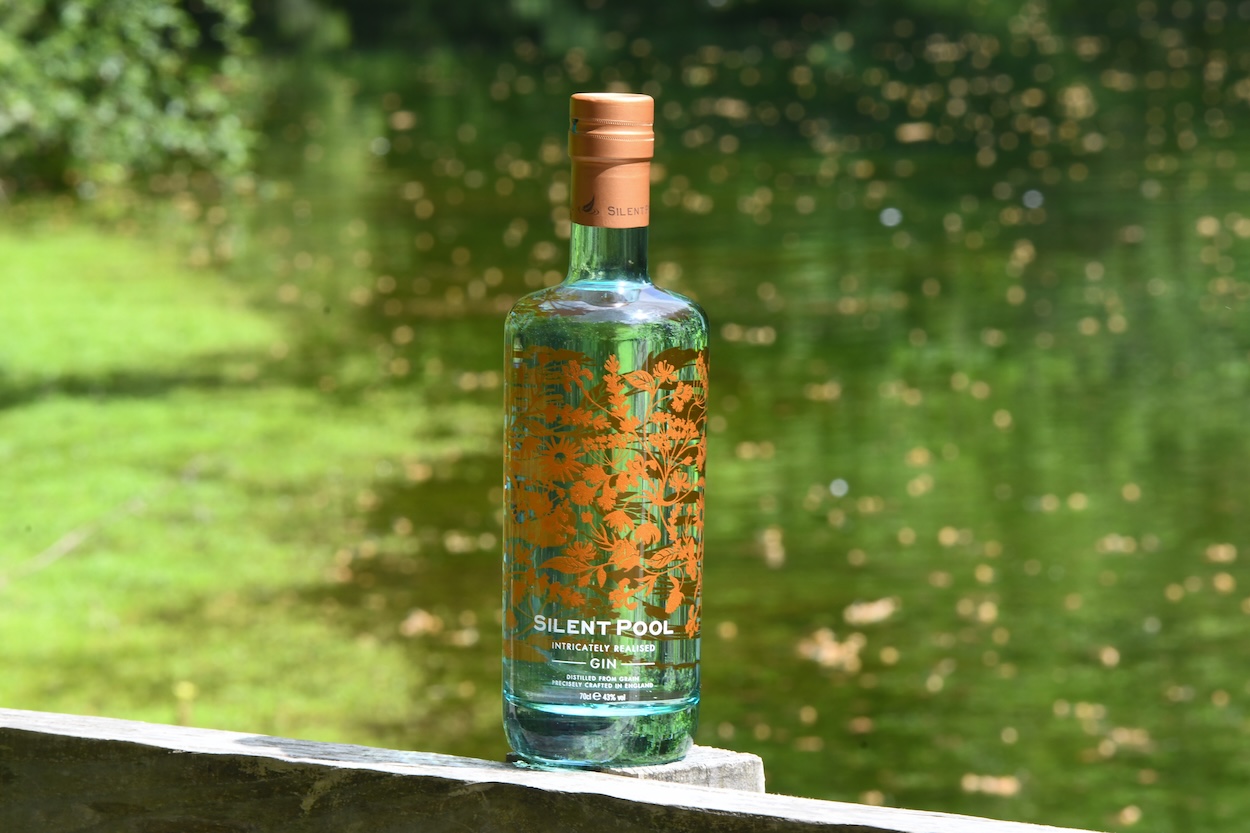
“Keep your head straight,” says Silent Pool’s Head Distiller Marzio di Rocco, his lesson in proper spirit smelling doubling as a reminder of one’s laptop-induced posture. “Start from your heart, and gently bring the glass to your nose.” In the copita glass, Silent Pool’s signature expression. A citrus-forward gin with a somewhat peppery bite—to our palate at least. “Some people get more florals, some get citrus, some get spices,” di Rocco explains.
Di Rocco has an edge on other distillers: his synesthesia. “The way my brain is wired, my sense of sight and sense of smell are quite close together,” he says. Born in a small village outside Rome, he unearthed a passion for hospitality while studying physics at university, and worked in bars, breweries, and wineries before becoming a sommelier. “I discovered my synesthesia during my sommelier course because I was always describing wine in terms of colors.”
He became a distiller sideways. After moving to the U.K. in 2011 without speaking a word of English, he found himself back behind a bar. “I didn’t have to talk much, because my drinks did the talking for me,” he says. A few years in, he traded martini shaking for spirit nosing, working his way through two distilleries before landing at Silent Pool nearly five years ago.
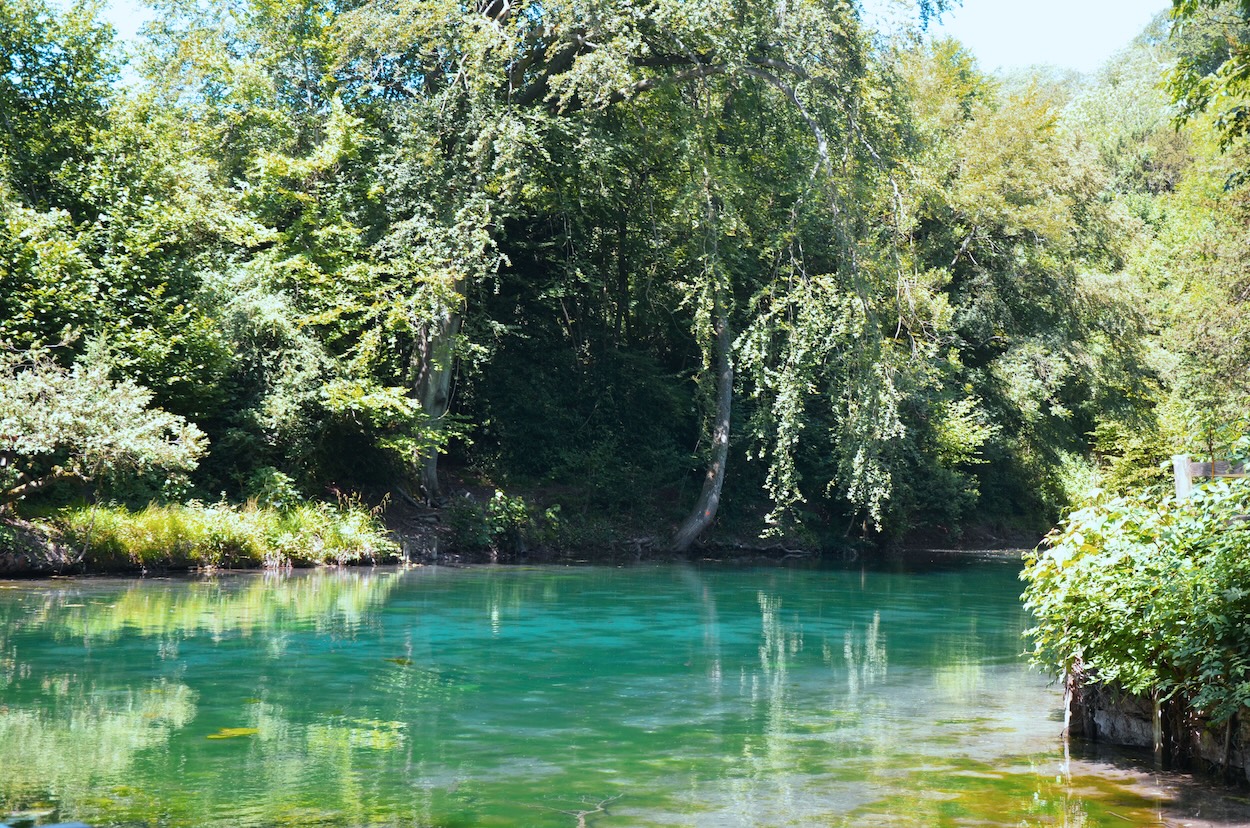
The pool in question sits a short walk from Juliet and Ophelia, the two Arnold Holstein-built copper stills di Rocco mans. Tucked in the rolling Surrey Hills, the (allegedly haunted) Ice Age-era pool once served as a Roman bathing site and was dragged in the 1926 search for a missing Agatha Christie—who was in fact 200 miles north at a Harrogate hotel. On a clear day, when the light hits just so, the water glows teal in the sun, the same blue of the Silent Pool bottles.
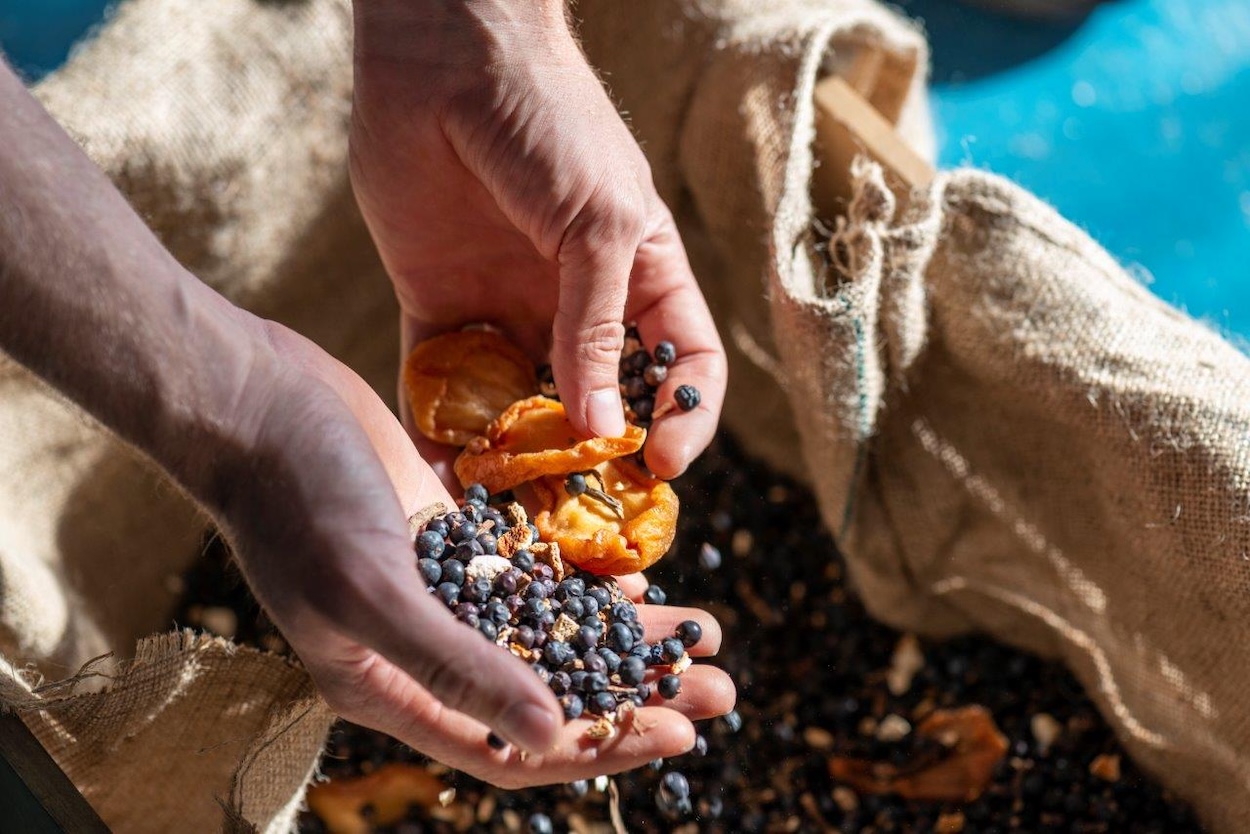
It took the team nine months and 650 trial distillations to settle on a recipe. “I wanted to learn how to put all of the little things people taste and smell into liquid form.” In the bottle, chamomile that was found growing up through the floorboards of the dilapidated barn-turned-distillery; a bouquet of lavender, linden flowers, and roses; English anjelica root (or the “Root of the Holy Ghost” as it was known in Medieval England), and 19 other botanicals.
A blind tasting is enough to help di Rocco spot any inconsistencies in the gin’s flavor profile. “If I get any dark shadows, it means something’s off.” At its purest form, di Rocco tastes Silent Pool as a pastel green. Much like the chalk grasslands of the idyllic countryside on which it’s made.