On October 18, ballet dancer Adrian Danchig-Waring will conclude his onstage New York City Ballet (NYCB) presence with a carefully composed farewell program. Danchig-Waring, who joined the company in 2003, ascended to principal dancer ten years later. Throughout his storied career, the ballet dancer overcame two potentially career-ending injuries and impressed upon innumerable audiences an athletic grace and an ability to channel character through movement. Following the event, Danchig-Waring will focus on his role as the artistic director of the New York Choreographic Institute, a division of the company dedicated to fostering talent and prioritizing radical experimentation.
Adrian Danchig-Waring’s New York City Ballet Farewell Performance
Two Balanchine ballets will bookend a groundbreaking same-sex duet choreographed by Lar Lubovitch and a pièce d’occasion by Pam Tanowitz
David Graver October 14, 2026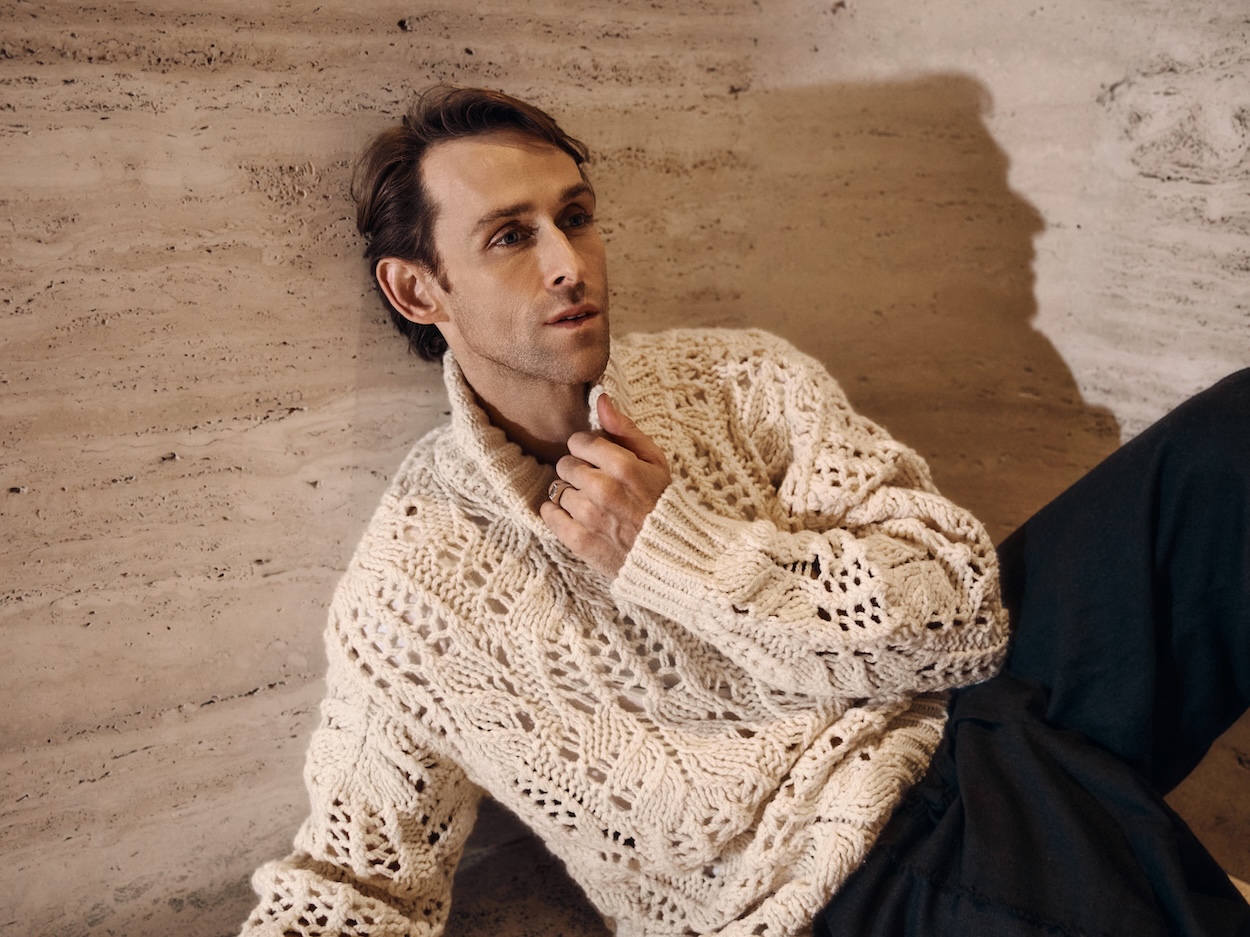
Image by Dani Case
…
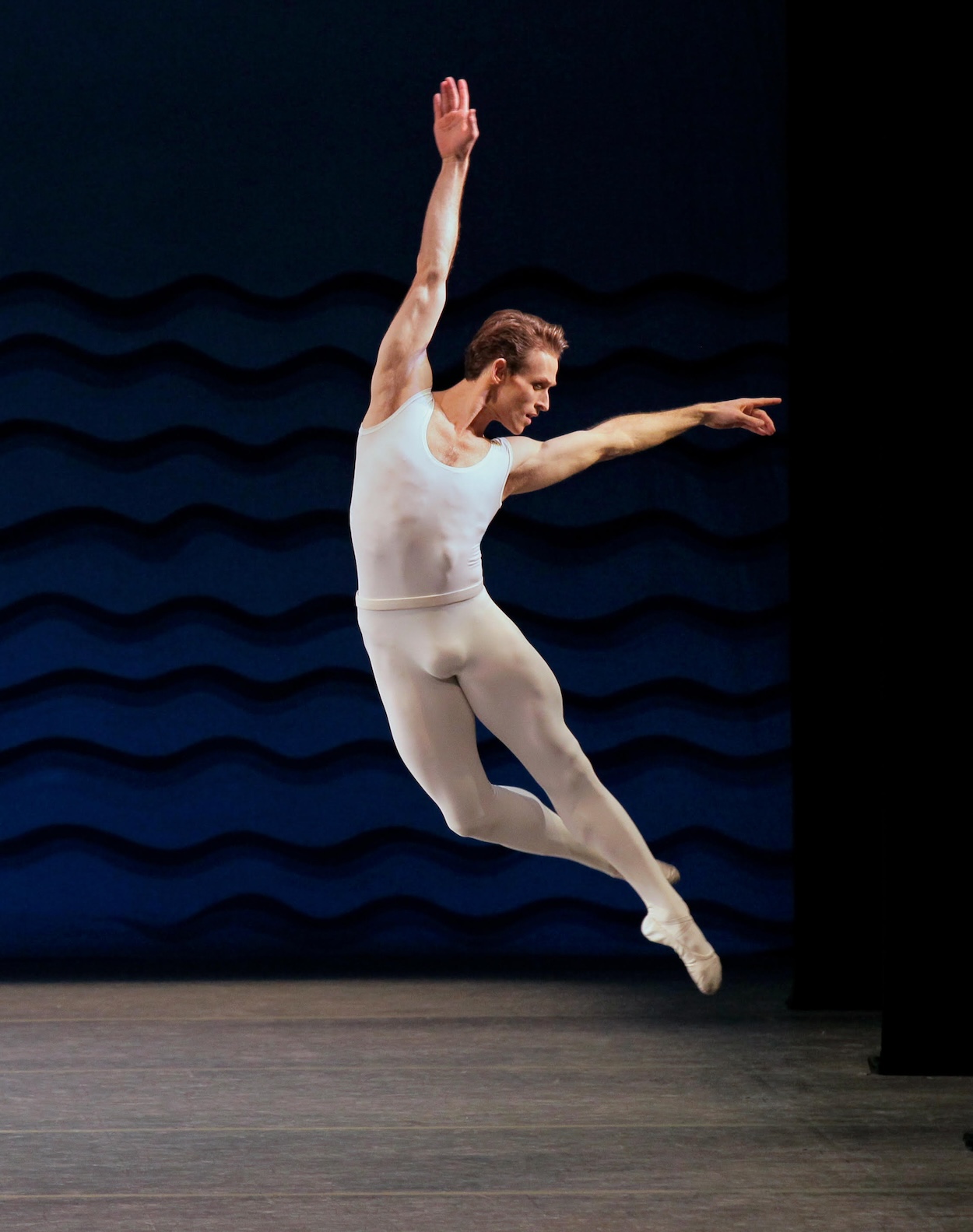
Adrian Danchig-Waring in In G Major Choreography by Jerome Robbins New York City Ballet Credit Photo: Paul Kolnik
…
“It has been a great honor of my life to do this work,” Danchig-Waring tells Surface, “and to be associated with these ballets, and to find myself inside of them.” Long before his 23 years with the New York City Ballet, his affinity for the art form began at age 11, accompanied by an invitation into a rigorous pre-professional program. All of this was driven by an early understanding that his body could be a means of expression. The fact that he could physically execute what was being asked of him also reinforced the desire for pursuit.
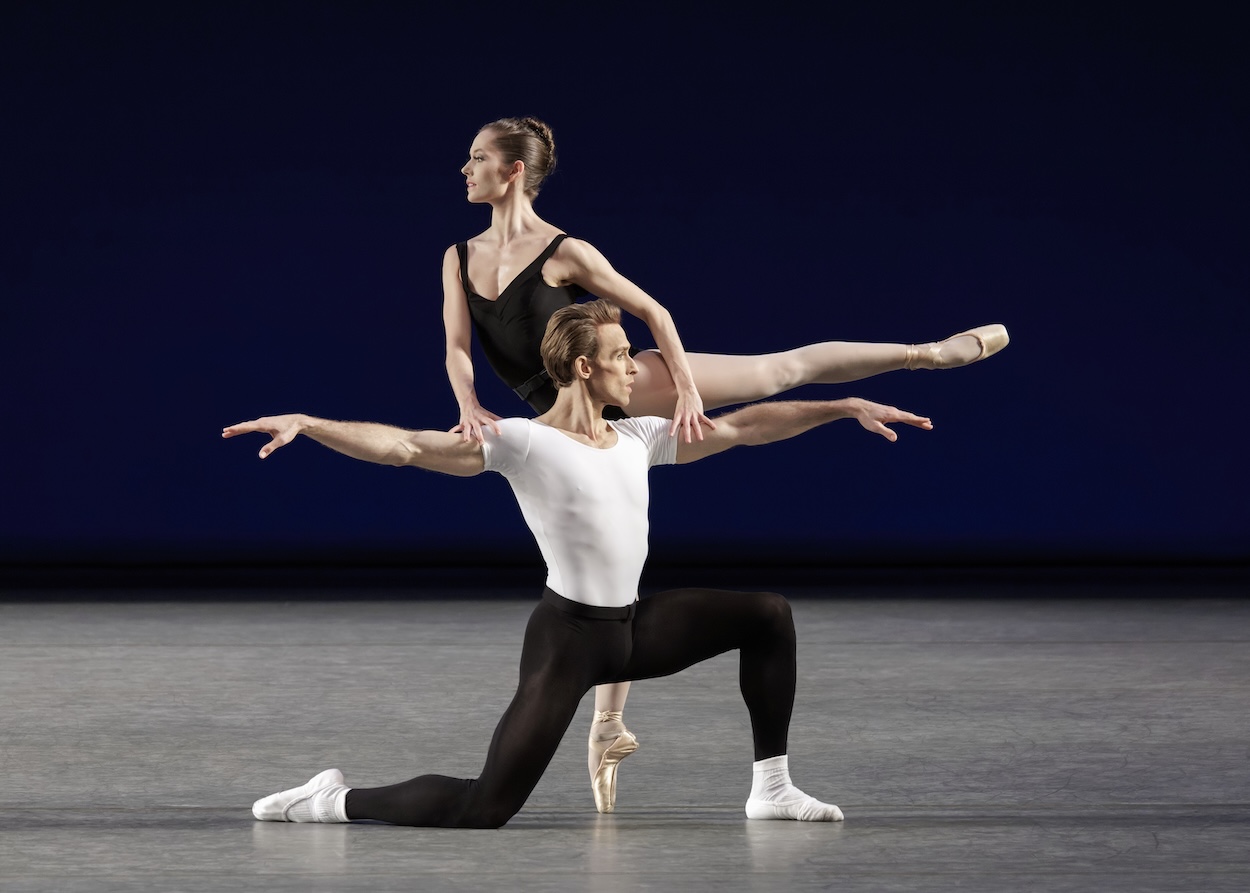
Unity Phelan and Adrian Danchig-Waring in "Agon", choreography © The George Balanchine Trust, New York City Ballet, David H. Koch Theater, Lincoln Center, Wednesday, May 10, 2023, 7:30pm. Credit Photo: Erin Baiano
…
Danchig-Waring understood that movement was an art expression. But, he adds, “I think for a long time, ballet was more of a rigorous practice and a structure and a technique, and it took me a long time to integrate those things.” In what he describes as youthful naïveté, Danchig-Waring conflated the words New York City and ballet. “I just felt like the place to aspire to, the place to make it as a dancer, the place to make it as an artist was New York. And so if I was to be a ballet dancer, this was the only option,” he says. “My move here was very contentious, and ultimately laid the foundation for my entire artistic life.”
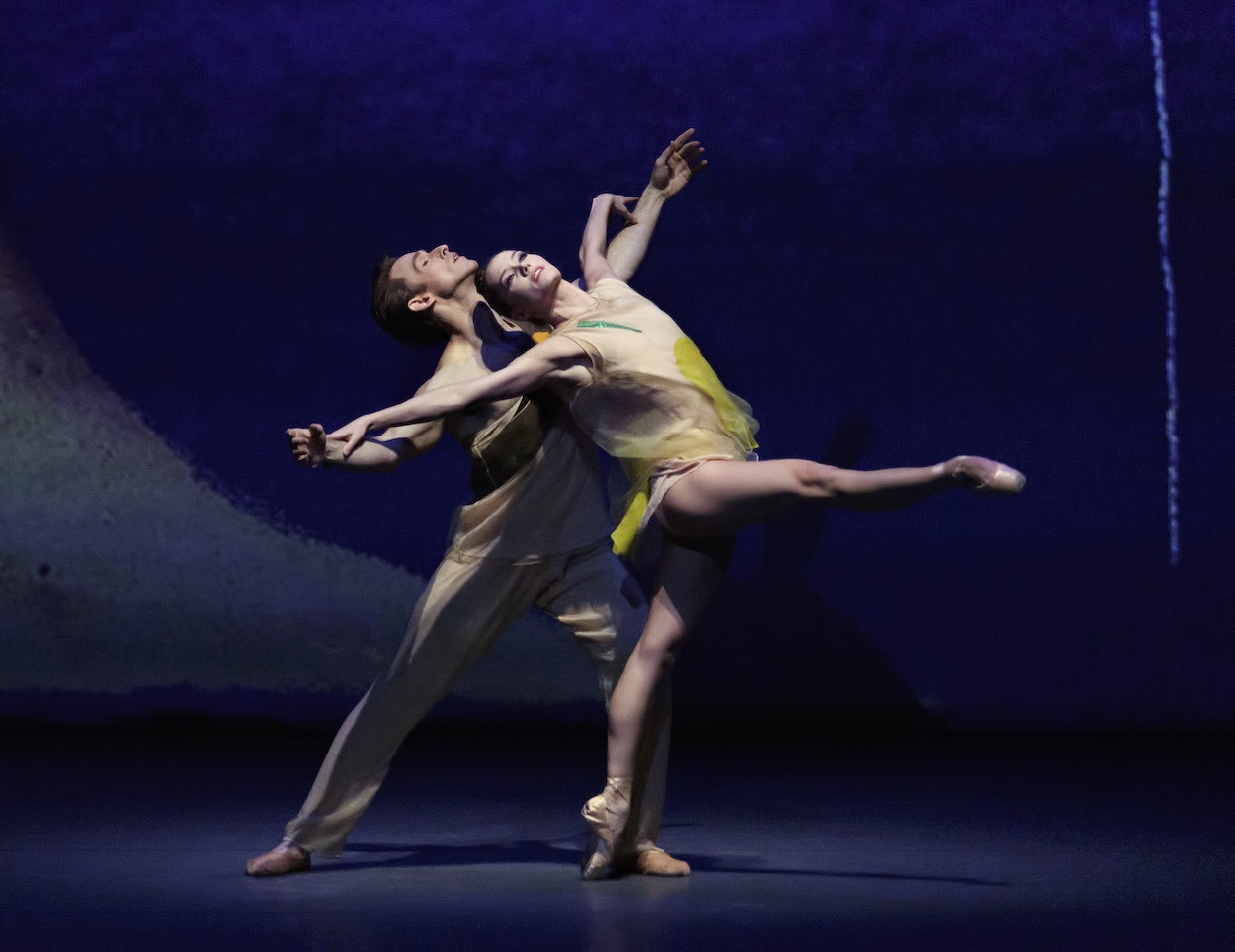
Unity Phelan and Adrian Danchig-Waring in "Pictures at an Exhibition", choreography by Alexei Ratmansky, music by Modest Mussorgsky. New York City Ballet, David H. Koch Theater, Lincoln Center. Friday, May 19, 2023, 8pm. Credit Photo: Erin Baiano
…
As a ballet dancer, Danchig-Waring has achieved what so many aspiring dancers dream of: the most rarefied form of the art upon one of the most revered stages. With each day, he still feels as if he’s arriving into the best expression of himself as a ballet dancer. “That is such a profound and powerful motivation to get up and do this work every day in a 42-year-old body,” he says. “There’s a lot of overcoming—of pain, of injury, of exhaustion.” He finds that pushing himself to the edge is itself an act of self-discovery.
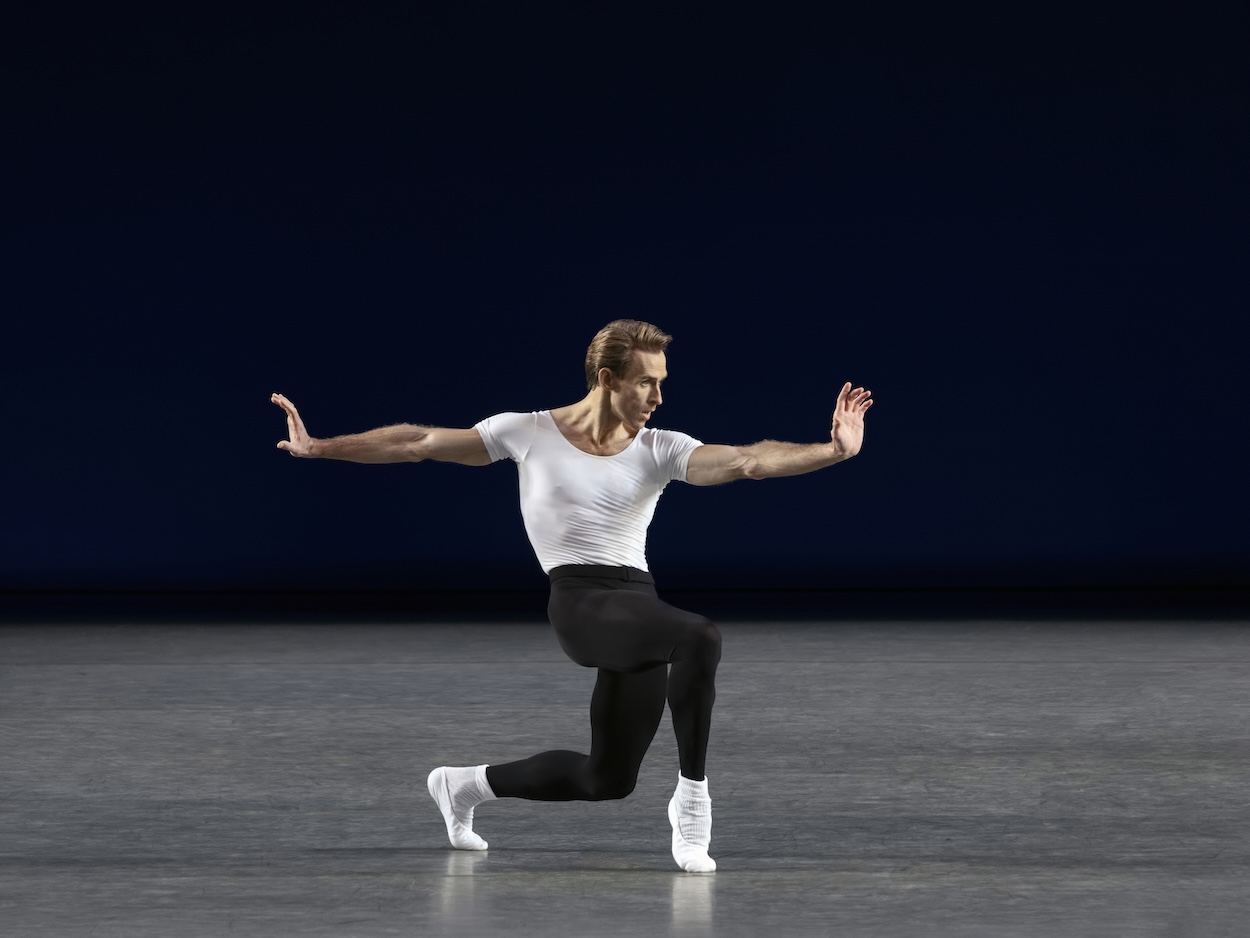
Adrian Danchig-Waring in Agon, choreography © The George Balanchine Trust, New York City Ballet, David H. Koch Theater, Lincoln Center, September 29, 2023. Credit Photo: Erin Baiano
…
Danchig-Waring is as erudite as his stage presence is elegant. Regarding the course of his career, he explains, “ballet is fundamentally a hierarchical system. And if you think about the way it was codified in the courts of Versailles, Louis XIV was the sun. He was the Sun King, and everyone orbited around him. The aspiration is always to get to the center of gravity. So the arc of a career, even today, in the 21st century, is one of starting in the outer orbit and by sheer force of will inching ever closer to the center.”
A poetic understanding born from experience informs his insight. “I think there’s a way in which dance allows a form of non-verbal communication, to express ideas that we actually don’t have language for,” he continues. “That, for me, becomes a spiritual practice. And it invites an embodied intelligence into all of our thought processes. There’s a dilation between the intellectual mind and the physical mind. And part of the pursuit is working toward integration between those things.”
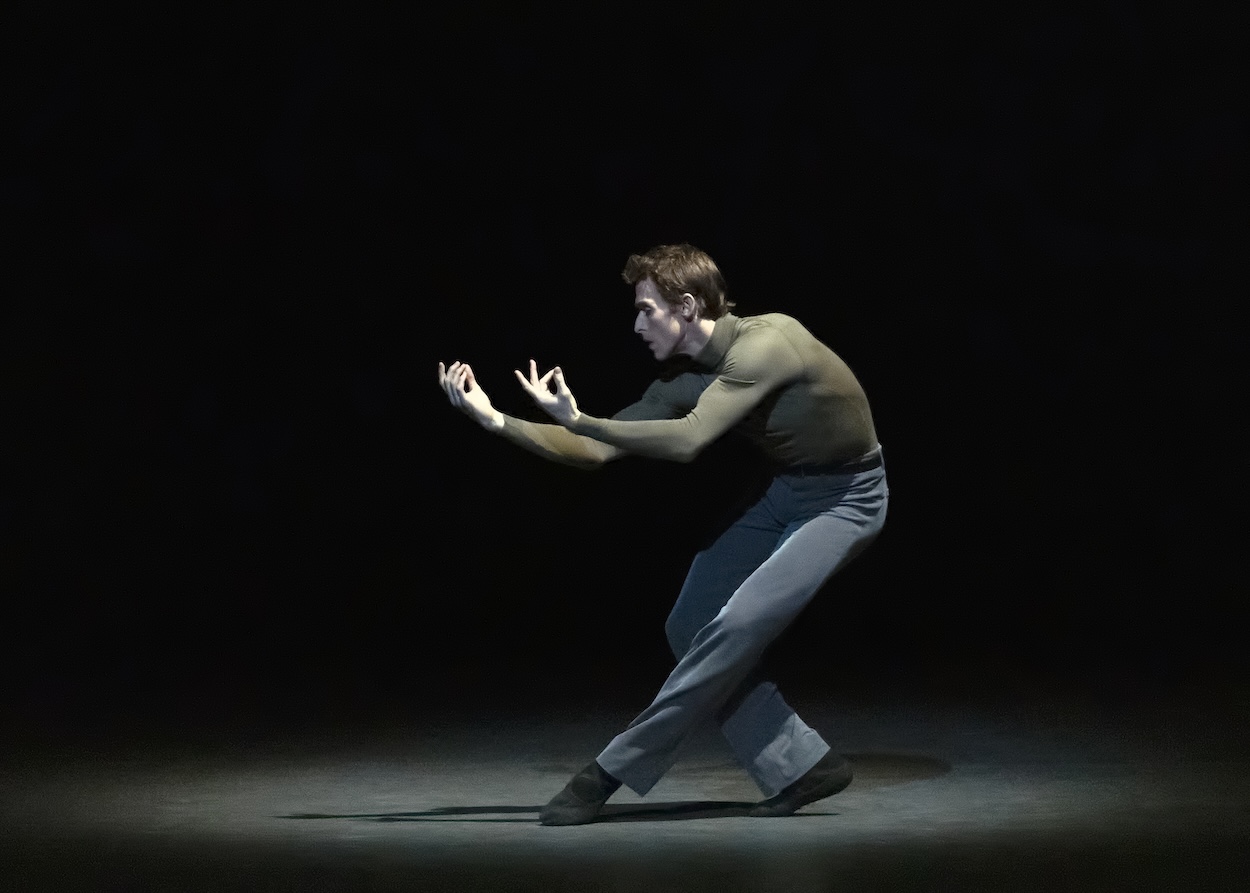
Adrian Danchig-Waring in Solitude, choreography by Alexei Ratmansky. New York City Ballet, David H. Koch Theater, Lincoln Center, Tuesday, February 27, 2024, 7:30pm. Credit Photo: Erin Baiano
…
For the one-day-only farewell event, Danchig-Waring will dance in four ballets. The program commences with George Balanchine’s The Four Temperaments, scored by Paul Hindemith. The work sets the occasion’s tone and establishes the balletic vocabulary. It will be followed by a groundbreaking performance of Lar Lubovitch’s Each In Their Own Time, set to selections from Brahms’ “Eight Piano Pieces (Op. 76).” Performed by Danchig-Waring and Taylor Stanley (who is also saying goodbye to NYCB this winter), the piece is the first duet for two male ballet dancers to be staged by New York City Ballet.
Choreographer Pam Tanowitz gifted a pièce d’occasion to Danchig-Waring, which will premiere next in the program—a quartet with three ballerinas. Danchig-Waring refers to it as a “profound gift” from a friend. “She is developing physical phrases,” he explains, “that over the course of a rehearsal process, start to overlap onto the music, and that allows you, the dancer, the performer, a lot of agency over how you’re choosing to sculpt music, or how you’re playing with space-time.”
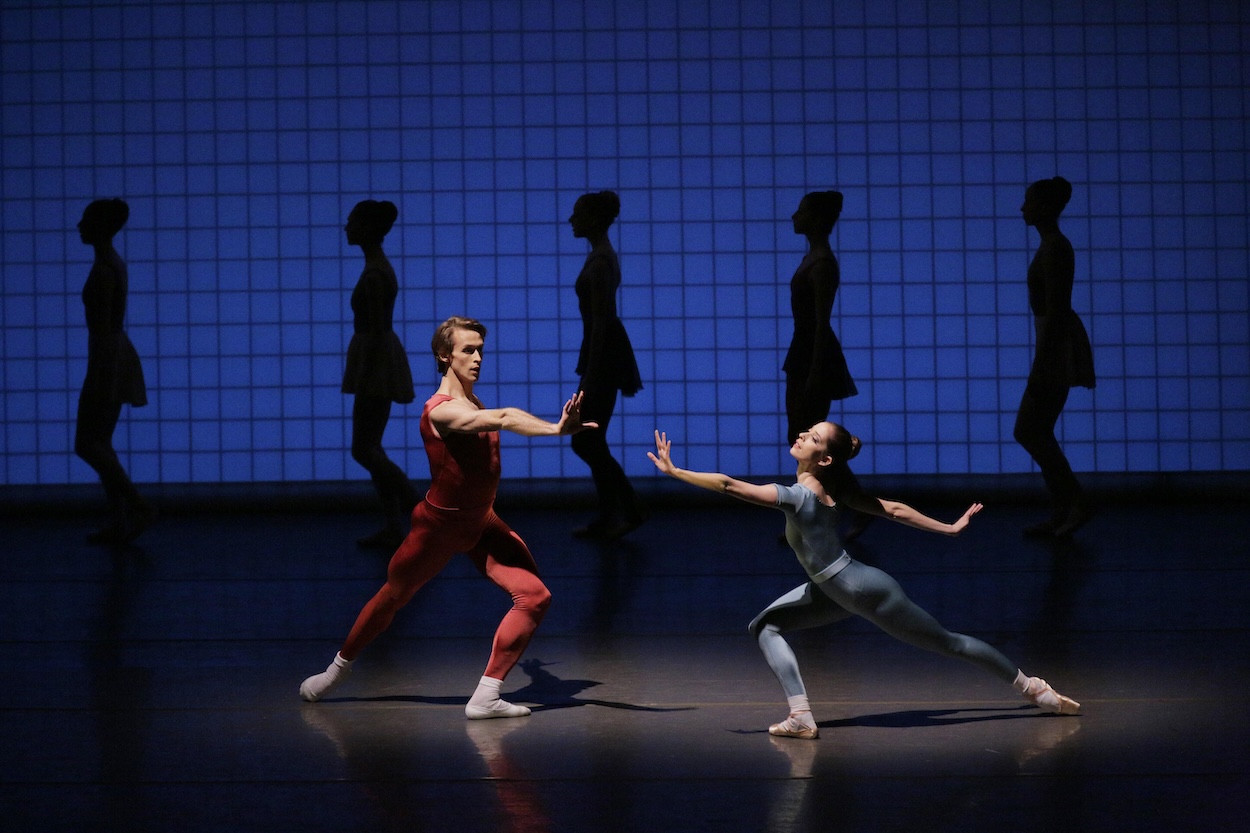
Rebecca Krohn and Adrian Danchig-Waring in Glass Pieces. Choreography by Jerome Robbins. New York City Ballet. Credit Photo: Paul Kolnik
…
For its conclusion, Danchig-Waring returns to Balanchine with Agon, the height of the choreographer’s artistic collaboration with composer Igor Stravinsky. Ultimately, a message takes hold throughout that ballet might not be for everyone but it is for anyone who has the curiosity, the interest, or the impulse. “My hope is that the arc of this program provides countless points of entry,” Danchig-Waring says.
“I think that the lineage I have put myself in at New York City Ballet is one of modernist abstraction,” Danchig-Waring says. “I feel very strongly that the Balanchine-Stravinsky works, what we call the black and white ballets, are evergreen. They are timeless because they are fundamentally abstract. Even though the medium is the human body. They trust that the musical structure is the structure of the dance. By making that manifested in physical form, you invite audiences into the sublime.”
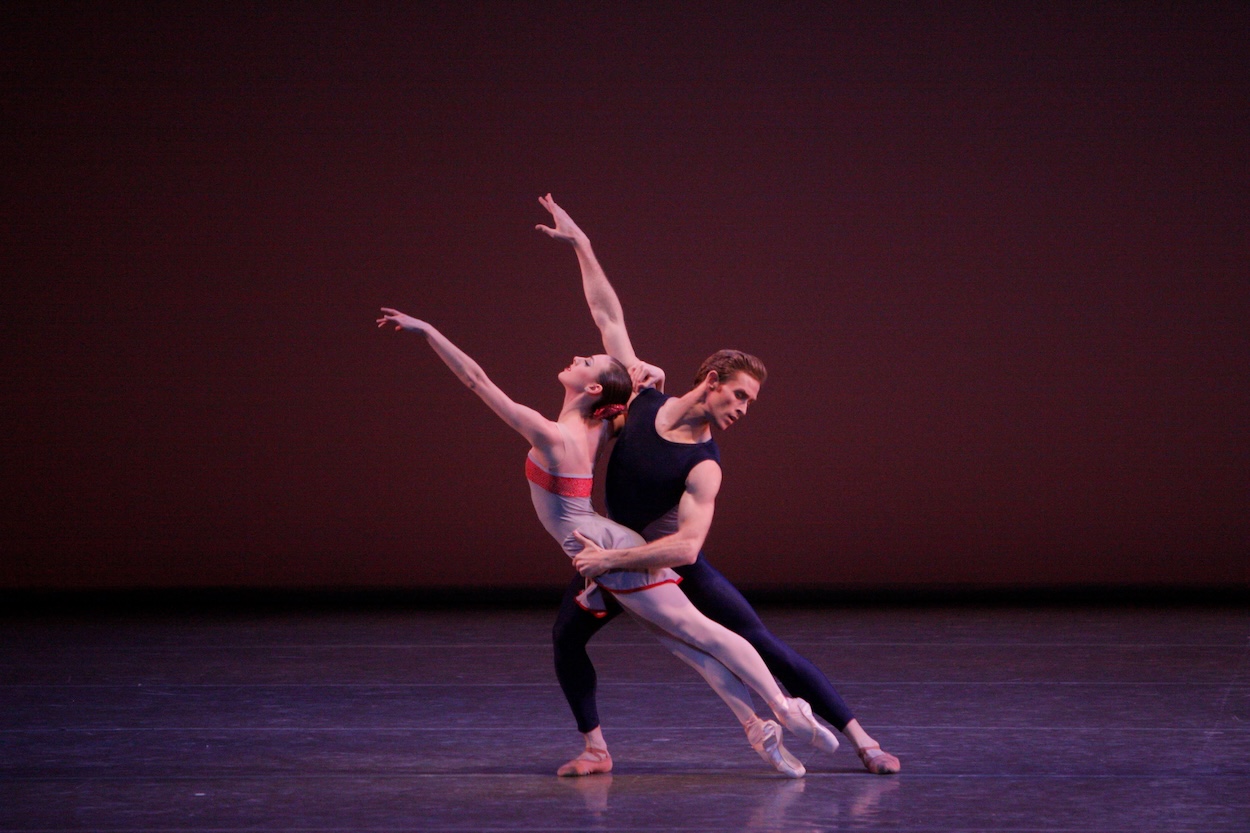
Mercurial Manoeuvres New York City Ballet 2/28/09 Credit Photo: Paul Kolnik © 2009
…
Danchig-Waring says he cannot predict what it will feel like to dance this specific program—whether he will translate emotion into stage presence and performance. That said, he is certain he knows its mission. “Dance is a medium of transmission, right?” he asks. “It passes from body to body and from one generation to the next. I think my responsibility right now is to be as generous in paying it forward as I can be.”
This will certainly be the case with the New York Choreographic Institute. “That program now is in the early phases of a five-year strategic plan, with programmatic expansion which is oriented around becoming an abundant ecosystem to support artistic experimentation,” he says. “We provide robust resources to choreographers at every phase of their development, not just emerging, but mid-career and established, to work at their most experimental. We are developing specific projects that support artists in all these different ways in nontraditional formats. It’s not just studio space and dancers, sometimes it’s dramaturgical consultation. Sometimes it’s art immersion. We are really operating as a think tank where we invite choreographers to participate.”