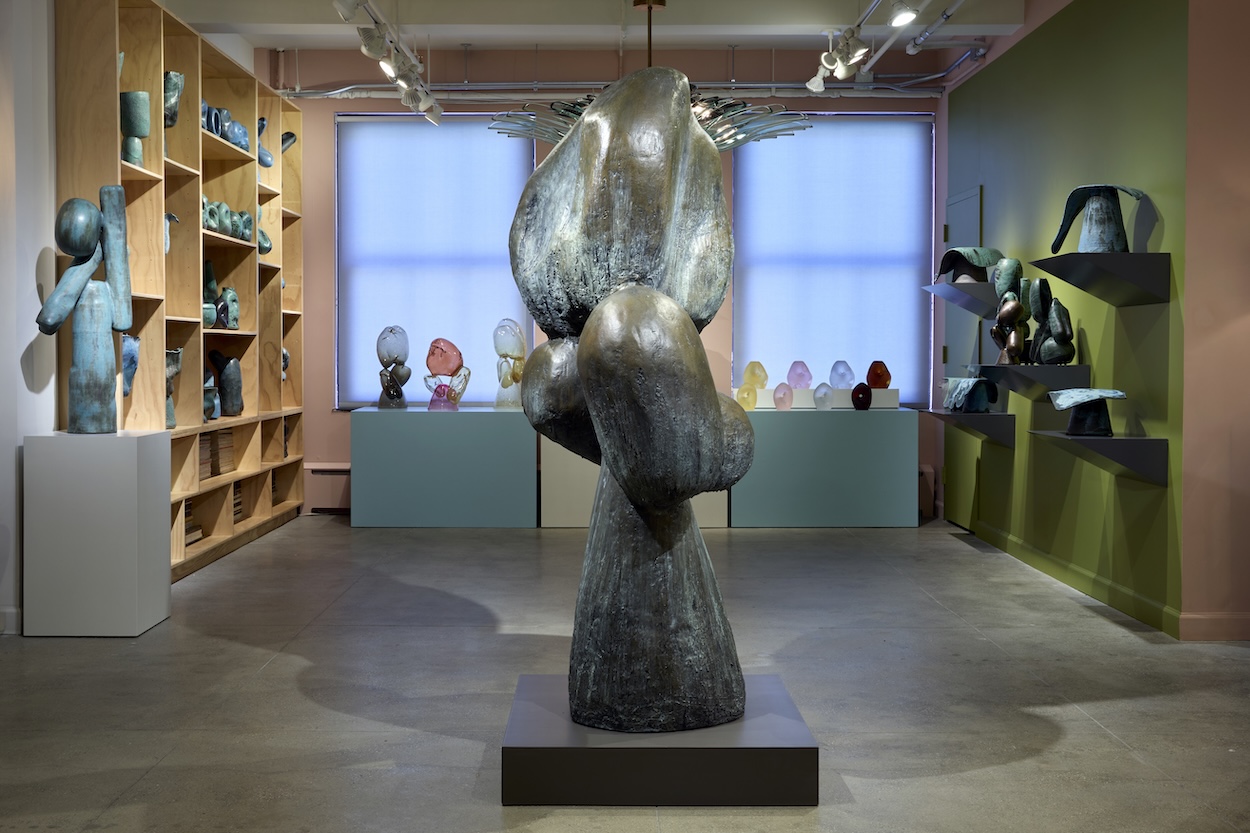
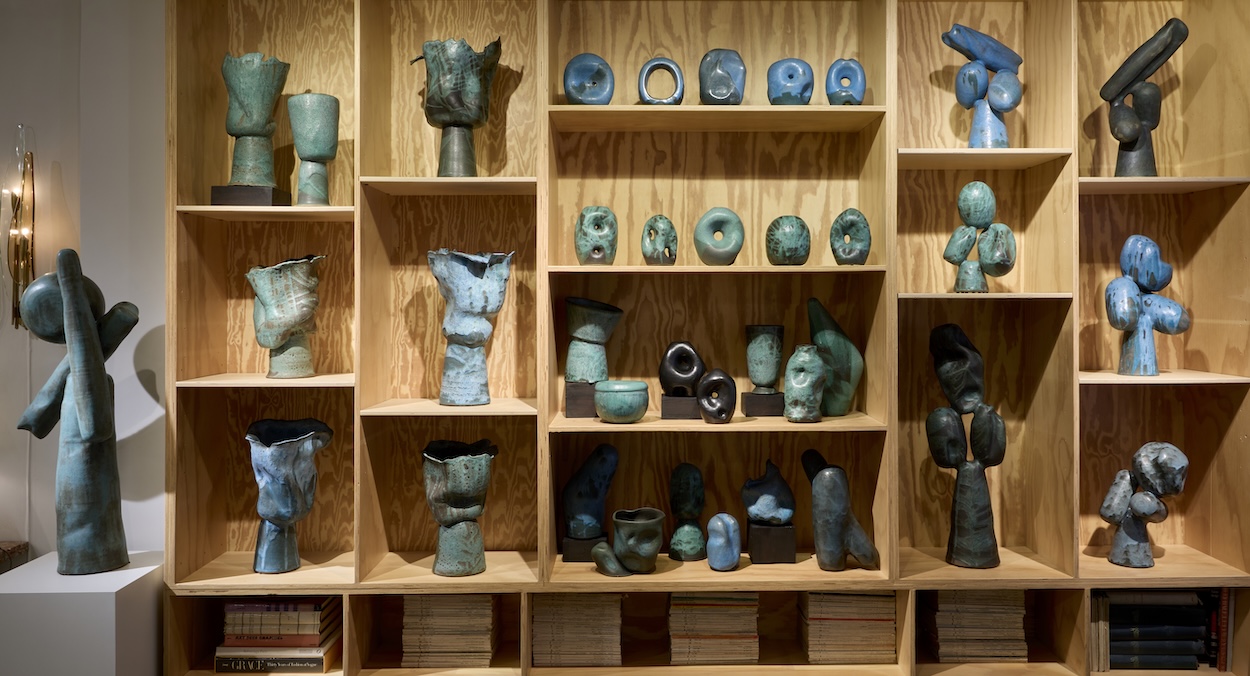
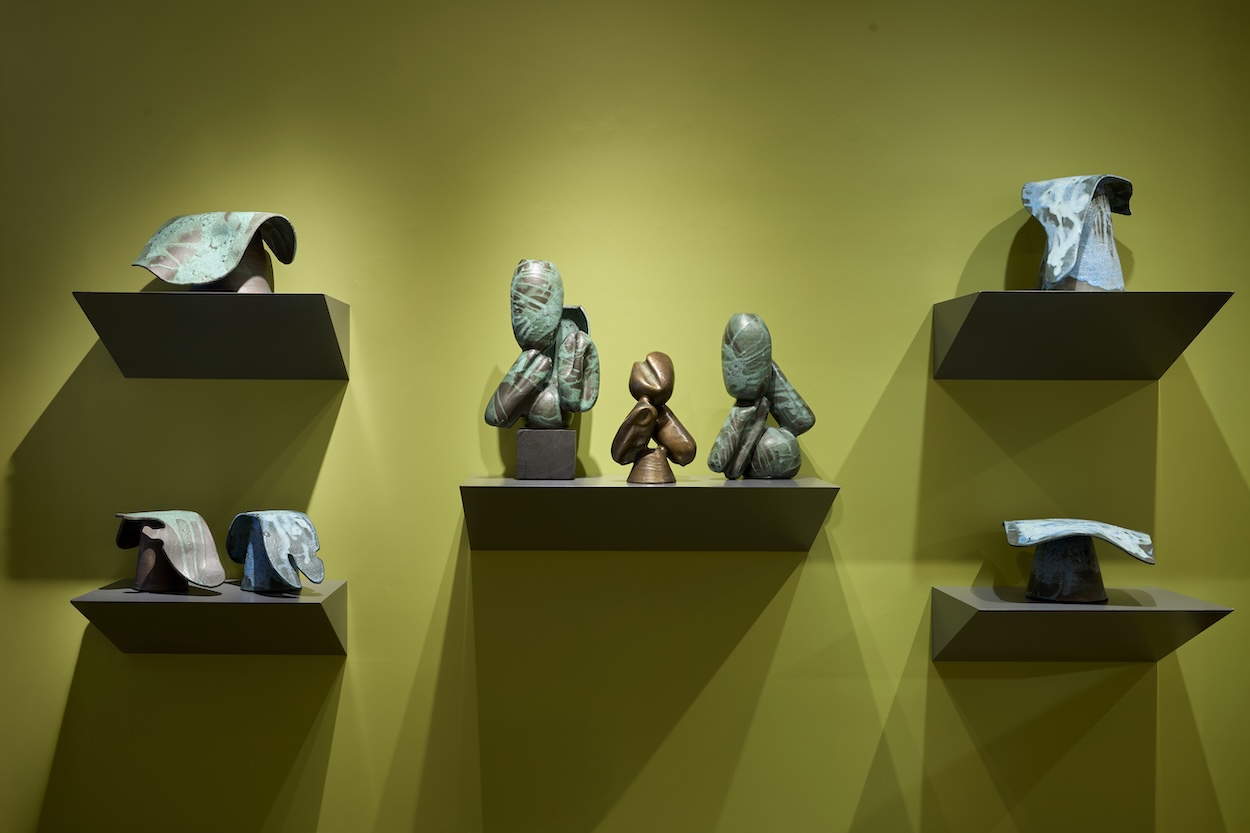
In a sunlit corner of the gallery Donzella Ltd., on the 15th floor of the New York Design Center, artist and editor David Haskell’s debut solo sculpture exhibition, “Boom Beach,” presents roughly 40 abstract objets d’art (and one monumental work) all originating from the pottery wheel. Even his bronze, cast glass, and blown glass pieces trace their inception to the wheel. Through anticipation of form, a compulsion to test the limits of stability, and the use of glaze for tonal complexity, often composed through moments of physical exertion (smooshing and slamming), Haskell configures weathered formations, wilting cake stands, and beguiling figurative assemblages.
David Haskell’s Solo Sculpture Debut, “Boom Beach”
Weathered formations, wilting cake stands, and figurative assemblages in ceramic and bronze, as well as cast and blown glass at Donzella Ltd.
BY DAVID GRAVER May 26, 2026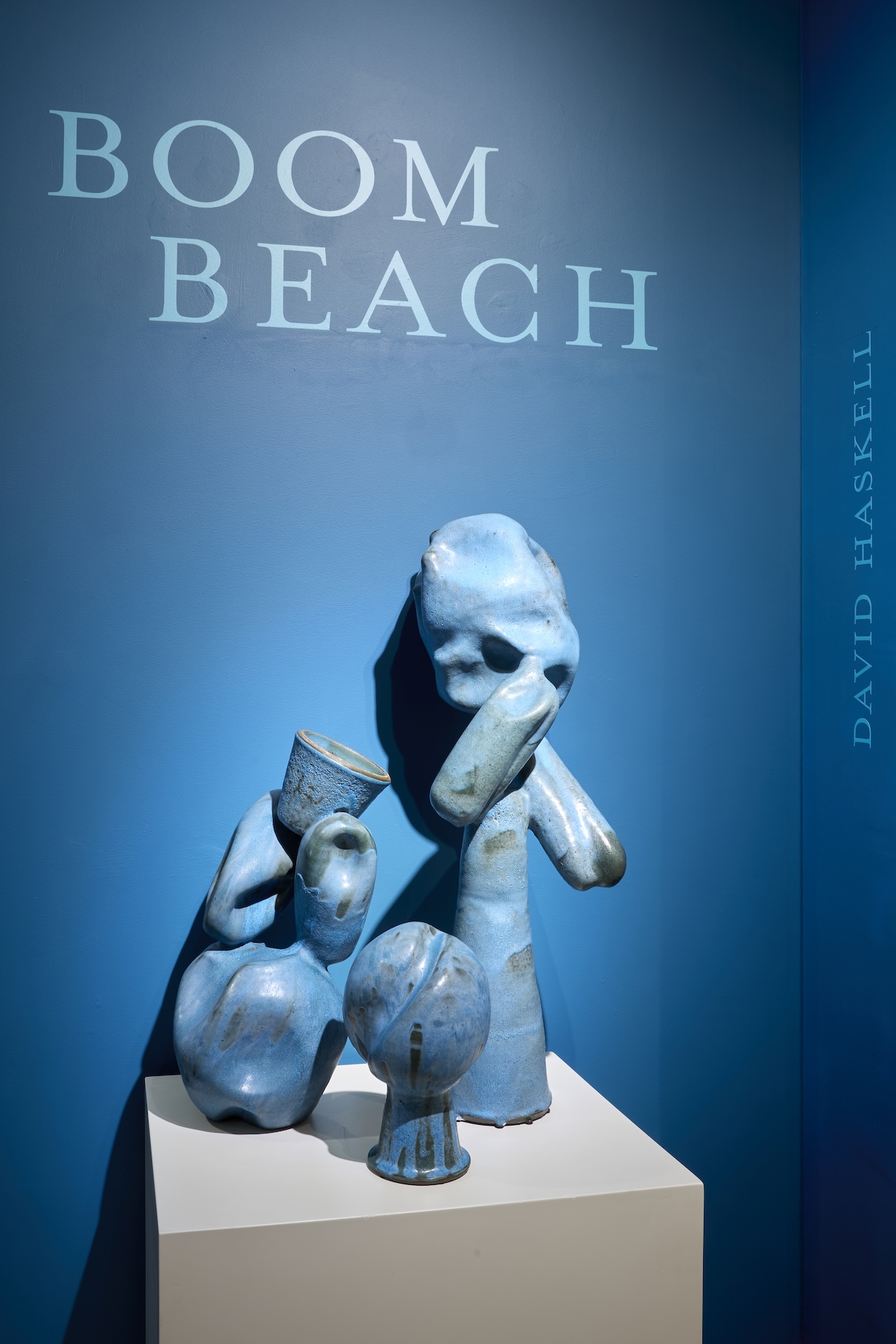
Courtesy of Eric McNatt
…
Courtesy of Eric McNatt
…
“Everything starts with the ceramics,” Haskell tells Surface. Though his practice began in high school, he returned to pottery about 12 years ago. “I was originally interested in planters, and making pots that were speaking to a particular plant that I collected. I would never have gotten here if I weren’t coming from a perspective of design and functional work—with wheel-thrown ceramic pottery as a language that I felt comfortable in. For me, the process got me here.”
Courtesy of Eric McNatt
…
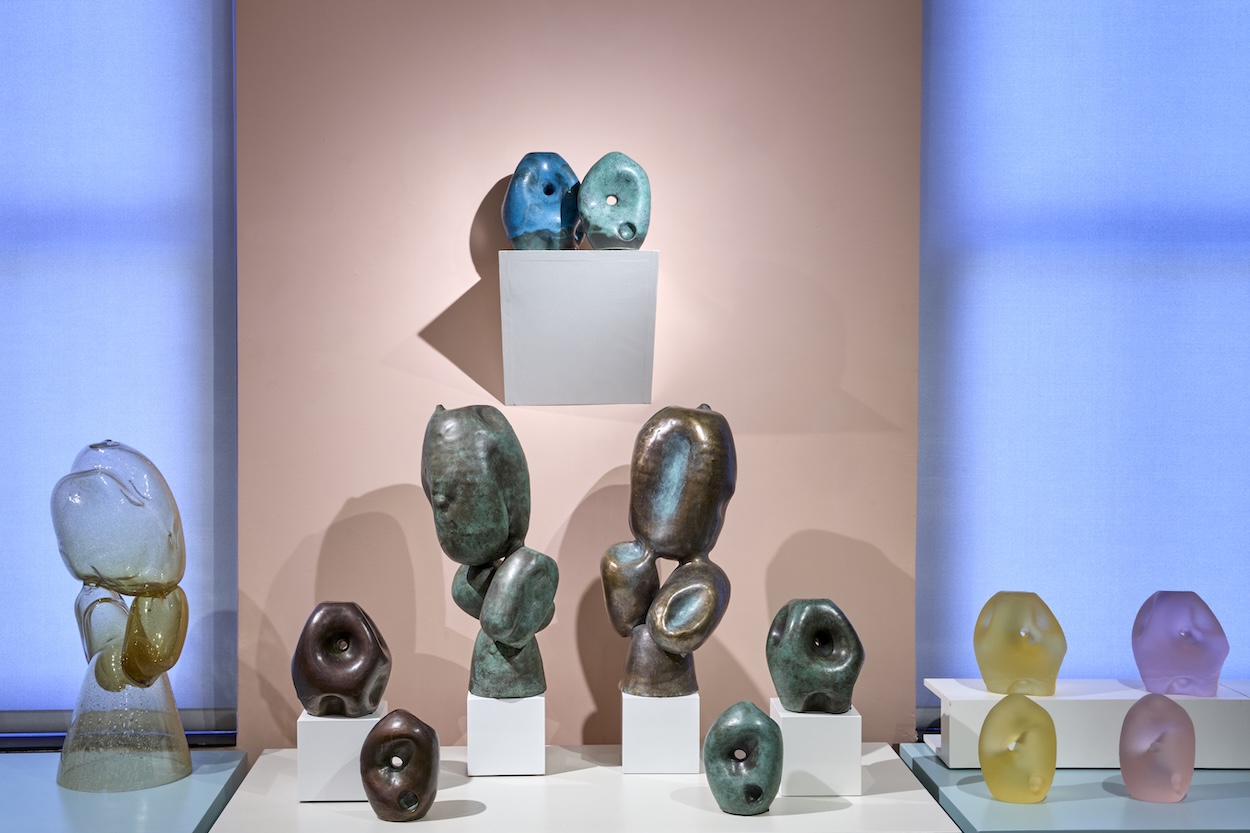
Donzella Ltd. has worked with Haskell for eight years. The exhibition, which runs through June 30, sprang from further developments in Haskell’s exploration of shape. Studies of rock transformed into pierced pieces. Floating vases and pedestal sculptures emerged. Some of it began when Haskell started marrying two pieces together as top and base. “Everything slides between plant, tree, human, rock—organic, inorganic. There are a lot of ideas around the assemblages,” he says.
Courtesy of Eric McNatt
…
In 2024, the artist began to investigate materiality. With the Modern Art Foundry in New York City, he translated his small assemblage sculptures into bronze. There, he experimented with patina, establishing a painterly quality that emphasizes the soulfulness of the metal in the same way that he uses his two signature glaze colors to enhance the emotional gravity of his ceramic works.
Courtesy of Eric McNatt
…
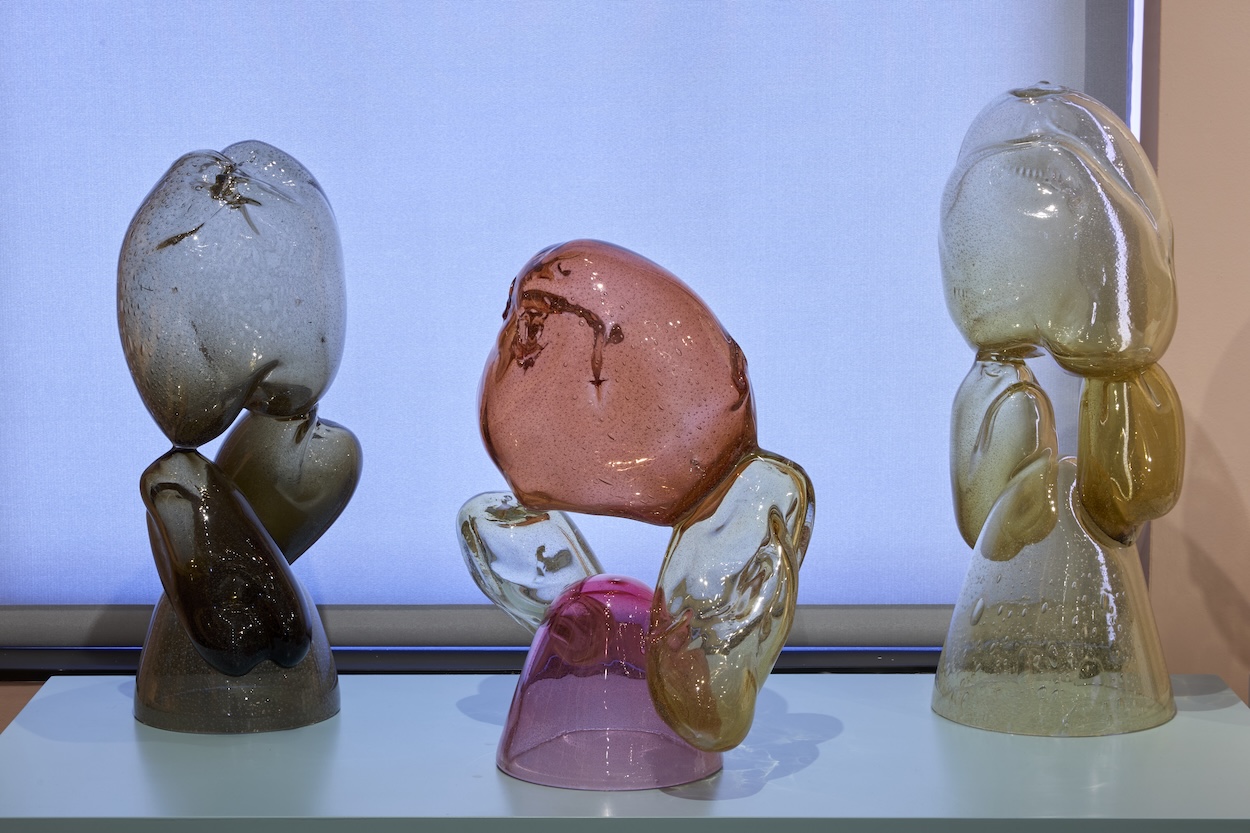
Haskell also took forms to Murano and partnered with Berengo Studio, which works exclusively with artists. There he produced cast glass iterations of his piercing pieces. The material allows him, for the first time, to see inside of his work. It also opened up a new color palette for Haskell—which references, he says, Gummy Bears in “whiskey, lavender, amber, and gray.”
He adds, “color is such a powerful way of triggering an emotion, and I find these fundamentally formal studies. They are not meant to distract you from the shape and form.” Even lighter, and airier, Haskell’s blown glass pieces within “Boom Beach” were actually produced in New York, with Brooklyn Glass.
Courtesy of Eric McNatt
…
The centerpiece—a bronze humanoid assemblage that rises six feet and weighs about 320 kilograms—was modeled after a smaller three-part sculpture. The work, which could be equally at home in a private residence or carefully manicured sculpture park, was born from a longstanding desire to create on a larger scale. To bring it to life, Haskell partnered with Fonderie Chapon in Paris. Together, they commenced with the fabrication process on January 20. The monument arrived one week before the exhibition’s April 29 opening.
“I feel like David’s just getting started,” gallery founder Paul Donzella tells Surface. “He’s got such a creative mind. This is such a work-out mentally for him that’s part of the balance in his life.” Donzella, who is always eager to know what’s next for Haskell, affirms that Haskell’s abstraction—and the way it alludes to the natural world—complements other pieces of art and design, both in the gallery and in the homes of collectors.