Upon arrival at Palo Gallery’s E. 3rd Street location, two blocks from its Bond St. flagship, the cloudlike abstract works of Athens-born, New York City-based oil painter Leda Tsoutreli swathe viewers with a soothing sense of wonder. The exhibition, titled “The Interstice,” marks the fine artist’s solo debut in the United States, and directly follows her fine arts MFA from Pratt Institute. It was at the prestigious art school that Palo Gallery founder Paul Henkel first viewed her work, during Tsoutreli’s thesis presentation, and offered her a solo show.
Fine Artist Leda Tsoutreli's Cloudlike Abstraction at Palo Gallery
An ethereal cohesion enfolds visitors upon entry to the Greek oil painter’s debut solo show, “The Interstice”
BY DAVID GRAVER October 24, 2025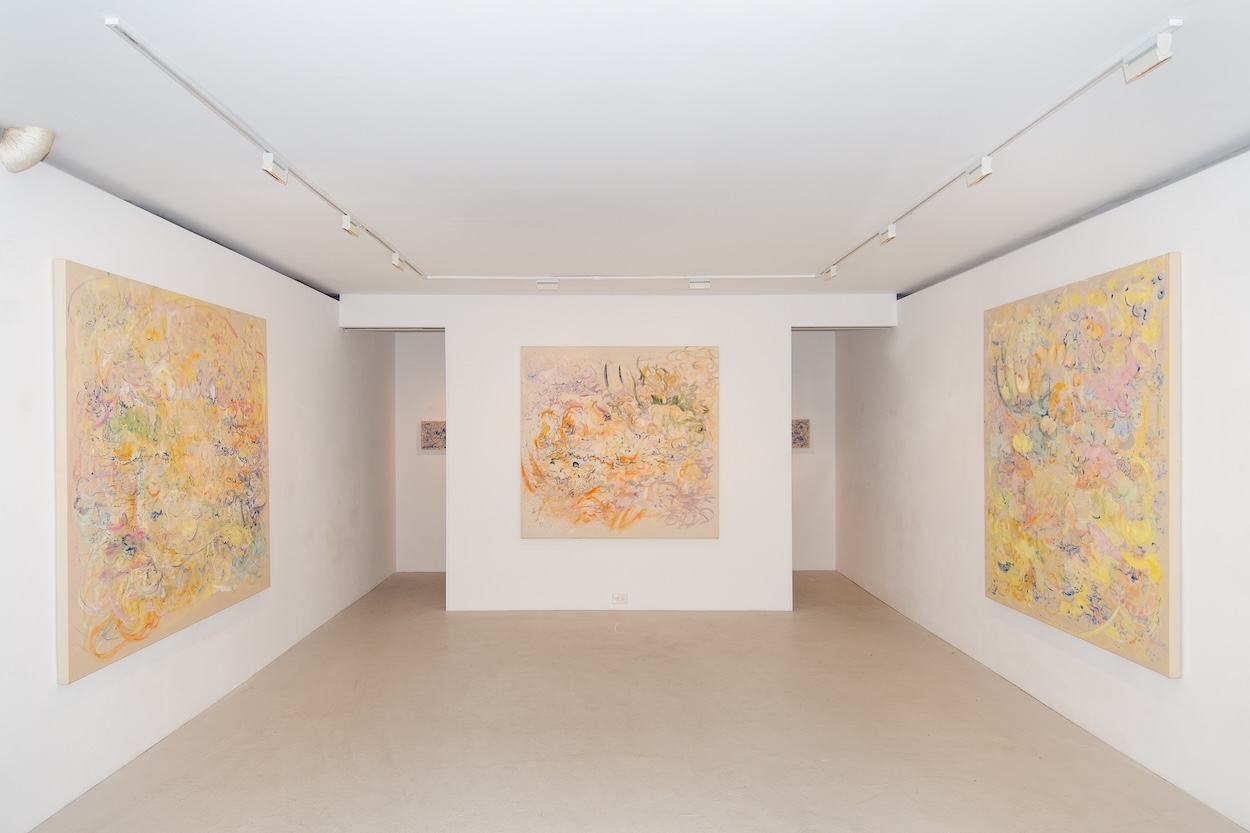
Install images courtesy of Palo Gallery
…
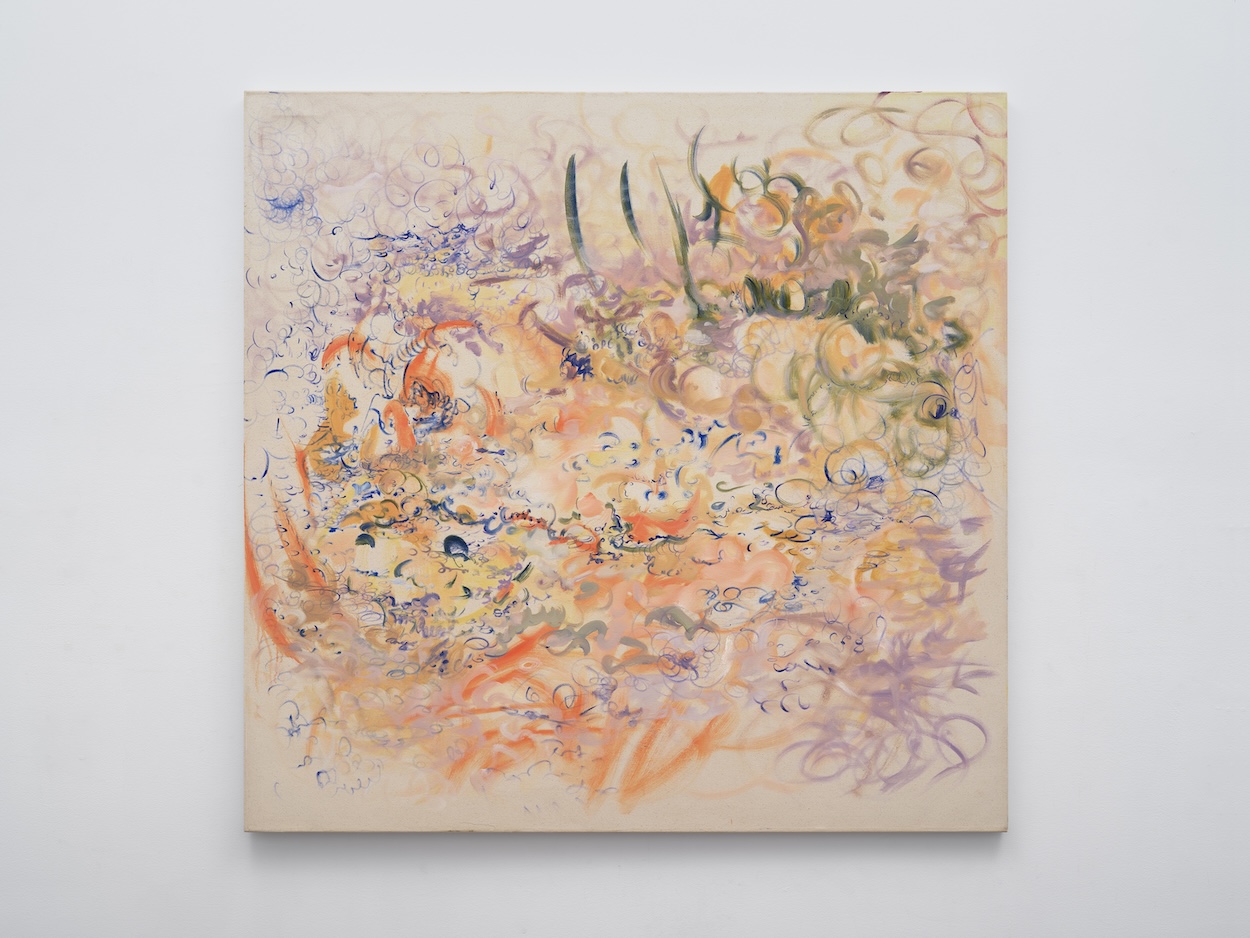
Image of Playing with Cy, 2025, courtesy of Leda Tsoutreli and Palo Gallery
…
Henkel was taken by her gestural mark-making and her evocative artistic reference points. “I don’t really show much abstract art, not because I don’t like it but because it’s really hard to find contemporary abstract artists that are doing something that feels fresh,” he tells Surface. For the gallery founder, Tsoutreli’s work had a clear, contemporary point of view—as well as an art history foundation.
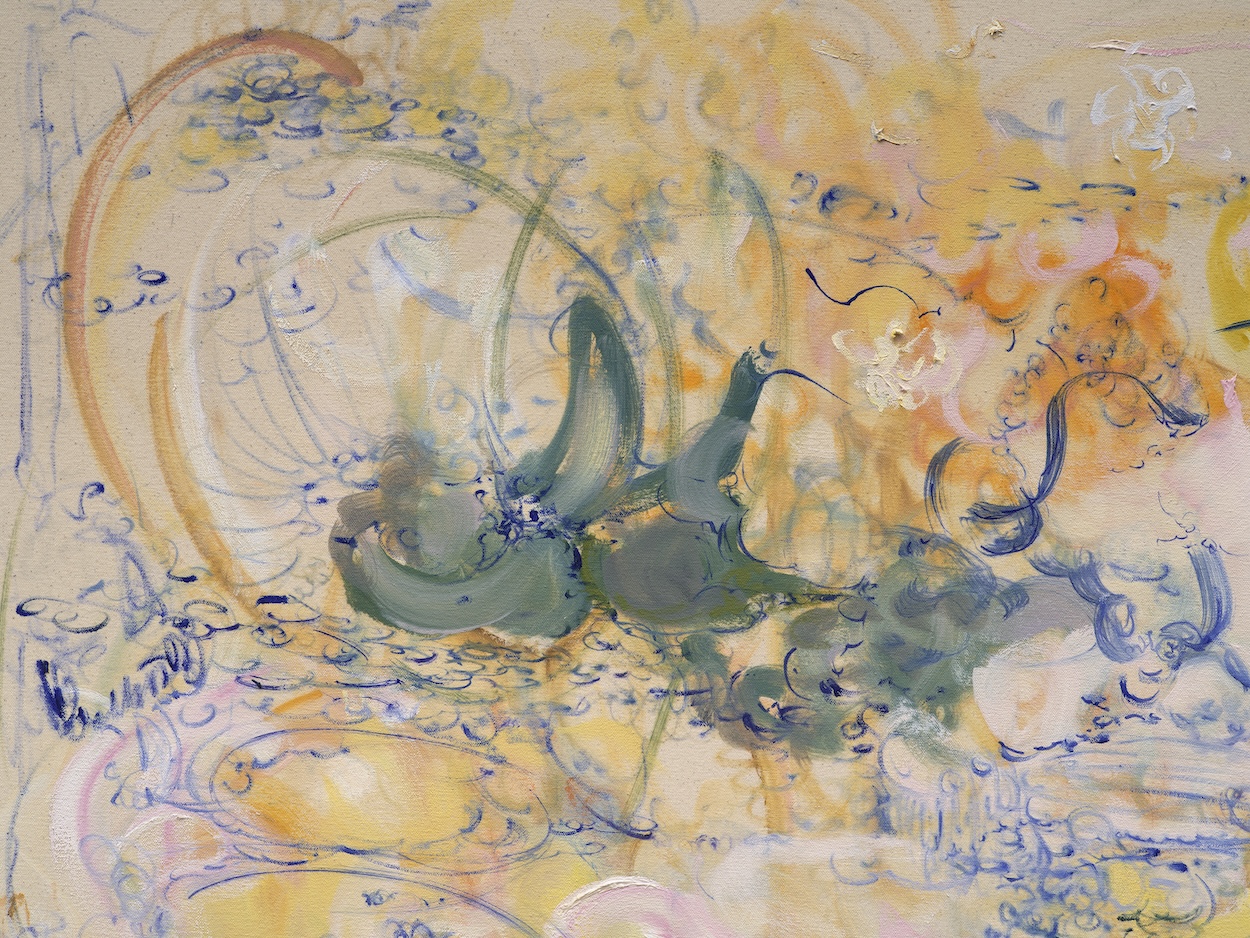
Detail image of Untitled, 2025, courtesy of Leda Tsoutreli and Palo Gallery
…
“These are Baroque compositions,” Henkel says. With Tsoutreli’s Hieronymus’ Garden, there is a subtle allusion to Monet’s Water Lilies and an acknowledgment of The Garden of Earthly Delights by Hieronymus Bosch. There are gestures reminiscent of Rubens, and references to Cy Twombly, Rococo, and poetic lyricism. “We work with artists who are art historians—who have a research-based practice and are hyper-aware of what they’re referencing and what they’re building upon,” he adds.
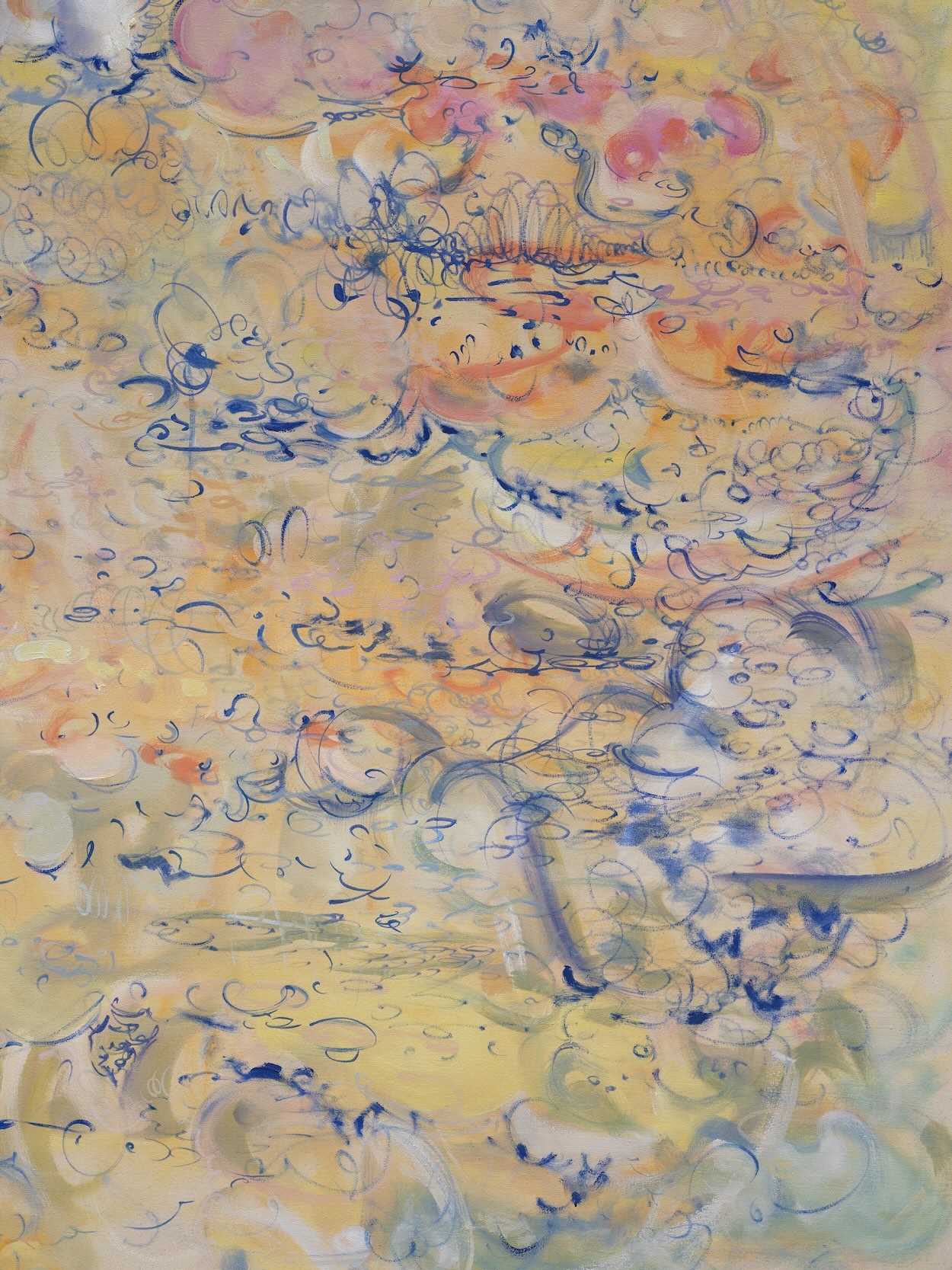
Detail image of Hieronymus’s Garden, 2025, courtesy of Leda Tsoutreli and Palo Gallery
…
“It starts a little bit like dancing,” the artist says of the origin story for each piece. “I think of the painting as a two-dimensional space that exists, in essence, parallel to us, which is also where the title of the show comes from. The best way I have described this space is the same way the pasture is described in the Bible: an image of infinite, never-ending green. The beginning of a painting will stand upon the farthest thing that I can see in this ‘empty,’ unoccupied two-dimensional space. I don’t have any points of reference when I am painting; I just start, and gradually become attentive to the painting’s needs.”
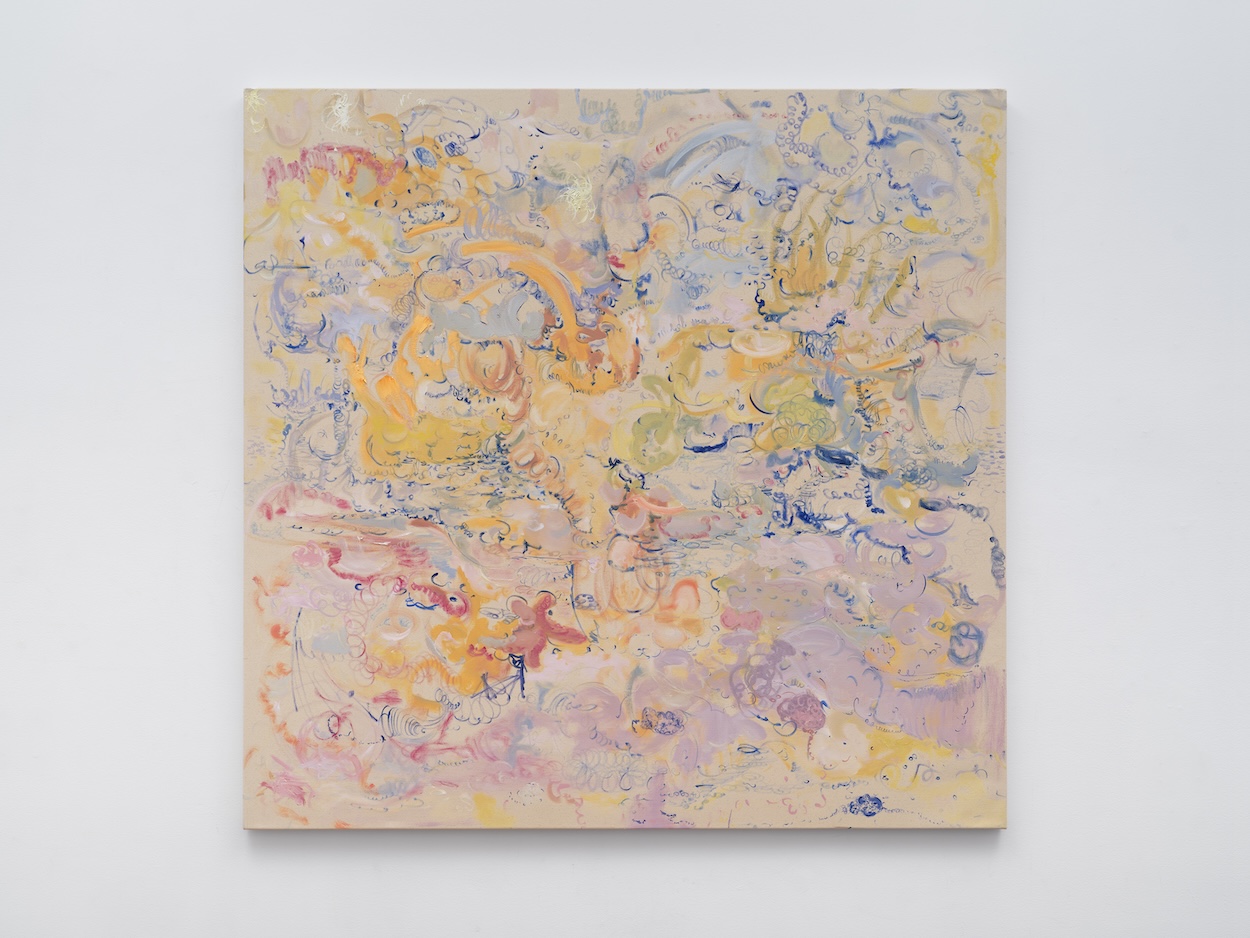
Image of Untitled, 2025, courtesy of Leda Tsoutreli and Palo Gallery
…
Tsoutreli ruminates on the words play and allow, and composes by the concepts of replication, pressure, and urgency. “I am more interested in when a painting is finished, and it is still something I struggle to understand, but that is the beauty of it,” she says. “That is where the raw canvas becomes essential to my practice. Making a canvas is like giving birth to it; color and stroke give it life, and using the raw canvas as material, paintings become manipulated beings rather than just filled images. I always like to underwork or overwork a painting, usually keeping score of composition, space and play, and that is when I know a painting is done.”
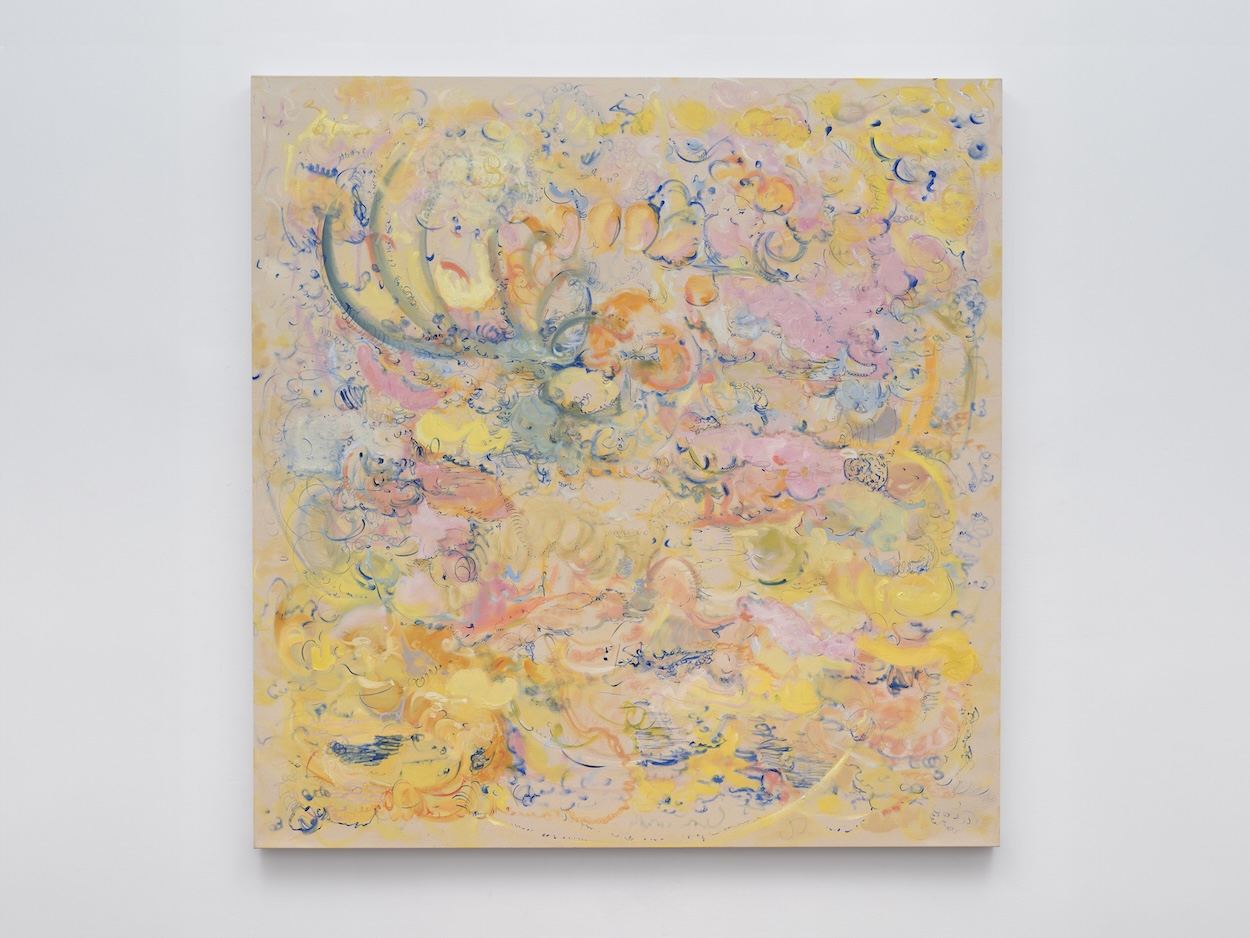
Image of Finding Leda, 2025, courtesy of Leda Tsoutreli and Palo Gallery
…
Throughout her painted works, Tsoutreli develops depth and dimension through her use of color. “I am a very messy painter, and never clean my palettes and usually just add white to create these bright, airy, ethereal colors,” she explains. “Color goes hand in hand with brushstroke; each brushstroke creates rhythm, and each color creates organization that gives structure to the composition of the painting. Lighter colors, such as yellows, oranges, and pinks, are usually made with thicker strokes that work outward, while thinner strokes, such as blues, work inward.”
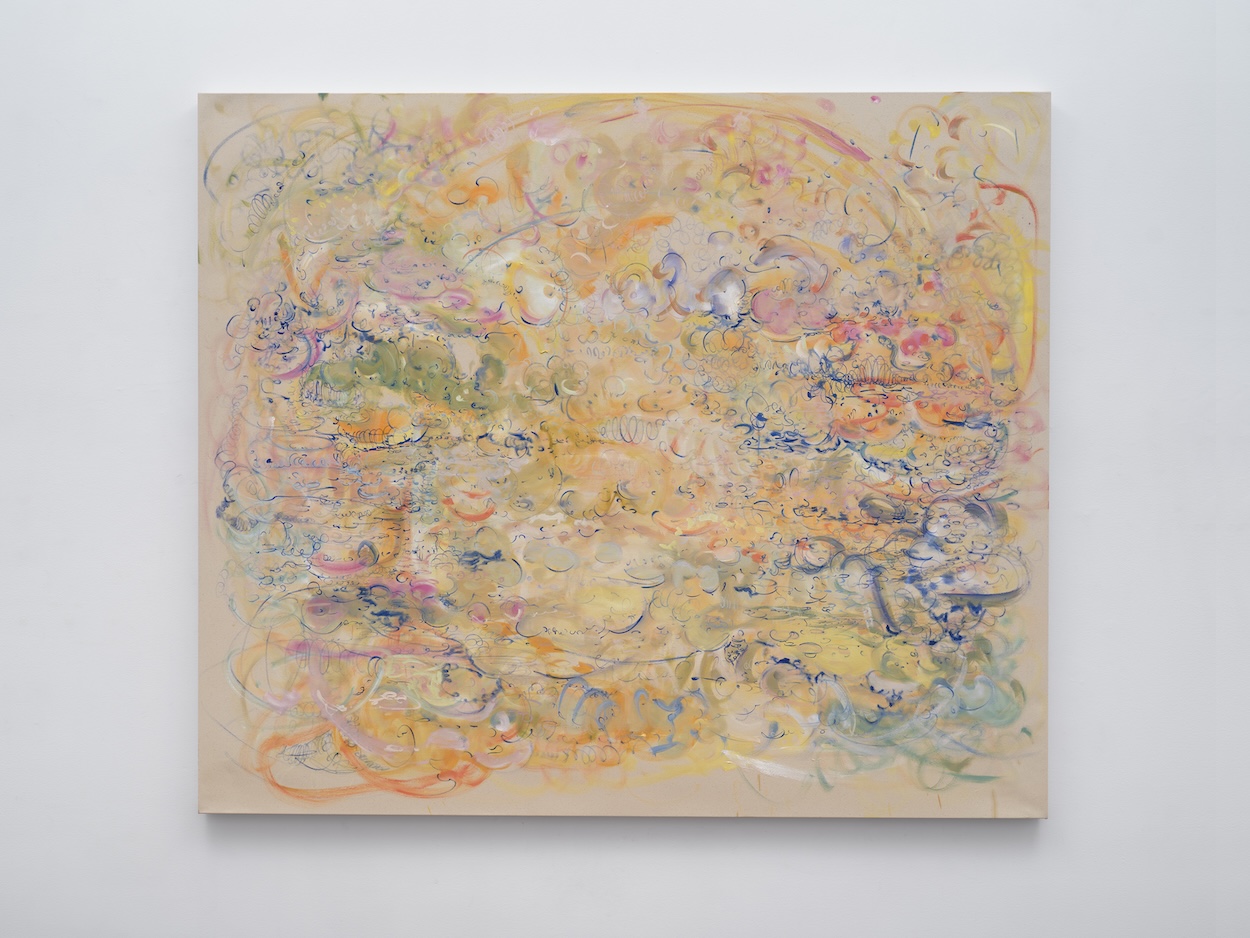
Image of Hieronymus’s Garden, 2025, courtesy of Leda Tsoutreli and Palo Gallery
…
“Blue plays a vital role in the composition of a painting as it is a color that works within itself,” she adds. “I introduced it to my paintings, similar to the use of the ballpoint pen in my drawings, binding together the immediacy of drawing to painting. Blue travels within the thicker strokes, allowing for anomalies to be created and each stroke to have both a warm and cold tone. They become mystical, a little bit like writing, and allow for space to be conceived through line. There is never closure to them; they are constantly moving and remain in a relay, like pressure systems that contain the pressure of touch.”

Detail image of Playing with Cy, 2025, courtesy of Leda Tsoutreli and Palo Gallery
…
For Tsoutreli, it’s important that viewers understand that paintings are a work of beauty. “It is a gift to see people find pleasure and feel this intense feeling of rapture, this craving and urgency that I feel while painting,” she says. In fact, the reception has been so positive that only one work remains unsold at the time of publication, led by what Henkel calls a frenzy at the opening. Palo Gallery has a detailed plan for next steps, including a presence at Art Cologne, group shows, and a solo exhibition in Paris.