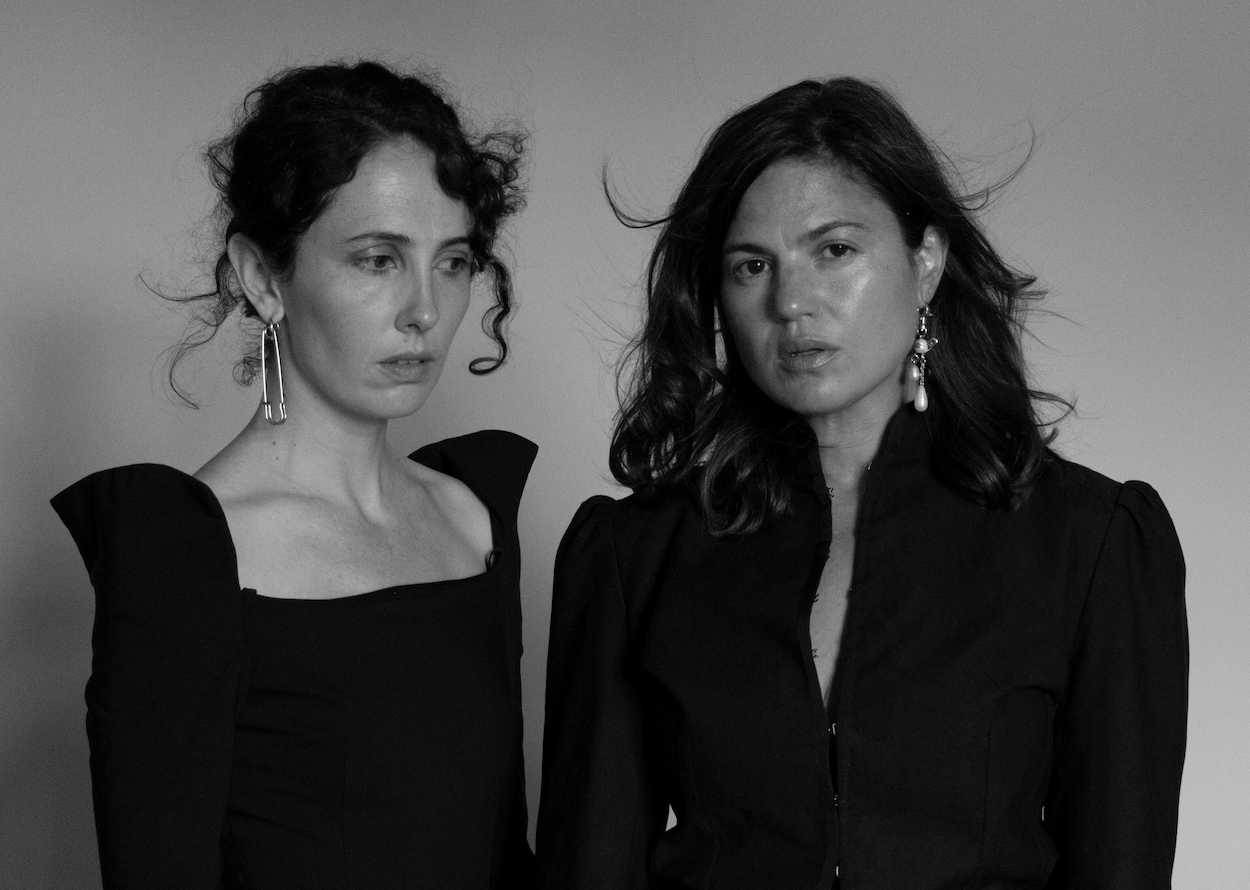
Since 2022, the artist duo Operator, Ania Catherine and Dejha Ti, has been asking how much of a human body survives once it is broken down and translated into code. Their three-part work, Human Unreadable, first encoded choreography as generative art on the Ethereum blockchain, then let collectors uncover the dance scores hidden inside. This week, the project reaches its conclusion.
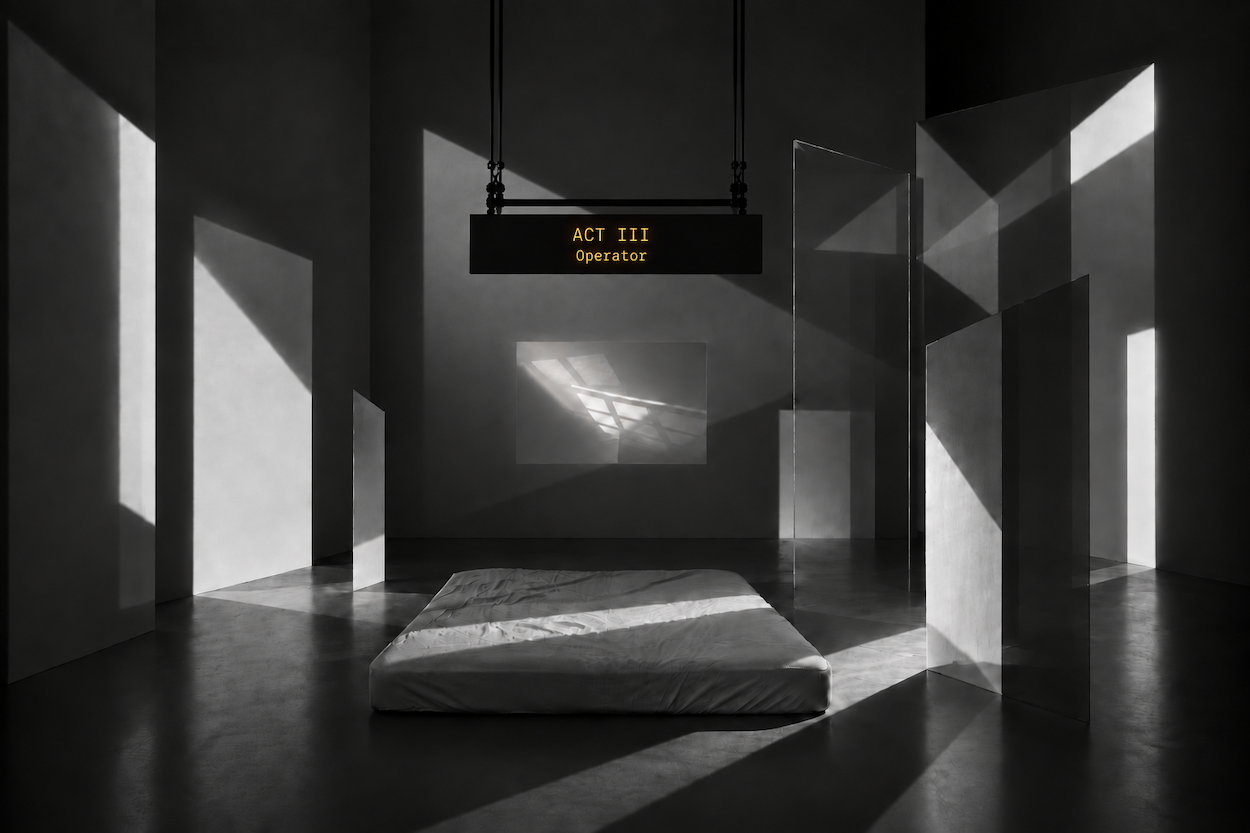
Presented as part of the Whitney’s exhibition “artport: A History of Internet Art,” Act III returns the first 100 of those scores to living dancers in an 80-minute performance at the museum’s Hess Theater, blending computational choreography with spoken narrative across five chapters. The show opens on November 19 and runs through the weekend. Alongside it, the Whitney has commissioned Entr’acte, a database artwork built from the voice notes, sketches, and rehearsals that shaped the show. Here, Catherine and Ti discuss ambition, vulnerability, and what it means to finally witness the body in full.
Human Unreadable began in 2022 by asking how much of a body survives when it is broken into pieces and translated into code. Four years later, Act III asks a version of that question about your own relationship. When did you realize the project’s central question had become personal and what led you to put your marriage on the record?
Human Unreadable has always asked how legible we are: how systems keep getting better at reading us while we get worse at reading ourselves and each other. Act I encoded the body into a generative artwork on the blockchain. Act II downsampled it further. Act III is where the body is finally witnessed in full. The first chapter is called “A shared language.”
Six thousand years ago, the words host and guest were the same word. The show starts from that original unity and traces what happened after the split. But it’s not just about language or the body. Act III is about the cost of ambition. What happens to the relationships, the people inside the practice, the signals you ignore when the climbing doesn’t stop. Along the way, we also went through a major personal transition, and rather than work around it, we let the work hold that too. Vulnerability has always been a core theme of Human Unreadable, and it felt more honest with Act III to be vulnerable rather than make a piece “about” vulnerability from a distance.
As part of that process, we built a tool to help us create the show, and that tool became an artwork itself. It’s called Entr’acte. It was a witness in the room from the beginning, holding our voice notes, creative sessions, sketches, rehearsals as they happened. Every deliberation, every path not taken, every possibility the stage couldn’t hold. The Whitney’s artport is commissioning it as a database artwork. The audience encounters the same system we used to make the work.
You’ve spent a decade building Operator as both creative and romantic partners. How has the way you work together changed as your marriage has ended, including how you share authorship, make decisions and settle disagreements? What has surprised you about continuing to make work side by side?
The shared language that first brought us together is still there, the creative trust, the way we can still get equally excited over a new scenic idea. The artistic alignment is unparalleled. That part has never wavered.
Act III is described as “theater aware of its own construction.” It moves between computational choreography and spoken narrative across five chapters. Ania, you come from choreography and performance; Dejha, from multimedia and technology. How did each of your disciplines shape the structure of the piece, and what did writing spoken text ask of you that movement or code never had?
Act III is the fullest combination of our two worlds, drawing on nearly every medium we work in between us. Underneath it is the Operator Generative Choreography Method, built for Human Unreadable in 2023: an on-chain choreography method that encoded movement itself onto the blockchain and made it collectable. It proved the body and blockchain could meet. The method produces and preserves the movement. Around it we build the show the way we build all our live work, integrating scenic design, live video, code and now spoken word into a single experience. Act III is the most ambitious version of both: the choreography returns to dancers at full scale, and the staging adds a written script, an AI witness system, a live global broadcast, and documentary footage of the making of Act III. We’ve both always had personal writing practices behind the scenes, but this is the first time we’ve written a script for a live performance. Writing spoken text asked us to be specific in a way that movement and code don’t require. Movement can hold ambiguity. Code can hold abstraction. A spoken line has to land in the room. It turned out to be one of the most enjoyable parts of making the show, and it’s hard to imagine an experiential work now without a major writing component.
The performance takes the first 100 choreographic scores, encoded on the blockchain in Acts I and II, and returns them to dancers’ bodies. What happened in rehearsal when the dancers began performing sequences generated years ago? Did reversing the translation change how you think about what’s lost, or recovered, between body and code?
We built a previsualization tool that lets us see the first 100 sequences performed by digital bodies before the dancers ever enter the room. We’ve watched dancers embody these sequences since 2022, when we first tested the choreographic algorithm. The same thing comes up every year: nothing matches a human body moving in front of you.
Act III plays out in scenic and lighting design built for the Whitney’s Hess Theater. At the same time, it will be broadcast live as its own artwork, mixed in real time, to institutions from the V&A to the Yemisi Shyllon Museum of Art in Lagos. How did you design an evening that feels both an intimate theater piece and a global broadcast? What does it mean to you for an audience to “witness” from thousands of miles away?
Over four years, collaborators around the world have worked on this project, and for all kinds of reasons many of them can’t be in New York. We loved the idea of people sharing time across continents, witnessing something together in real time without being in the same room. So we organized institutions in the UK, Nigeria, Italy, Switzerland, Argentina and many other countries to stream the performance at the same moment. We didn’t want to just put a camera in the middle of the room. The stream shows views the theater audience never sees: aerial shots, close-ups, a whole different way of looking. The Whitney performance is theater. The broadcast is a separate work, mixed in real time. We hope the same feeling runs through both.
The project concludes that the human was never lost to code, but to “normalizing the treatment of our bodies as systems to optimize and ignore when they signal.” Your practice has long looked at privacy, surveillance and transparency on the blockchain. What do you hope audiences take with them from the Whitney about their own relationship to technology and ambition? And what comes next for Operator after Human Unreadable?
We often think we’re one upgrade or one achievement away from a happier version of ourselves. How many upgrades later and did life meaningfully change? Did we really feel different after that show, that prize, that commission? There’s a monologue in Act III called Inspiration Point. The protagonist climbs and climbs and when she reaches the top, the view doesn’t feed her; it shows her the fault lines. Act III is a parable about the cost of that climb. We’re both trying to focus on tuning in to the signals we’ve been trained to ignore. That’s what comes next for us: paying attention.