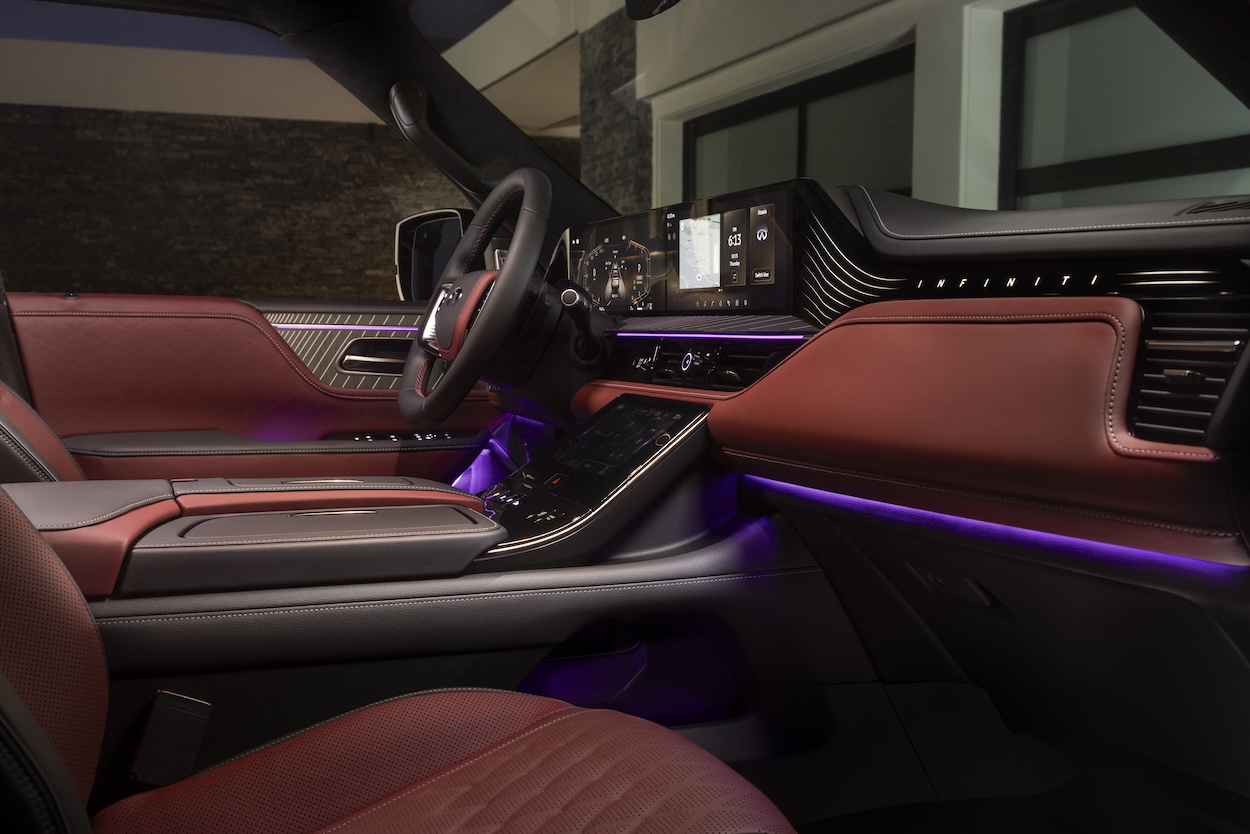
For Japanese luxury automaker Infiniti, it was important that a sense of omotenashi, or selfless hospitality, start before opening the door of its flagship SUV, the QX80. “The experience is expressed through details that may seem small on their own, but together shape how a person feels,” Infiniti’s head of design, Taisuke Nakamura, tells Surface. “Inside the QX80, the space is open and calm, and every row is comfortable, not only the driver’s seat. Technology like the large displays and Google built-in should feel natural to use and help quietly in the background. From the outside, the QX80 has a strong presence. Inside, it should feel like you are being looked after.”
Infiniti’s Head of Design, Taisuke Nakamura, on Shaping the 2027 QX80 Around Japanese Hospitality
The concept of omotenashi guides every detail of the flagship SUV, from its bamboo-patterned grille to its sand-dune-inspired interior
Sofia Quintero October 22, 2026
2027 INFINITI QX80 Sport. Courtesy of INFINITI.
…
2027 INFINITI QX80 Sport. Courtesy of INFINITI.
…
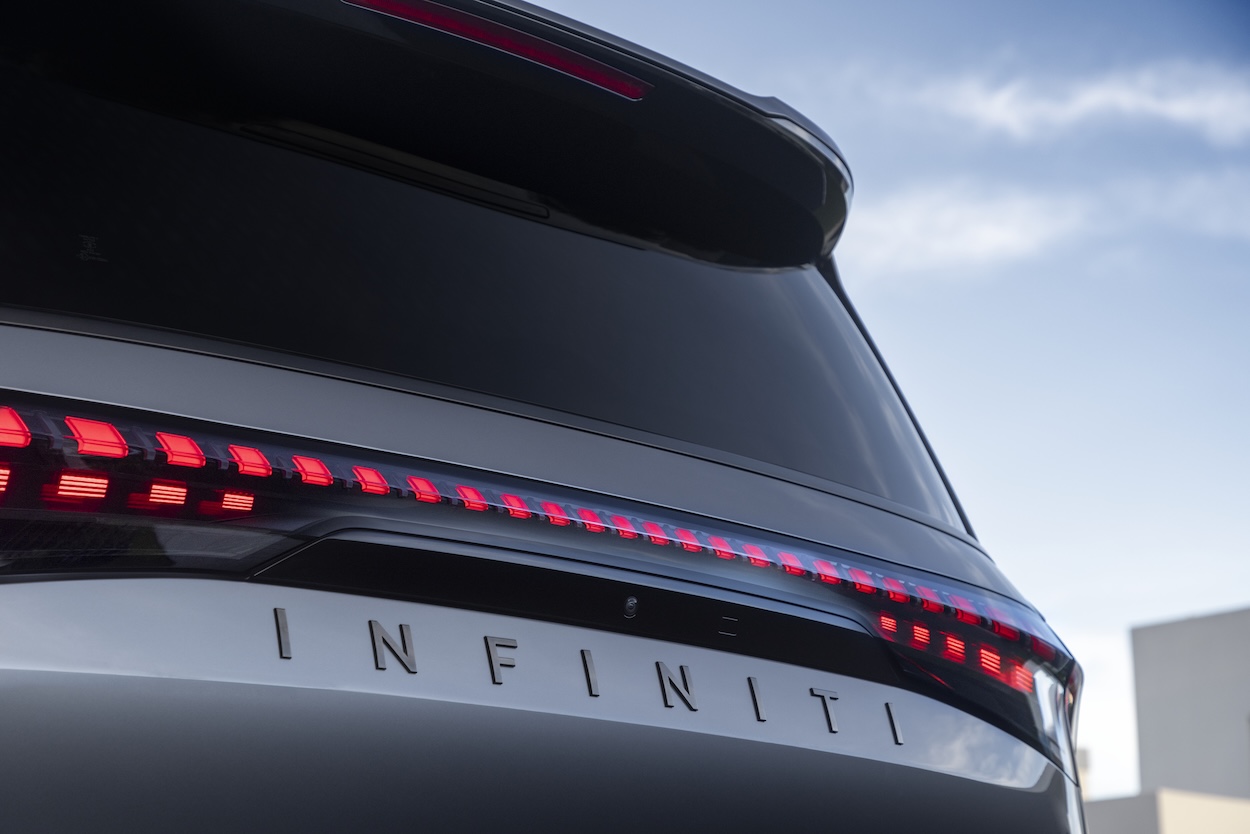
Infiniti’s approach to creating vehicles is to express emotion through dynamic movement and craftsmanship. “We artistically sculpted powerful fenders to place the wheels at each corner for a confident stance, while keeping the body sides very clean,” says Nakamura. The 2027 model is deeply inspired by nature motifs that connect this artistry back to its country of origin. The main feature of this is the bamboo-inspired grille pattern, which is executed as an industrial sculpture while serving its function as a radiator grille. “The size of the grille communicates a sense of power, while the shape of the grille frame, our trapezoidal double-arch signature, expresses a key aspect of Infiniti,” Nakamura shares.
Another example is the sand dune pattern in the interior, inspired by nature and sculpted in miniaturized form on the utility tray beneath the center console, the wireless phone charger, the cupholder surfaces, and the rear center armrest. This attribute fuels a sense of exploration. “We hope these small discoveries create a little smile for customers and provide a subtle sense of comfort and delight during everyday use,” Nakamura concludes.
2027 INFINITI QX80 Sport. Courtesy of INFINITI.
…