Achille Salvagni Brings a World Shaped by Water and Wind to M/Y HEED
With interiors by the Roman designer and exteriors by Alberto Mancini Yacht Design, the 53-meter all-aluminum superyacht draws on natural forms that gradually take architectural shape
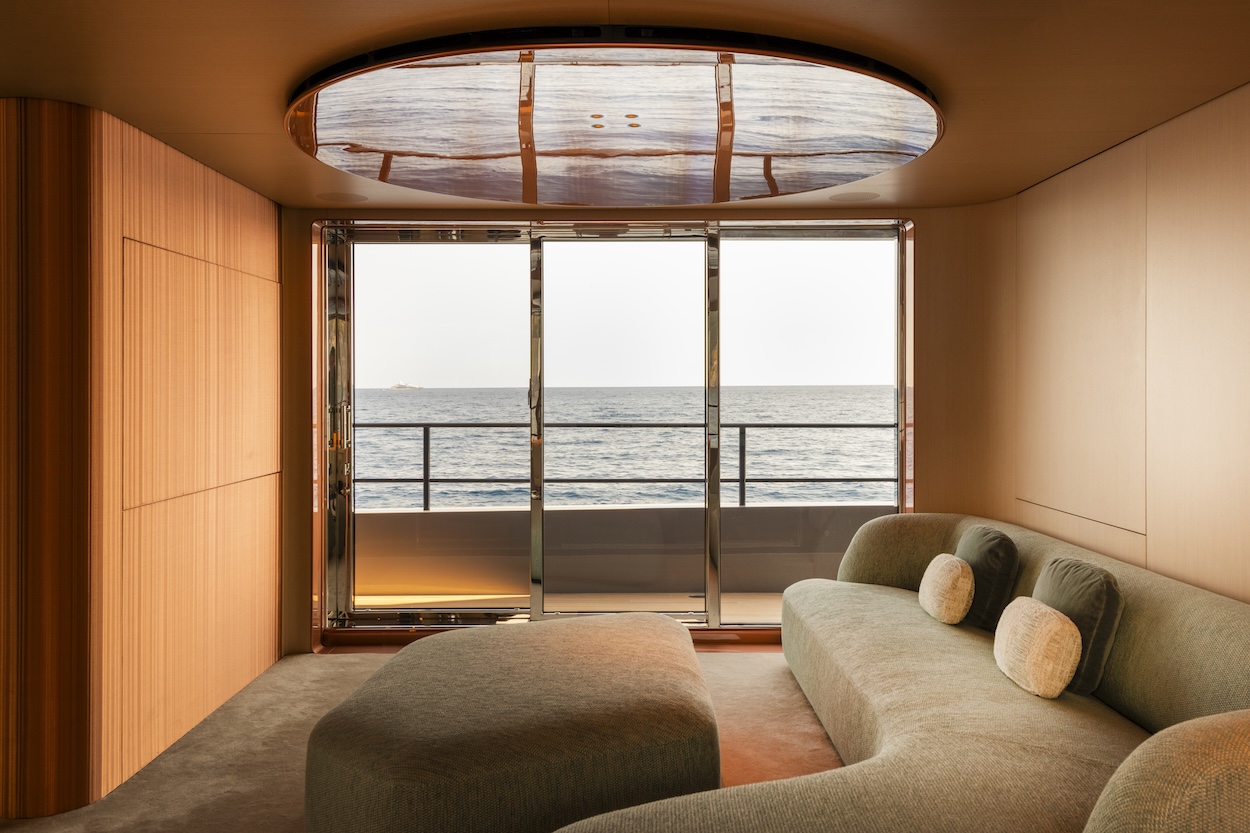
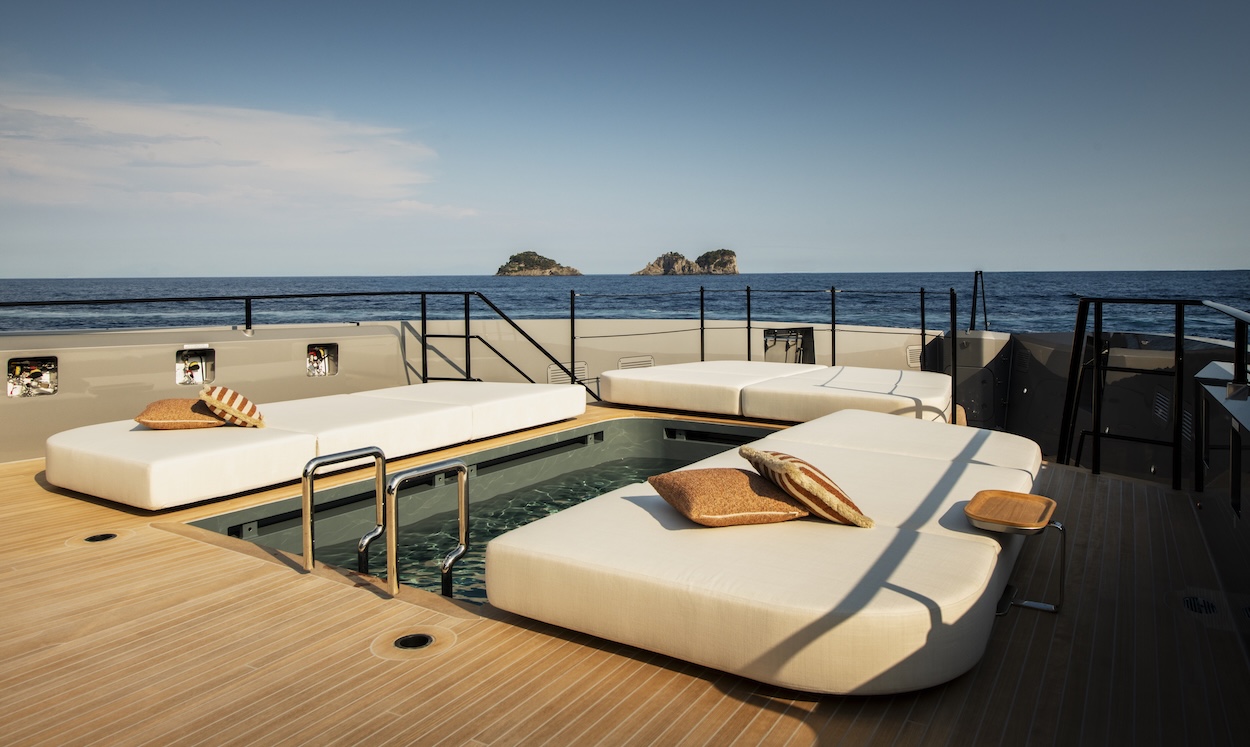
Aboard M/Y HEED, which debuted at the Monaco Yacht Show this past September, the line between inside and out is blurred, with the sea, light, and landscape serving as the backdrop to life on board. Developed by Italian shipyard Rossinavi in collaboration with its owner, the 53-meter aluminum superyacht pairs exteriors by Alberto Mancini Yacht Design with interiors by Achille Salvagni. “It is a yacht designed to be lived on, where functionality leads without compromising on style,” says Federico Rossi, chief operating officer of Rossinavi. For Salvagni, the guiding idea for the interiors was softness.
“I was interested in creating a world suspended somewhere between the sea and the sky: an interior without rigidity, where architecture seems to lose its conventional boundaries and become something softer, more instinctive, almost alive,” he says. Salvagni sat down with Surface to discuss the interiors of M/Y HEED and what it takes to design a space that floats with serenity.
Photo by Paolo Petrignani.…
You’ve said you wanted HEED’s interior to feel as if it hadn’t been designed but shaped by water, wind, light, and time. How do you design something like that?
I think the starting point is to resist the temptation to design everything. When you look at nature, nothing feels imposed. Forms emerge through a process of erosion, movement, and transformation; they carry the memory of time. I wanted HEED to have that same quality, as though its interior had gradually taken shape through its relationship with the sea rather than being placed inside the yacht. This requires a great deal of intention, but the intention must remain almost invisible. Proportions, transitions, textures, and light have to work together so that nothing feels forced. For me, the ultimate sophistication is when a space feels inevitable, as if it could not have been any other way.
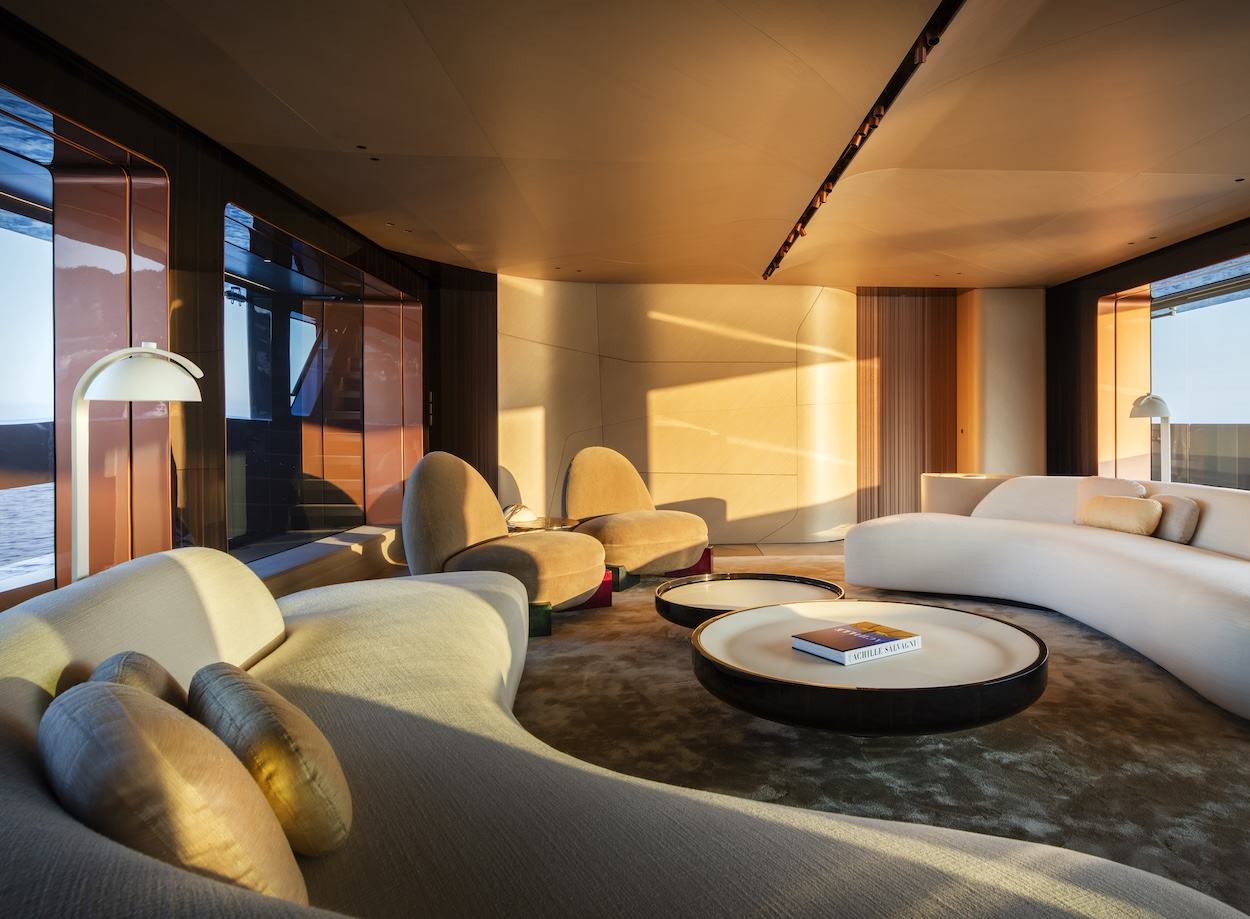
The main saloon is described as “a landscape for conversation,” with seating arranged like an archipelago. What do you think about the way people gather and move through space at sea compared with on land?
On land, architecture is often organized around fixed points and clearly defined functions. At sea, the experience is different. You are surrounded by a constantly changing landscape, and your relationship with space becomes more fluid. The horizon, the movement of the water, and the changing light all become part of the interior. For HEED, I wanted the main saloon to feel less like a conventional room and more like a small landscape. The seating is arranged as an archipelago, with distinct islands that allow people to come together naturally, without imposing a single way of interacting. You can be part of a conversation, enjoy a quieter moment, or simply look out toward the sea. I believe the best spaces for gathering offer a certain freedom. They allow people to find their own rhythm and distance from one another. At sea, that sense of freedom becomes particularly meaningful.
Photo by Paolo Petrignani.…
The palette ranges from bleached wenge and parchment to a 100-gloss finish, with amaranth metal accents. How did you decide on those materials?
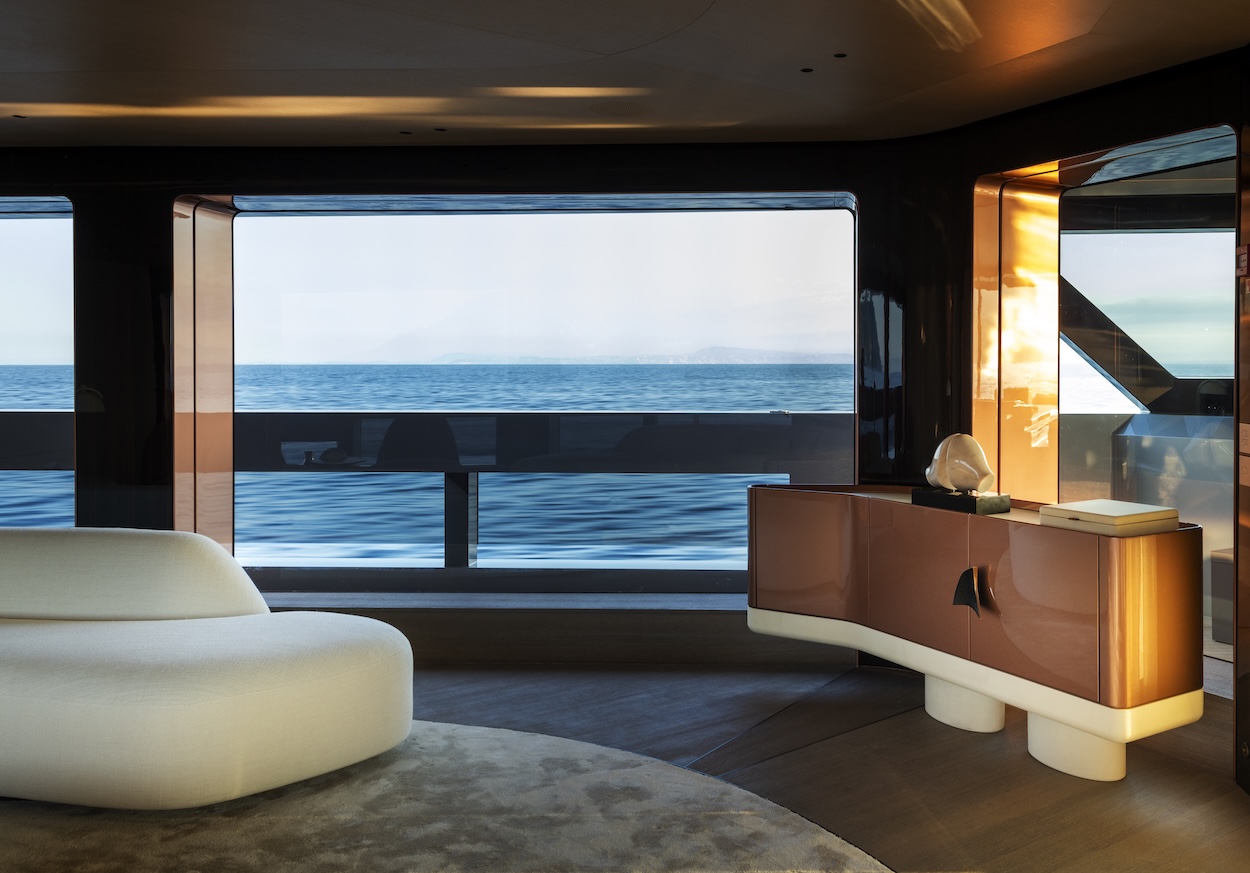
Materials are never simply a question of color or finish. They have their own character, their own depth, and their own relationship with light. What interested me in HEED was the possibility of bringing together very different surfaces while allowing them to feel as though they belonged to the same natural landscape. The brushed, bleached wenge flooring and bleached teak walls establish a quiet, almost mineral foundation. Against them, the butter-colored parchment introduces a softer, more tactile quality, while the dark eucalyptus, polished to a 100-gloss finish, brings depth and reflection. I was interested in this dialogue between restraint and intensity, between surfaces that absorb light and those that capture it. The amaranth-toned metallic accents introduce a warmer note, somewhere between copper, rose, and deep red. They recall the colors of a Mediterranean sunset, when the light becomes richer and more elusive. I wanted these accents to bring a sense of warmth and depth without competing with the sea beyond the windows.
Your practice is rooted in your Roman heritage. Where does Rome show up on board HEED, even if subtly?
Rome is part of the way I see the world. It has taught me that architecture is not only about form, but also about the relationship between the built environment and the human body. It is a city where beauty often emerges from the dialogue between very different periods, materials, and layers of history. On HEED, I would say that Rome appears less as a recognizable reference than as an underlying sensibility. It is present in the interplay of solid and void, and in the understanding that materials acquire meaning through the way they are assembled and experienced. I have always been drawn to the idea that a contemporary space can carry a sense of history without looking backwards. Rome embodies that possibility.