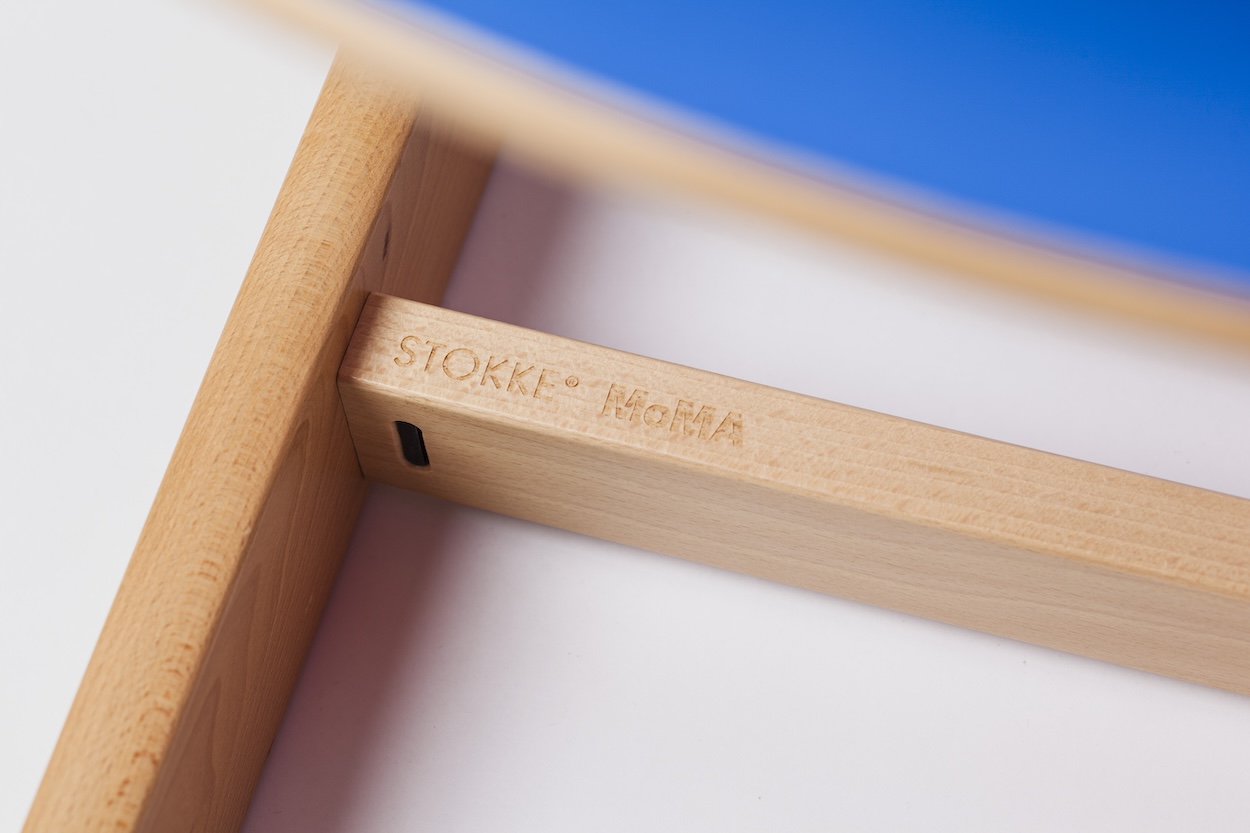
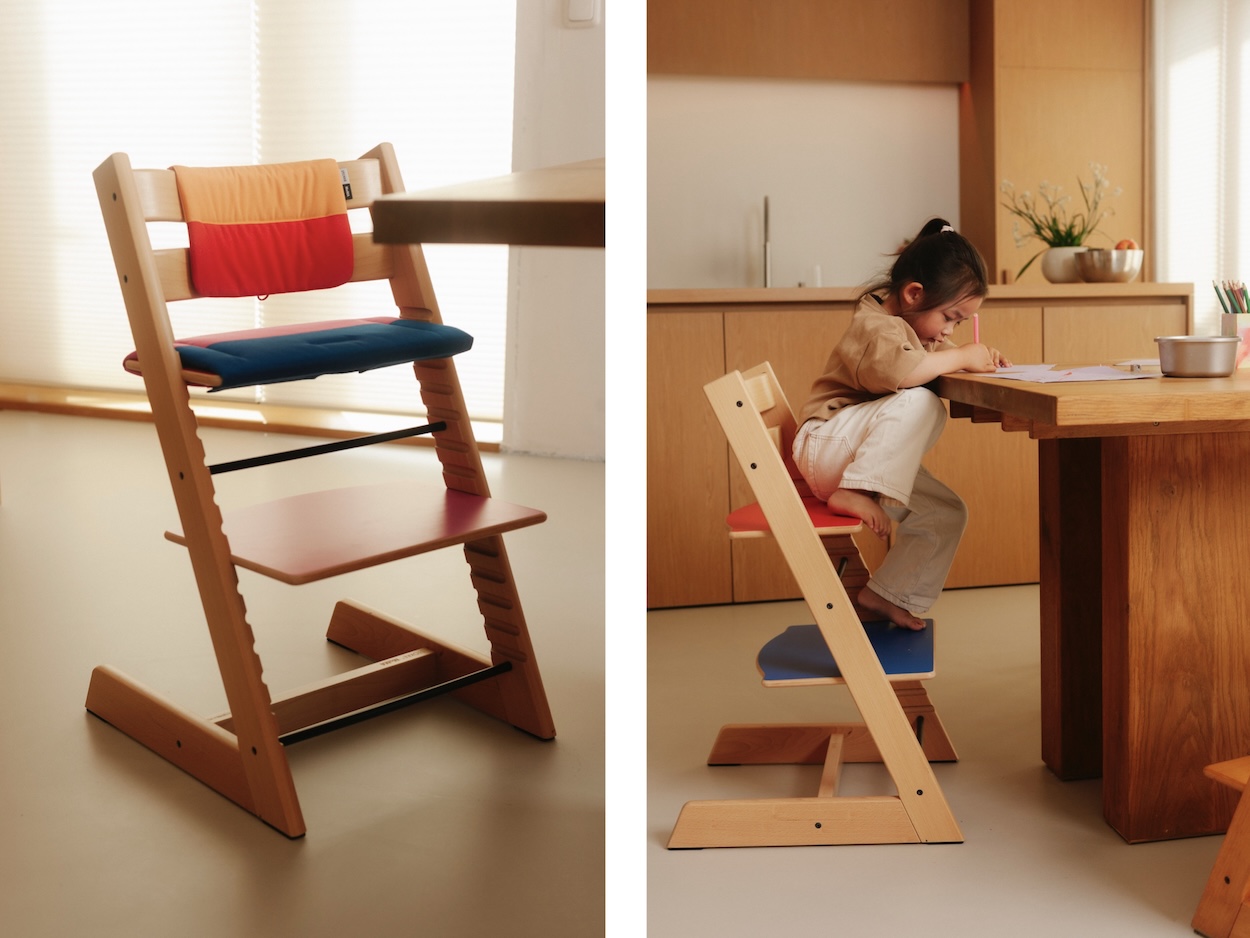
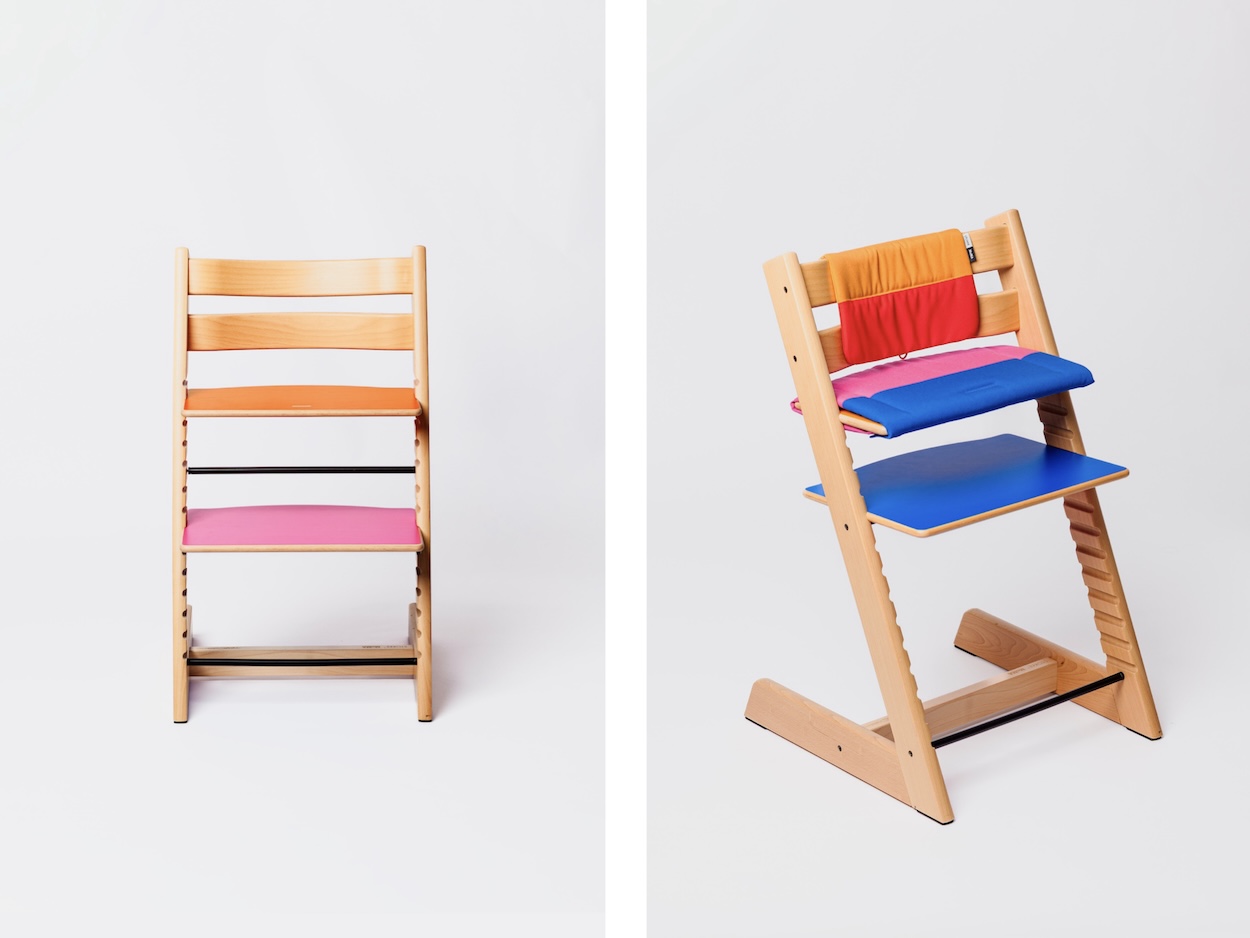
Very few chairs designed for children have entered the canon of furniture iconography, and fewer have found a home within the Museum of Modern Art’s permanent collection. Stokke’s ladder-like Tripp Trapp, designed by Peter Opsvik in 1972, is one such piece. In October, the museum collaborated with the Norwegian furniture company on the release of the Tripp Trapp Chair MoMA Edition, an ode to nearly 55 years of the design, composed of FSC-certified European beechwood and bearing colorful accents drawn from MoMA’s signature palette.
MoMA collaborations, as well as the curation of the MoMA Design Store, are driven by several tenets. “First of all, we look into the collection,” Emmanuel Plat, Director of Merchandising at MoMA, tells Surface. “With Tripp Trapp, we’re talking about an object that is in the collection. But we also ask, ‘Has the designer or the artist had an object in the collection? Has it been in an exhibition before?’ Because you sometimes have an object that made it into an exhibition, but it’s not in the collection.” Then Plat analyzes material, innovation, technology, sustainability, and diversity.
“Why we did this chair,” he adds, “is that we want to work on things relevant to the design community, in the market, and we try to identify what people will use because ultimately design is here to address a problem. Here, you need a chair for your child to grow with.” People may be surprised to learn that the MoMA Design Store stocks items for children—that it sees high design as applicable to infants and toddlers, too. “Design does not always need to be intimidating,” Plat says. “There is an object for everybody, and every object has a story.”
Plat refers back to the Tripp Trapp’s unexpected form—its balance and architecture. “It’s clean lines. It’s easy to integrate into an interior. It doesn’t take up much space. It’s plain, simple, and useful. These are all features of great design. Normally, chair design does not stand the test of time. But this is not just for design lovers; it’s universal.” What MoMA has offered with the limited-edition version is a reinforcement of premium materiality.
For the introduction of color, consumers can choose between red and yellow for the seat. hey can then select between blue and pink for the footrest. An optional fabric cushion allows for further customization. “This is an unsung hero of design,” Plat says, “but with a MoMA twist. It has a different personality with these touches of color. We are disrupting Stokke’s neutral palette, but integrating the concepts of happiness and fun.”