Sardinia is a study in contrasts: marina culture and wild Mediterranean terrain, superyachts and granite cliffs, buzzy beach clubs and hidden coves. Poltu Quatu sits between those worlds. Set in a quieter notch of the northeast coast, between Porto Cervo and Baia Sardinia, the village lives up to its “hidden port” translation—and now serves as the setting for W’s new Italian property.
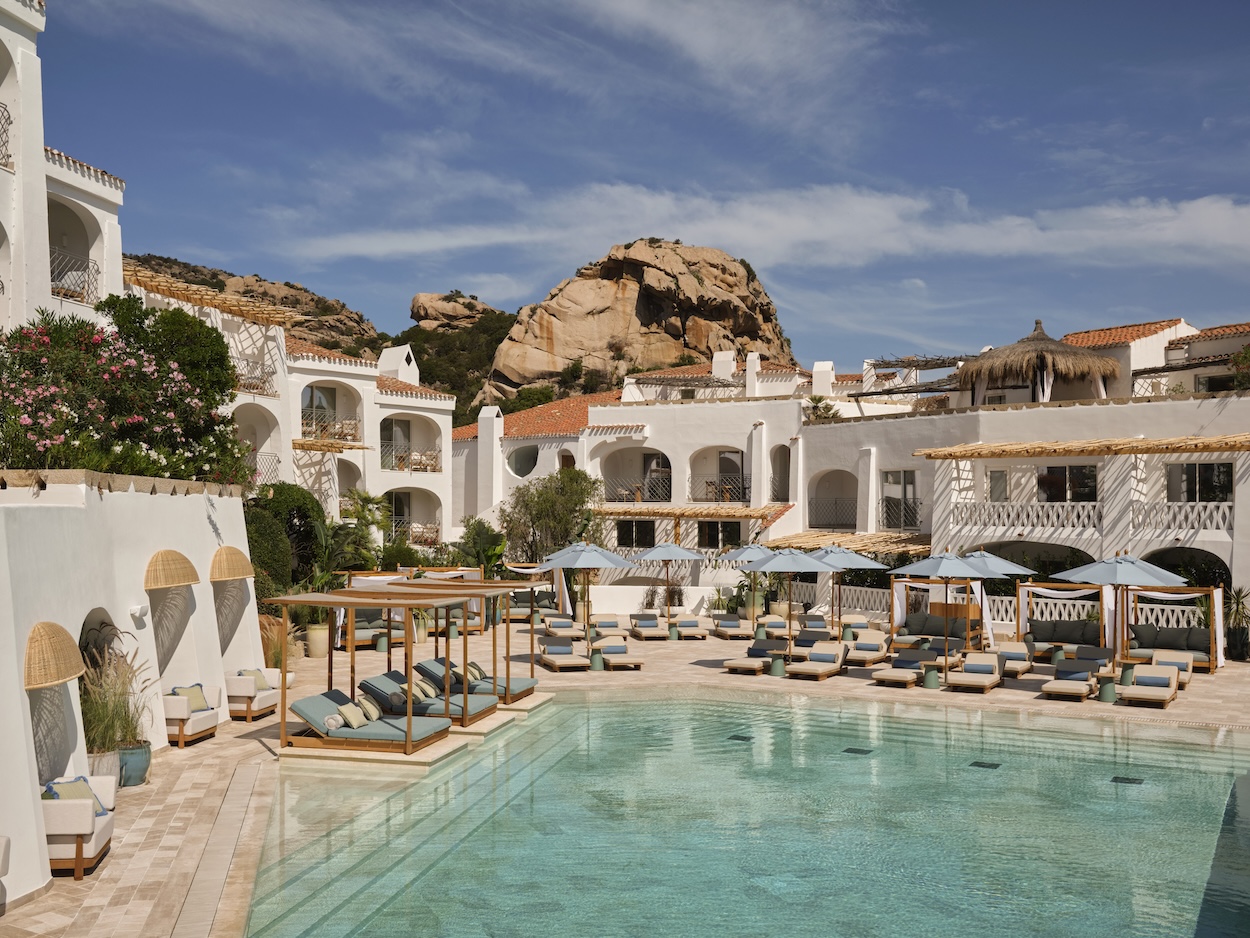
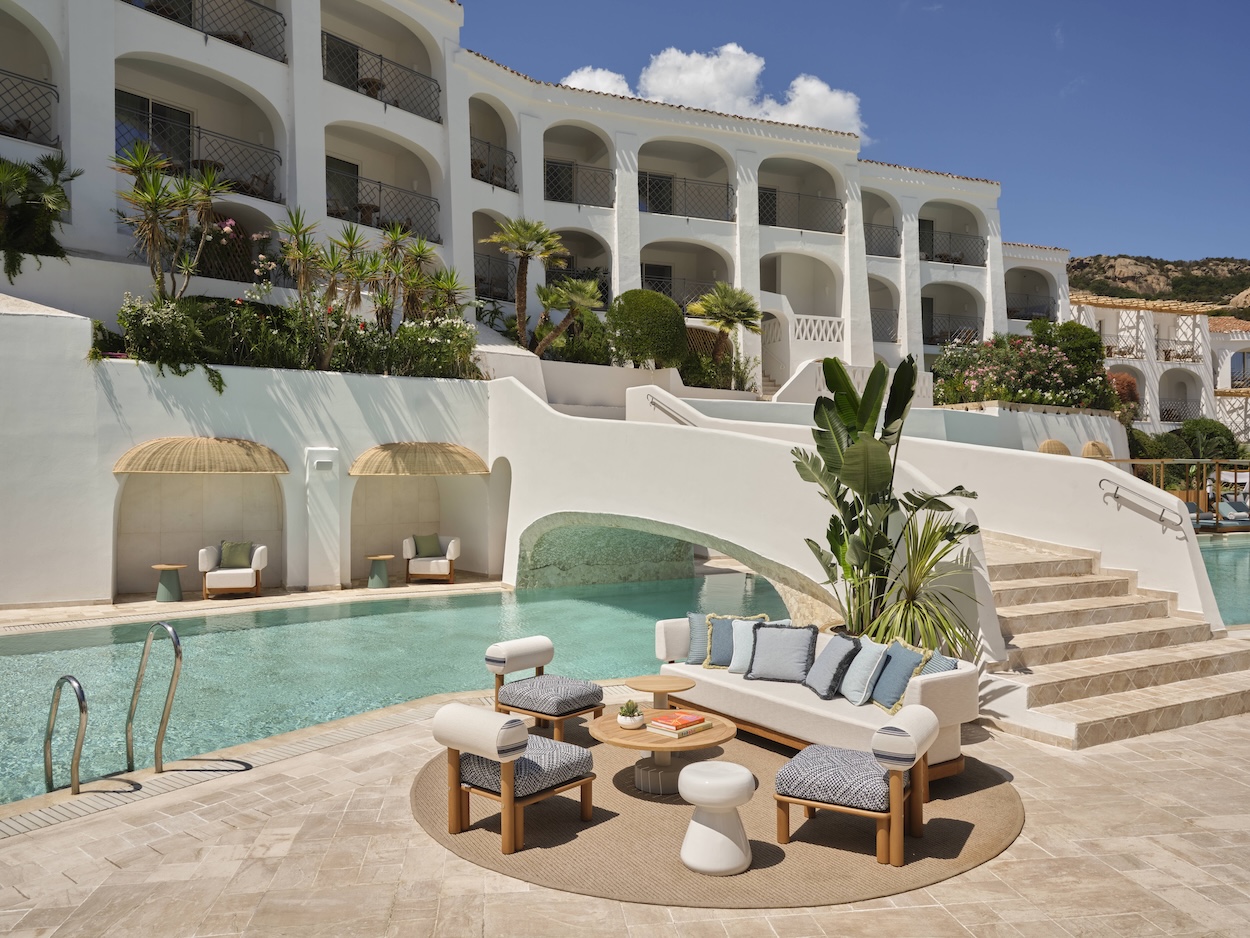
Designed by Meyer Davis, with architecture by DE.TALES, W Sardinia – Poltu Quatu signals an evolution for the luxury lifestyle hospitality brand. It keeps the see-and-be-seen spirit that made W the hotel to be in the mid-2000s, but gives it a more design-forward frame. Here, the property trades the brand’s once-dark, lacquered glamour for a more rooted experience. Rather than trying to out-gloss its celebrity-frequented Costa Smeralda neighbors, the W leans into its heritage setting: whitewashed buildings rising from jagged-edge mountains, wild greenery, ancient ruin-like arches, and a palette that seems pulled from the coastline just beyond its doors.
W Sardinia – Poltu Quatu, courtesy of W Hotels…
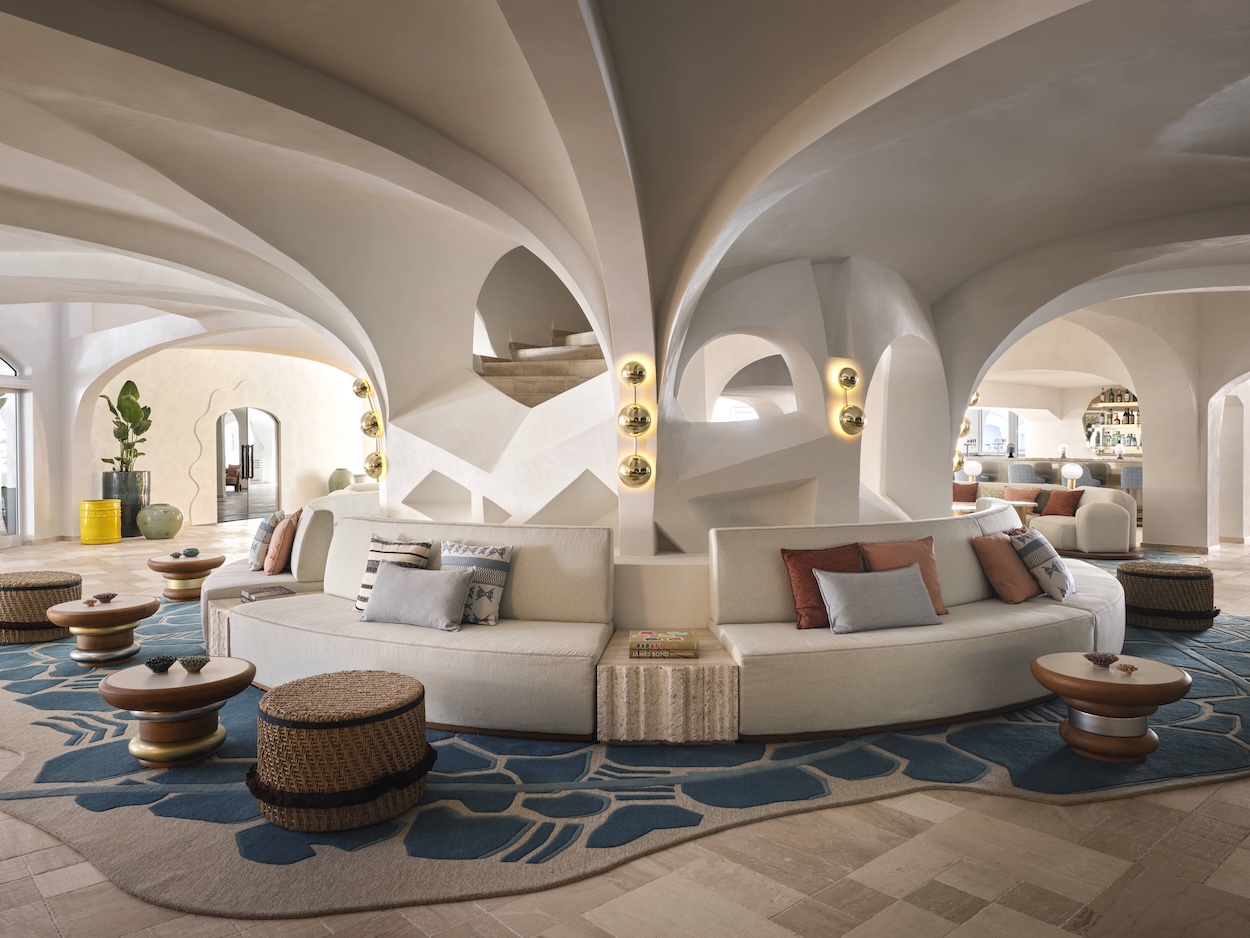
That sense of place continues from the public spaces to the 157 guestrooms and suites, where the design takes its cues from Sardinia’s natural landscape: sand, stone, textured white walls, sun-washed wood, orange-pink sunsets, and marine blues. Natural textures, organic shapes, and tactile materials inform the interiors throughout.
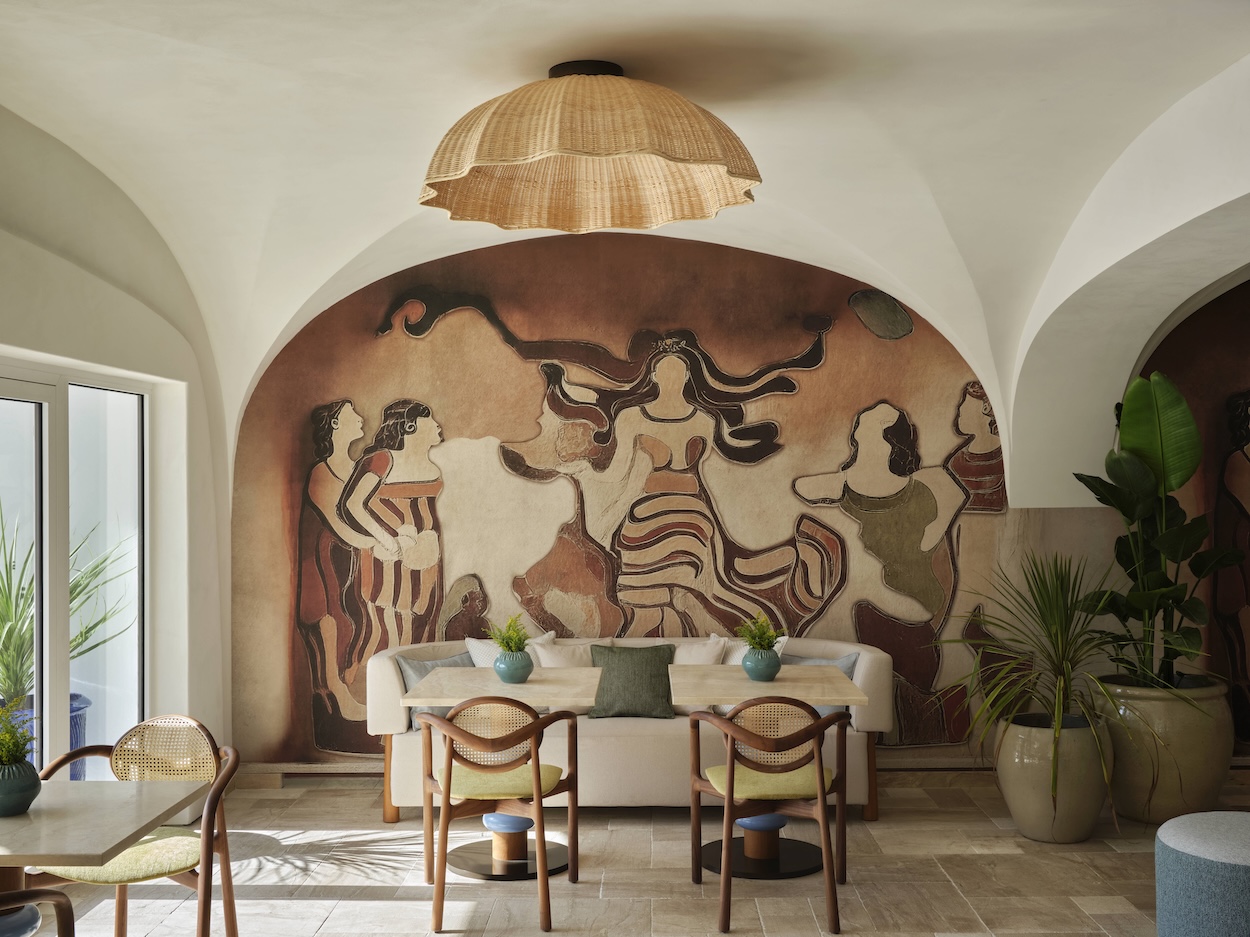
Artwork gives the property an additional layer of local context. An outdoor sculpture by Sardinian artist Nicola Filia announces the property grounds, while the property’s mainstay, the W Lounge, nods to the Janas, cave-dwelling figures from Sardinian folklore. Luca Scassellati’s ceramic wall calls to mind underwater forms, while Orosei marble, hammered metals, and mirrored surfaces are meant to evoke the island’s grottoes. Works by local artists—including vases by Walter Usai, tapestries by Fabrizio Sanna, paintings by Cinzia Murgia, and photography by Giuseppe Chironi—round out the hotel’s regional references.
W Sardinia – Poltu Quatu, courtesy of W Hotels…
Of course, this is still W, which means the hotel is designed for gathering as much as retreat. For guests, that means the day can unfold across the expansive pool terrace, the spa, the gym with offerings like sunrise yoga, and TANIT, a waterfront seafood restaurant whose name references the ancient goddess of abundance. Elsewhere, poolside bites turn into sunset aperitivos, nightcap cocktails, and DJ sets, giving the resort a quintessentially W after-dark edge.
W Sardinia – Poltu Quatu, courtesy of W Hotels…
This extends to off-property programming. Throughout the season, W invites local artisans, chefs, and performers to shape a seasonal program tied to Sardinian craft and culture, from ceramic workshops and pasta-making sessions to guided hikes through the island’s unspoiled landscapes. From the private marina, guests can head out by boat to secluded swimming spots with turquoise waters, nearby islands, and the beach club.
Part of a broader recalibration for a brand long associated with nightlife and glossy urban cool, the Sardinia opening ushers in a new era for W Hotels. In Italy, alongside W Rome and W Florence, the Sardinian debut points to a brand becoming more focused on design, local culture, and food as central parts of the experience rather than secondary add-ons.
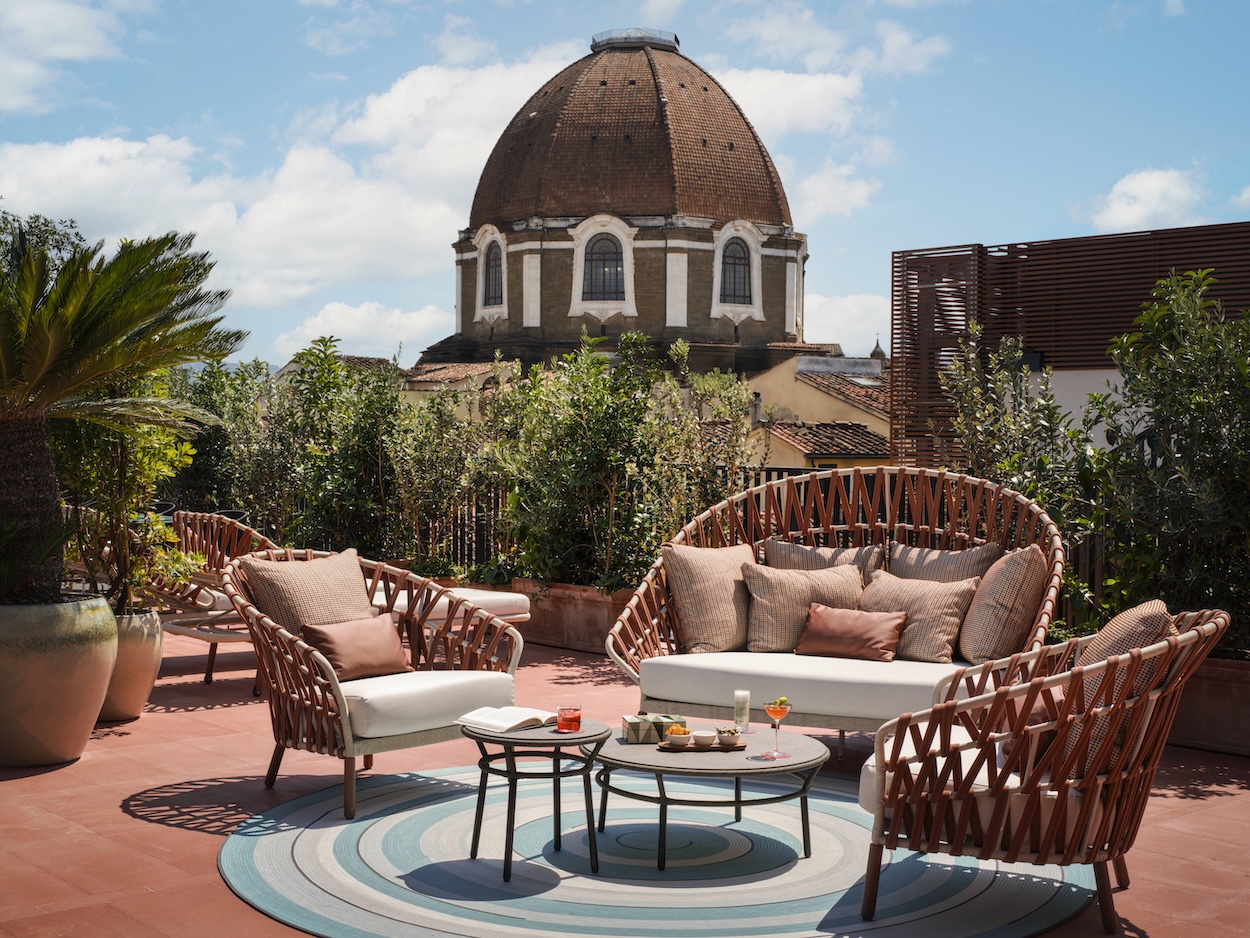
W Florence, courtesy of W Hotels…
In Rome, W’s first Italian hotel occupies two 19th-century palazzos near the Spanish Steps, where Meyer Davis reimagined Roman grandeur through saturated color, eclectic art, and graphic patterns. In Florence, the property is set inside Lando Bartoli’s former Grand Hotel Majestic, a 1968 rationalist-modernist landmark. Genius Loci Architettura handled the restoration and AvroKO the interiors, creating an environment that mixes 1960s and ’70s references, Italian fashion influences (fitting for the city that birthed Gucci), and furniture and design elements inspired by Italian industrialists such as Joe Colombo.
If W’s new direction can be seen in Rome through palazzo glamour and in Florence through fashion and cultural flourishes, Sardinia shows what happens when a hotel lets the setting dictate the design. In that sense, W Sardinia may be proof that the next era of W is less about being everywhere at once, and more about knowing exactly where it is.