A wall of windows greets guests of The Boat House, an experiential rental home from Design Within Reach (DWR) and Boutique on a picturesque harbor between Shelter Island’s North Ferry and Yacht Club. Long a secluded vacation destination (and full-time community) with a storied history, Shelter Island has developed into an enchanting alternative to the neighboring Hamptons and North Fork. The transformation of this idyllic property mirrors this narrative: constructed as a waterfront boat house for a larger estate in the 1920s, respectfully restored and expanded into a 2,400-square-foot, five-gabled house by the current owner, Scott Murphy.
Inside Design Within Reach's Idyllic Summer Escape on Shelter Island, The Boat House
Along boat-speckled Dering Harbor, an architectural wonder with impeccable furnishings—available in partnership with Boutique
BY DAVID GRAVER May 28, 2026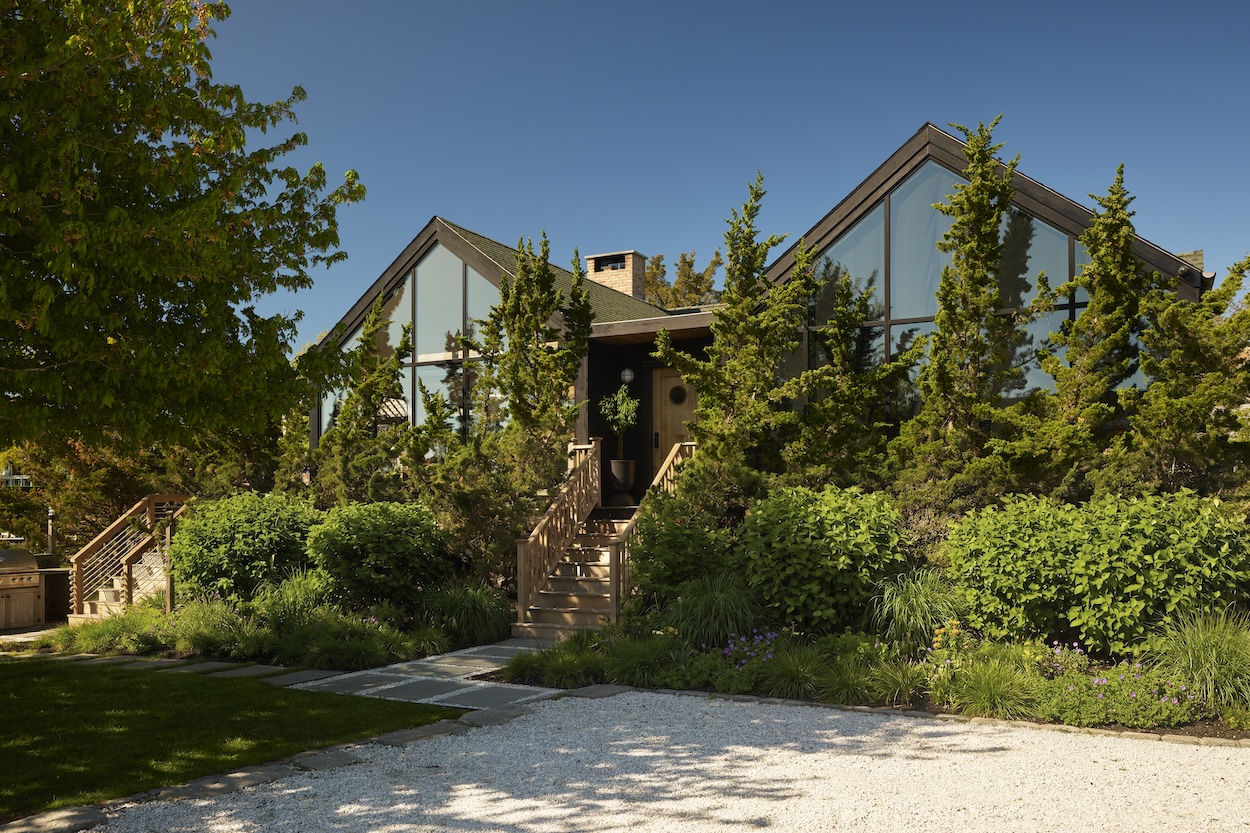
Courtesy of DWR
…
Courtesy of DWR
…
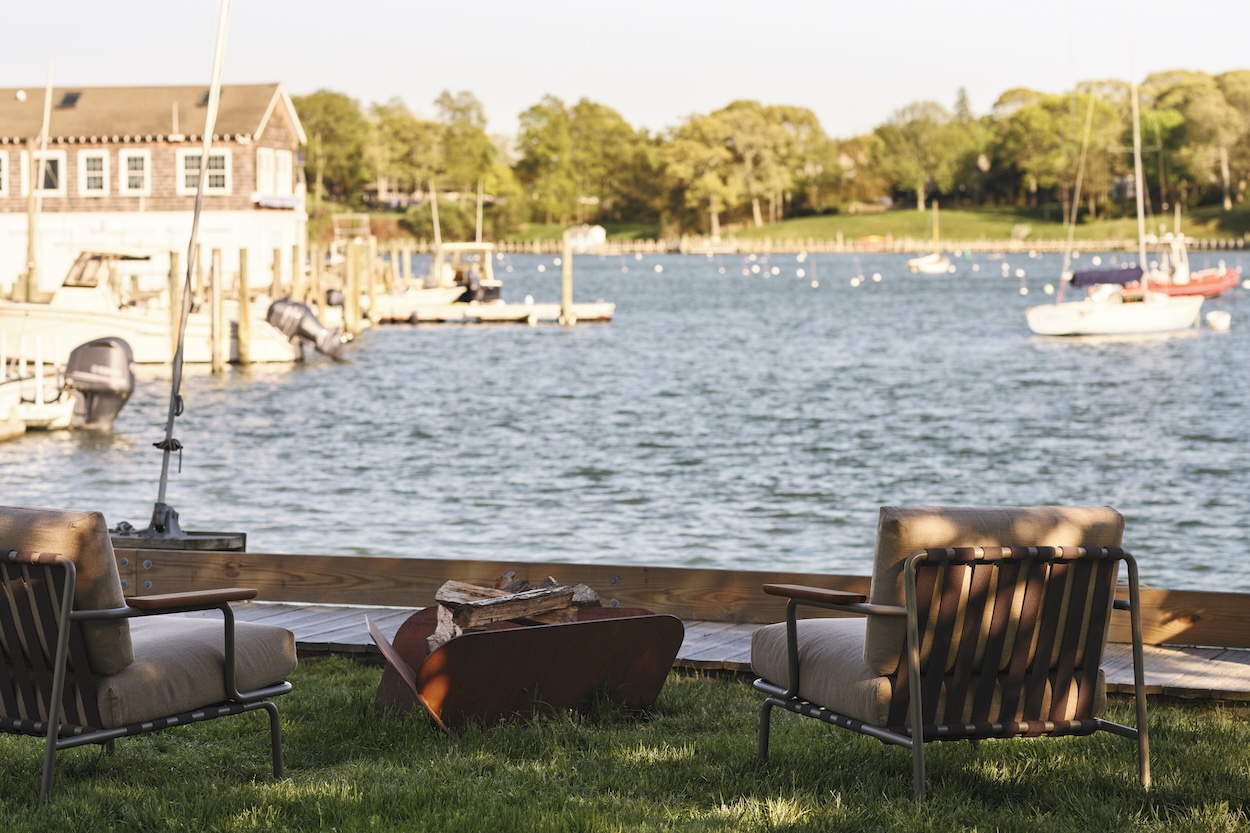
Before guests enter the architecturally significant home, they’ll quickly note its all-black finish, created with an organic mix of Swedish pine tar and linseed oil. This traditional 50-year stain further distinguishes the built environment from its surroundings—a meticulously manicured lawn with a fire pit and outdoor furniture pieces, and a dock along Dering Harbor, itself speckled with sailboats. In the distance, visitors can observe the back deck of the lauded local market, Marie Eiffel.
Courtesy of DWR
…
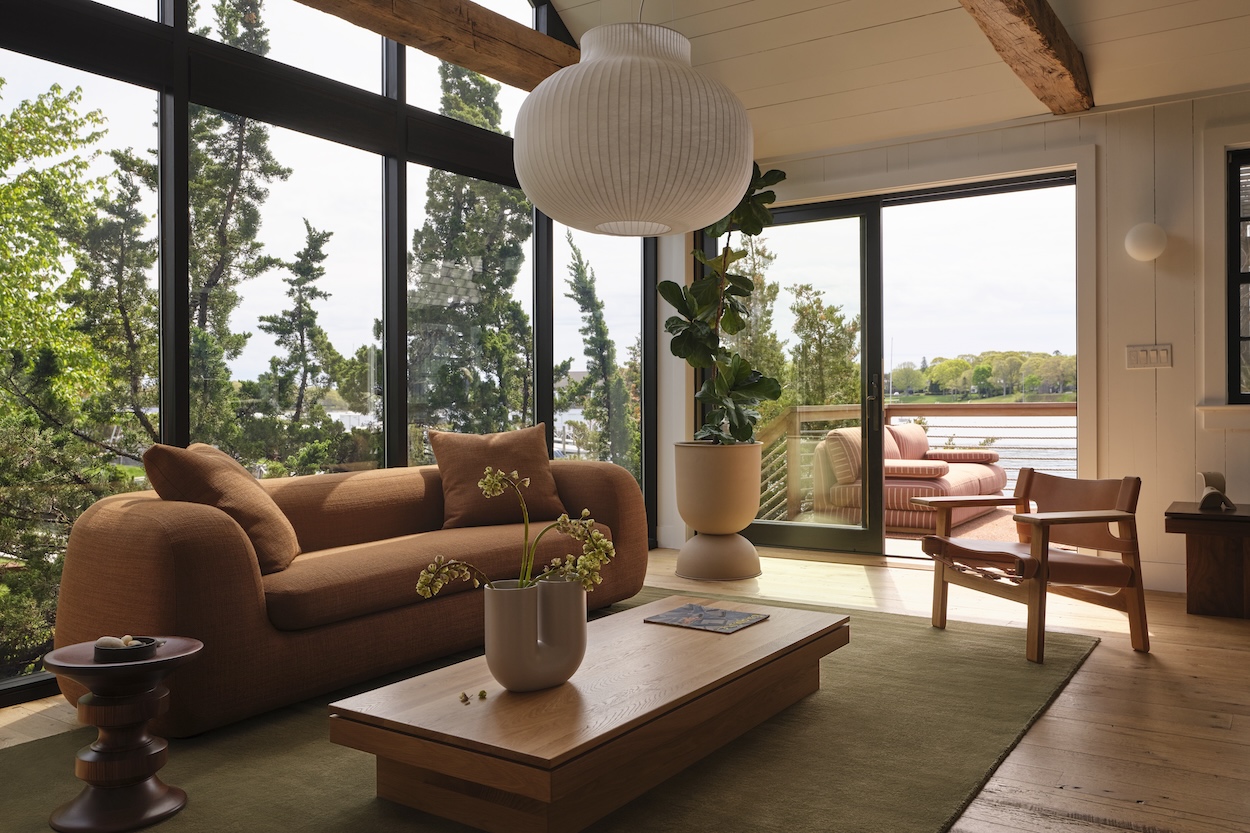
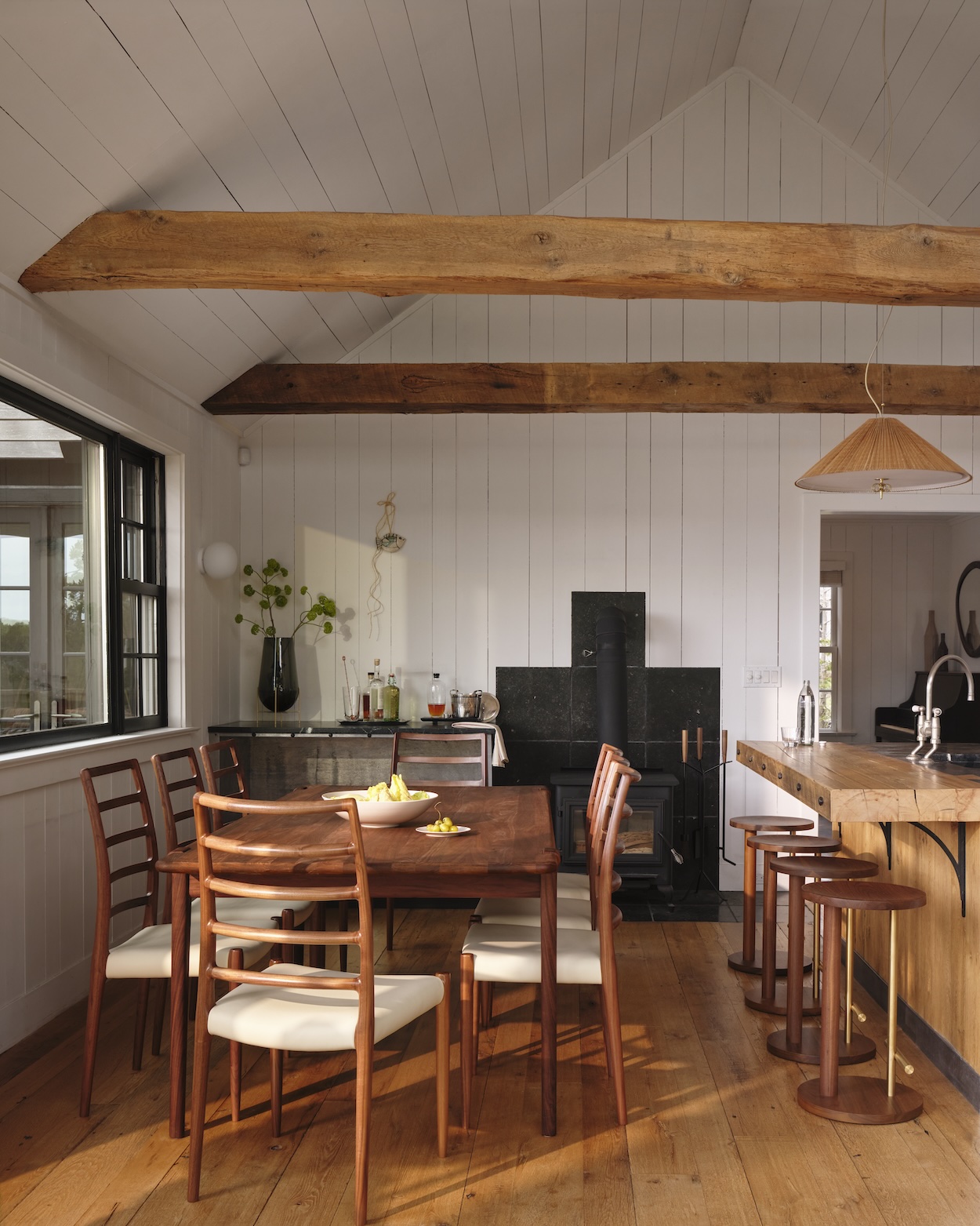
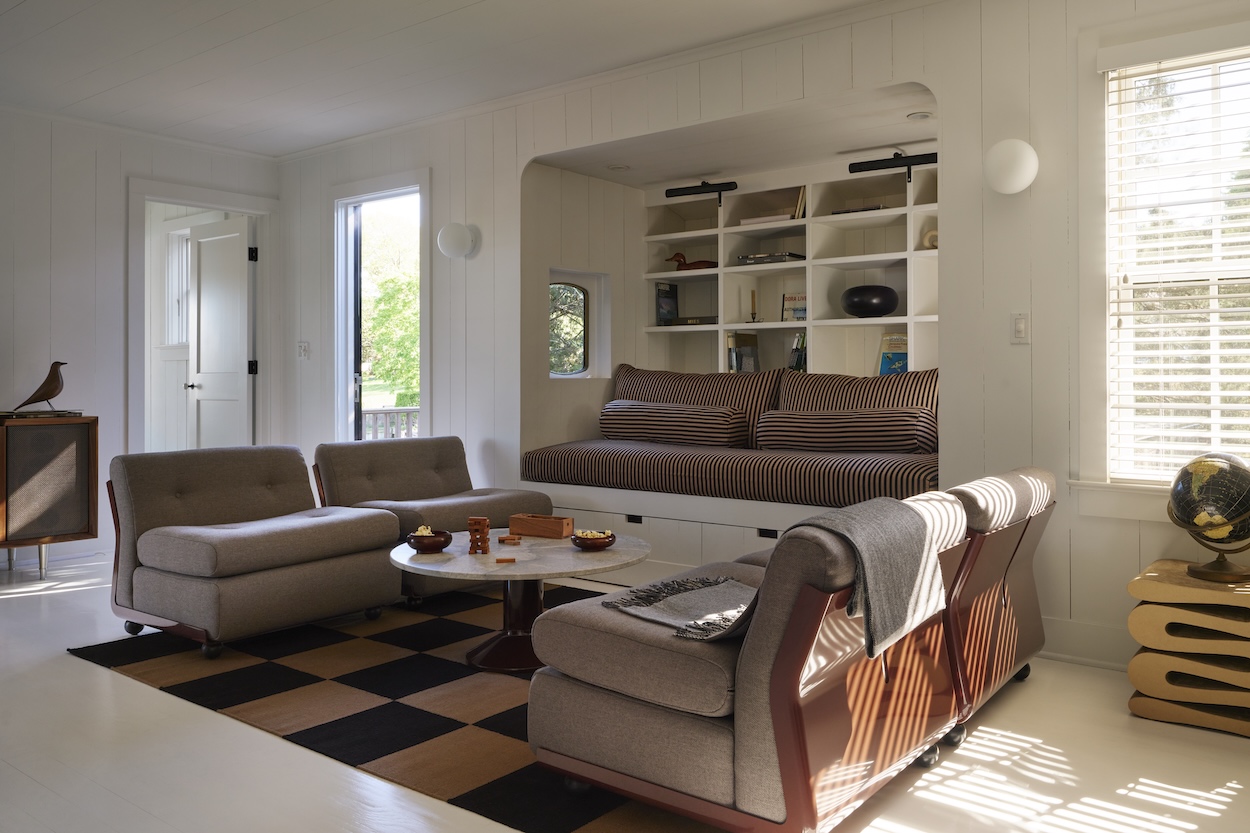
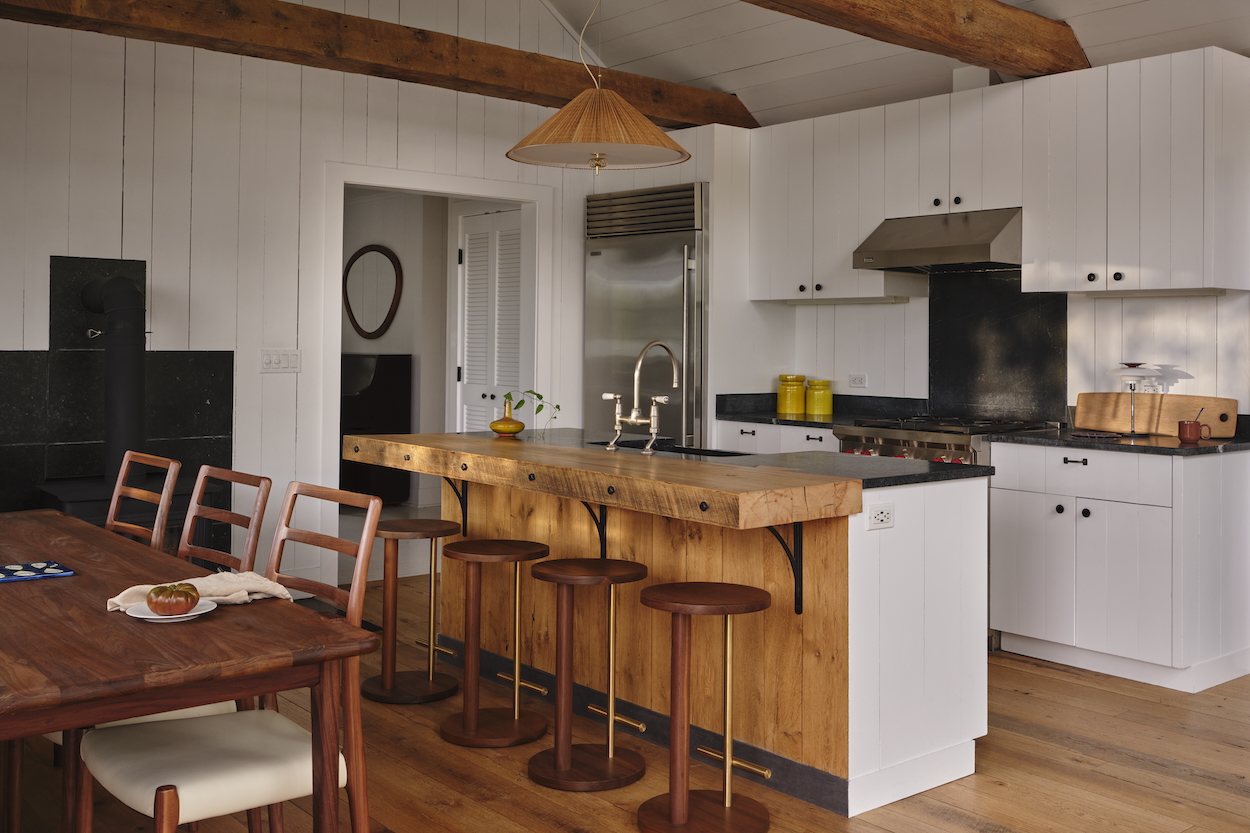
Inside, however, patrons find surprise, delight, and a carefully selected arrangement of DWR furniture and design pieces. From the Americano Sofa by Hlynur Atlason for DWR, flanked by two Spanish Lounge Chairs from Fredericia, with a verdant backdrop beyond the glass windows, to a suite of Model 82 Dining Chairs from Møller along an Otto Dining Table, the aesthetic expression demonstrates that modern design can comfortably converse with any architectural style—without imposing itself.
Courtesy of DWR
…
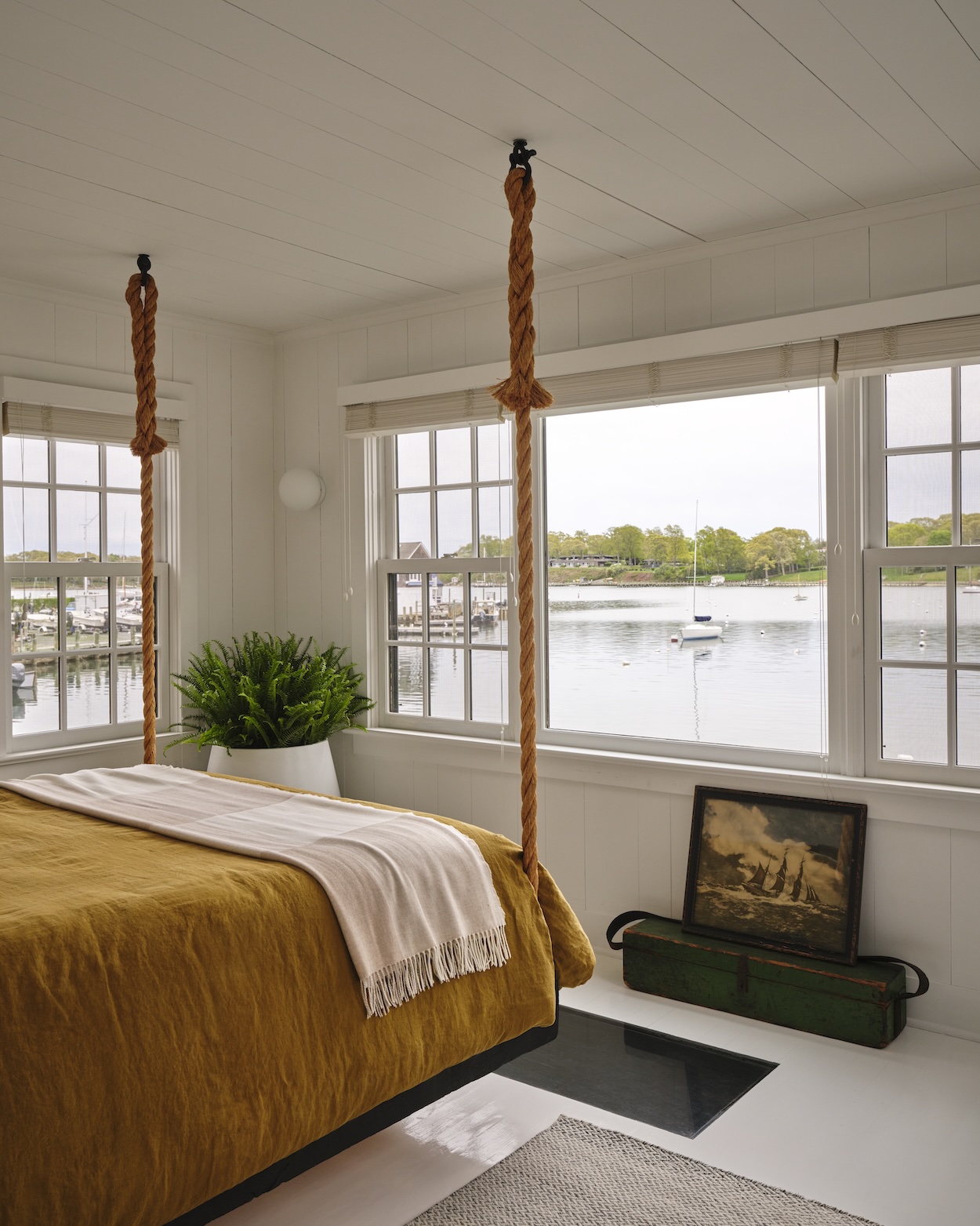
Unexpected attributes abound. This includes a hanging boat bed, suspended by heavy rope in one bedroom that extends out over the water and is surrounded on three sides by windows. In this room, a glass floor panel at the foot of the bed offers a vantage of the water below; a switch turns on a submerged light, so that one can observe fish by night. In the parlor in front of that bedroom, two porthole-like windows mirror one another in a built-in nook, accented with cushions upholstered in Manahram Toostripe Girard fabric. In dialogue with these nuanced, nautical attributes are contrasting touches like the Gehry Wiggle Stool, and a Wrensilva M1 Record Console.
Courtesy of DWR
…
It’s the marriage of location, landscape, architecture, and design that sets The Boat House apart. “We looked at many homes, of all different architectural styles and locations. We immediately fell in love with The Boat House’s rich history, character, and the way in which it beautifully captures the spirit of the island,” Debbie Propst, President, Global Retail at MillerKnoll, tells Surface.
Courtesy of DWR
…
At the heart of this is Shelter Island itself, as well as the preserved nature of the Shelter Island Heights neighborhood. “Although it may seem like an unexpected destination for a modern design brand, the values of the Shelter Island community organically align with those of DWR,” Propst continues. “There is a shared appreciation for designing with intention and creating spaces that feel deeply rooted in their surroundings. Shelter Island’s quiet, unspoiled landscape encourages a slower pace and a meaningful connection to place, values that resonate strongly with DWR’s belief in thoughtful, human-centered design.”
Courtesy of DWR
…
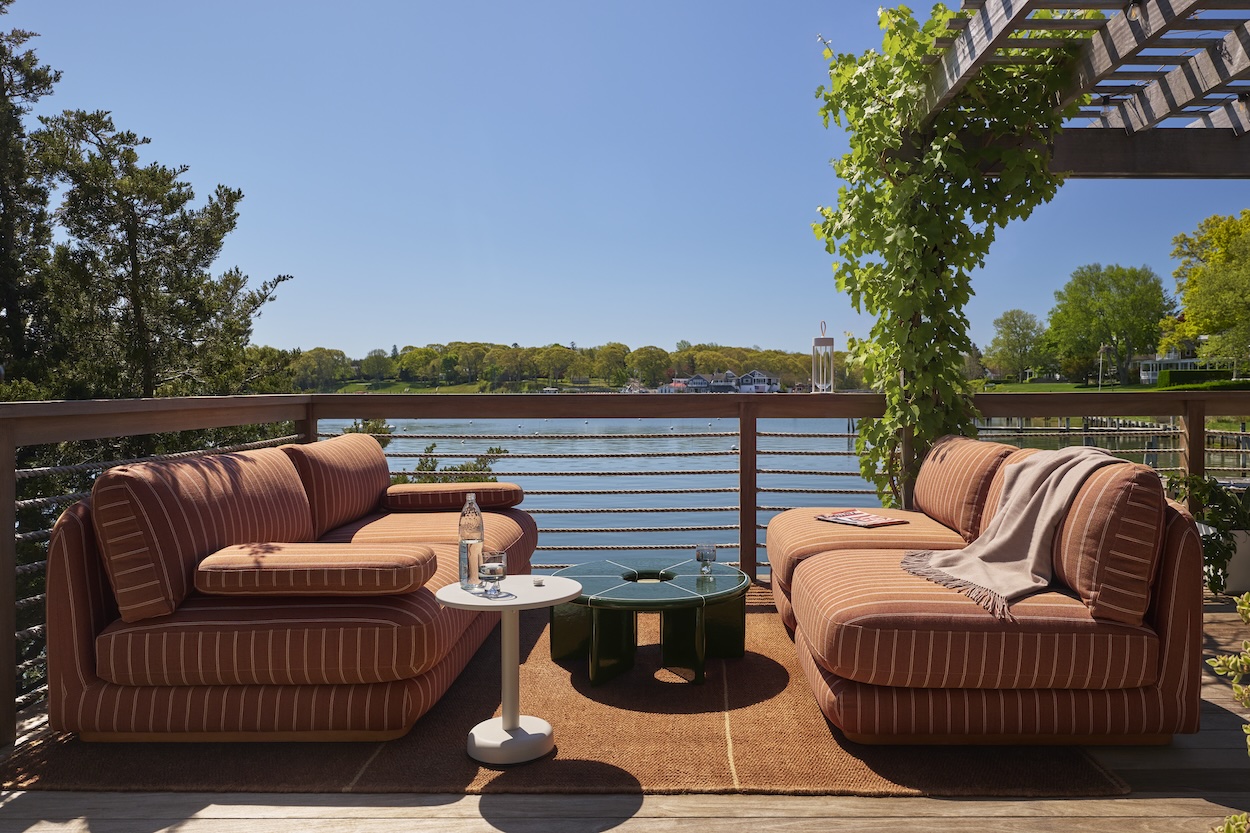
Propst observes that the architecture and interiors found on Shelter Island often prioritize natural materials, light, and openness, emphasizing a dialogue between indoors and out—this is very much true of The Boat House, and its raised deck overlooking the harbor (complete with a Palissade Dining Set from HAY and a plush Stacked Outdoor Collection from Ellison Studios). “This reflects DWR’s ethos of designing in step with nature, honoring the environment rather than competing with it. Equally important is the sense of quiet connection the island fosters—moments shared with family, friends, and the surrounding landscape,” Propst says.
Courtesy of DWR
…
Murphy’s vision for the house—from the reclaimed white oak from a Pennsylvania Mennonite barn used for flooring, walls, and built-ins to the soapstone countertops and tumbled marble floors in the primary bathroom—served as a North Star for the DWR integration process. “The Boat House exists as a kind of threshold between land and water, between the grounded and the untethered,” Omar Nobil, Creative Director at DWR, tells Surface. “Each space was conceived to feel both grounding and open, creating opportunities for connection to the landscape, to others, and to oneself. This informed how and where pieces were placed—every piece was chosen to support a quiet, cohesive rhythm.”
Courtesy of DWR
…
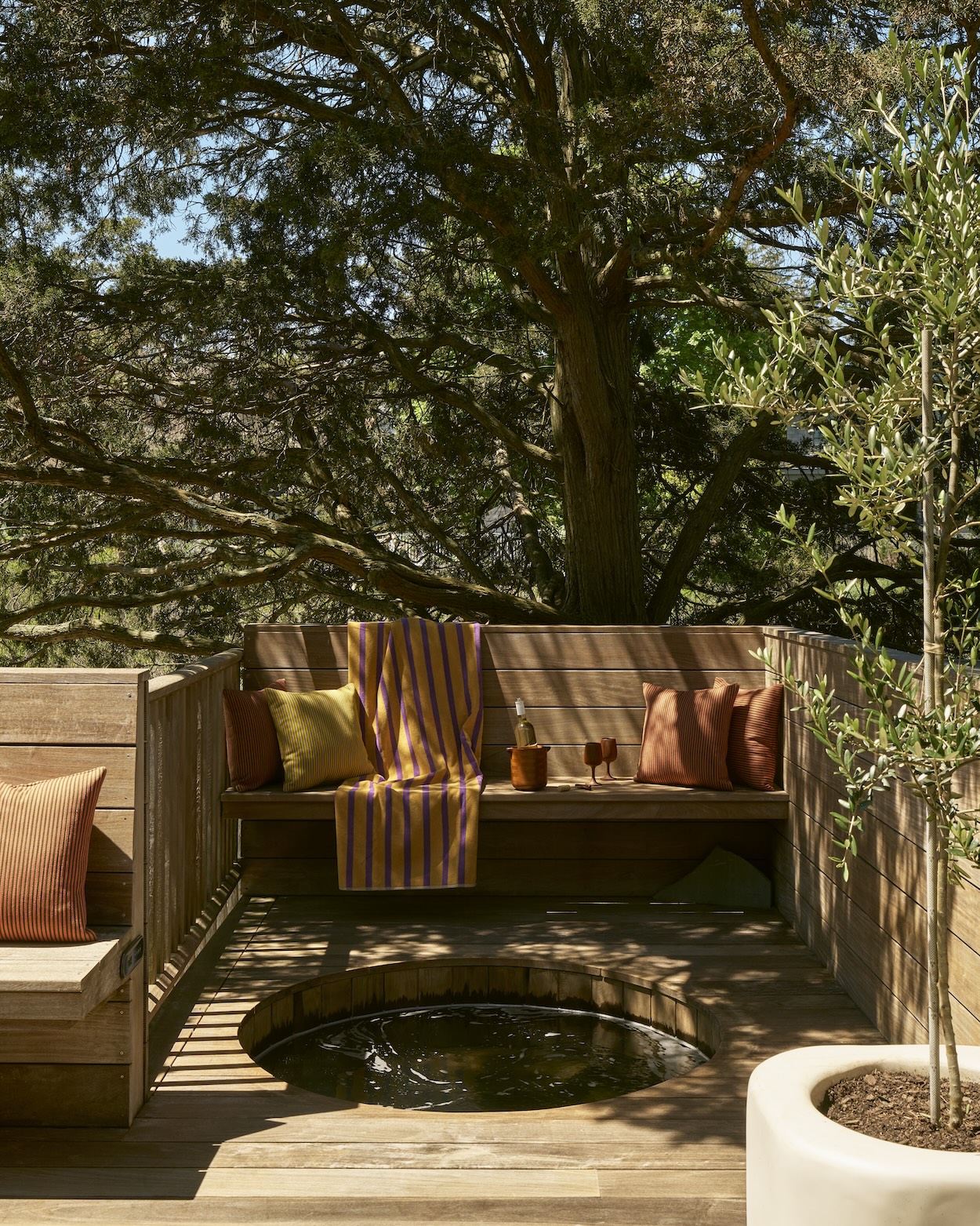
Infrared sauna and cedar hot tub aside, The Boat House is a comprehensive, organically imagined DWR world. “More than anything, we invite people to pause here,” Propst concludes. “To pay attention to how the space makes them feel, and how each element—from materials to placement—shapes that experience. It’s a chance to understand that design isn’t just about how something looks, but how it supports the rhythms of everyday life.” With paddle boards for the harbor and bikes to cycle to Crescent Beach for a sunset dinner, The Boat House is also an access point into all that Shelter Island has to offer.