A24's 'Backrooms' Designs Horror From Indifference
Production designer Danny Vermette didn't invent the backrooms' fluorescent dread. He sourced it from estate sales, strip malls, and Facebook Marketplace.
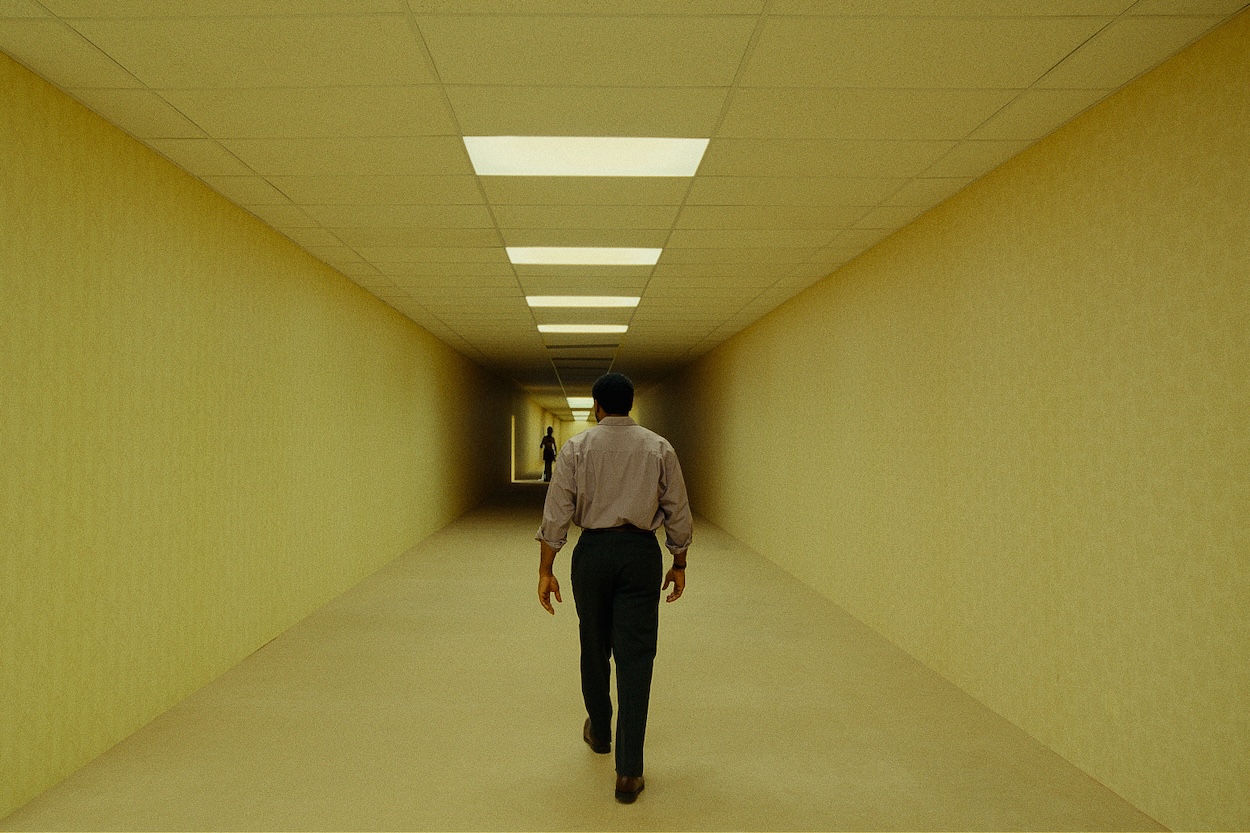
A hallway, wallpapered in a nauseous shade of yellow, gives way to a labyrinth. The hum of irregularly placed fluorescent lights is the only sound over the whirr of a VHS camcorder documenting the expanse. Something moves at the edge of your periphery, skittering and ducking behind walls. Welcome to the backrooms, with production design by Danny Vermette.
Born from an anonymous 4chan post, the backrooms propagated across the internet, from Minecraft buildouts to a fervent subreddit, before landing on the silver screen. The A24-produced Backrooms, directed by 20-year-old Kane Parsons (screen name Kane Pixels), wades into the liminal mythology of the creepypasta, the catchall for internet horror content. Parsons, whose viral found-footage-style YouTube series is the closest thing to foundational backrooms texts, tapped production designer Vermette (Longlegs, The Monkey).
Courtesy of A24…
“I needed to understand how his theory of it worked,” Vermette tells Surface. “And I had a crash course of almost limitless content.” Adapting an internet fixation as well-trod as the backrooms—the official fan wiki has mapped 99 levels and their sublevels—meant wrestling a singular vision from one that had been co-authored by thousands. But he was quick to cast the albatross of lore from his neck. “Kane hates that word,” he says. Instead, his focus was the tangible.
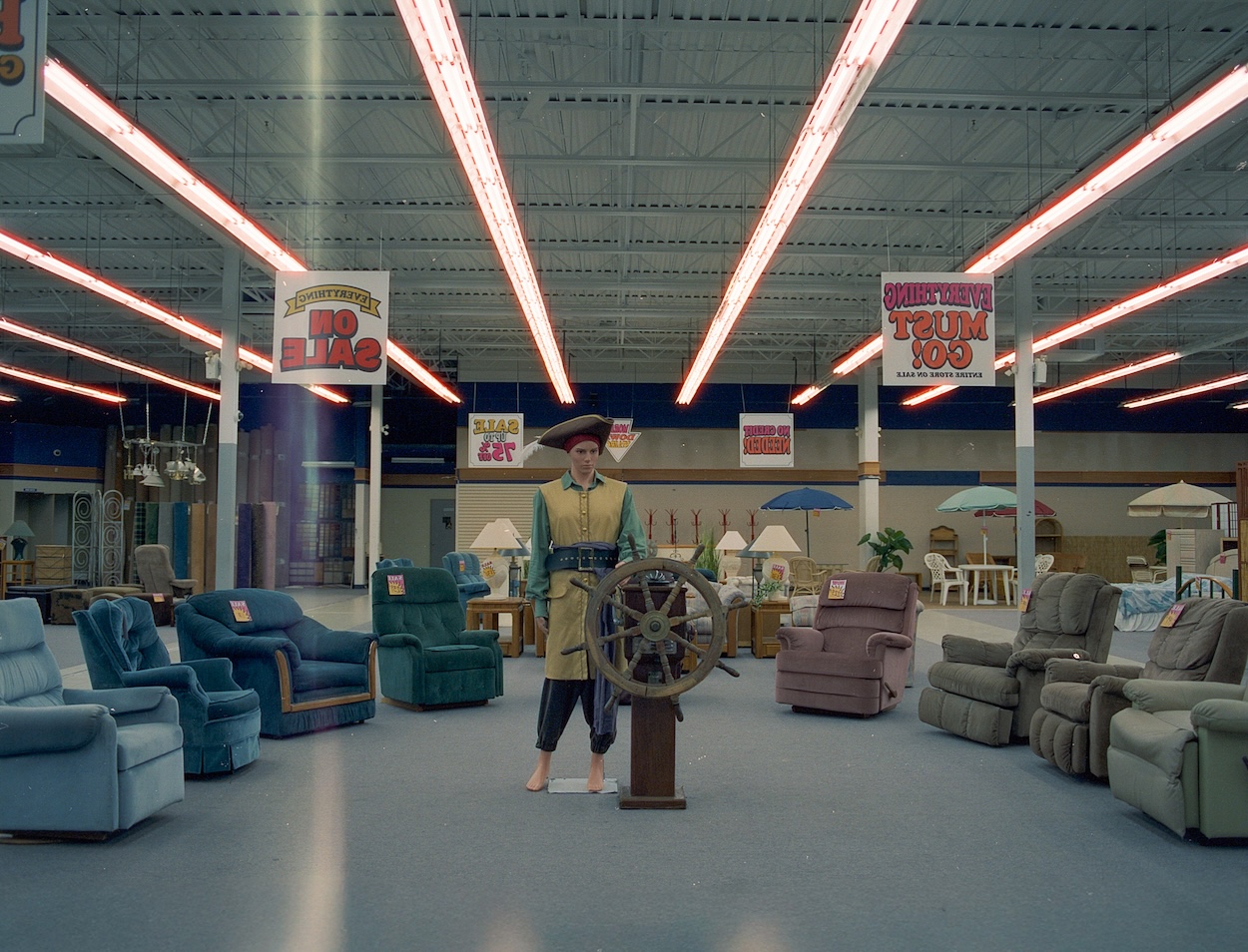
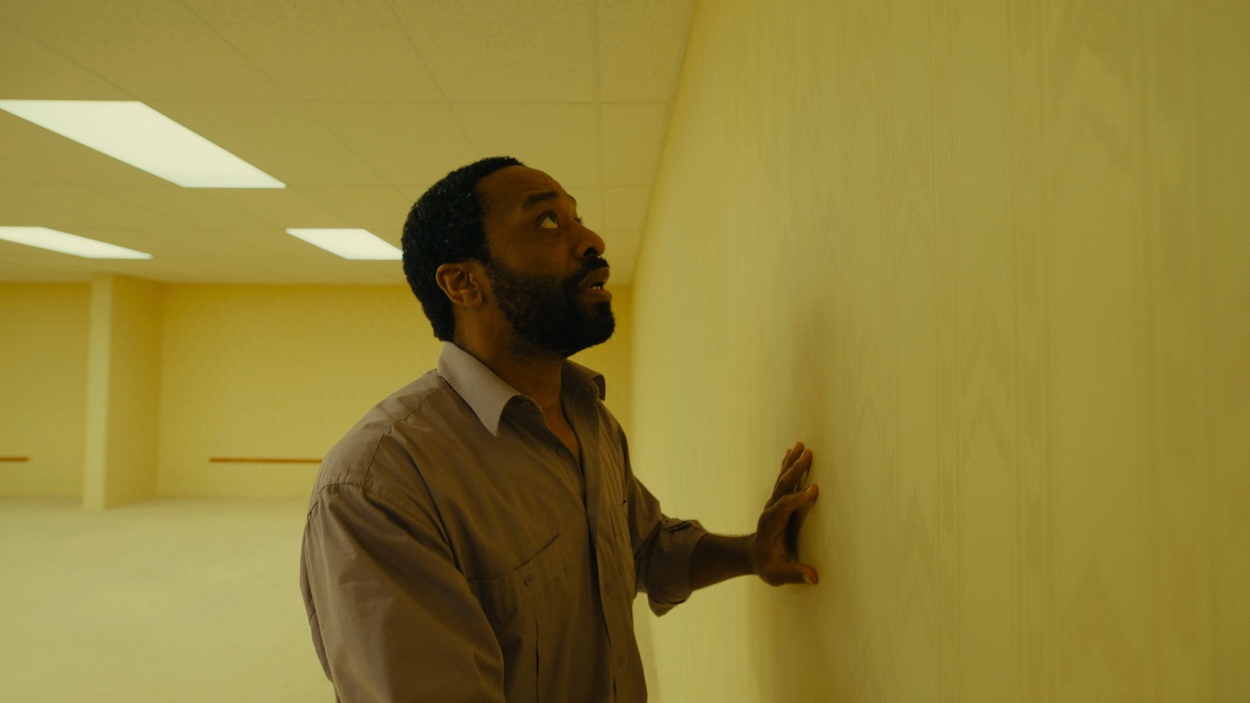
An aspiring architect self-relegated to the role of proprietor of a thematically confused furniture warehouse, Cap’n Clark’s Ottoman Empire, Clark is our ticket in. He happens upon the backrooms in his showroom basement, slipping through a seemingly solid wall (also known as no-clipping) as if it were liquid, into a maze furnished with the ghosts of his own inventory.
Courtesy of A24…
“If we were building it, we had to make it count,” says Vermette. Sets connected by ramps were constructed on 15-foot risers, the actors sliding from one room to the next. “We wanted to put them in a world that seemed out of sorts and was awkward to interact with.”
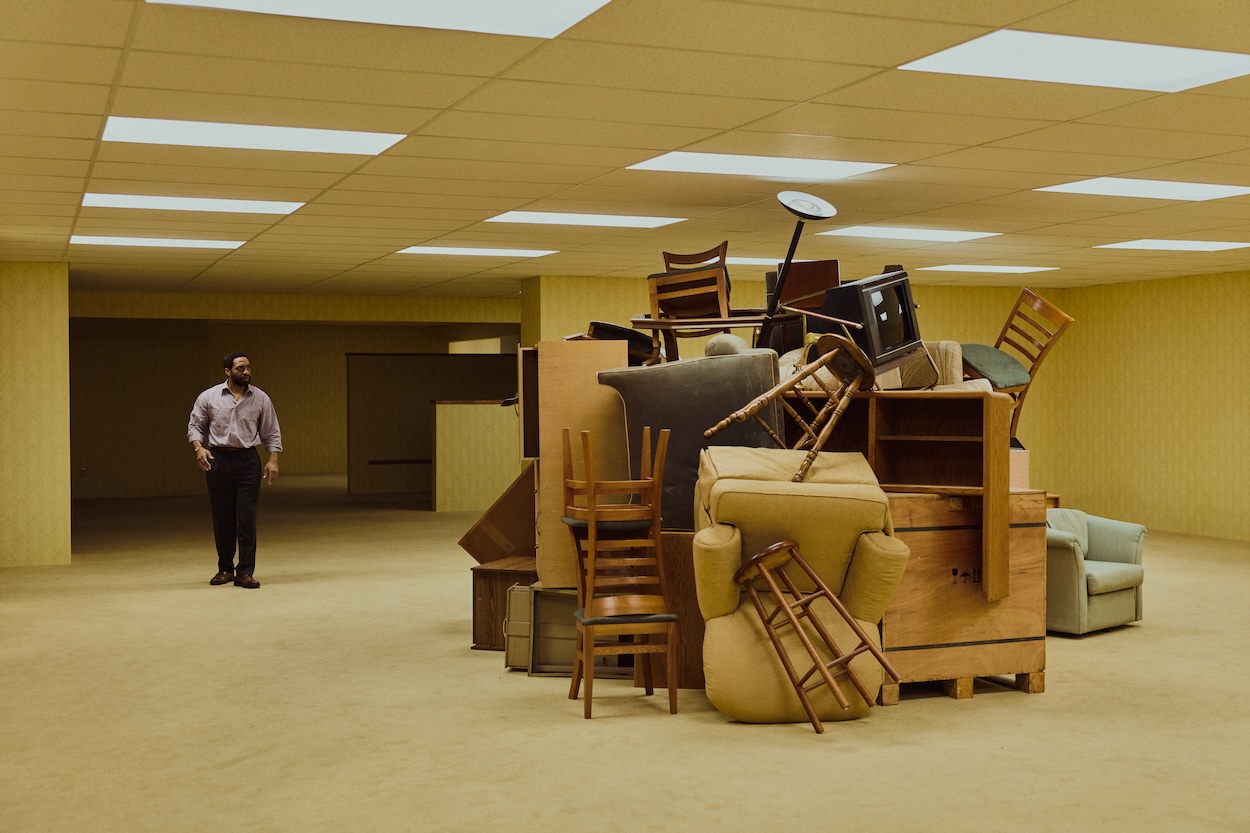
In lieu of the shoddily drawn map Clark fashions, Vermette left spatial anchors to keep the audience grounded. Towers of furniture and cavemen cutouts playing the Voyager Golden Record on a loop serve as signposts for both the characters and the viewers. “We wanted to create recognizable landmarks so the viewer understands that this isn’t ever-changing, it’s just endless,” says Vermette.
Courtesy of A24…
Where horror movies of the past have rested heavily on an inherent fear of darkness, Backrooms is comparatively well-lit. Perhaps crushingly so. The inescapable fluorescence reveals not only the banality but the incomprehensible weight of its scale. “It exists without any thought of human inhabitants. It’s very eerie,” Vermette says. Sightlines stop at a pony wall or a sharp corner, cutting off any view past a certain depth. Elsewhere, the lights simply die out.
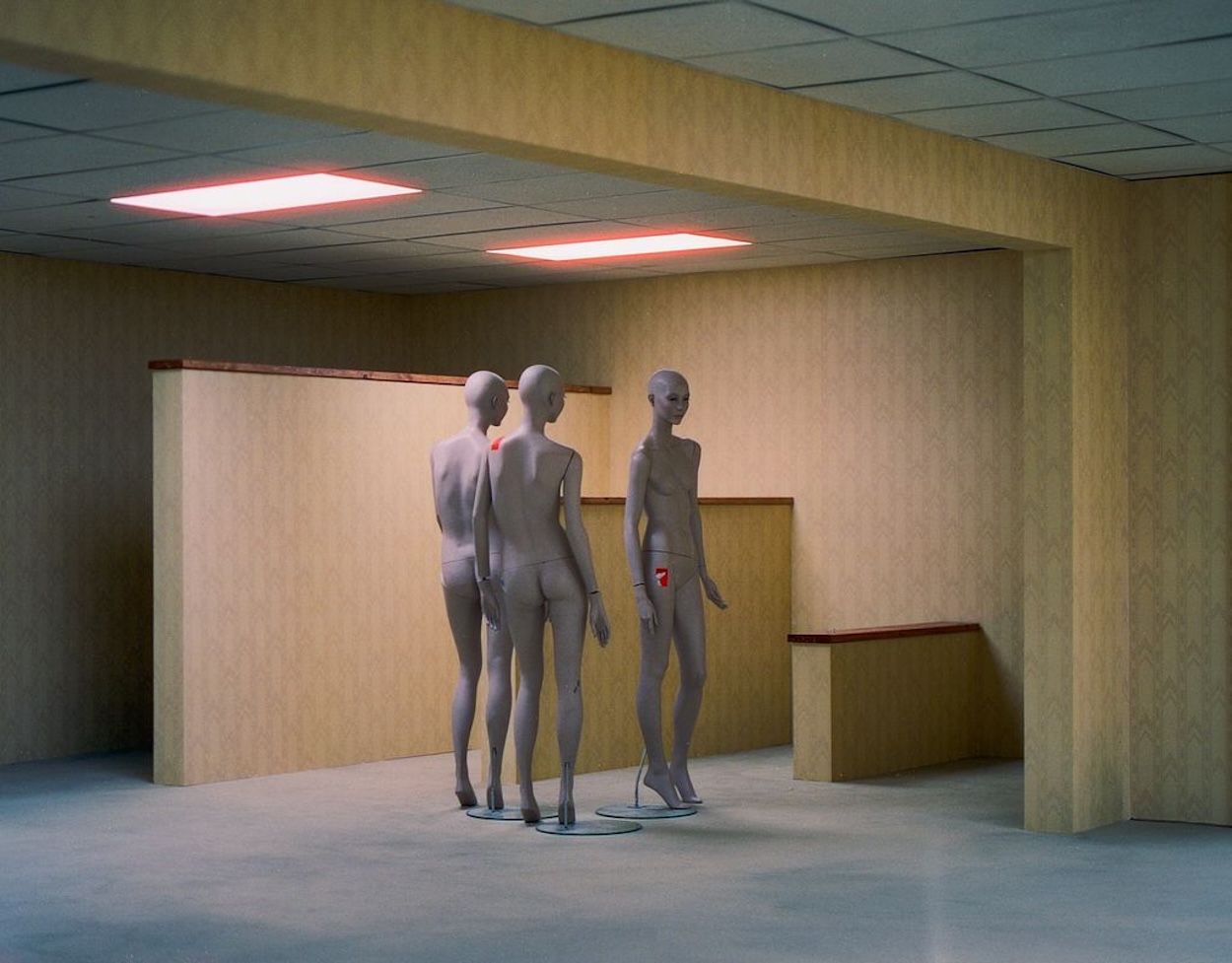
Vermette and his team filled those rooms with relics of the ‘90s, plucked from estate sales, clearance spots, hotel liquidators, and Facebook Marketplace. “You can see how much volume of this one patterned couch was pumped out in the ‘80s and ‘90s. It’s consumerism at its best.” Thirty-nine of the same chair, found in one haul, reappear as oddities, barriers, and the bones of nonsensical creations.
Courtesy of A24…
Backrooms tips its hat to the fact that the places around us—the parking lots, strip malls, and office buildings of our day-to-day lives—are every bit as simulated as its sickly yellow hallways. “The exterior world is somewhat dreamlike,” Vermette says. “There’s a surreal quality to it.” Shopping carts remain unreturned, hospital lights flicker, high-rise developments loom. The industrialized sprawl of the ‘90s, refracted back to us on the internet, was as indifferent as the backrooms themselves.
“We use nostalgia as an anchor,” says Vermette. “The ‘90s were an era of mass construction with very little thought of human interaction. And that’s the main story of the backrooms: a place that is built without anyone in mind.”