Gabriel Charbit on Turning Skylines Into Furniture
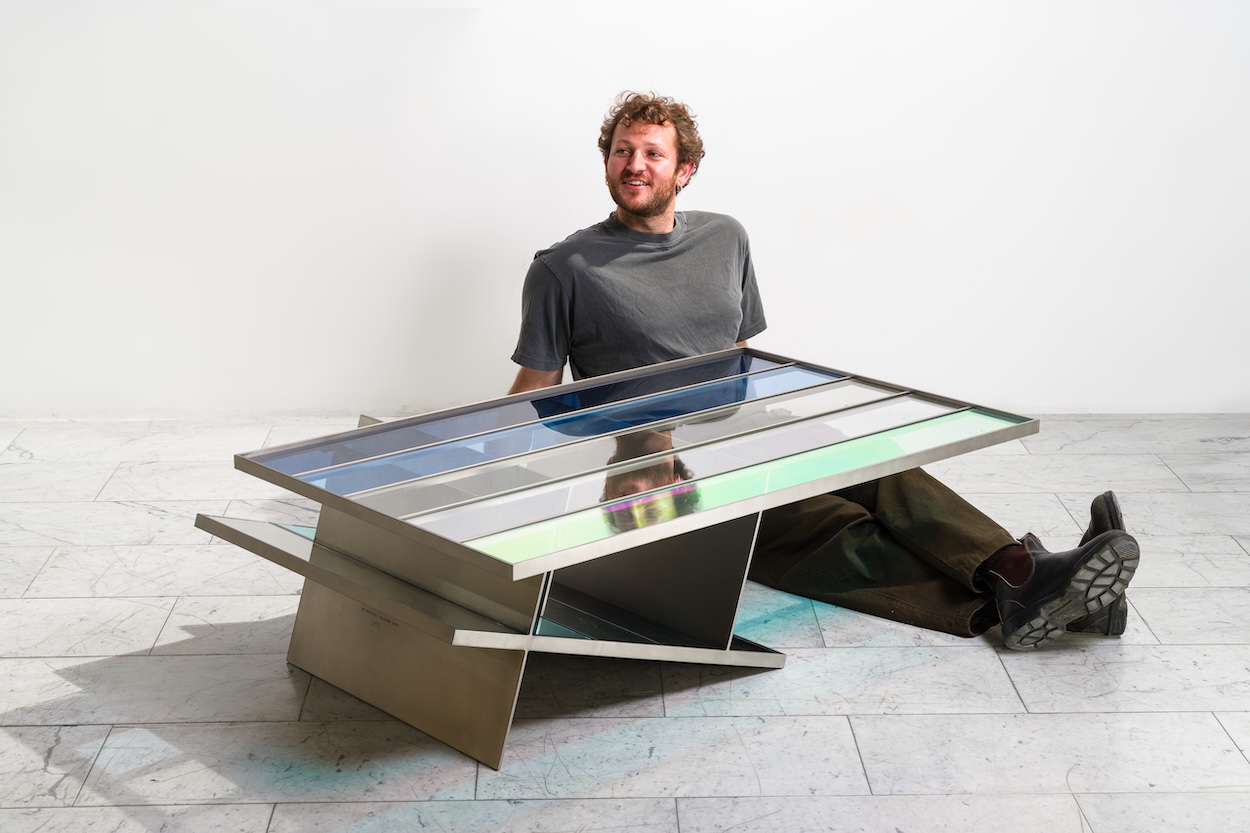
Across two collections, "Skyline" and "Metropolis," the French designer, represented by Todd Merrill Studio, invites viewers to look beyond the object itself.
Photo by Simon Leung, Courtesy of Todd Merrill Studio…
Gabriel Charbit didn’t grow up wanting to be a furniture designer. For a long time, he thought he’d become a singer-songwriter. “I’ve always had an overflowing imagination, constantly inventing stories and imagining different lives,” he tells Surface. “More than choosing a profession, I was searching for a way to give those ideas a tangible form.” He came to design rather unconventionally, through science rather than art. Raised in what he calls “a scientific family,” his father an engineer turned real estate developer, his mother a doctor, Charbit followed the logical path first, studying engineering with a focus on computer science and systems architecture. “Science came naturally to me, but I eventually realized that, although I loved understanding how things worked, I needed to make something with my hands.”
Sculpture seemed like the answer, briefly. Then he realized what he actually wanted was for people to live with the work, not just look at it. “I wanted an object to become part of someone’s life,” he says. “That’s how I found furniture.” Looking back, he doesn’t think the music ever really left. “I simply changed instruments,” he says. “Today, I still think about furniture the way a musician thinks about a composition. Rhythm comes first. The medium comes after.”
Photo by Simon Leung, Courtesy of Todd Merrill Studio…
To learn to work with his hands, Charbit enrolled at École Boulle, the storied fine arts college in Paris for cabinetmaking and design. “After several years behind a computer, I wanted to understand what it meant to make something with my hands,” he says. “École Boulle felt like the perfect place for that.” The training was exacting and slow. “Every Monday morning I was at my workbench with the same set of tools, slowly making a Napoleon III scriptorium,” he recalls. “It took hundreds of hours.”
Alongside the bench work, he studied drawing, art history, and construction. What stayed with him most, however, was the way of thinking. “You could have the perfect drawing, but once you started working with the material, it answered back,” he says. “Sometimes it resisted. Sometimes it surprised you. Those surprises became part of the design.”
That lesson became foundational. “École Boulle made me understand and respect the material I work with, engaging me in a dialogue, and together reaching the imagined form while at the same time allowing space for the viewer’s input,” he says. The contrast between his two disciplines sharpened his point of view. “Engineering taught me a language. Cabinetmaking taught me how to listen.”
Photo by Simon Leung, Courtesy of Todd Merrill Studio…
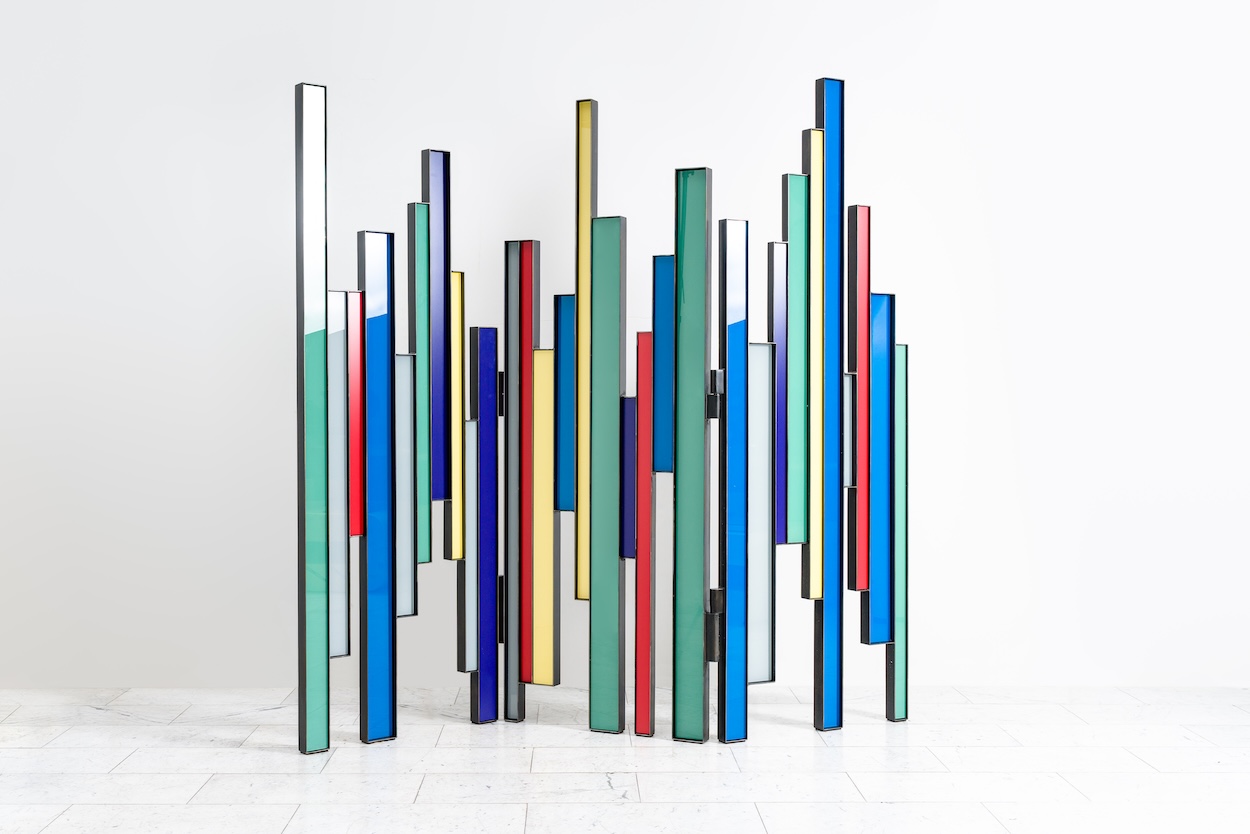
Charbit’s fascination with New York began long before he ever lived there. Growing up in Europe, he was captivated by the city from afar, its buildings, its seemingly eternal skyline. That distant fascination is what shaped his 2018 debut collection, Skyline. “Skyline was born from looking at the city from a distance,” he says. “I was fascinated by the musicality of skyscrapers, their rhythm, their repetition.”
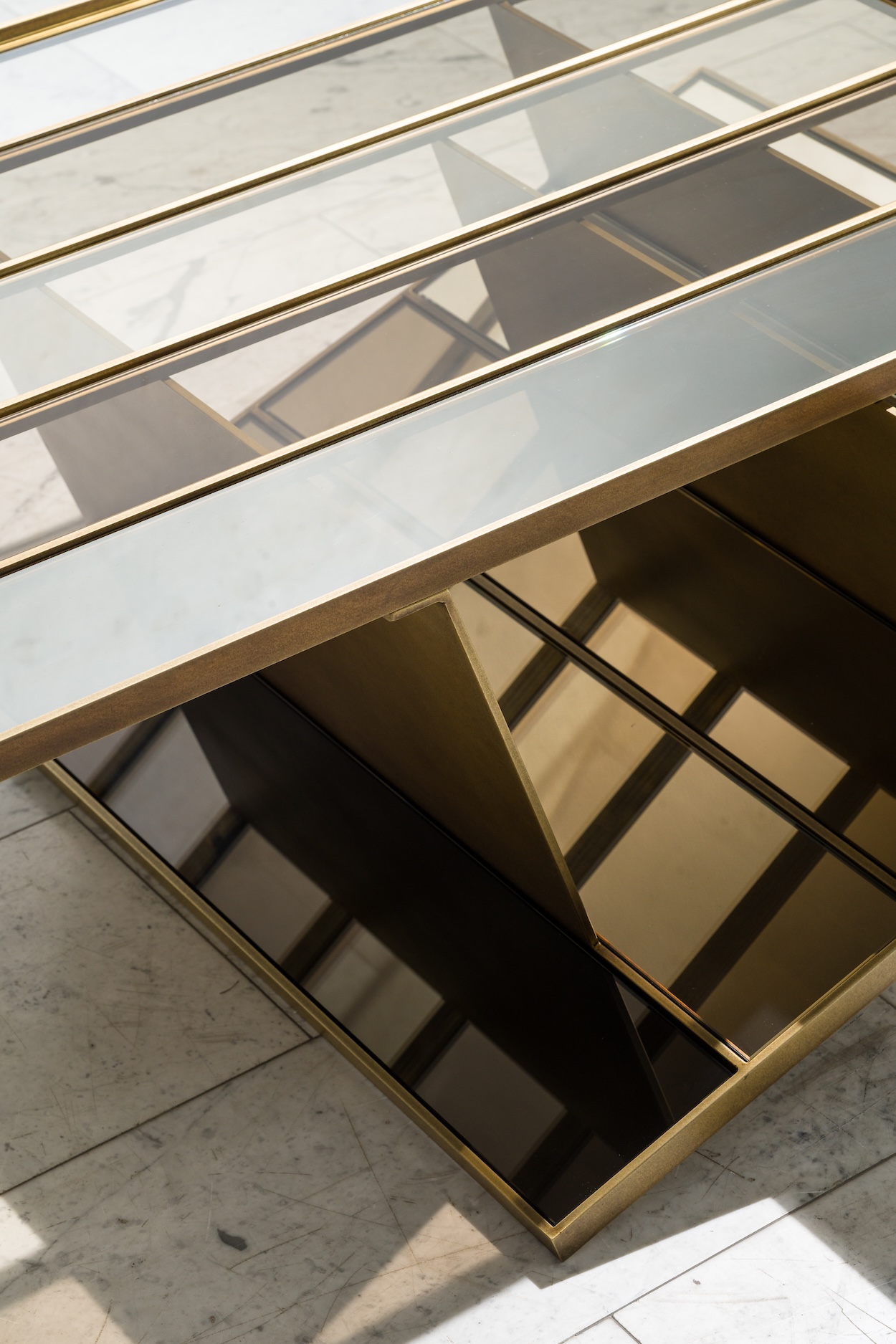
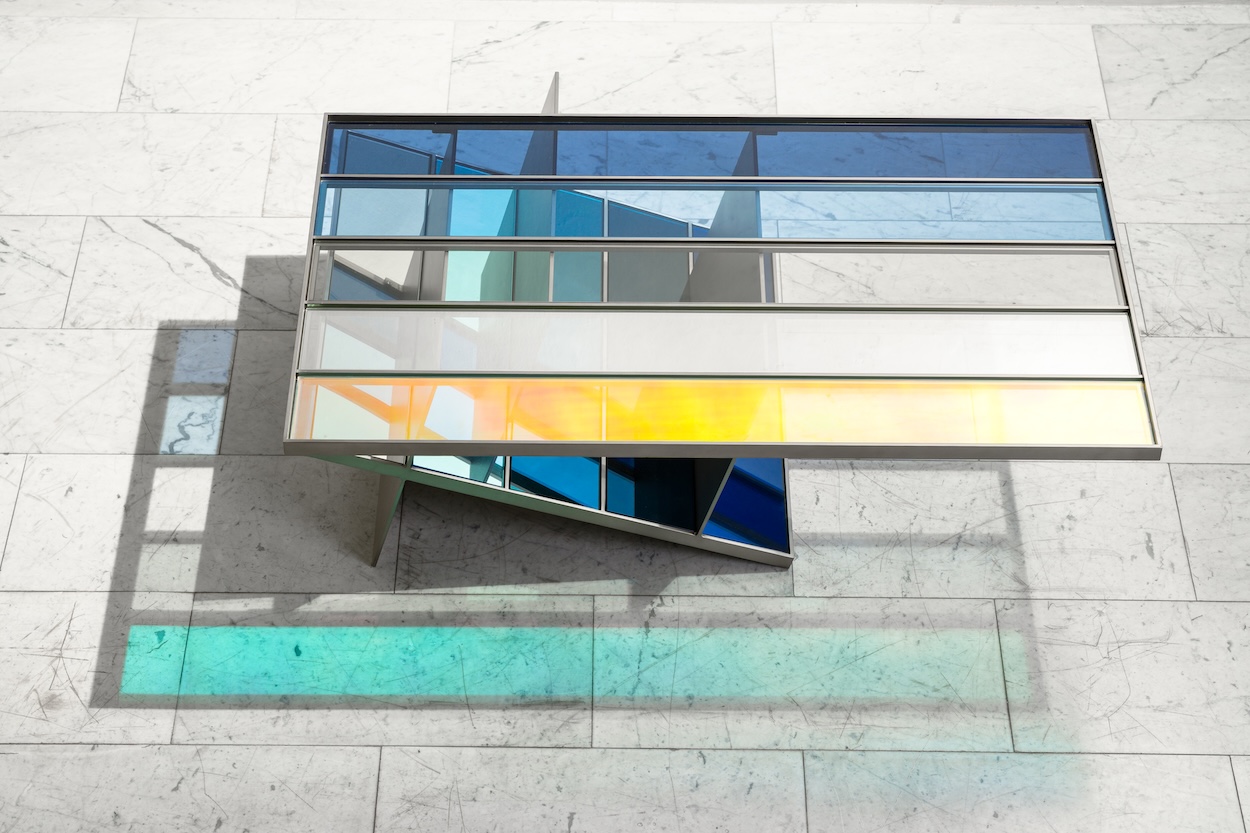
Everything changed when he moved there. “Once I was inside the city, I stopped looking at buildings as objects and started experiencing them while walking,” he says. “Reflections appeared and disappeared, glass caught the sky, steel changed color throughout the day. Every street offered a new composition simply because the light had shifted or I had taken a different route.” That shift carried directly into Metropolis, his second collection, which explores the relationship between material, texture, and light, while still leaving space for the viewer to bring their own reading to the work.
“The real challenge has always been simplicity,” he says. “My work often looks very quiet: straight lines, simple geometries, restrained compositions. Achieving that simplicity takes an enormous amount of work. Every angle matters. Every reflection matters.”
Photo by Simon Leung, Courtesy of Todd Merrill Studio…
Looking ahead, Charbit says he wants to keep working in the territory of transition, the threshold moments between one state and another. “What excites me most is continuing to explore moments of transition,” he says. “I want my work to create openings to new possibilities, new interpretations, and new ways of looking. I love the idea of furniture as a stage, inviting new stories to unfold.”
“Eventually,” he says, “I’d love to create installations and public works that invite people to slow down, wander, and experience their surroundings differently.”