Shaking off the stylistic shackles of restrained Danish modernism, polymath Arje Griegst took his cues from wildly baroque, rococo, and ultimately maximalist touchpoints; elaborate, organic structures found in nature. Working across jewelry, homeware, sculpture, and other object categories, the trained goldsmith always sought to confront his fears. With the seminal seashell and wave-form inspired Triton collection, he found a way to push past his dread of swimming in the waters that surround his native Denmark. In doing so, he also pushed centuries-old, royal-decreed porcelain homewares brand Royal Copenhagen out of its comfort zone and catalyzed the heritage producer to tailor-engineer a new molding and coloring process all its own.
Royal Copenhagen Breaks the Mold With the Reprised Arje Griegst Triton Collection
The heritage porcelain homeware brand has ventured into its archive to revive and refine the whimsically radical, seashell-inspired offering
By Adrian Madlener June 17, 2026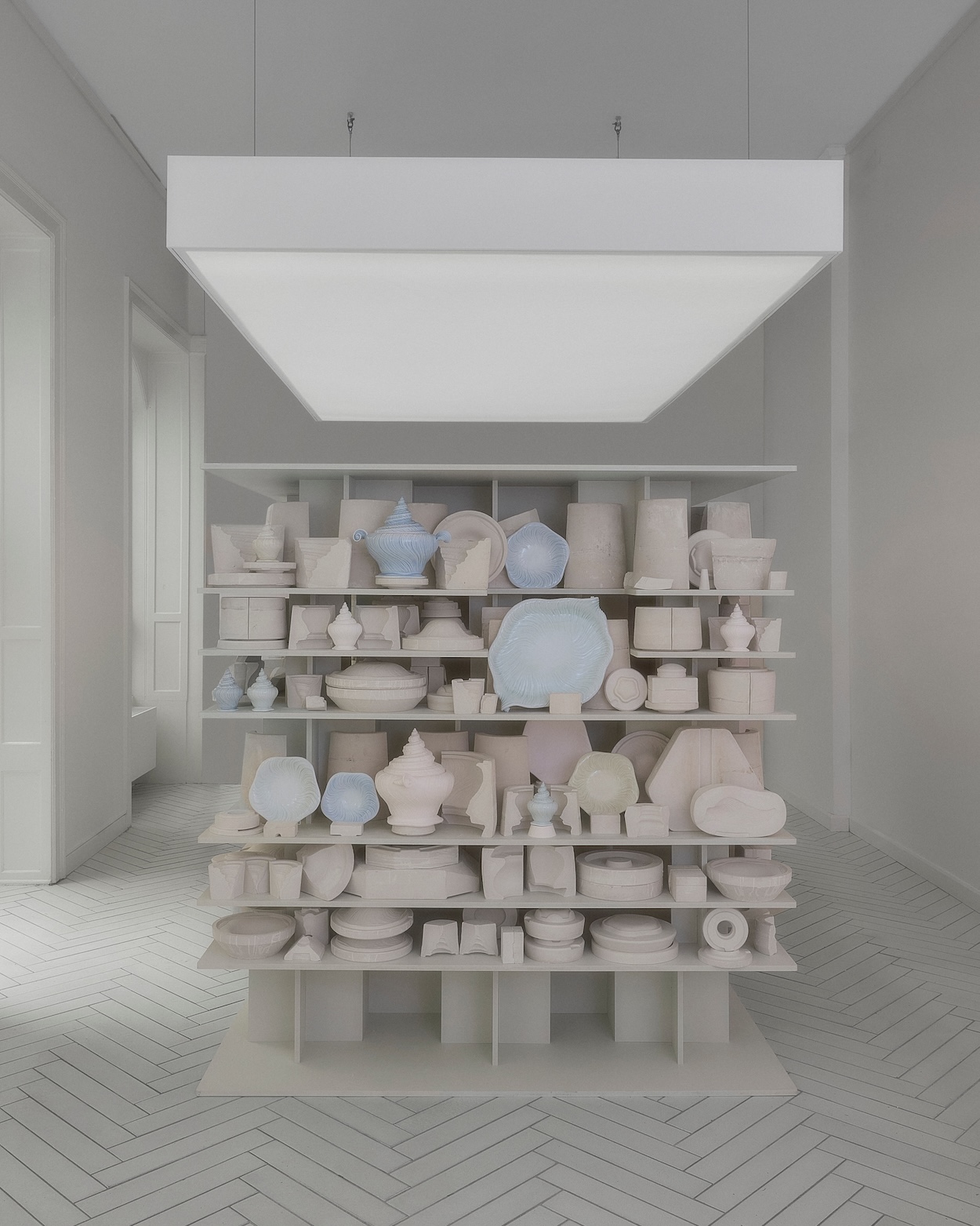
Courtesy of Royal Copenhagen
…
Courtesy of Royal Copenhagen
…
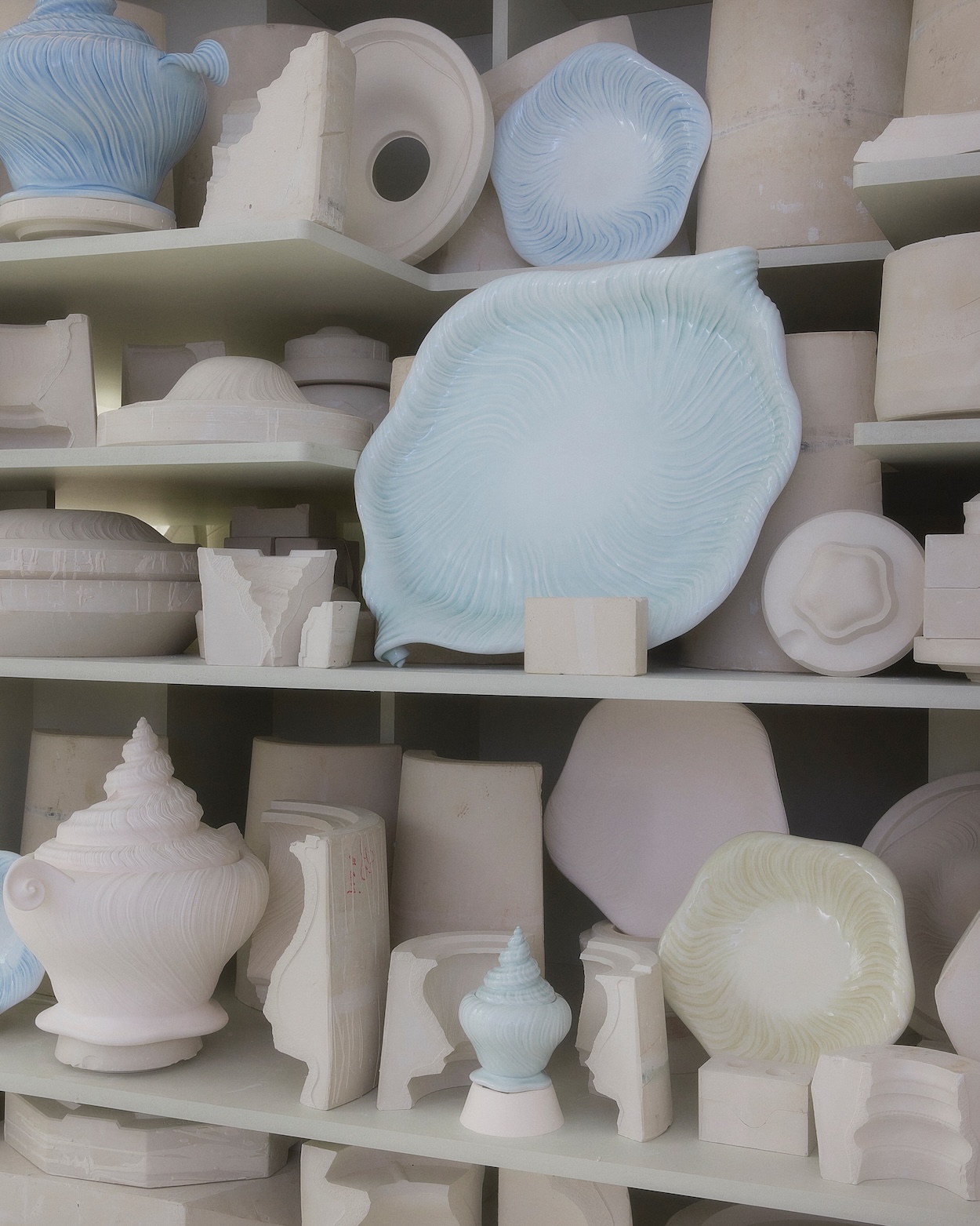
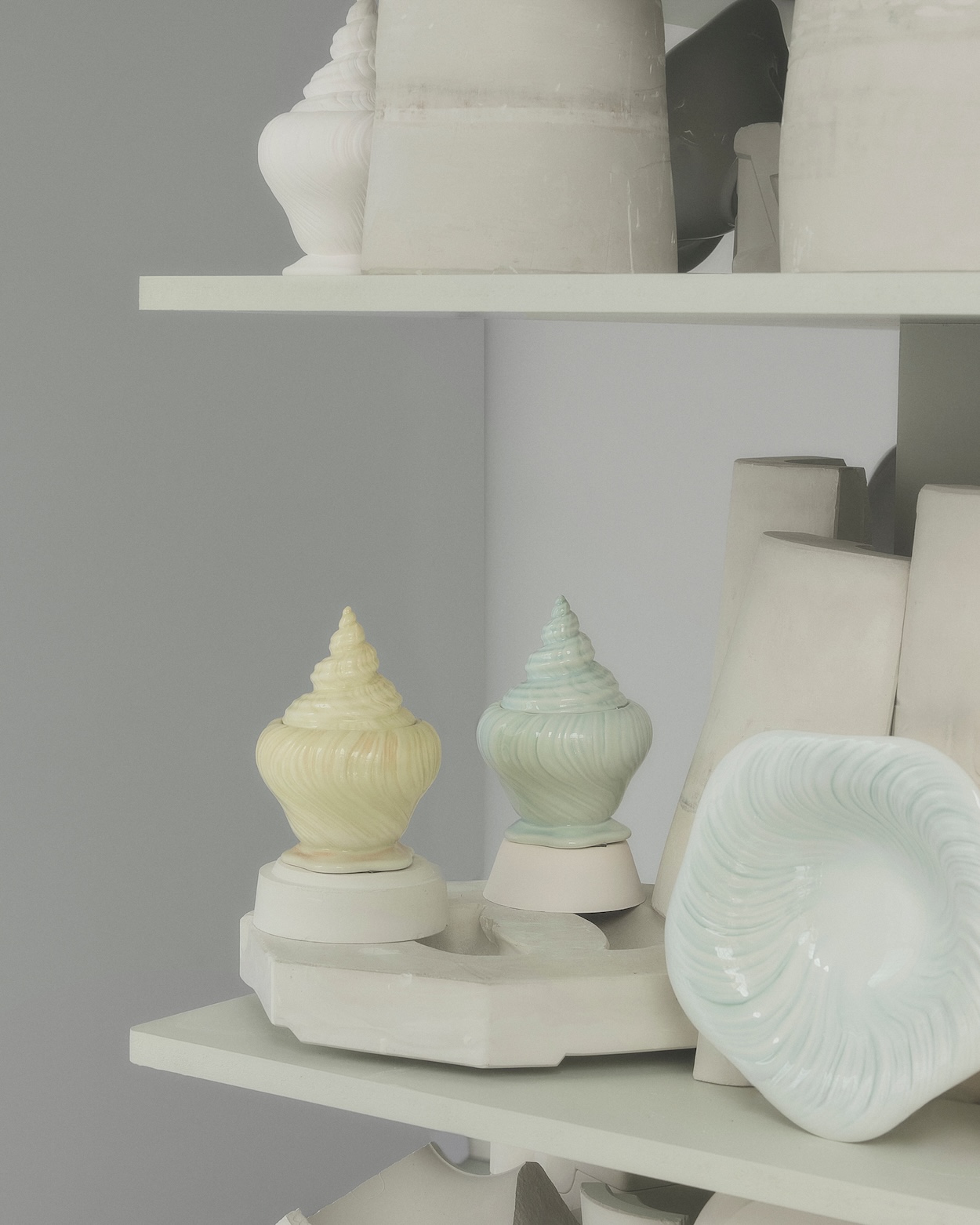
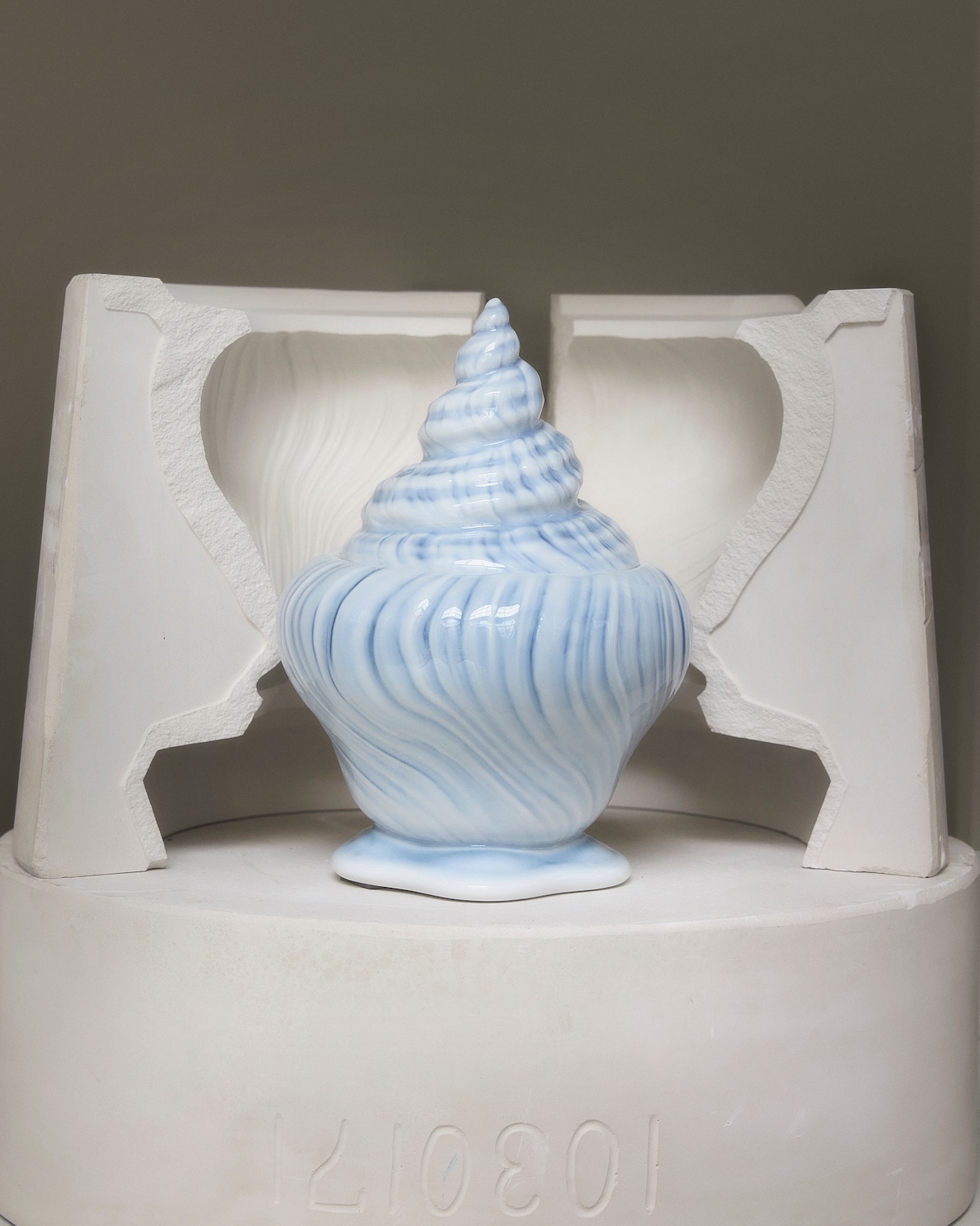
At last week’s 3daysofdesign—now the industry’s second-largest event—the legendary offering was relaunched. The sought-after carapace-esque tureens, bonbonnières, dishes, and plates are available again, in a tightly imagined range of colorways: Sand, Ocean, and celadon; complementing the original pinkish tone. The striated, undulating forms are whimsical but heavily rooted in natural representation. These elements are surprisingly functional. The forms themselves work well as near-ergonomic handles.
Courtesy of Royal Copenhagen
…
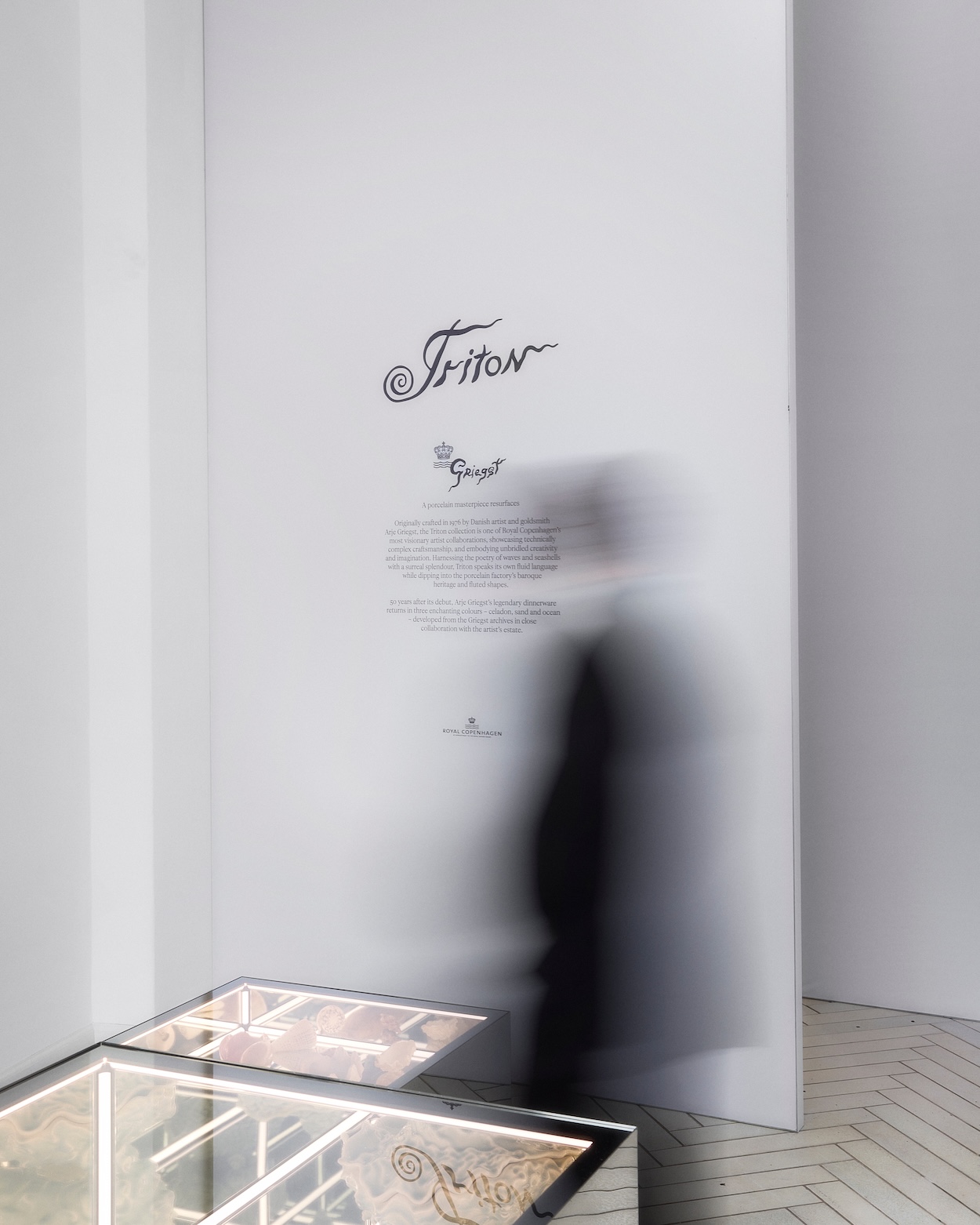
To commemorate its 50th anniversary, the company launched the collection with “Triton: a porcelain masterpiece returns,” staged with museological rigor at Royal Copenhagen’s city-center flagship. In illuminating jewel-box vitrines and stacked shelf displays, independent design writer and curator Dan Thawley put emphasis on the dynamic, precise, yet complex process involved: the various sources of inspiration and tools essential to the development of these designs.
Courtesy of Royal Copenhagen
…
The reprised process is being carried out by seasoned craftspeople, at Royal Copenhagen’s workshop on the outskirts of town, one of whom started out and is now ending his career producing the same collection. In this facility, the porcelain pieces are being formed using archival drawings and complex, multi-component molds. Nothing—from the spiraling top of the tureen to circling conch-shell handles of the serving lanterns, nor the articulation of the stabilizing ridge on the back of the plates—was left to chance. These details were either fully replicated—true to original form—or slightly improved yet still reflecting Griegst’s original intent. The intricate relief pattern surfaces are carefully spray-painted before glazing and firing to achieve a realistic, gradient effect.
Courtesy of Royal Copenhagen
…
“With its enchanted and playful universe, Triton adds another dimension to Royal Copenhagen’s 250-year history rooted in nature and the baroque, bringing back a lyrical language in new and beguiling colors which feels very right for now and we are grateful to the Griegst family for once again setting off on this voyage with us,” says Jasper Toron Nielsen, Royal Copenhagen Creative Director.