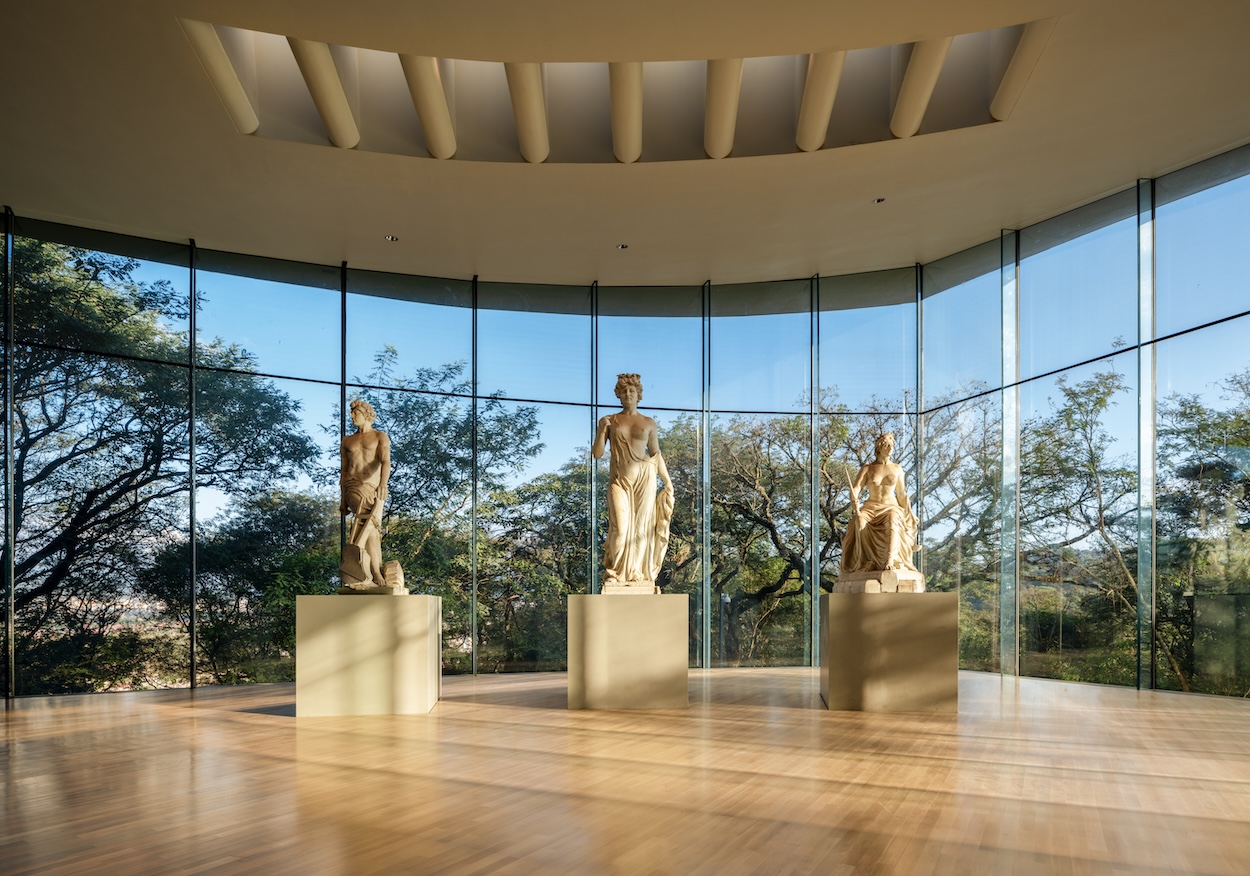
For more than a hundred years, six monumental marble sculptures by pioneering Argentine sculptor Lola Mora sat in the province of Jujuy, largely disconnected from the public they were meant to inspire. Commissioned for the inauguration of Argentina’s National Congress in Buenos Aires in 1906, the sculptures were removed just fifteen years later and donated to the province, where they stood for a century in the open air. Now, for the first time since their creation, all six works have been brought together under one roof, in a building designed specifically to hold them.
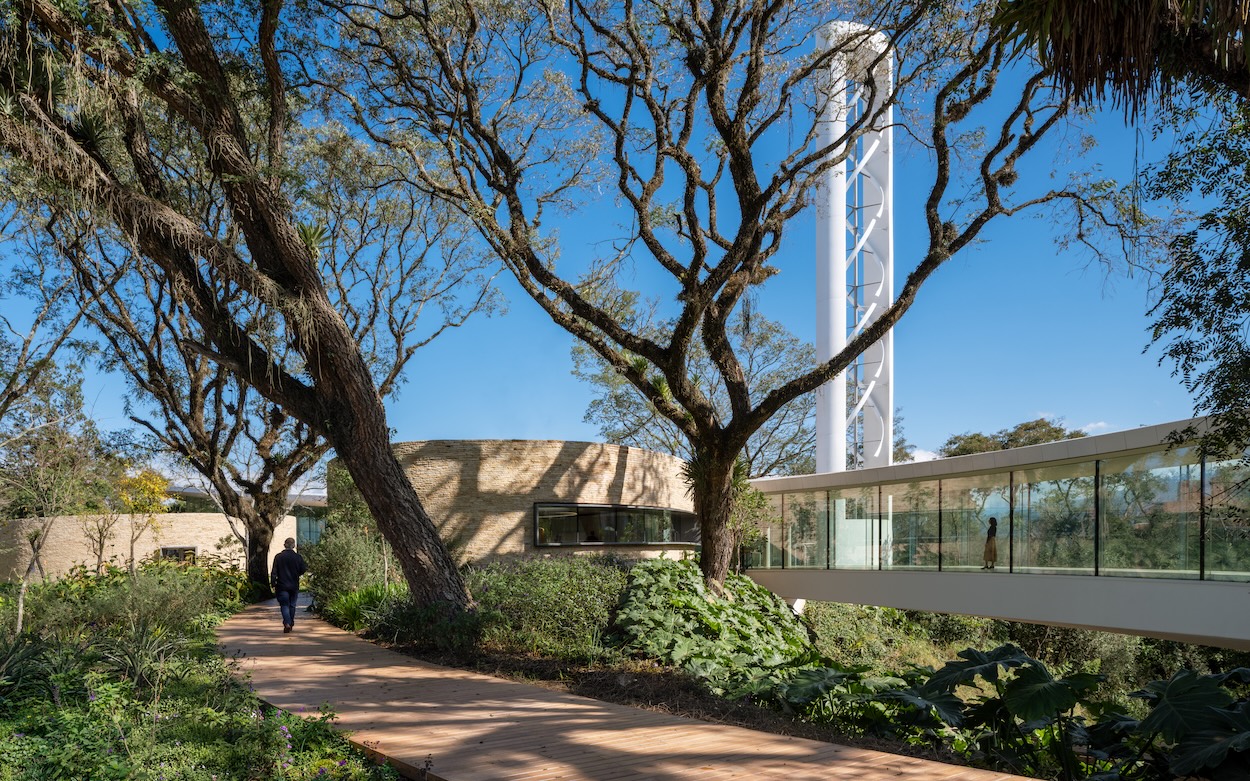
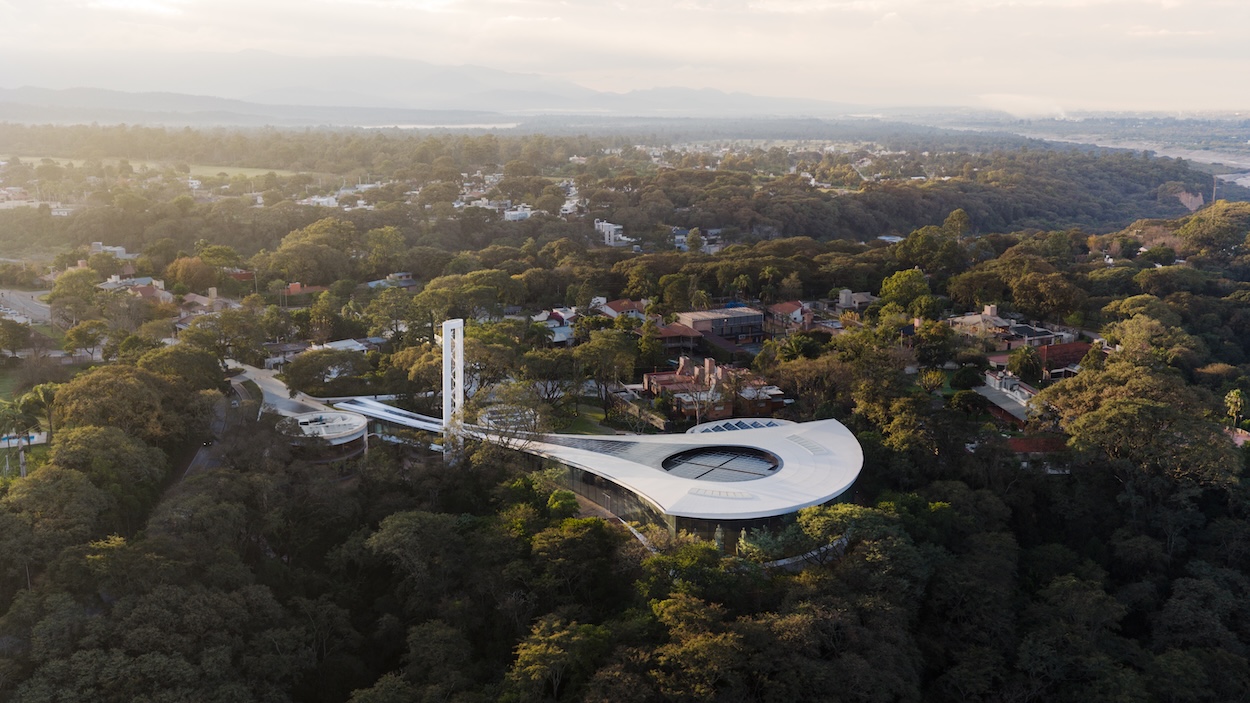
Pelli Clarke & Partners has completed the Lola Mora Cultural Center in San Salvador de Jujuy, a net-zero building set at the foot of the Andes, its curving form woven around an existing grove of native trees. It is the final project led by the firm’s founder, the late Argentine–born César Pelli, who died in 2019. For his son (and current firm partner) Rafael Pelli, its completion is as much a personal milestone as a professional one, and a tribute to Lola Mora, an artist his father admired from childhood, coming to life in the region of Argentina where Pelli himself was born.
Was there a specific moment during the design or construction process where you felt your father’s presence or influence most strongly?
The prioritization of civic space and the deep integration of landscape are among the strongest expressions of my father’s influence and design philosophy. From the outset, César’s desire to place the sculptures in a lush garden surrounded by the Yungas strongly shaped the design team’s direction. Every effort was made to preserve and highlight the site’s natural beauty, incorporating it as a crucial element of the architecture.
How much did the sculptures themselves dictate the architecture, versus the landscape?
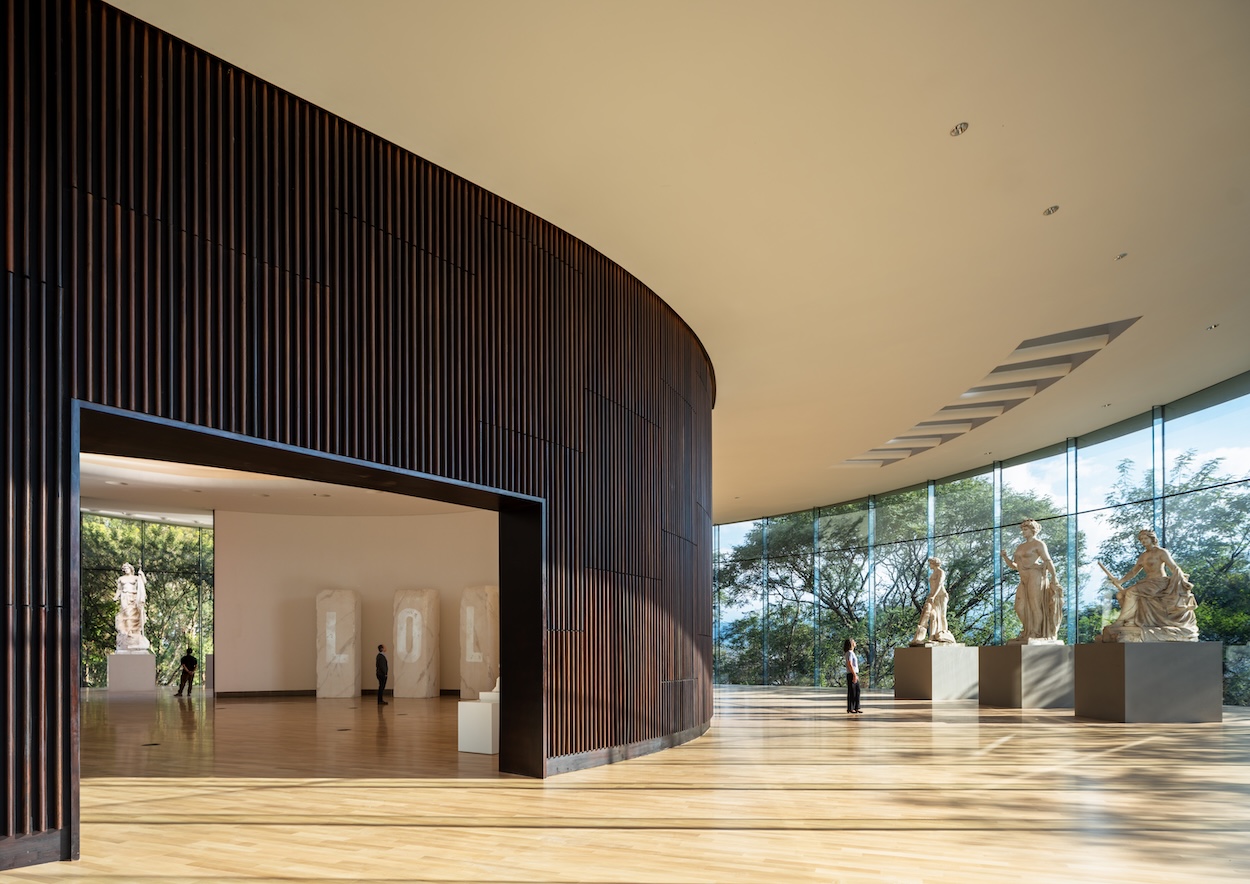
The sculptures are the soul of the project. The building’s primary purpose is to showcase and highlight these remarkable works. Its carefully considered layout encourages a dynamic, fluid process of discovery, moving from distant group views to surprising framings of individual sculptures. As visitors walk through the exhibition and interpretation rooms, new and unexpected views of the sculptures appear and disappear, like images in a magical kaleidoscope. The landscape of the Yungas is omnipresent, a verdant backdrop to Lola Mora’s work.
Your mother, Diana Balmori, founded the landscape architecture firm behind the gardens here. What did it mean to have both of your parents’ legacies represented in the same project?
My parents, Diana and Cesar, collaborated frequently throughout their careers, and this project embodies the spirit of that lifelong partnership. Architecturally, it prioritizes public access and enables a meaningful dialogue between the institution and the community it serves, qualities that were always present in Cesar’s designs. From a landscape perspective, the preservation of the trees, the respect for natural hydrology, and the careful integration of architecture within the existing ecosystem reflects principles that were fundamental to Diana Balmori’s work.
San Salvador de Jujuy is a community close to your heart. Can you talk about that connection, and what it meant to build something there specifically?
In his last years, my father, Cesar, reduced his workload to concentrate mostly on his projects in Argentina, which held the greatest meaning for him. He was always grateful for the opportunities he was given by coming to the United States, but he retained a deep attachment to Argentina: the country, the culture, his extended family still there, and especially the memories of his boyhood on family trips through the northern provinces of Tucumán, Salta, and Jujuy. Seeing the museum completed gives me enormous satisfaction. The project gave my father a last opportunity both to remember his upbringing and to celebrate the history of one of Argentina’s most important artists. And I know he took great pride in contributing a public building open to everyone in Argentina.