“Keeping Community,” the Center for Art and Advocacy‘s latest project, resists the format of a conventional exhibition. There are no wall texts guiding visitors from one framed piece to the next, and no single narrative to follow from entrance to exit. Instead, the Center’s modular gallery has been reimagined as a gathering place: a season-long collection of pop-up programs, collaborations, and partnerships built on the core belief that runs through all of the Center’s work: that liberation is not a solitary pursuit, but a collective one.
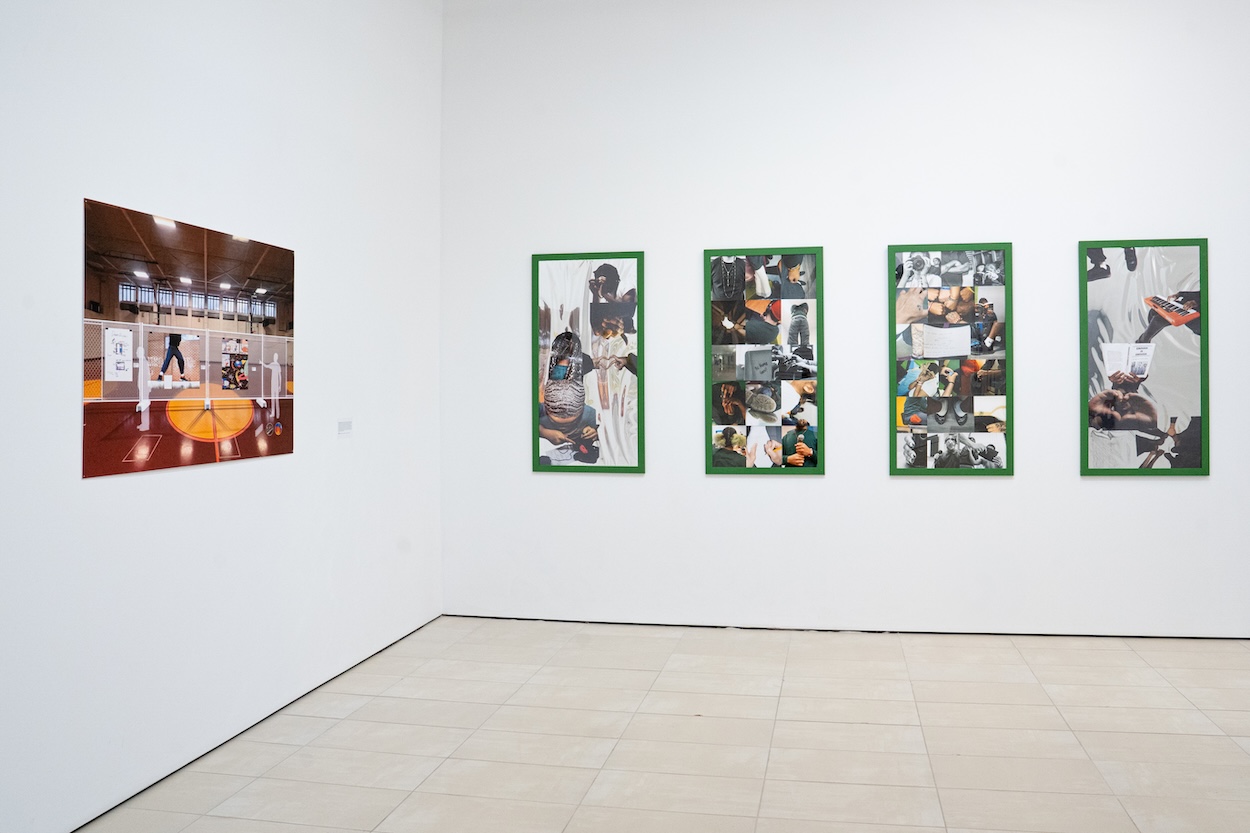
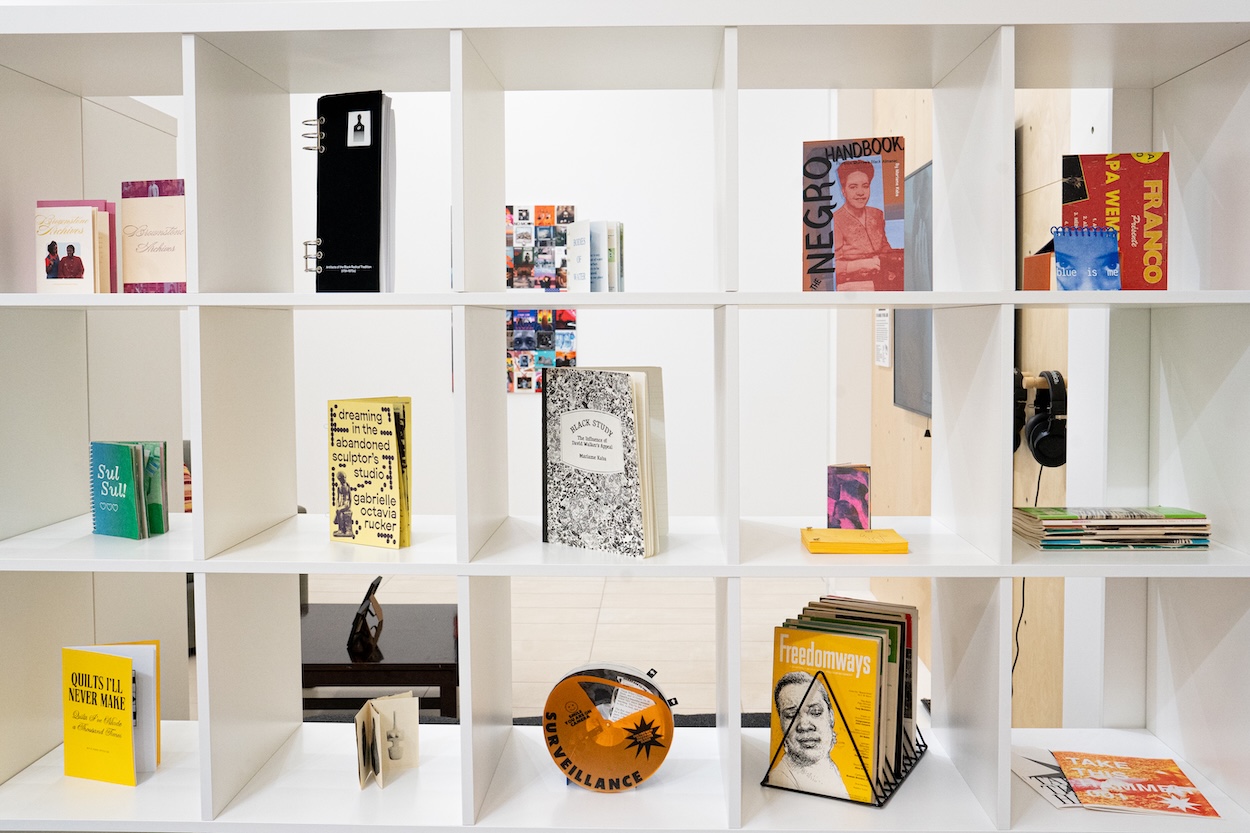
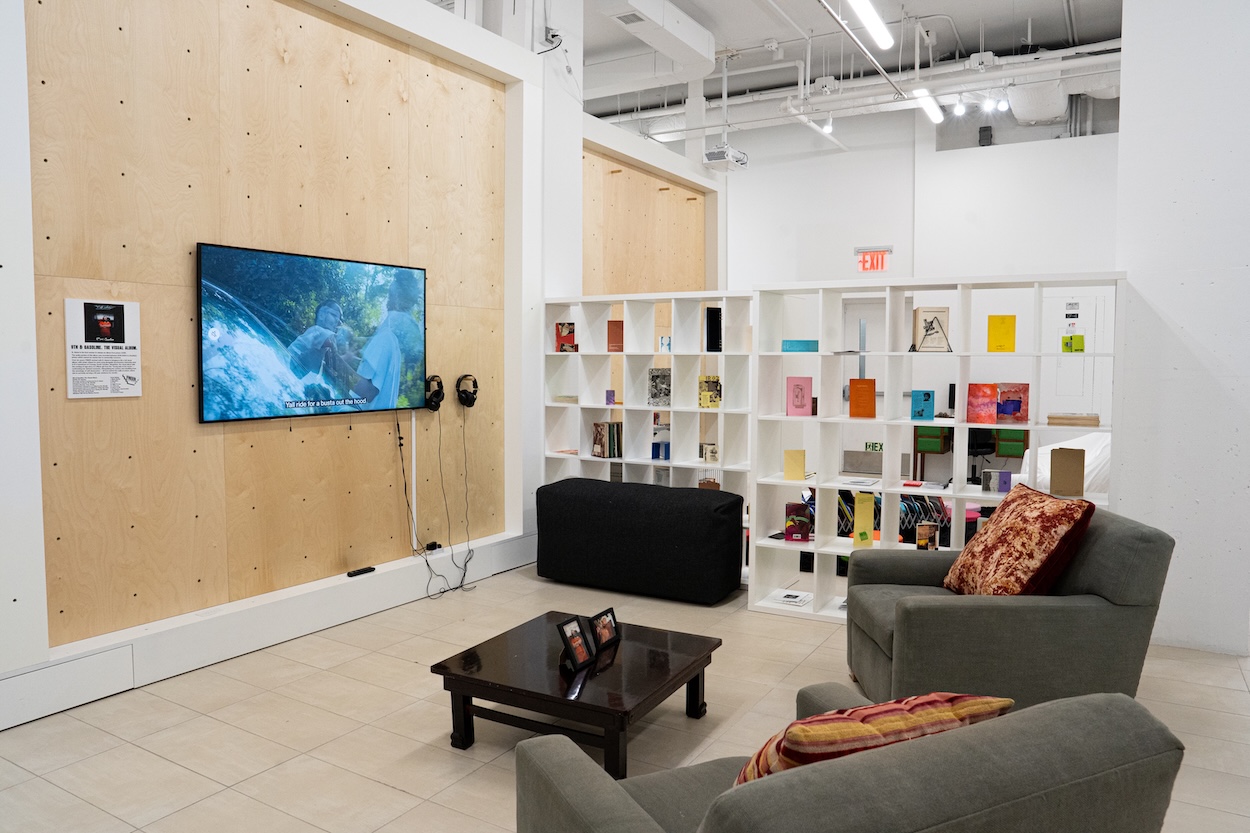
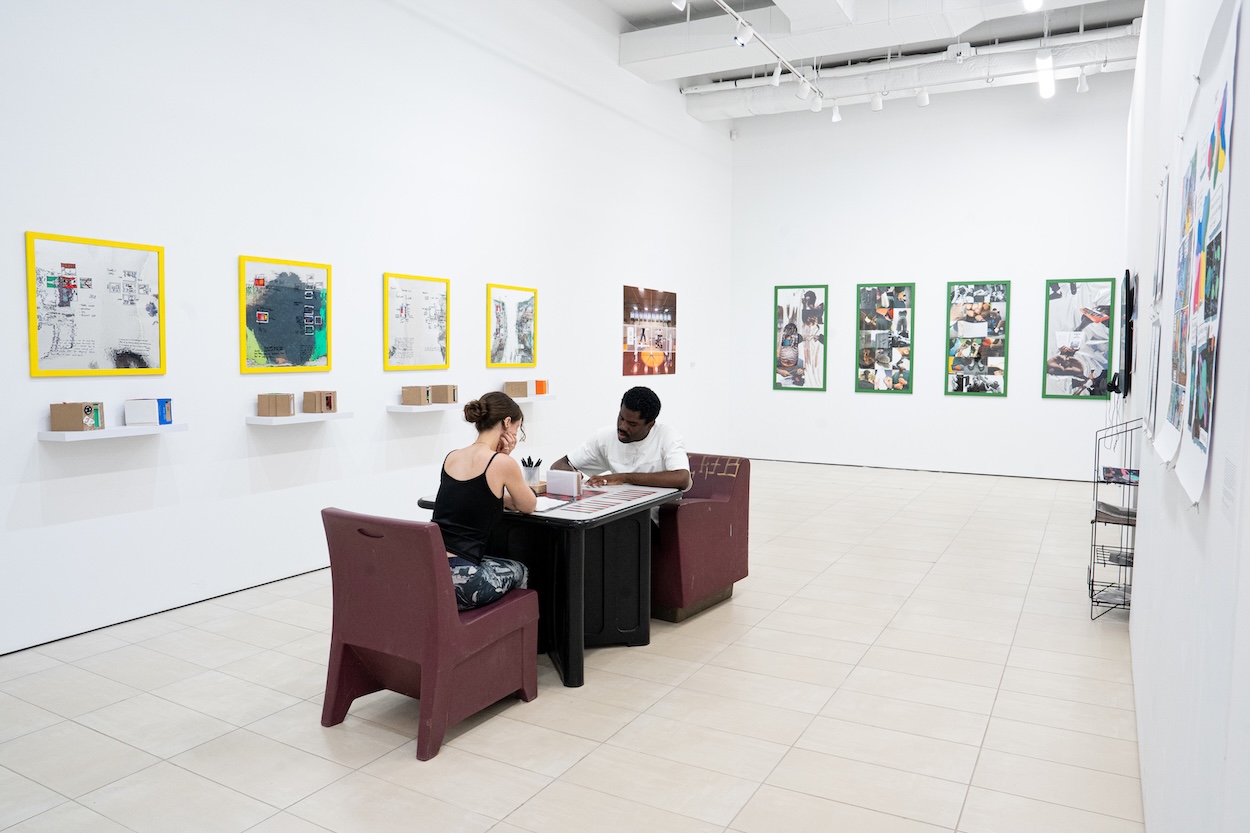
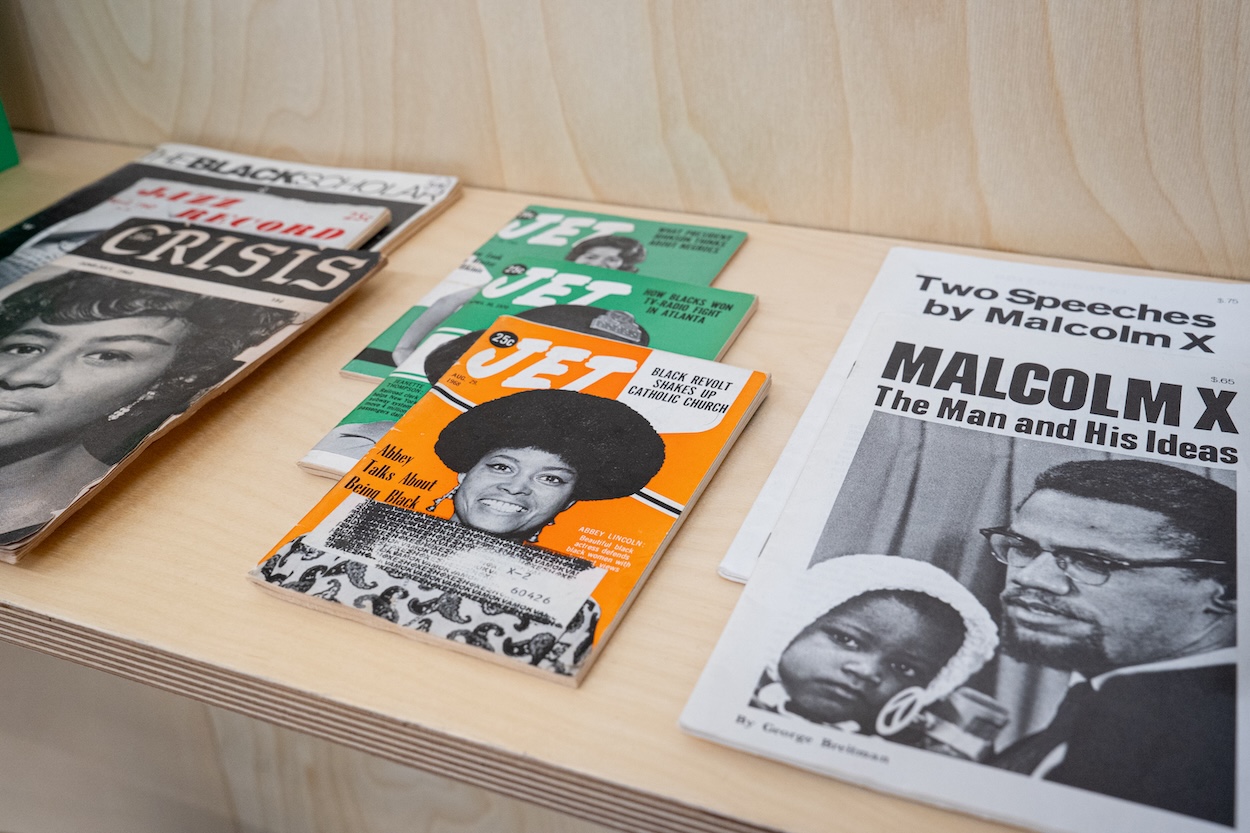
That concept takes physical form across three distinct rooms, each shaped by a different community partner working at the intersection of creativity and justice. First, the Reading Room, curated by Sojourners for Justice Press, gathers archival zines, rare books, and VHS ephemera into a space built for slow study rather than a quick walkthrough. Second, the Listening Room, curated by Freer Records, traces the largely untold sonic history of formerly incarcerated musicians through curated playlists and artwork, alongside a station where visitors can write directly to currently incarcerated artists. Lastly, the Youth Art Space showcases work by Crossroads Juvenile Center youth, made during workshops led by visiting teaching artists and creatives. Taken together, Keeping Community proposes that a gallery might function less as a place to look at art, and more as a place to practice it.
Courtesy of the Center for Art and Advocacy. …
The title “Keeping Community” feels especially meaningful. What does “keeping community” mean to you, and why did it feel like the right theme for this project
“Keeping Community” is an invitation more than anything for organizations carrying out similar justice-centered work to take up space and activate the Center through a programmatic lens grounded in abolition, liberation and discovery. Its roots originate from our 2025 Community as Practice Block Party which featured a set of activations from myriad NYC organizations and groups. “Keeping Community” is a continuation of that ethos and a celebration of the work of aligned organizations that are working to craft resources and pathways for currently and formerly incarcerated artists and youth.
Instead of organizing a traditional exhibition, the Center created spaces for reading, listening, learning and gathering. What inspired that approach?
As our space is modular, with movable walls and other adjustable display pieces, we wanted to explore a program-forward layout that would transform the gallery into an especially tactile and interactive landscape for visitors. “Keeping Community’s” dynamism also reflects the expansiveness of the work the Center and other similar organizations are doing and enacting out in the world. It embodies our belief that art, wellness, community, and liberation are inextricably linked and cannot be siloed. We have been hosting various visits and tours with youth, artists, and the local community, and our desire is for the space to feel inviting in a new, generative way and to offer opportunities for guests to explore and spend time within each space with intention and curiosity.
Courtesy of the Center for Art and Advocacy. …
How did these partnerships come together, and what made them feel like the right fit?
Many of these partnerships were born from community outreach we conducted last year in the lead up to our Community as Practice Block Party. For example, Freer Records and One Love Community Fridge tabled at the event, and “Keeping Community” feels like a natural and fluid evolution of those nascent connections. Similar to how Center Fellows work across plural mediums and disciplines (Center Fellows include scholars, writers, musicians, visual artists, performers, filmmakers and more), we aimed to activate the Center’s physical space through distinct yet overlapping creative mediums. We eventually landed on a threefold structure after much ideation: a literary space, a sonic space, and a visual arts space. Last year, we launched our Center Youth Fellowship as a way to highlight the creativity of justice-impacted youth, and designating a youth arts space felt like a crucial extension of that mission.
The Center’s work has always focused on supporting artists with lived experience of incarceration. How does “Keeping Community” build on that mission in a new way?
“Keeping Community” advances that mission by bringing partner organizations whose work is similarly undergirded by creativity and justice into the fold, both physically and conceptually. In building “Keeping Community,” we invited our partner organizations, who work directly with justice-impacted artists and communities, to curate and program with autonomy and offer visitors insight into the rigorous, visionary creativity that exists behind bars. “Keeping Community” also features stations in which visitors can connect more directly with the participating artists, writing them letters and crafting pieces of art in response to their exhibited works. These encounters and moments for collective reflection build on the Center’s philosophy that liberation and justice are, at their core, communal endeavors.
Courtesy of the Center for Art and Advocacy. …
The community fridge is one of the most unique parts of the project. Why was it important to include a form of mutual aid alongside the exhibition?
The Community Fridge is a significant component of the project as it is a direct way to offer resources to the Center’s local community. An organizing principle of our work is that art, wellness, and collective care do not operate in vacuums but interact and fold onto each other in the everyday. “Keeping Community” functions as a gesture toward this ethos. Put simply, mutual aid is a material way of bridging communities, as too is art. We believe that stocking the fridge daily with fresh, locally harvested vegetables and produce is another iteration of our work.
What do you hope visitors take away from “Keeping Community” after spending time in the space?
We hope that visitors feel empowered to engage with the work of each organization in meaningful ways and honor the power in artists telling their own stories. “Keeping Community” is a participatory and collective network of creativity that brings together the visual, sonic, and literary arts to surface truths behind each artist’s own lived experiences. We hope that visitors will continue to frequent and engage with the space with each public program, book they want to continue reading, albums they’d like to revisit, or youth artwork they want to further reflect upon. The work is ongoing and a continued practice and commitment to care, learning, creative expression and responding to the direct needs of our community.