Fernando Mastrangelo: Beauty First, Then the Tension
With his new solo exhibition, “Territories,” at Cristina Grajales Gallery, the New York-based artist and designer fuses his signature material language with geopolitics and belonging.
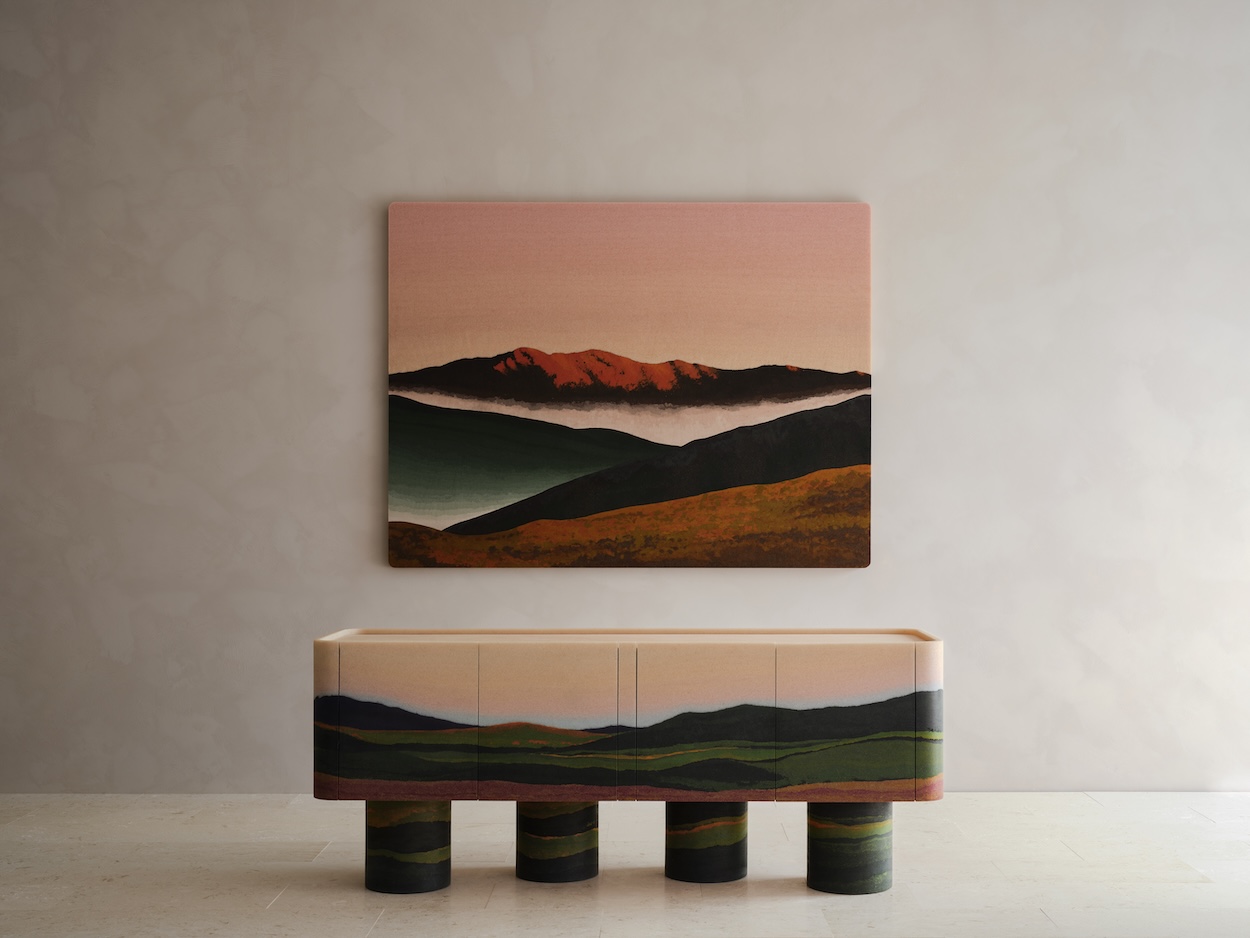
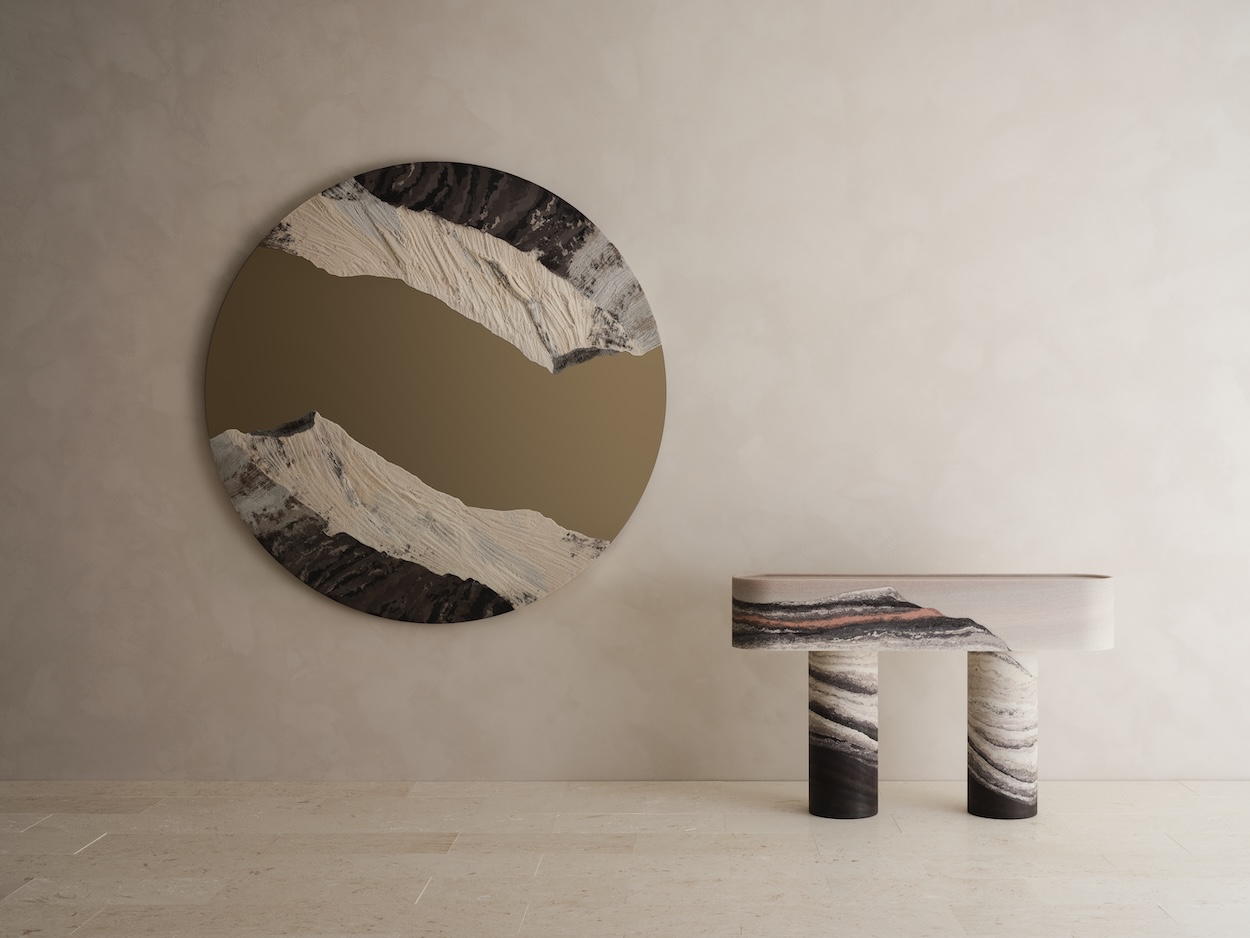
“How can something as familiar and serene as a landscape carry the gravity of our current moment?” That is the first question and concept that sparked Fernando Mastrangelo’s latest exhibition “Territories.” Here, everyday objects, such as a table, are layered with a sense of urgency and meaning that isn’t common. “It’s about engaging with the idea of territory itself; how land becomes politicized, how borders are imagined and reimagined, and how identity is often imposed onto geography.”
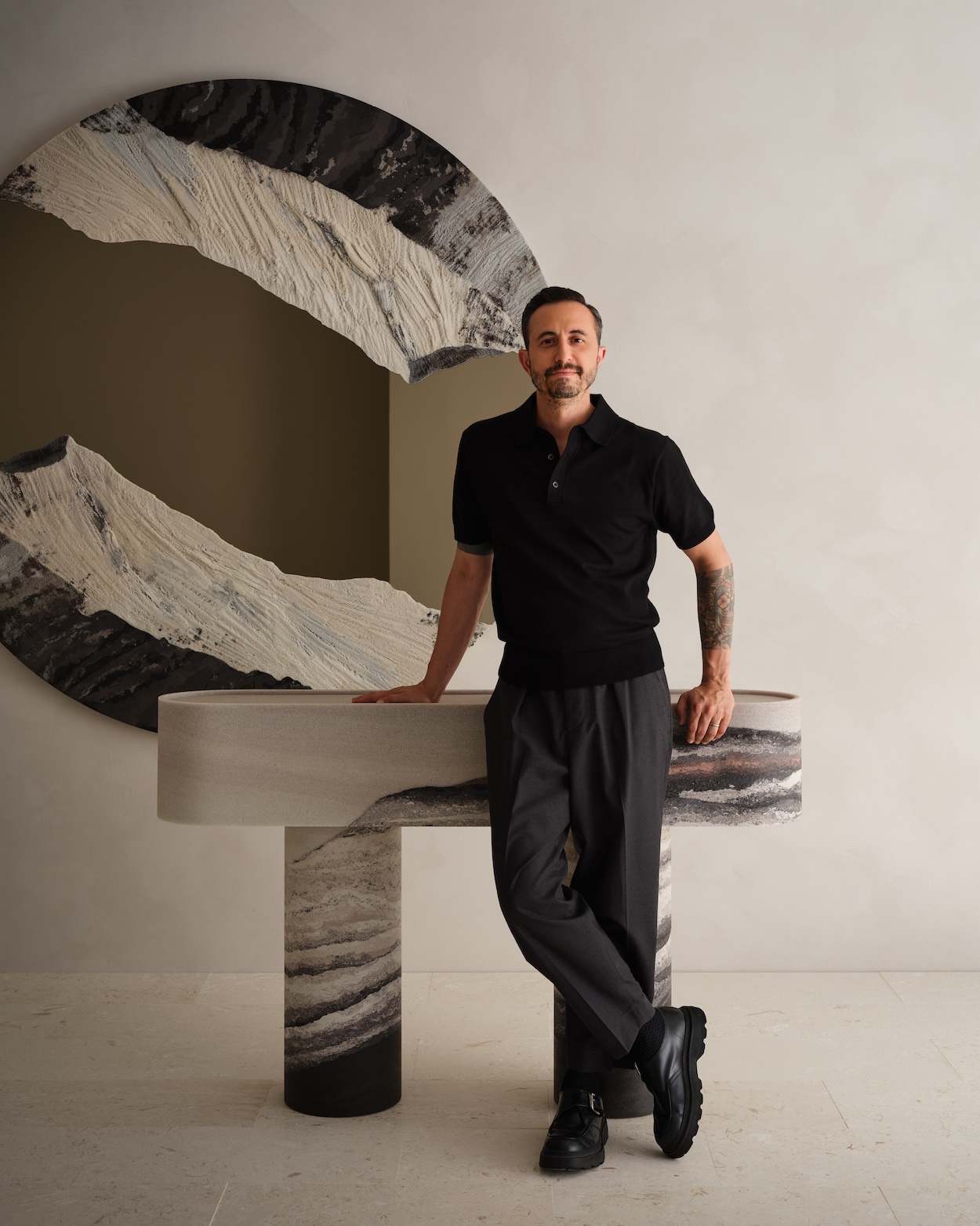
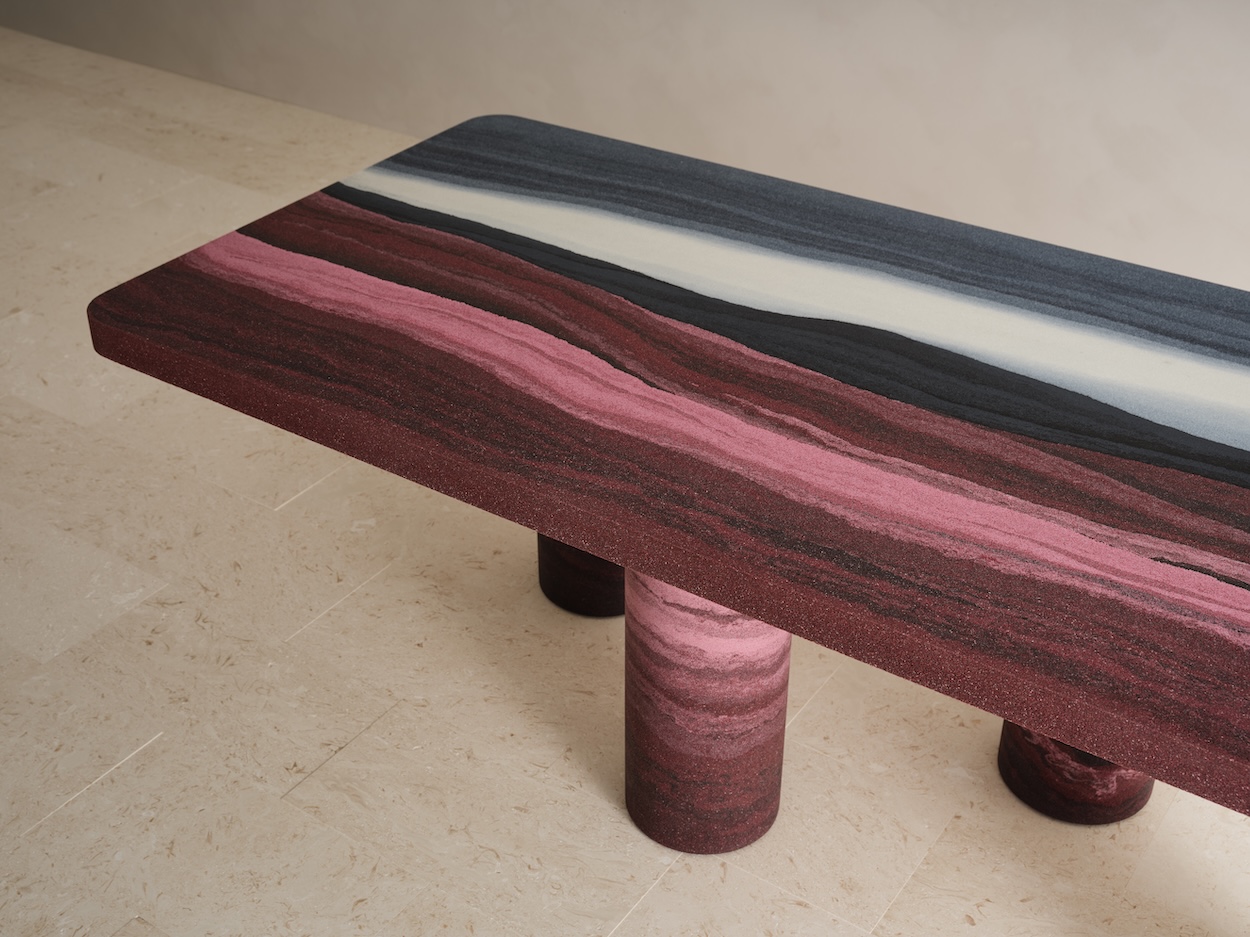
On view through February 12, 2027, Mastrangelo’s exhibition invites visitors to take in the beauty first, and then the tension, and to examine his use of natural materials including sand, crushed glass, and rare earth oxides as pigment. “There’s an opportunity for design to be more reflective of its moment, to hold complexity without sacrificing beauty or utility,” he shares. To celebrate the opening, Surface sits with Mastrangelo to discuss the fine balance between furniture and sculpture, the creative process of working with rare oxides, and how he embraces a loss of control.
Photo by Joe Kramm.…
The series began with the news about the US and Greenland. Do you remember the moment that headline became an idea for a body of work?
I do. What really stuck with me wasn’t even the politics of that one story. It was the language around it, this idea that a place could still be talked about in terms of ownership, acquisition, territory. It felt very old and very contemporary at the same time. That’s when I started thinking about landscapes differently. We tend to think of them as these neutral, beautiful things, but they’re constantly being named, claimed, divided, extracted from. Greenland was really the entry point for me. From there I started looking at other places where this incredible beauty exists alongside a much more complicated history of ownership and conflict.
Rare earth oxides are both your pigment and part of your subject. Where do you source them, and has working with them changed how you think about the objects around you?
I source them through specialty mineral and ceramic suppliers. At first, I was honestly drawn to them because of the color. They can create these really incredible, almost unnatural colors, but they’re still completely mineral. Then I started understanding more about what these materials actually are, where they come from, and how important they are to technology, phones, cars, energy, all of it. That changed the way I looked at them. You realize how completely disconnected we are from the raw materials inside the objects we use every day. Most of the time you never think about them at all. Then suddenly you’re holding the actual material in your hand.
Photo by Joe Kramm.…
Your casting technique balances control with chance. In this series, where did the materials surprise you?
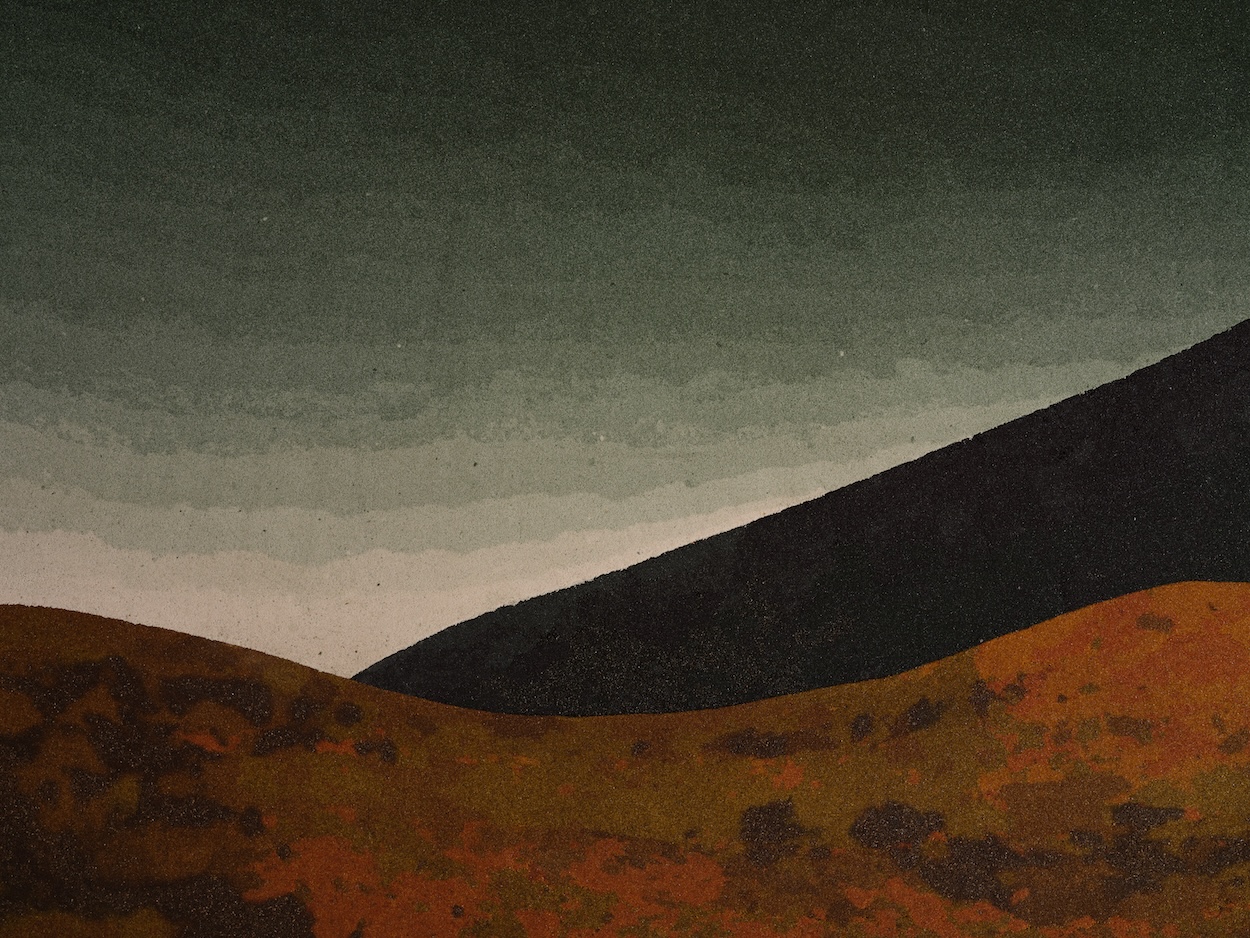
All over the place. The finished pieces can look really controlled, but making them is actually much messier than that. I’m building the landscapes layer by layer with sand, glass, and pigment, and when you’re casting, you never fully know what’s happening inside the mold. Colors bleed into each other. Glass shifts. Edges collapse. Sometimes a layer does something completely different from what I expected. Earlier in my career I probably would have tried to fix all of that. Now I’m much more interested in letting some of it stay. Some of the best moments in these landscapes came from things I couldn’t have drawn or planned. That loss of control has actually become one of the most interesting parts of the process for me.
Many of these works are functional objects. What happens to a charged subject when it becomes something you eat at or set a drink on?
I actually really like that contradiction. My work has always existed somewhere between furniture and sculpture, so I’m interested in using a familiar form like a table as a way into something that isn’t necessarily about function at all. There’s something interesting about taking a subject as charged as contested land and placing it into an object that feels domestic and recognizable. It changes the way you encounter the subject. It becomes more intimate, more physical, and in some ways more strange. You’re not just looking at an image of a landscape. The landscape has become an object in front of you, with weight and scale and presence. I like that tension a lot.
Photo by Joe Kramm. …
The show asks viewers to experience beauty first and the tension beneath it after. What do you hope visitors carry out of the gallery?
I don’t really want someone to leave with a specific answer. For me, beauty has to come first. I want the materials and the color and the landscape to pull you in before you know what any of it means. Then, once you understand what you’re actually looking at, hopefully it shifts a little. Something that feels beautiful becomes slightly uncomfortable. That’s the part I’m interested in. If someone walks out thinking about landscape differently, about how quickly something beautiful can become territory or property or resource, then I think the work has been done enough.