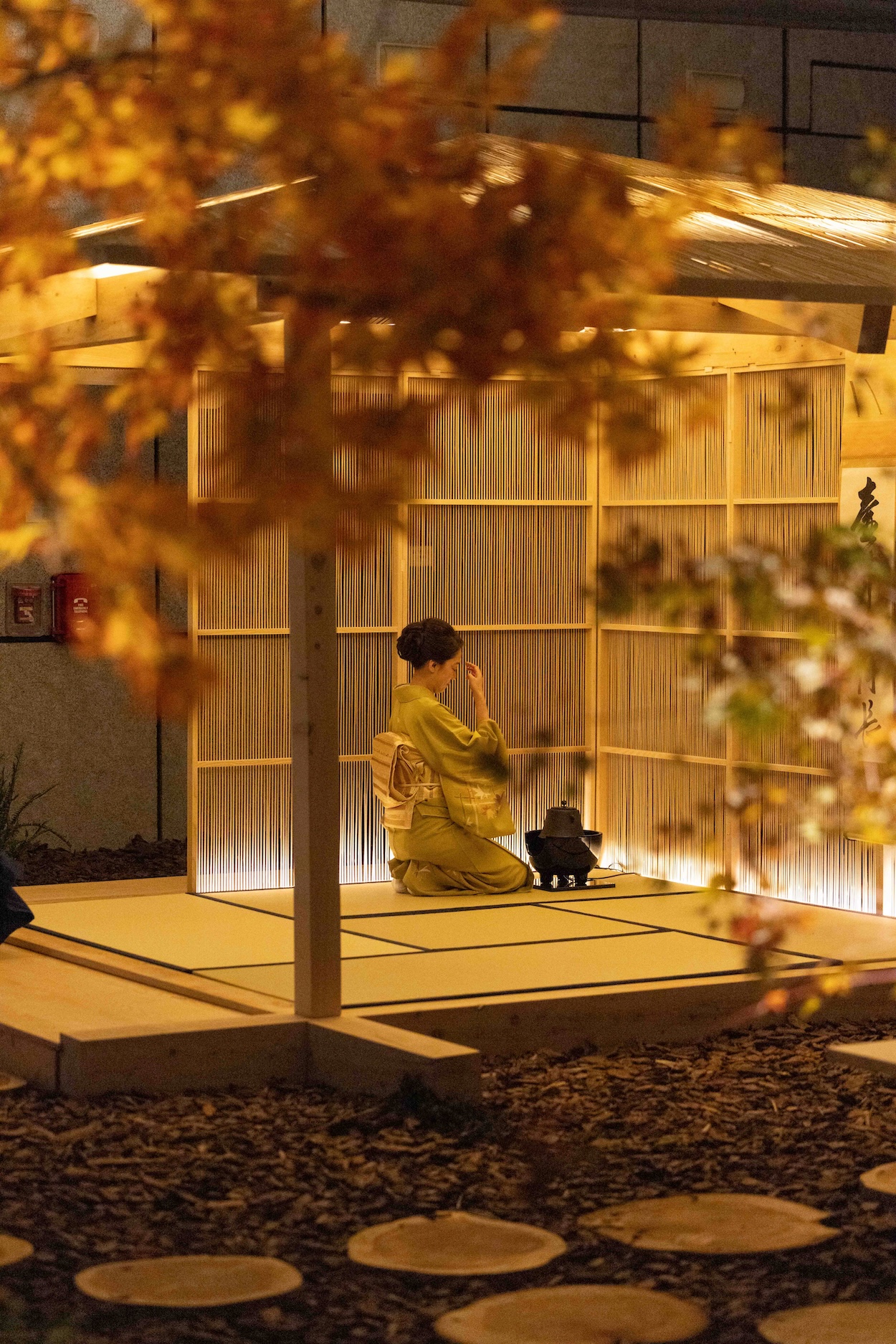
On October 6, the sixth floor of West Chelsea’s Pace Gallery—an expansive outdoor terrace with uninterrupted views of Manhattan—transformed into an ephemeral landscape, complete with a wooded trail and tea house designed by acclaimed international architect Kengo Kuma. The serene installation, an organic contrast to the glass and steel of the city’s skyline, was one element of “The Gift of Time,” a global initiative helmed by Seiko Group Corporation to exhibit Japanese luxury.
Inside Seiko’s “The Gift of Time” Exhibition with Kengo Kuma
David Graver October 15, 2026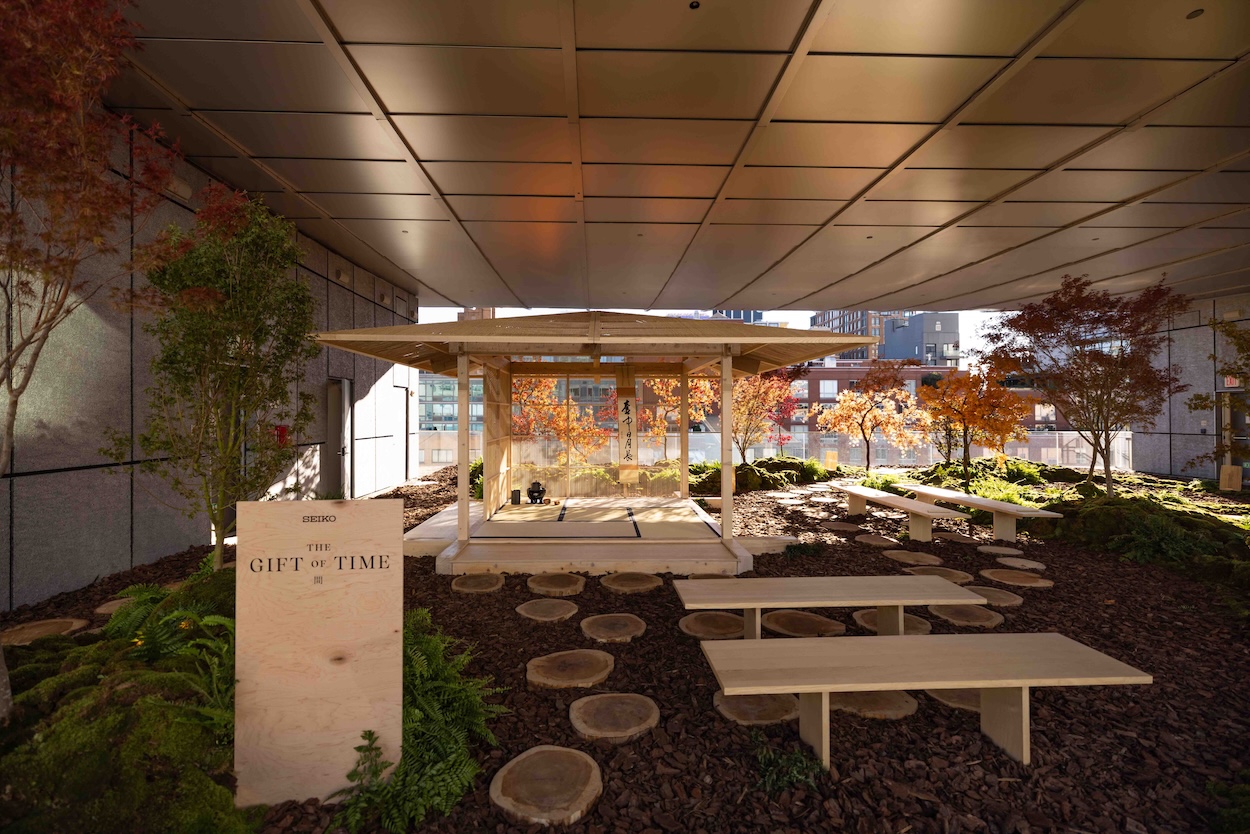
…
Courtesy of Seiko Group Corporation
…
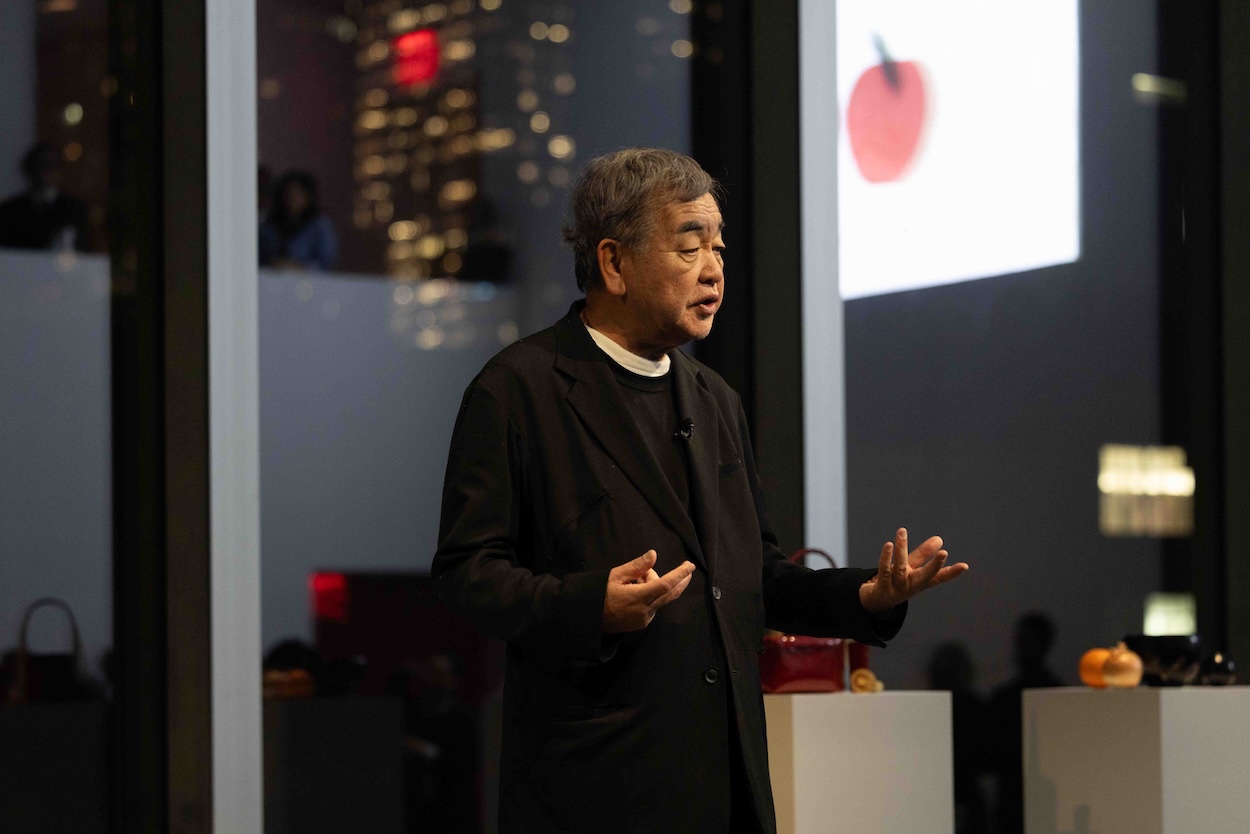
Time, a construct integral to both tea ceremonies and wristwatches, acted as the immersive event’s unifying force. In fact, the Japanese concept of ma—the intentional space between moments that forms our perception of time—informed not only Kuma’s architectural contributions, but also the short film directed by Paula Chowles that premiered on site. A detailed exhibition paired historic objects from The Seiko Museum Ginza with items curated by Wako, a prestigious Tokyo store spotlighting Japanese craftsmanship and design, as well as signature models from Grand Seiko and Credor.
Courtesy of Seiko Group Corporation
…
“The story began years ago when Seiko commissioned [Kengo Kuma & Associates for] the Grand Seiko Studio Shizukuishi in Japan,” Kuma shares with Surface. “Mr. Hattori [the Chairman, Group CEO, and Group CCO of Seiko Group Corporation] and I became close during that collaboration.” Kuma also designed the interior of the Grand Seiko boutique on Place Vendôme in Paris.
Courtesy of Seiko Group Corporation
…
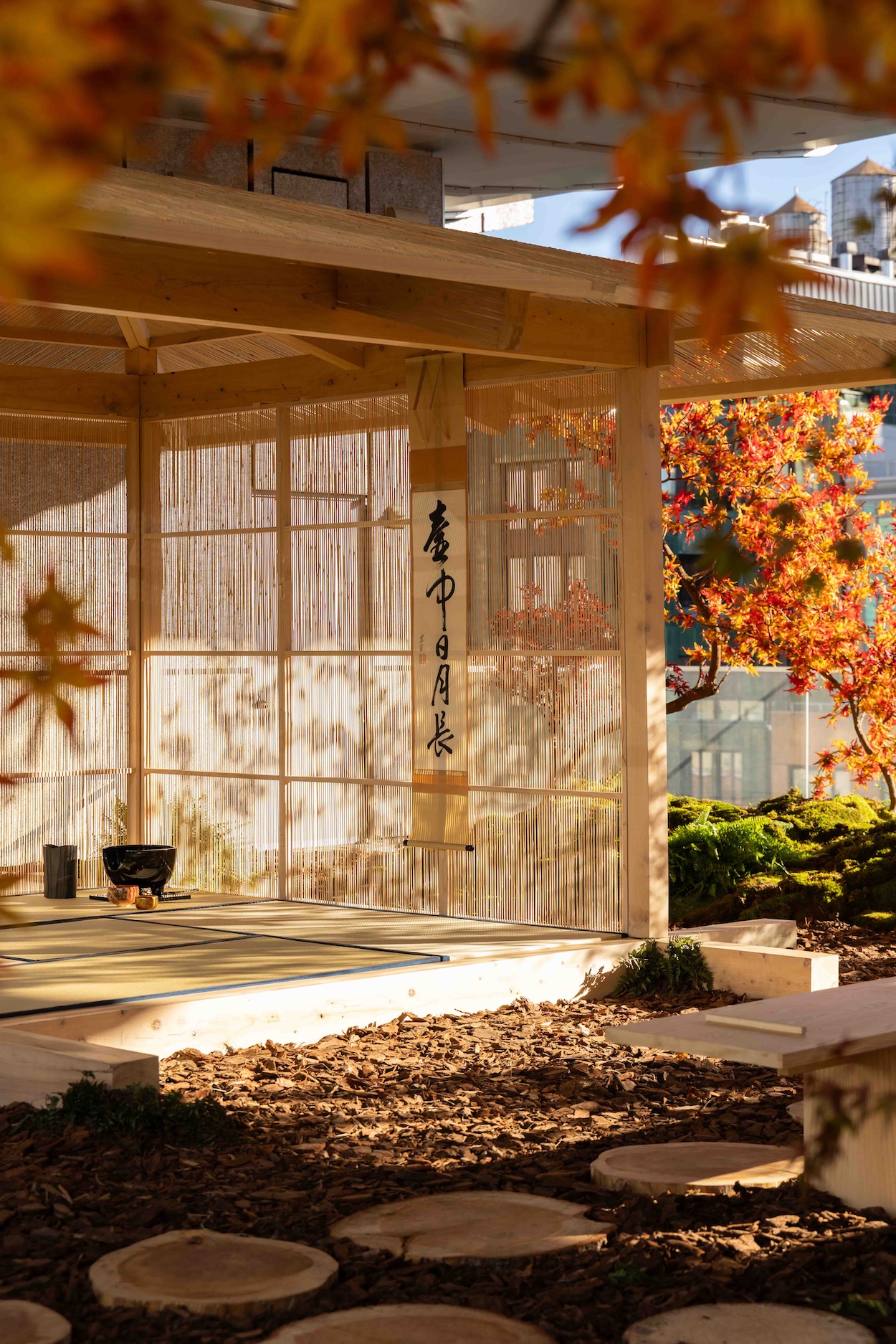
As with his studio’s other projects, currently underway in 50 countries, Kuma approached this artistic commission with a poetic touch. “The tea house is not only a space for a tea ceremony. It’s a spiritual space, a place for meditation, and in a tea house people can find themselves. This is a very important function of the tea house. This is encouraged by the natural materials. I wanted to show the depth of this.”
“We also wanted to show the potential of a small space,” Kuma continues. “Even in an intimate space, people can feel the big universe. This is also related to the concept behind Seiko watches. Seiko is always saying that time is a kind of philosophical phenomenon. We tried to bring that idea into the small tea house.”
Courtesy of Seiko Group Corporation
…
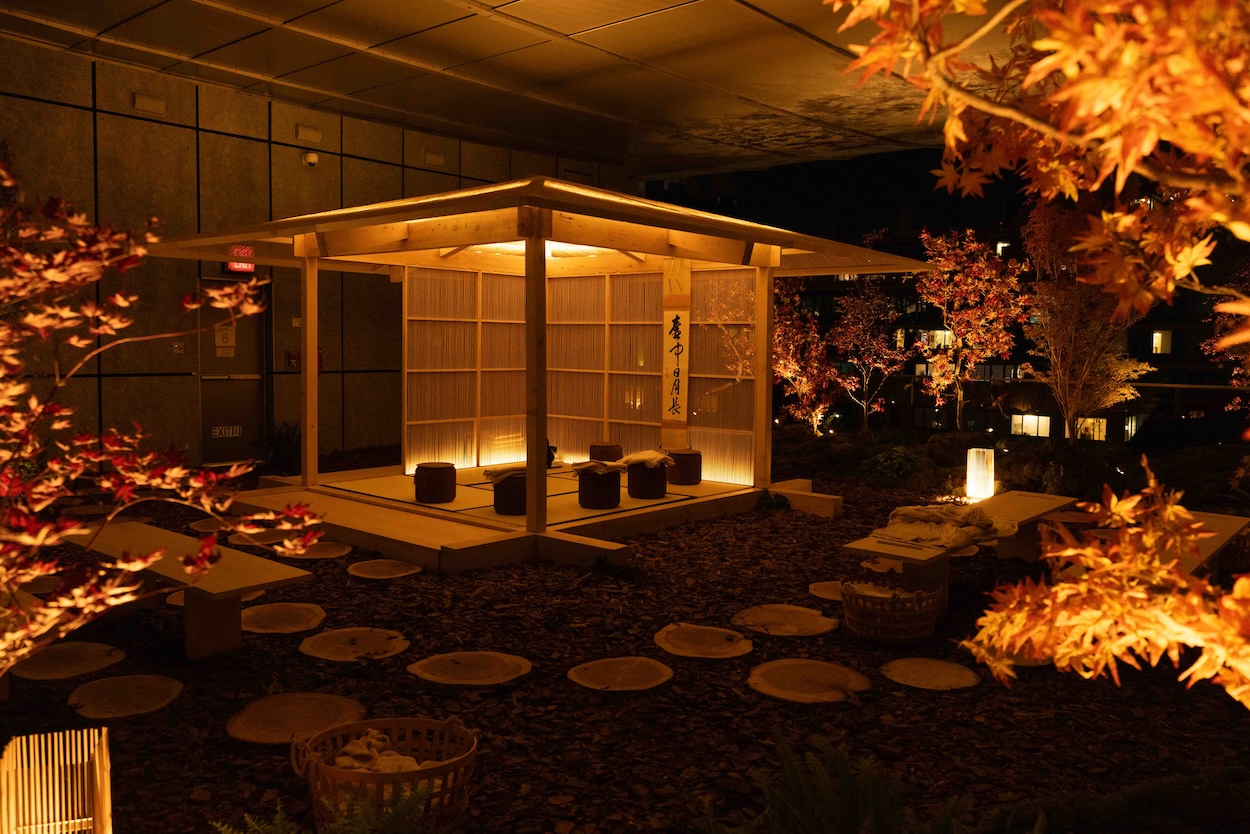
This extends to the landscape, as well, with its tree branches and colorful leaves. “Whenever I design a tea house, I think about the relationship between nature and the architecture. This project was designed as an entire environment. A tea house is a magical space. It is peaceful. Without the landscape, it is less of an intervention.”
“The Gift of Time” followed presentations in Tokyo and Paris. Set within one of the city’s most revered art institutions, the New York City exhibition successfully demonstrated Seiko’s century-and-a-half relationship with time. But it also engaged all the senses and encouraged emotional reflection—from Chowles’ film to traditional Japanese tea ceremony experiences with tea master Souyuu Yamazaki of the Urasenke school.