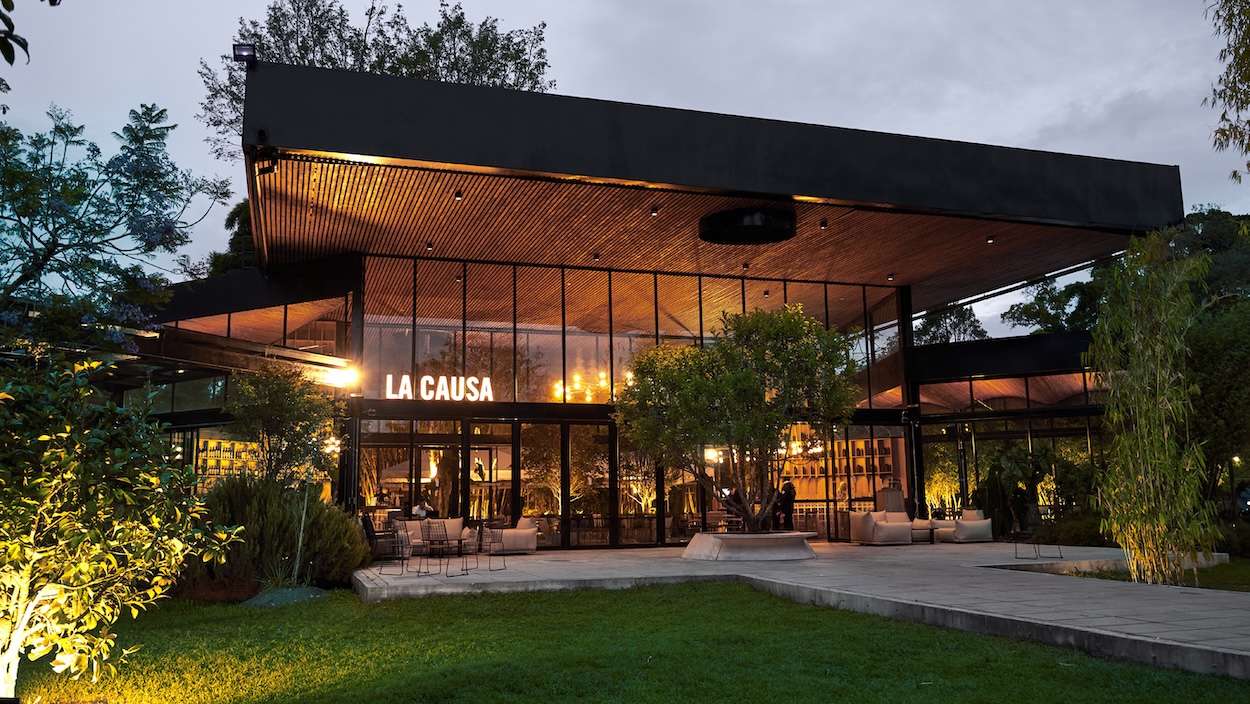
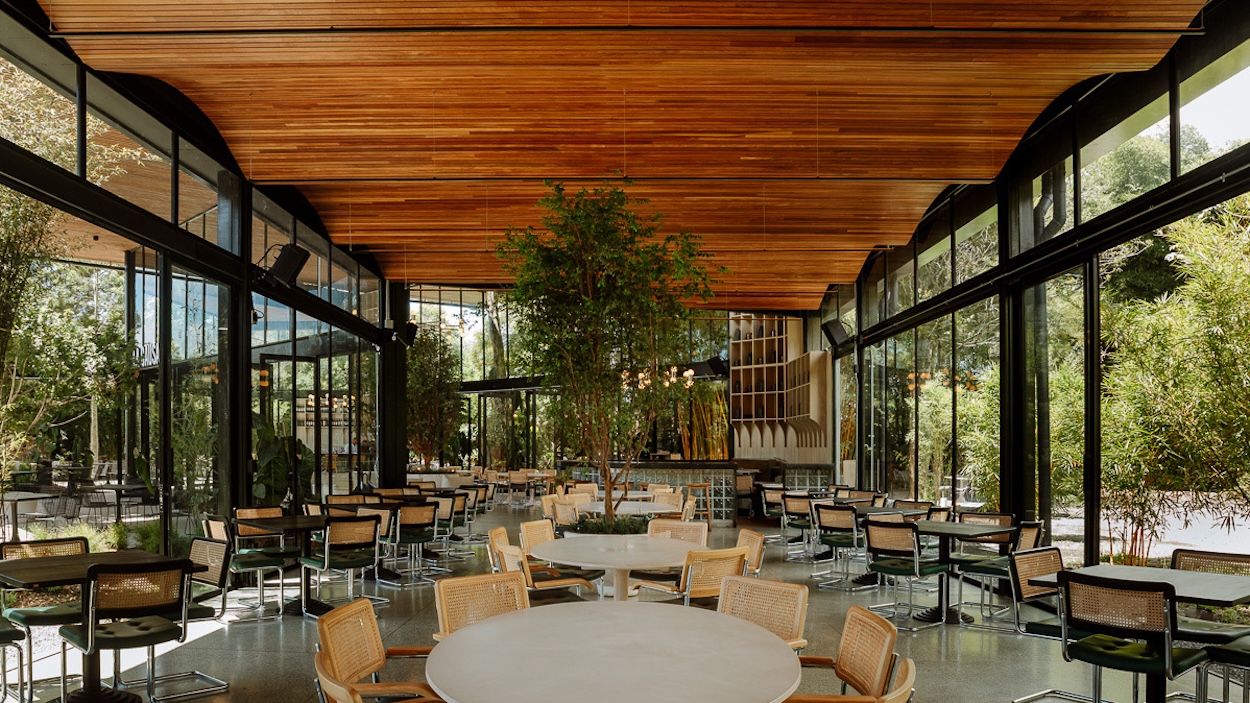
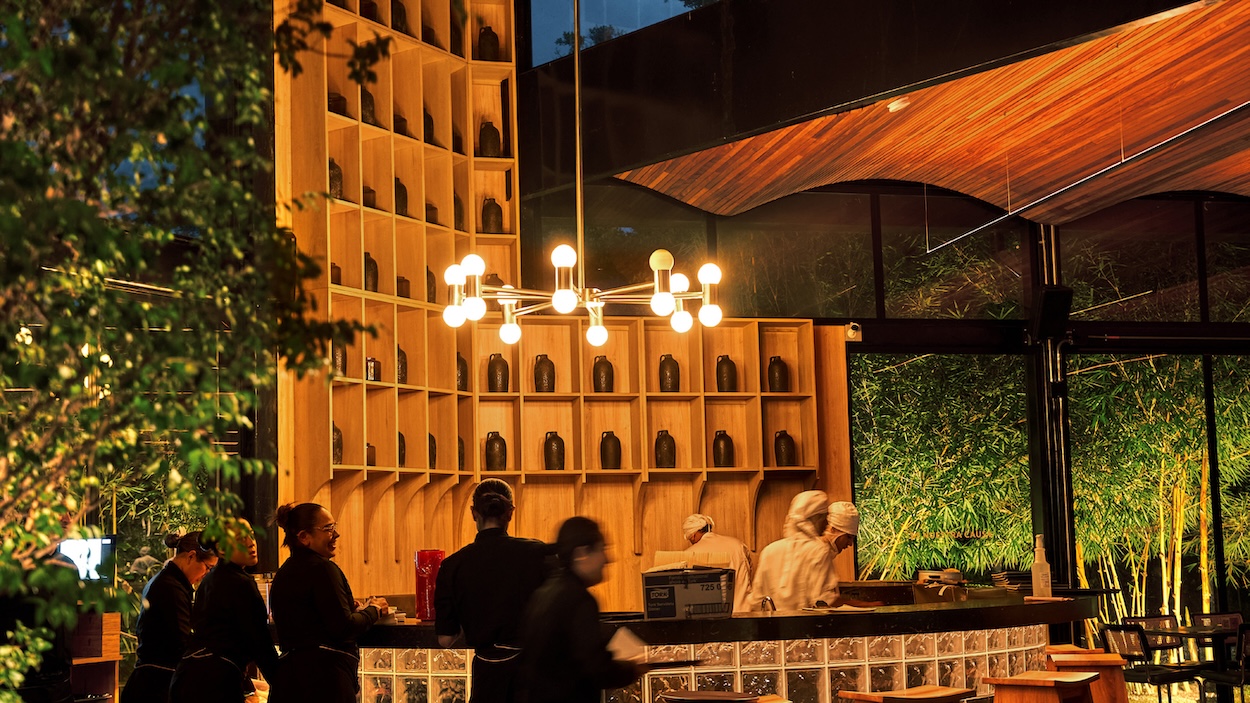
Outside of Medellín, in the verdant, affluent town of Llanogrande—arguably the Hamptons of Colombia—architecture and interiors studio F05 designed La Causa, an 8,000-square-foot restaurant serving Nikkei cuisine (a fusion of Japanese and Peruvian culinary traditions). From a roof of undulating wooden waves to molded concrete tables, and glass walls that blur the boundaries between inside and out, the architecture epitomizes F05’s specialization: contemporary tropical modernism. “Aside from the Cesca chairs, everything here is designed by us,” F05 founder Felipe Mora tells Surface. “We even picked out the trees.”
Colombian Architecture and Design Studio F05's Vision for Contemporary Tropical Modernism
From an 8,000-square-foot glass restaurant to a geometric concrete home with a catwalk for a car collection, the Medellín–based practice refuses to conform
David Graver July 31, 2026
Courtesy of Meliza Lopera
…
Courtesy of Meliza Lopera
…
In February 2020, Mora returned to Colombia following educational and professional advancements in the U.S. and Italy. “I lived in seven cities in the two countries,” he says, attributing his studio’s international approach to these years abroad. “The last time I left Colombia was 12 or 13 years ago—and interior design was non-existent in Medellín. It’s a new practice here. It started showing up around 10 years ago.” Now, Mora feels a responsibility to help forge the aesthetic identity of his home city, and his generation.
Courtesy of David Cardona
…
“Because of the violence of our past, we as a culture have worked really hard to show the world that we are not that,” he says. “We have started to transform ourselves in everything. Colombians, especially people from Medellín who are called Paisas, are similar to New Yorkers. We work so hard. We live in a beautiful place full of great people with infinite potential; in the last decade, that has translated into architecture.”
Courtesy of Meliza Lopera
…
The concept of contemporary tropical modernism was born from the way Mora’s creative process engages with the city itself. “We are deeply respectful of those who came before us and we are deeply respectful of other people’s work, especially from the ‘20s to the middle of the century,” he says, noting that they do not—and would not—imitate anyone’s work (which he has observed others do in Colombia). “Tropical because Medellín is a lush city. It’s completely green. There’s biophilia woven into our architecture. It’s the one thing that has given us an architectural identity.” Contemporary, he explains, is his desire to contribute to the present day.
F05 aligns luxury interior design and experiential hospitality with Medellín’s strong culture of material sensitivity and landscape integration. Emotion underscores this. “I am the most pragmatic person. For me to show feelings, even to my wife, is hard—but not in my line of work,” Mora says. His drive is to push the entire architectural establishment forward. “A lot of people here want what their neighbor wants. Trends here are prevalent. I do not do that. I live here and I love my city but my mentality is not from here. I cannot be a conformist. I cannot stay with what works right now. If I stop there, it’s the end of my practice and career,” he adds.
Courtesy of F05
…
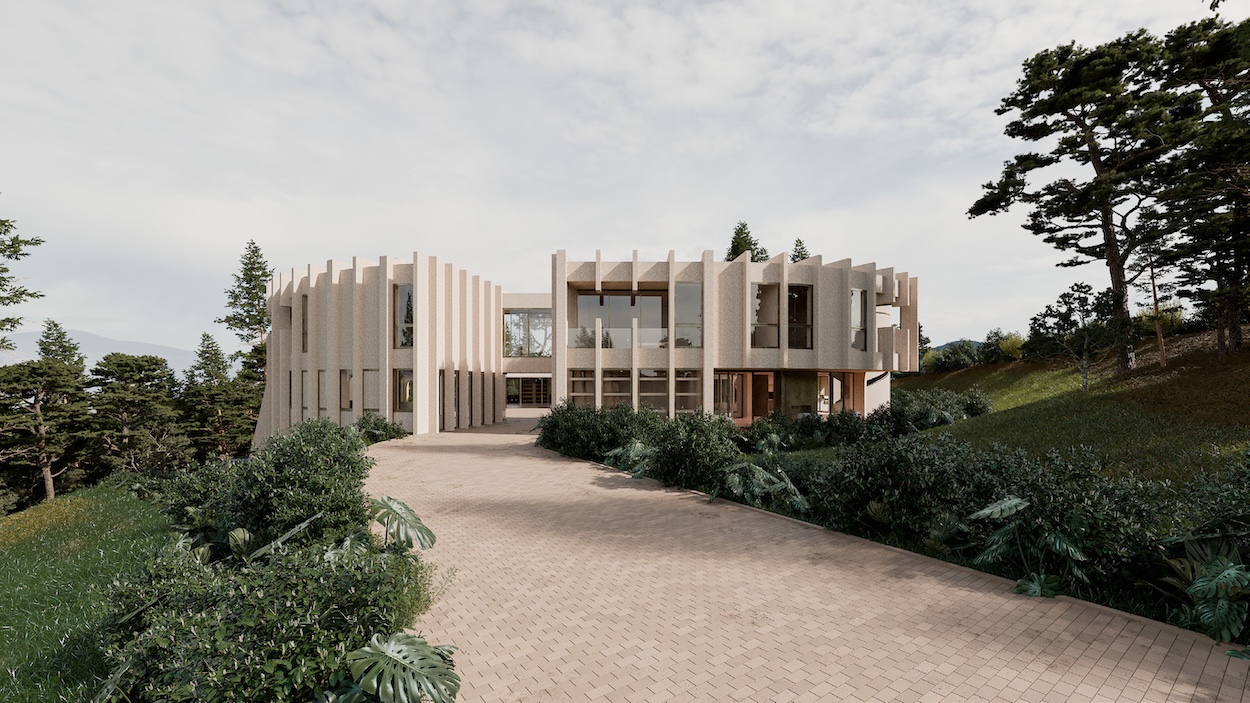
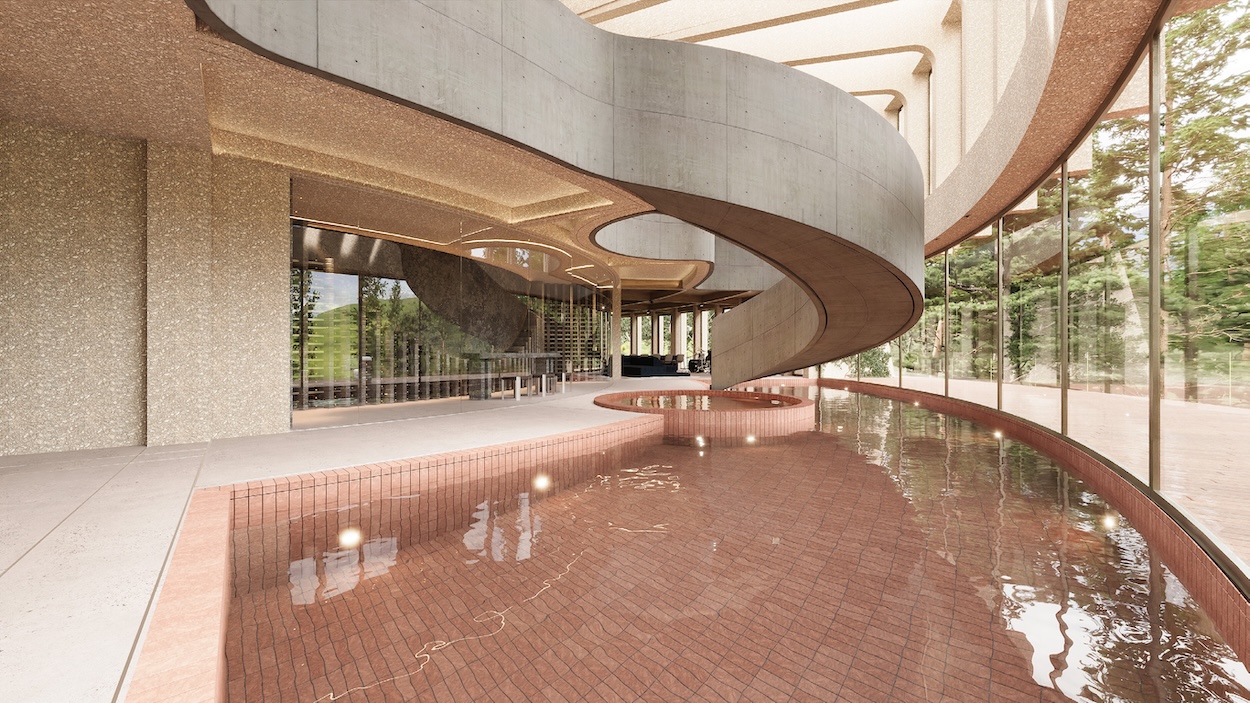
Above Bogotá, F05 is helming a residential project unlike any other. Designed for a Porsche collector, the three-level, 20,000-square-foot home categorically silos its spaces—with garages and a catwalk for cars in one area, leisure amenities (including an indoor pool and wine cellar) in another, and living spaces in a third. The concrete form is inspired by a Porsche test track in Germany. F05 constantly researches materials—though their promise to clients is never to use anything inauthentic. “We do not do tiles that look like concrete,” Mora says. “If it looks like concrete, it’s concrete.”
Courtesy of Meliza Lopera
…
“We are designing homes and high-end luxury hotels and restaurants for people who do not need them to survive,” Mora muses. “On the other hand, we are designing the built world—humans spend roughly 90 percent of their time in the built environment. We are not saving the world but we are helping to shape it.”
F05 tries to control the entire user experience. “For hotels and homes, we consider everything down to the fork. That’s why we do not take on a lot of clients. We want the interior design to feel perfect, like a psychological click,” he adds. Whether it’s transforming a private disco into a spa with a hyperbaric chamber, jacuzzi, and cold plunge within a client’s house—because the disco simply wasn’t necessary—or designing a wellness-oriented hotel from discarded boulders in a historic coffee-growing region, F05 is establishing a lasting repertoire at home.