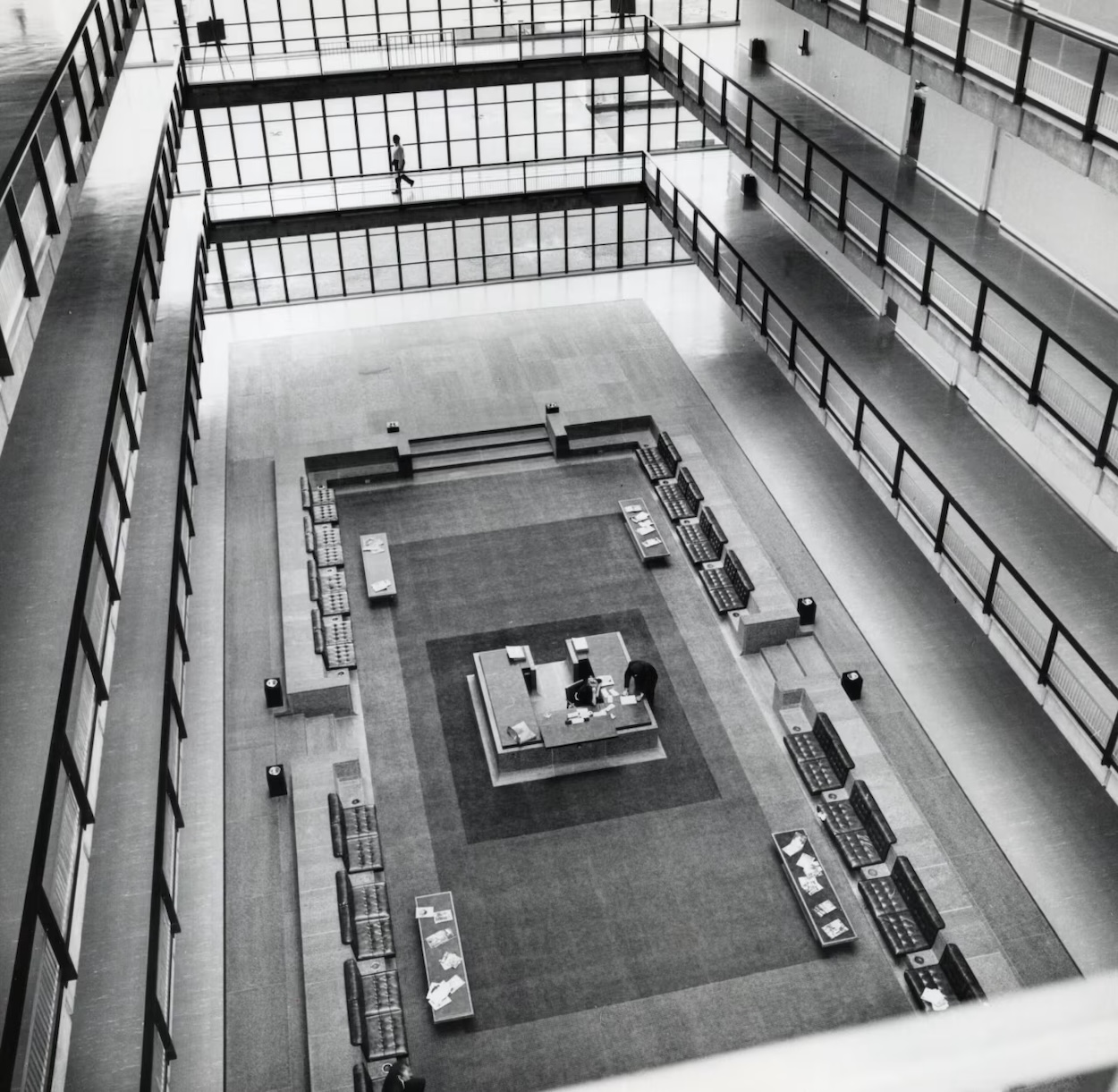
Sometime in the middle of the last century, the patent lawyers at Bell Laboratories became curious about their own inventors. The Labs was then one of the most productive research institutions on earth. The transistor, the theory of the laser, the solar cell, and the mathematical theory of information all came out of what was, nominally, the research arm of a telephone company. The lawyers, who processed the paperwork on every invention, were in a position to notice something the scientists themselves could not: some researchers patented constantly, and others, equally credentialed, almost never.
The lawyers went looking for the variable. Whatever separated the inventors from the merely employed, it was not in any file the company kept, not in the degrees, not in the years of service, not in the org chart. What they landed on instead was something no personnel department has ever tracked: who ate with whom. The most prolific inventors at Bell Labs tended to take breakfast or lunch with a Swedish-born electrical engineer named Harry Nyquist.
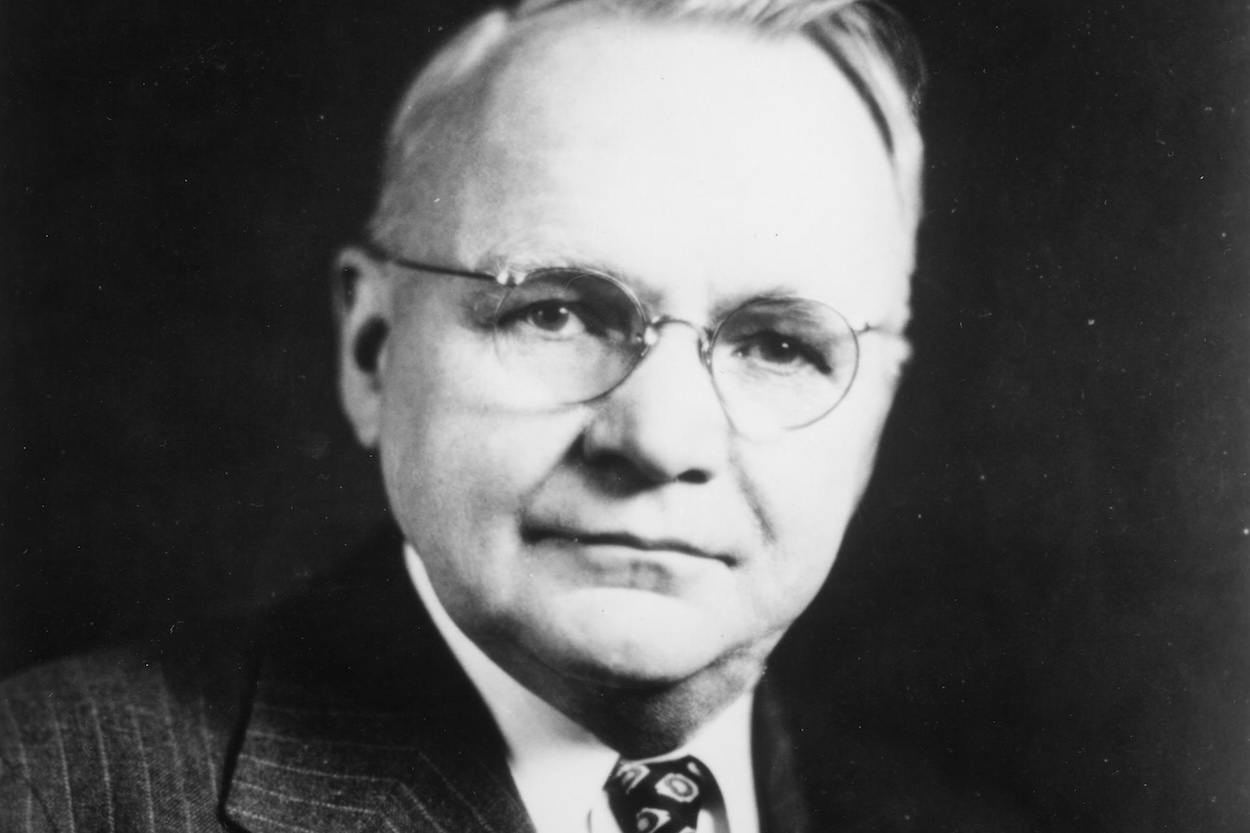
Harry Nyquist…
Nyquist was not slipping anyone ideas, he had a hundred and thirty-eight patents of his own, and no evident shortage. What he did at the table, colleagues later said, was draw people out. He asked good questions. He got them thinking. As Jon Gertner recounts in The Idea Factory, Bell Labs went looking for the source of its extraordinary productivity and found a man at a breakfast table, listening.
Decades after his death, Swedish public radio made a program about Nyquist and titled it Ett bortglömt geni—a forgotten genius. The title is affectionate and slightly off. What Nyquist had was something rarer than genius and far less understood: he was the person genius ate with.
I found myself thinking about Nyquist this summer, as the dispatches came back from Detroit, from a gathering called Reindustrialize, where people who build rockets, reactors, electric aircraft, and munitions had once again gotten on airplanes to spend two days together.
Reindustrialize began a few years ago, as a modest bet on an unfashionable idea: that America ought to make physical things again. For two decades the gravity of the technology industry had pulled in the opposite direction. Software was faster to build, easier to fund, easier to scale. The standing joke, that the industry preferred assembling bits to assembling atoms, was less a criticism than a business model. Hardware was for incumbents and masochists. The founders who chose energy, materials, aviation, manufacturing—the slow, heavy, capital-hungry stuff—spent years explaining themselves at dinner parties.
I was there the first year, when the whole thing still had the feeling of a conviction rather than a movement. One of Reindustrialize’s founders, Gregory Bernstein, is a friend, and the early gathering was small enough that a single dinner could hold a meaningful share of it. I remember a dinner that J.P. Morgan hosted: bankers and founders and builders around the same table, everyone slightly surprised to find the others in the room—which of course was the point. Nobody there was performing certainty about a revival. They were placing a bet, mostly on each other. And whether our rather peculiar waiter would get our order right.
They are not explaining themselves anymore. By this summer’s edition, the Detroit event had become a calendar fixture, the floor thick with materials scientists and shipbuilders and venture capitalists in exactly the loose, three-cornered conversations that decide more than most board meetings. By every account that reached me, the mood was not nostalgia for the industrial past but appetite: the specific, slightly impatient energy of people who believe they’ve arrived early to something big.
Watching it grow from that first small year into a calendar fixture is perhaps why the question underneath it interests me more than any panel. What is it about proximity to people you would not otherwise encounter that makes things happen? Bell Labs had stumbled onto one answer decades earlier: its most prolific inventors kept turning up at the same breakfast and lunch table. Proximity was not incidental to the work. Sometimes it was part of the work.
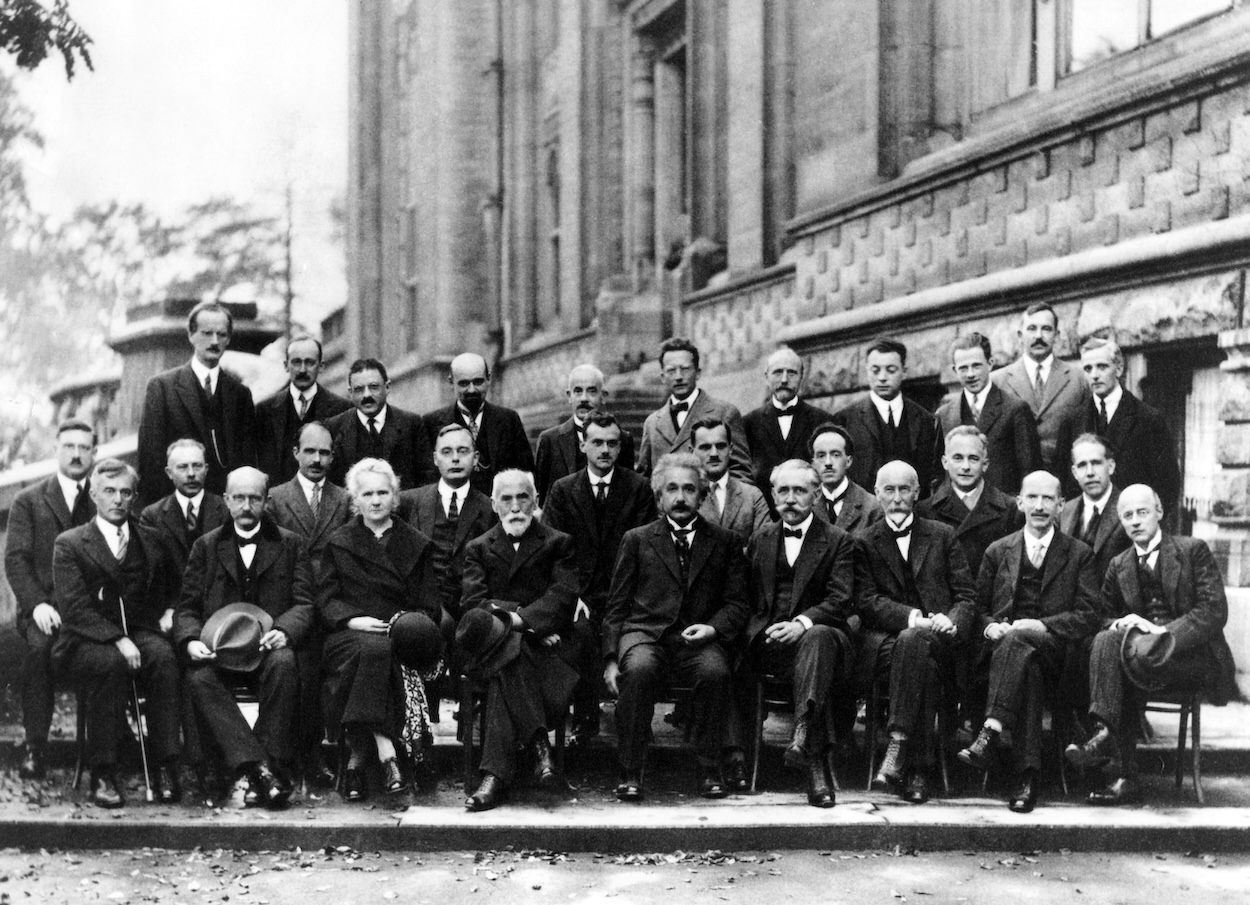
History keeps returning to the same arrangement. In October 1927, 29 people gathered in Brussels for the fifth in a series of conferences that had begun there in 1911, paid for by an industrialist. Ernest Solvay, who had made a fortune in soda ash, died in 1922, but the institutes he endowed kept writing the checks. The stated subject was electrons and photons; the actual product was an argument over how to interpret quantum mechanics, a running dispute between Einstein and Bohr that refused to stay in the sessions and followed them back to the hotel, where it was renewed each morning at breakfast like a subscription. Of the 29 faces in the conference photograph, seventeen belonged to Nobel laureates, past or future. Solvay had bet that putting exceptional people in the same room, arguing over coffee, could move physics, and he had left enough money behind to keep placing the bet. The physicists came for each other. The universe, in a sense, was renegotiated over hotel breakfast service.
Solvay conference…
In those same years, on an estate outside New York, a Wall Street financier named Alfred Loomis pushed the idea to its domestic extreme. Loomis was an accomplished amateur physicist and a host of historic consequence: he converted a mansion in Tuxedo Park into a private laboratory and filled it, on weekends, with Einstein, Fermi, Bohr, Lawrence, and other leading scientific minds, lured by good instruments and better dinners. It would be easy to file Loomis away as a rich man with an expensive hobby, and many did, until the microwave-radar work seeded in his living room migrated into the MIT Radiation Laboratory and helped shorten the Second World War. His money mattered; his real invention was the room, a place where a physicist could collide with a banker and a general in a single evening, and no one had to justify the collision.
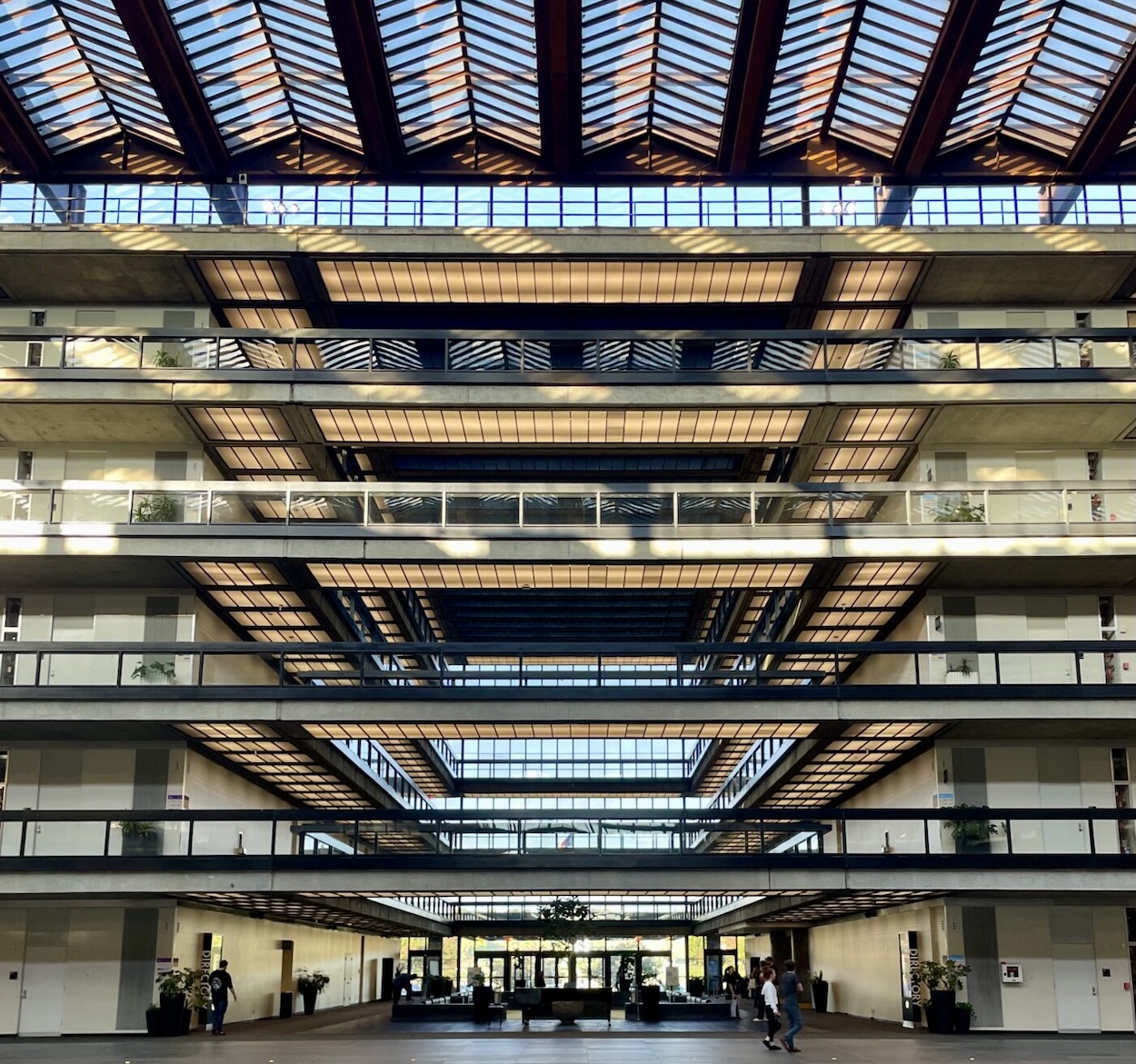
Brussels, Tuxedo Park, Murray Hill. A hotel, a mansion, a corridor—Bell Labs, famously, built its hallways long on purpose, so that a physicist could not reach the cafeteria without passing a metallurgist and a mathematician, turning even a trip to the bathroom into a collision engine. The formats differ; the pattern does not. Each mixes people who would otherwise never meet—not the networking of sames, but physicists beside financiers beside philosophers, which is where the voltage lives. They recur; genius, it turns out, keeps appointments. They carry stakes, some shared sense that a real question is on the table. And each has a host: a Solvay, a Loomis, a Nyquist, someone whose contribution is not the idea but the table itself. The rooms never assemble themselves. Someone always sets them, and the setters are chronically invisible, right up until the patent lawyers run the numbers.
There is a reason the pattern hides in plain sight, and an old friend once named it without meaning to. I moved to New York in 2000, and one of the first people I befriended was Nick Denton. This was before Gawker, when he was merely a sharp Englishman with theories about media. Years later he said something that stayed with me: when you’re inside a moment, you don’t know it’s a moment. Only afterward do you look back and see—ah, that was a time.
That is true of every gathering in this story. No one breakfasting with Nyquist believed they were generating a data set. The 29 people in Brussels thought they were arguing about electrons. Loomis’ guests came for the instruments and the wine. And at that first Reindustrialize dinner, it was genuinely unclear whether anything was becoming anything. Two years later the bet is a movement, and everyone can see we are in a moment. Significance tends to feel ordinary while it is happening. Perhaps that is why we are so bad at recognizing the beginnings of things.
Which brings the question back to Detroit. Perhaps Reindustrialize will prove to be one of those consequential gatherings; perhaps it won’t. From inside, that is almost impossible to know. What it does have are the ingredients: unlikely combinations of people, an annual rhythm, real stakes, and hosts making the invisible but consequential decision of whom to bring together. Even the setting matters. The Romans spoke of the genius loci, the spirit of a place, and Detroit produced an extraordinary concentration of industrial ingenuity across much of the twentieth century. To convene an industrial revival there is not mere staging; it is an argument—that the spirit of a place, like the talent of a person, can survive neglect. It waits to be drawn out. It waits, one might say, for someone to ask it a good question.
If you want to know where the next era is being assembled, the evidence of a century points somewhere unfashionably analog: find the table where unlikely people keep having breakfast, the one that still feels like a conviction rather than a movement, the one nobody has thought to put on television yet. And pay attention, the patent lawyers would insist, to whoever set it.