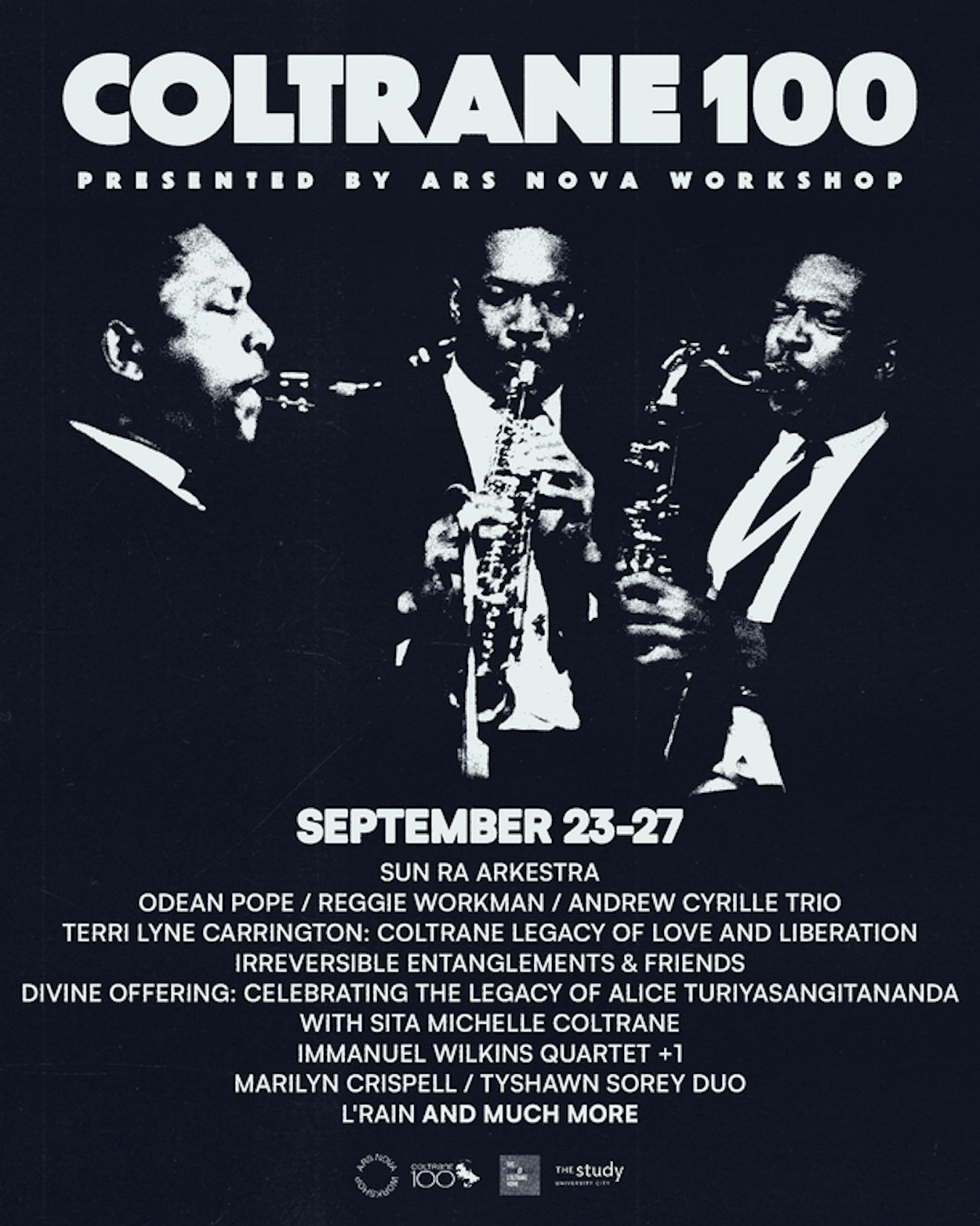
To mark the 100th anniversary of John Coltrane’s birth, the award-winning cultural organization Ars Nova Workshop is bringing a citywide program of performances, conversations, exhibitions, and community gatherings to Philadelphia—Coltrane 100. In an effort to be more than a tribute, the initiative reflects on Coltrane’s enduring influence and the city’s central role in shaping it, tracing the steps between his legacy and the creative community he helped define. To learn more, we spoke with Ars Nova Workshop’s executive artistic director, Mark Christman.
Ars Nova Workshop's Citywide Coltrane 100 Program
Executive Artistic Director Mark Christman on the enduring legacy of John Coltrane and what it means to Philadelphia today
Sofia Quintero September 22, 2026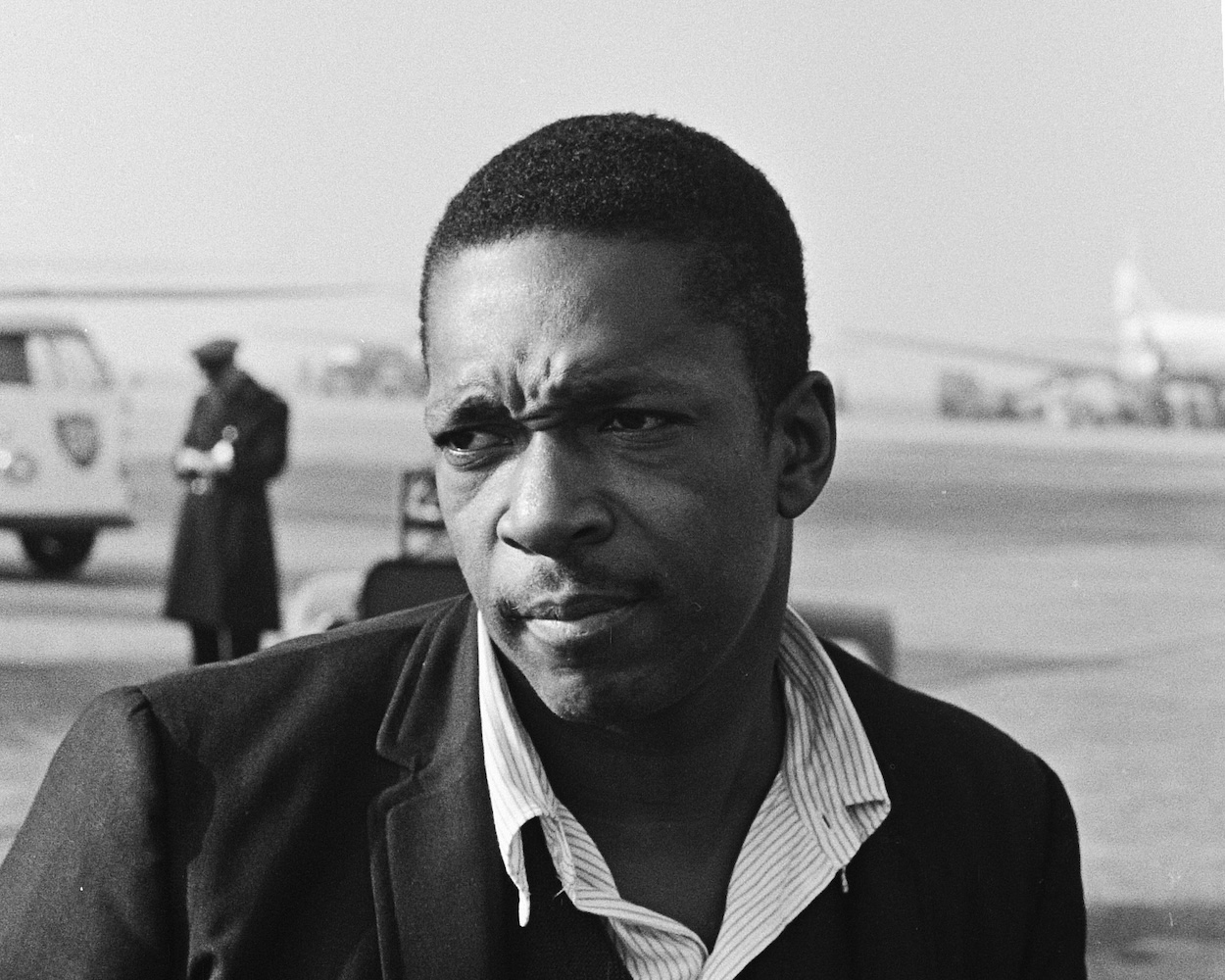
Photo by Hugo van Gelderen
…
John Coltrane’s centennial is being justly celebrated by institutions and musicians across the country. What is unique about how Ars Nova Workshop is contributing to that larger celebration?
What distinguishes Ars Nova Workshop’s Coltrane 100 is that we’re not approaching the centennial only as an opportunity to celebrate an extraordinary body of music. We’re thinking about Coltrane as a living cultural force—an artist whose music, spiritual searching, intellectual curiosity, and commitment to transformation continue to generate new possibilities. And we’re doing that from Philadelphia, the city where so much of Coltrane’s artistic identity was formed, with the Coltrane Estate and the Coltrane House at the center of the project. So the festival moves between performance, scholarship, conversation, community, archives, historic preservation, and new creation. Rather than building a monument to Coltrane, we’re asking what it means to actively carry this legacy forward—and what Coltrane can still teach us about how to live, listen, create, and imagine.
Coltrane spent some of his formative years in Philadelphia. How did his relationship with the city shape your vision for Coltrane 100?
Philadelphia isn’t incidental to Coltrane’s story—it is one of the places where John Coltrane became John Coltrane. He arrived here as a young man and entered an extraordinary Black musical ecosystem of musicians, clubs, neighborhoods, teachers, churches, and relationships that helped shape him before the world knew his name. That makes Philadelphia uniquely capable of telling a different centennial story: not just celebrating the icon, but looking at the communities and conditions that allow an artist like Coltrane to emerge. The house on North 33rd Street makes that history tangible, but the larger goal is to reconnect Coltrane to the living cultural geography of Philadelphia and to recognize that his legacy belongs not only to jazz history, but to the city’s present and future.
The performance program brings together artists from several generations, each with a different relationship to Coltrane’s music. What guided your choices and how did you think about the connections among the artists and performances?
I wanted to resist creating a festival of Coltrane repertory or assembling artists just because they could play this music beautifully. The more interesting question was: who has something meaningful to say through Coltrane? That leads naturally to multiple generations and very different artistic practices—from musicians who were part of the musical world Coltrane created or who worked alongside his collaborators, to artists whose own radical practices carry that searching spirit into the present. Across the program, there are relationships between generations, between composition and improvisation, between history and experimentation, and between Coltrane’s actual musical language and the larger ideas his work unleashed. The connective tissue isn’t stylistic resemblance; it’s a shared willingness to search.
Several performances place canonical works such as A Love Supreme and Ascension in the hands of artists with highly individual practices. What makes reinterpretation meaningful when engaging with Coltrane’s music?
Coltrane himself gives us the model: this is music built on inquiry, transformation and the refusal to stand still. So the least interesting thing we could do, to my mind, would be to treat works like A Love Supreme or Ascension as sacred objects that must be faithfully reproduced. Their power lies partly in the questions they continue to pose. Putting them in the hands of artists with unmistakable voices allows those questions to become contemporary again. The goal isn’t reinvention for novelty’s sake, and it certainly isn’t to improve upon Coltrane; it’s to create the conditions for another artist to encounter the work deeply enough that something new can happen. That tension between reverence and freedom feels completely consistent with Coltrane’s own practice.
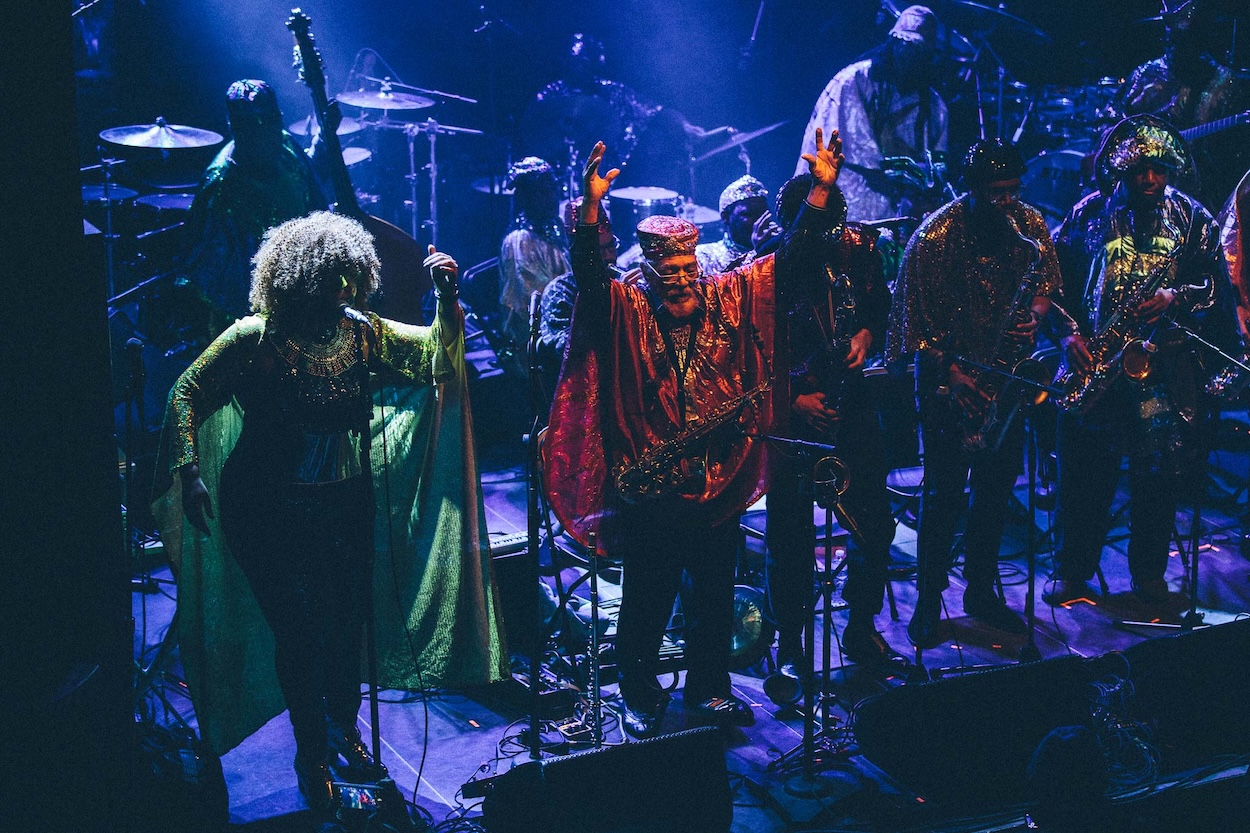
Image by Christopher Andrew
…
Coltrane 100 extends beyond the concert stage. Are there specific conversations, gatherings or public programs that feel important to the story the festival is telling?
The conversations are absolutely essential because they allow us to ask questions that concerts alone cannot answer. We’re bringing together musicians, scholars, writers, family members, archivists, and cultural stewards to talk not only about Coltrane’s music but about spirituality, archives, memory, preservation, and what it actually means to inherit a cultural legacy. I’m particularly invested in conversations involving the Coltrane Estate and other families stewarding major artistic legacies, because they reveal the enormous amount of invisible work behind the histories we inherit: caring for recordings and objects, navigating intellectual property, preserving homes, making archives accessible, and deciding how intensely personal histories enter public life. Those conversations broaden the centennial from “What did Coltrane accomplish?” to a more urgent question: “How do we care for what artists leave us?”
The future of the Coltrane House in Strawberry Mansion sits at the center of this festival. What responsibilities come with preserving a site of Black cultural history, and what role do you envision the house playing in Philadelphia’s cultural life?
Preserving the Coltrane House cannot simply mean saving a building and putting a plaque on it. A place like this carries family history, neighborhood history, Black cultural history and global music history simultaneously, and stewardship requires respecting all of those dimensions. That means the Estate and the community must remain central, and it means thinking beyond architectural preservation toward activation: how can the house become a place for learning, listening, research, gathering and artistic discovery? My hope is that it becomes something intimate and alive rather than monumental—a place where young people from Philadelphia can encounter Coltrane not as a distant historical genius but as someone who once lived, practiced, struggled, learned and dreamed in their city. If we do this correctly, preserving the house becomes an investment not only in memory, but in possibility.
Ars Nova Workshop has expanded beyond presenting concerts to supporting archives, artist estates, commissions and other forms of cultural stewardship. How does Coltrane 100 reflect that evolution, and what do you hope the project sets in motion beyond the centennial year?
Coltrane 100 brings together many strands of work that Ars Nova Workshop has increasingly understood as inseparable: presenting artists, commissioning new work, preserving histories, supporting archives and estates, activating culturally significant places and creating relationships that can endure for decades. After more than twenty-five years of working with artists, we’ve become increasingly conscious that presenting the performance is only one moment in a much longer continuum. Who documents the work? Who cares for what remains? How are artists’ stories told, and who controls those stories? How can institutions put their resources behind families and communities already doing this work? The centennial gives those questions enormous visibility, but September 2026 isn’t an endpoint. I hope Coltrane 100 helps establish structures, partnerships and ways of working that strengthen the Coltrane House and Estate well beyond this year while also informing how Ars Nova approaches the stewardship of other extraordinary artistic legacies in the future.