Sable Elyse Smith Brings Her Biggest Exhibition Yet to the FLAG Art Foundation
The interdisciplinary artist presents “Clockwork,” a solo show combining sculpture, video, and photography to question the systems of power that define society today
Sable Elyse Smith doesn’t consider “Clockwork” her biggest exhibition, not in the way the word usually gets used at least. Following its debut at The Contemporary Austin, the solo show opens at the FLAG Art Foundation on September 24 and has been reconfigured specifically for a space about a third the size of its original home. In reimagining the experience, she removed her 15-foot Ferris wheel, a kinetic sculpture made from prison waiting room furniture. In its place is what Smith calls an intentional sparseness, a hang that lets video, neon, and sculpture speak to one another across a quieter environment.
In “Clockwork,” Smith continues her interrogation of the systems that define American life, dominated by sound, images and language systems. Surface sits down with the artist to learn more about how she reworked the show for New York, the collapse of boundaries between media, and how she portrays surveillance in 2026.
Courtesy of Sable Elyse Smith. …
How did the architecture of FLAG change the way you approached the exhibition, and what feels different about experiencing the work in New York?
The architecture of FLAG, primarily the footprint of the space, completely changes the exhibition. That’s something that I was aware of, Austin’s exhibition space feels like roughly three times the space of FLAG, but the year-and-half lead-up to the exhibitions is focused on the Austin location first. Once I realized what that show was going to be and how tightly the experience in the space was orchestrated. I knew it would be impossible to just replicate the Austin show at FLAG. It wasn’t a matter of shrinking the checklist and copy-pasting. I looked at which works logically fit in the space. For example, there was a 15-foot ferris wheel in Austin that wouldn’t fit in FLAG. And once I knew which objects I could work with within the space of FLAG, then I considered the context.
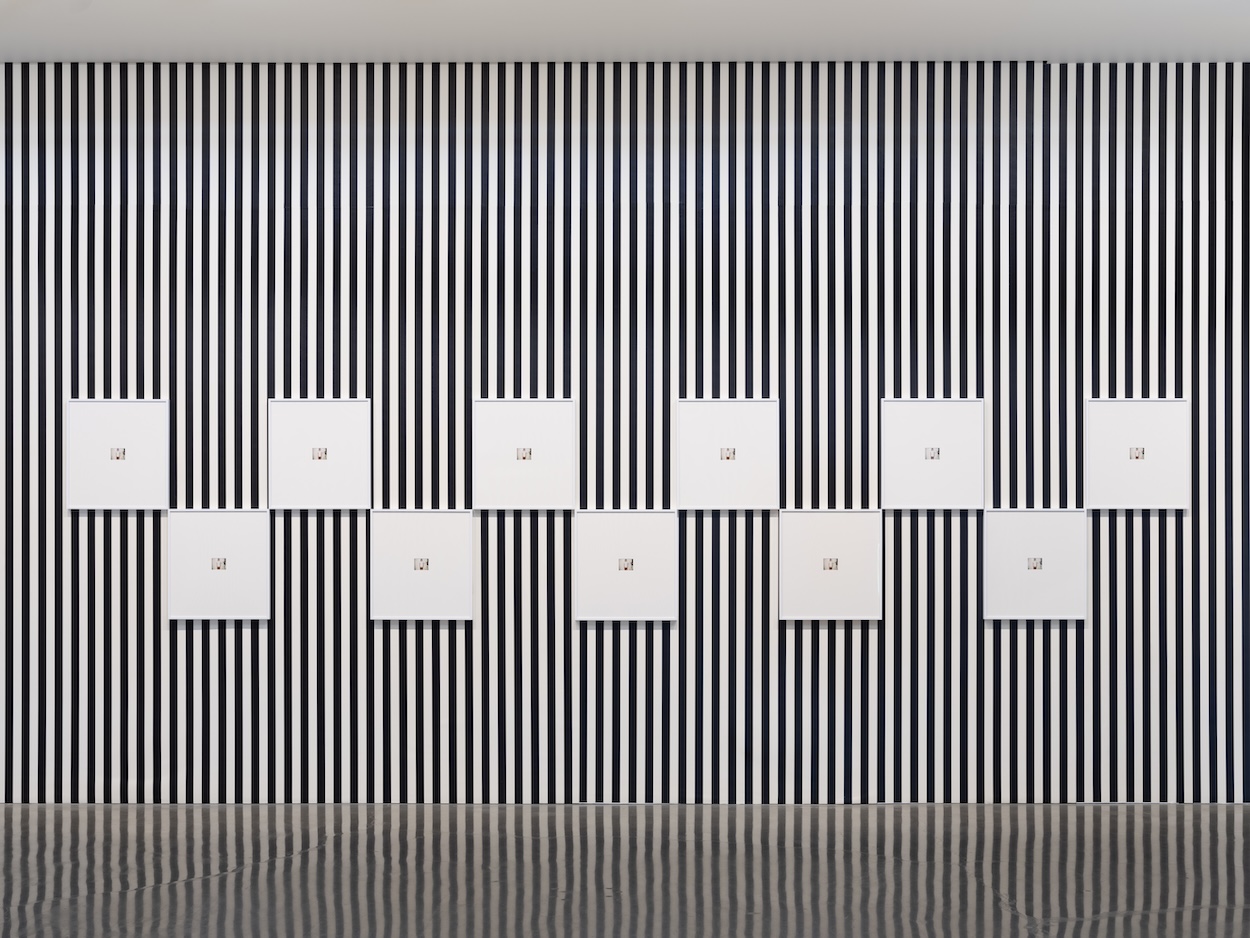
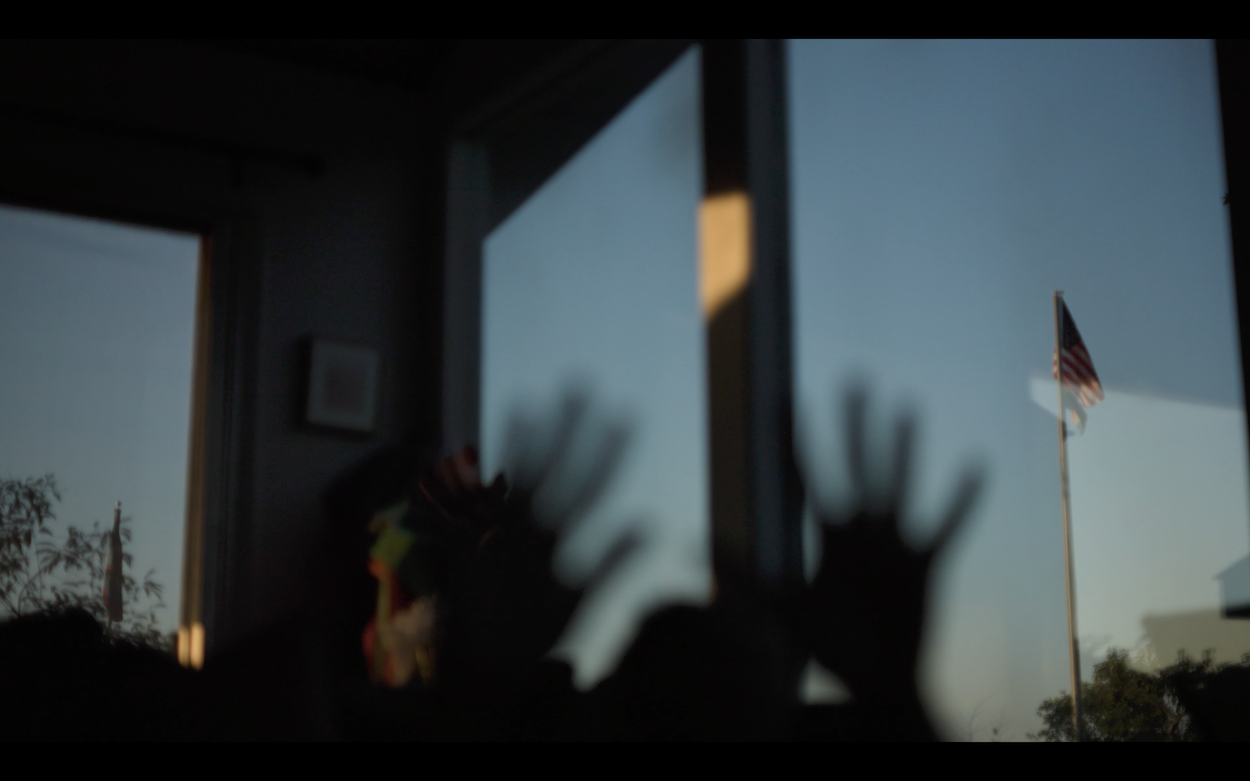
The Austin version was my largest show in Texas, so it made sense for certain aspects of my practice to be represented there. I’ve shown work in New York for a while now, so there is a different fluency to certain aspects of my practice and some areas that are more underrepresented here. So first I stripped the show down for scale and then I stripped it down even more. The hang here at FLAG is sparse. It does a nice dance between image and language systems. The exhibition is dominated by sound and images, both moving and still images. Everything seems to be extracted or proliferated from the same world. Out of the world of the two films that are the center pieces of each floor: “Laugh Track, Or Who’s That Peeking in My Window,” and “skin suit.” This New York version focuses on video, neon, and sculpture. Focuses on the elision between thoughts and materials and disperses that across space.
The exhibition brings together video, sculpture, neon, photography, and text within an immersive environment. How did you think about the relationship between these different mediums when constructing the exhibition as a whole?
I’m not so much concerned with the difference or rather the “boundaries” between media or material. The exhibition is a text and in writing, word choice and sentence structure or formation are paramount. Deciding to place a neon or a photograph in a room is just selecting the right word for the sentence.
Courtesy of Sable Elyse Smith.…
You often take objects and visual languages associated with systems of incarceration and shift them into new contexts. What interests you about transforming these highly functional, institutional objects through material, scale, or placement?
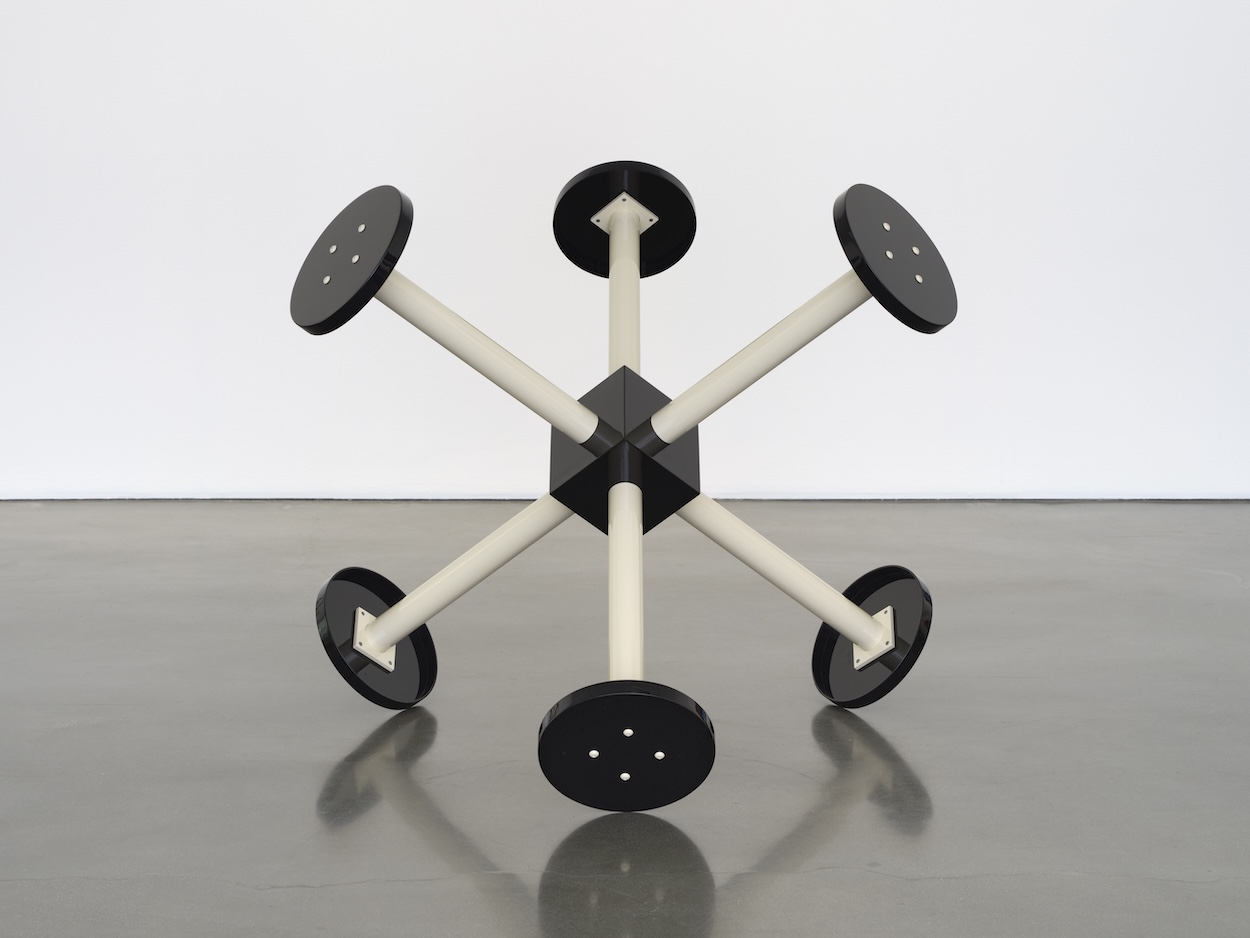
My first thought reading this sentence is that here the phrase “system of incarceration” is called out as something separate and contained. So, if I just speak hyper-locally, we could say the “United States” is another way of saying “system of incarceration”. (And of course, it’s not exclusive to the U.S. but for the sake of simplicity we can speak locally.) It’s this kind of linguistic unraveling that’s important. A table design is taken from a company who places their object in prisons and other places. A didactic tool is taken from the street. A photograph is taken from the social collective production of vernacular images, thus producing an archive, a record. The context in which these things circulate shift and change, or compound their meanings. So the circulation is key. Implied in the question is the purported function of any object. Maybe to strip things down even further, we could say one thing I’m asking is what other functions might be camouflaged in here and who benefits when they circulate in particular ways.
Surveillance appears throughout your work not only as literal observation but as something that can shape behavior and perception. How are you thinking about surveillance in “Clockwork,” particularly in relation to the viewer’s own position within the exhibition?
I think the definition of surveillance in 2026 is very complex and constantly stretched. That’s important for us all to think about. In the exhibition the viewer is in a positing on looking, that’s it. That’s the default. But how we look, what we look at, when we choose to look away are all things we should be noticing out in the world, in our lives. And not mistake it for passivity.
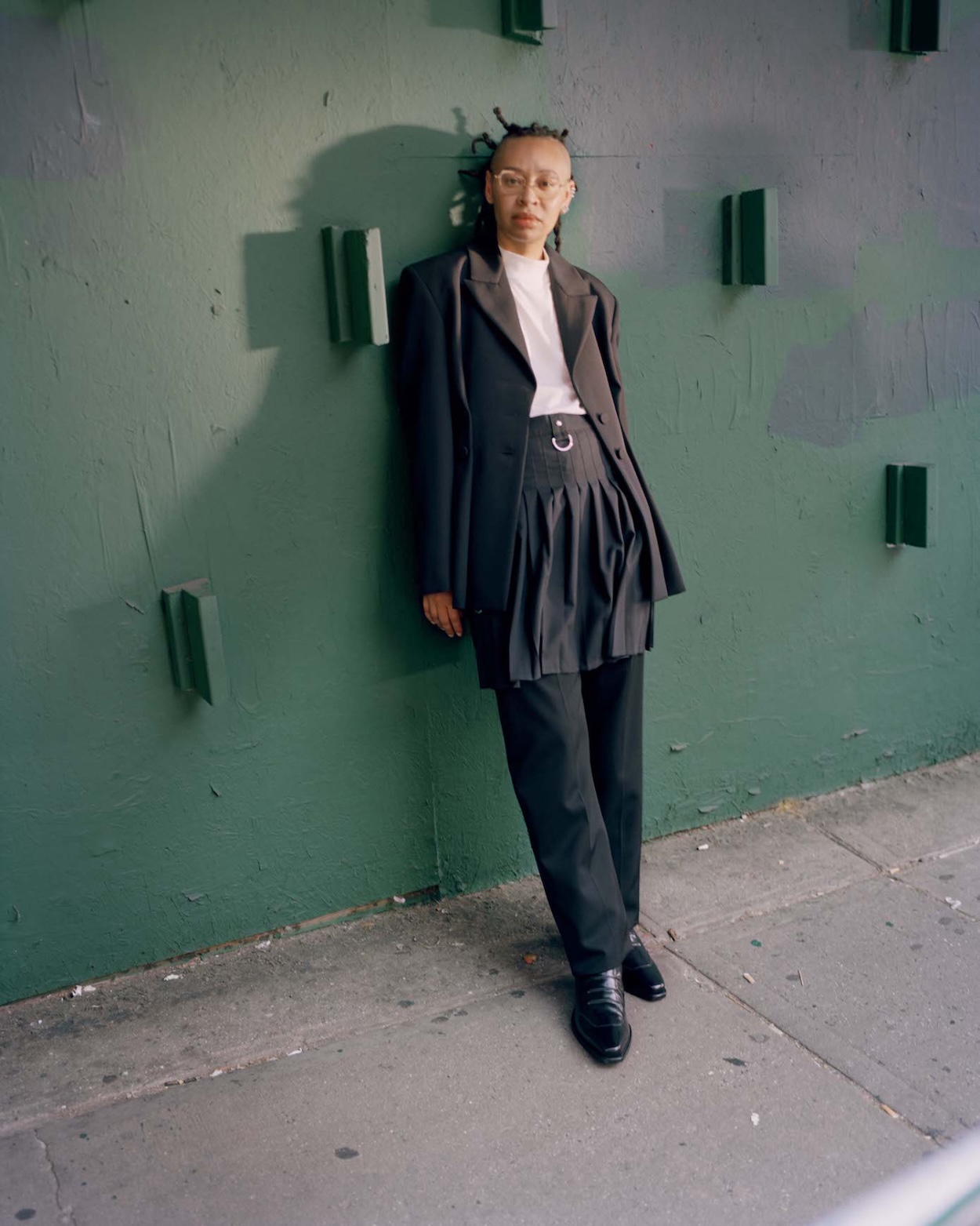
Portrait of Sable Elyse Smith. …
There’s an interesting tension in the work between seductive visual qualities (light, color, moving image) and subjects rooted in violence, confinement, and control. How do you think about beauty or visual pleasure when working with this material?
Attraction, attention, and repulsion are maybe the primary things operating here. In most instances, they act as lures.
This is your largest presentation in New York in several years. Did returning to New York with a show of this scale change how you thought about the exhibition or the conversations you wanted it to generate here?
It’s a solo show but I don’t think of the scale as large. Because again we designed this layout with an intentional sparseness. This was a very specific project developed for the prize, starting in Texas, so the framing is just very different then if I were solely conceptualizing my next New York solo show, if that makes sense. The fact that this is New York, did play a factor of course as I mentioned earlier, it’s one of the reasons I cut down a lot more of the 2D work from the initial checklist. So in the FLAG version it really requires or makes space for people to spend time with each work in object and figure out how that fits into this larger puzzle.
After someone moves through “Clockwork,” what do you hope stays with them?
I think what stays with people, says more about them and that’s fascinating. I’m more curious about that, than prescribing my own desires based on their experiences. My hope is just that people spend time with the work.