Artwork by Maya Makino. Courtesy of IMAZ Foundation.…
There is a moment in each soccer game when everyone holds their breath around a single object. A ball, mid-air, before it crosses a line or doesn’t. For a fraction of a second, millions of people are unified by the same object: the fútbol. IMAZ Foundation is asking what happens if that moment is made to last, and to mean something more. This June, the newly launched cultural platform and nonprofit opens “Chapter One,” its inaugural exhibition, at The Atelier at Ideal Glass Studios in New York City.
Timed with the 2026 FIFA World Cup, the show brings together eleven contemporary artists, each invited to reinterpret the fútbol through their own visual language. The works are presented as a silent auction, and every sale funds the construction of a home for a single mother and her children in Quito, Ecuador, built in partnership with CAEMBA, a ground-level organization embedded in the communities where the homes will stand.
Artwork by Vincent Beaurin. Courtesy of IMAZ Foundation.…
How did you select these 11 artists? Were you looking for a geographic spread, a central concept, and practices that spoke with one another?
Sami Deller: The selection was led by our curator, Javier Martín, whose vision was instrumental in shaping this entire chapter. Javier has spent years building relationships across the contemporary art world and has an extraordinary ability to identify artists with truly distinct voices. The artists come from different backgrounds, generations, and disciplines, but each has developed a visual language that is immediately their own. Javier understood that the strength of the exhibition would come from contrast, by bringing together artists whose practices are so different, football became a catalyst for eleven entirely unique perspectives.
What does soccer mean to you, and what was the process of translating that into art?
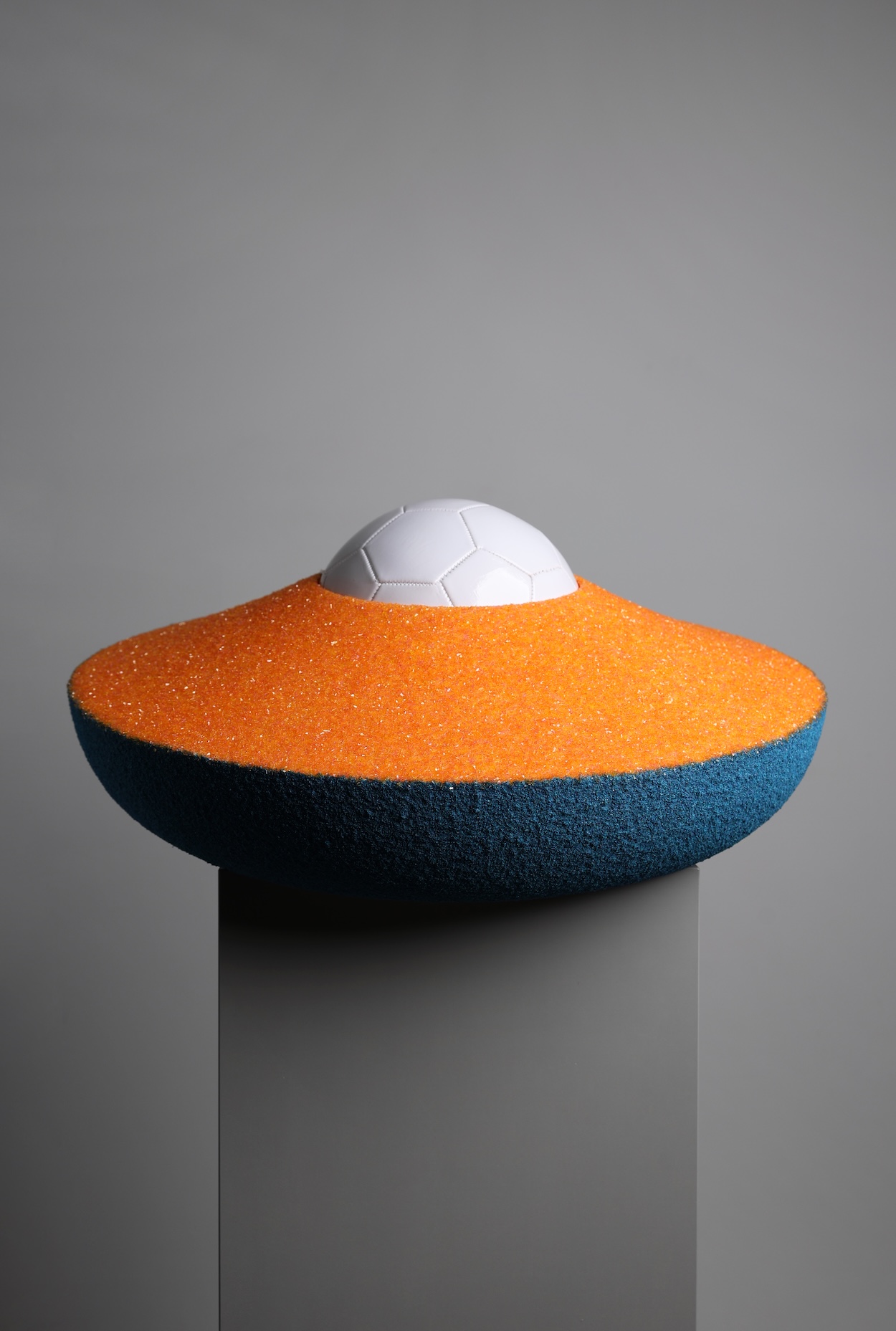
Vincent Beaurin: To me, soccer is a kind of colorful, popular astronomy. In my work, too, color, space, and the stars are essential. Like a meteor on the soccer planet, I hope this artwork will inspire people to make a wish—the wish to provide a home for a mother and her children in need.
Artwork by Jose Durán. Courtesy of IMAZ Foundation.…
Tell us the story behind the partnership with CAEMBA.
Sami Deller: CAEMBA’s work resonated deeply with me because their mission is rooted in something I understand personally. I was born in Ecuador, and while football gave me some of my earliest memories and opportunities, I also saw how transformative stable housing can be for a family and a community. As we developed IMAZ, we knew our first chapter needed a tangible and measurable outcome. Through conversations with CAEMBA, it became clear that there was a natural alignment between what they were building on the ground and what we hoped to build through culture. Their model is simple, direct, and proven. For our inaugural chapter, every artist-designed football helps fund a home for a family in Ecuador. It felt important that our first impact initiative began in the country where my own story began.
What surprised you about your own response to the brief?
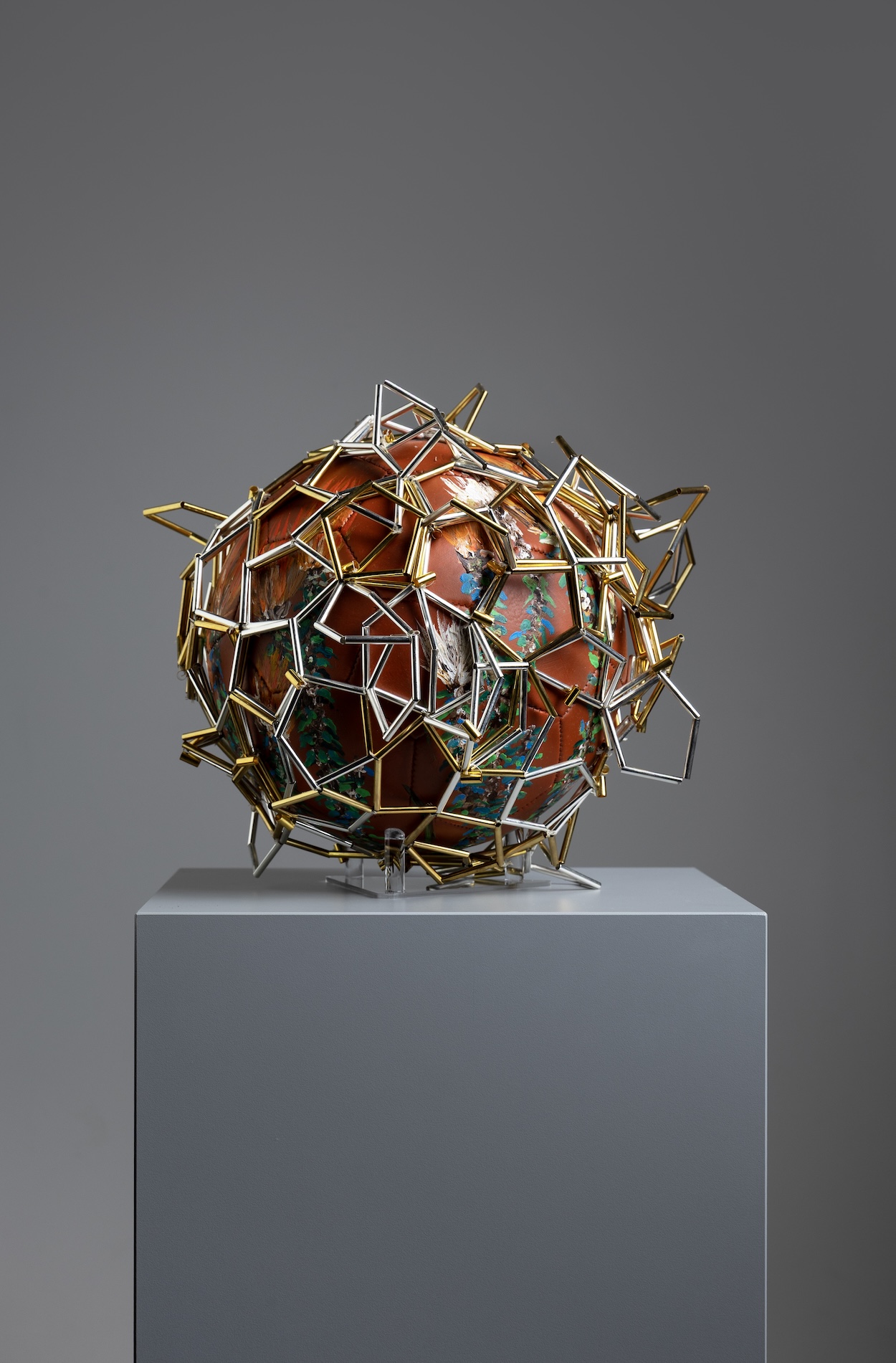
Jose Durán: The use of plants is part of my artistic practice and my investigation process when I create art. I wanted to connect the ball with the country that inspired its creation, so I used elements of their environment, like their national flower. I also wanted to learn more about the endemic plants from Ecuador. It inspired me to investigate.
Jose Durán. Courtesy of IMAZ Foundation. …
How did working on a sphere change your process
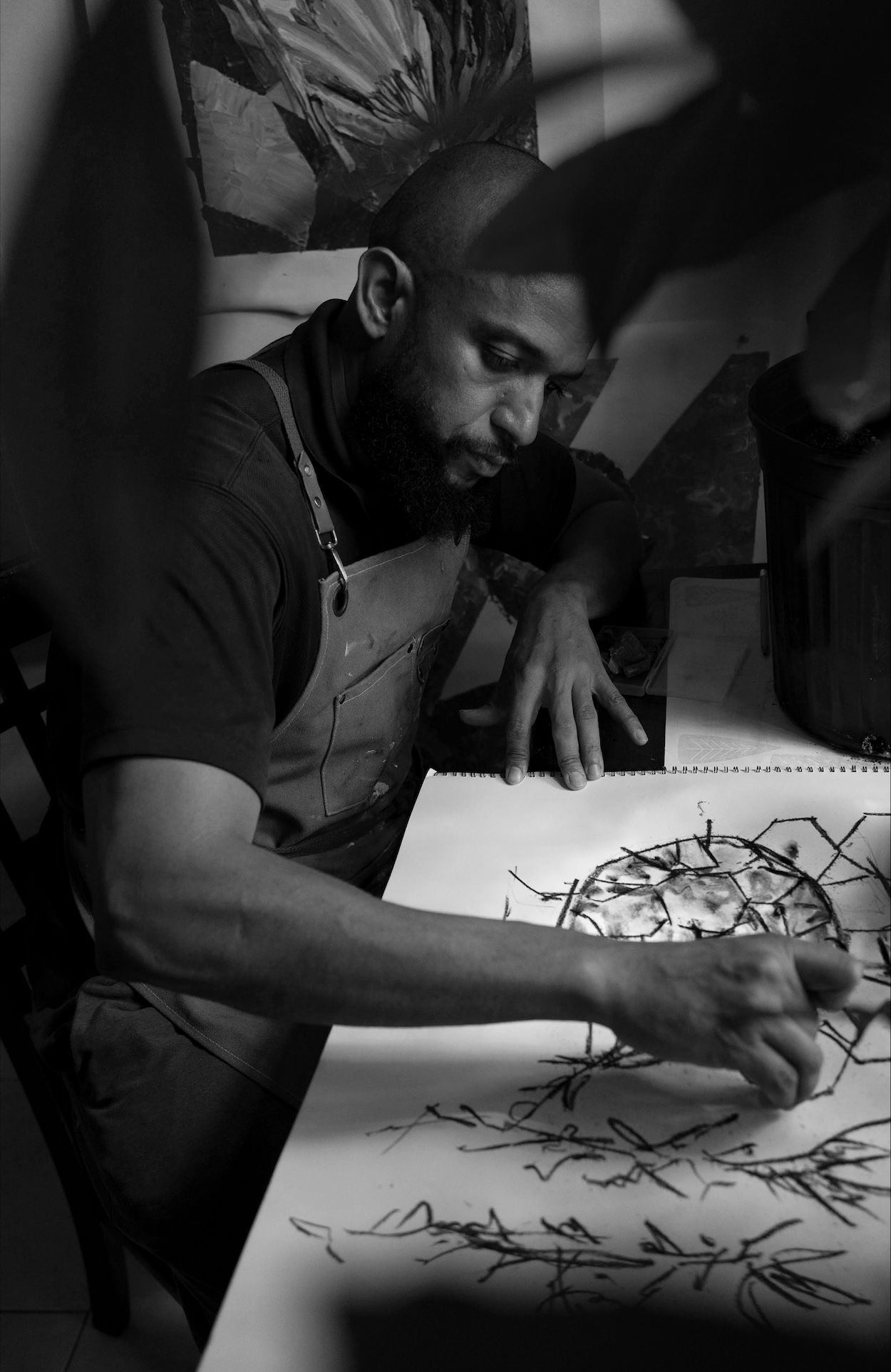
Maya Makino: One challenge in creating spherical works is that gravity acts on the surface from multiple directions. Because the indigo dye I use is highly fluid, I needed to devise techniques that differ from those used on flat surfaces to achieve stable adhesion on the curved surface.
What surprised you most about how the artists interpreted the brief?
Sami Deller: How completely they ignored one another. We gave eleven artists the same object, and what came back felt like eleven different universes. Some transformed the football into sculpture, others into memory, architecture, mythology, landscape, or personal narrative. What I loved most was that nobody treated the football as a football for very long. They treated it as material, as metaphor, as a surface for ideas. The football stopped being a football almost immediately. It became a vehicle for eleven distinct ways of seeing the world. That’s what great artists do.
Artwork by Wes Aderhold. Courtesy of IMAZ Foundation.…
What do you want visitors to feel when standing in front of your work?
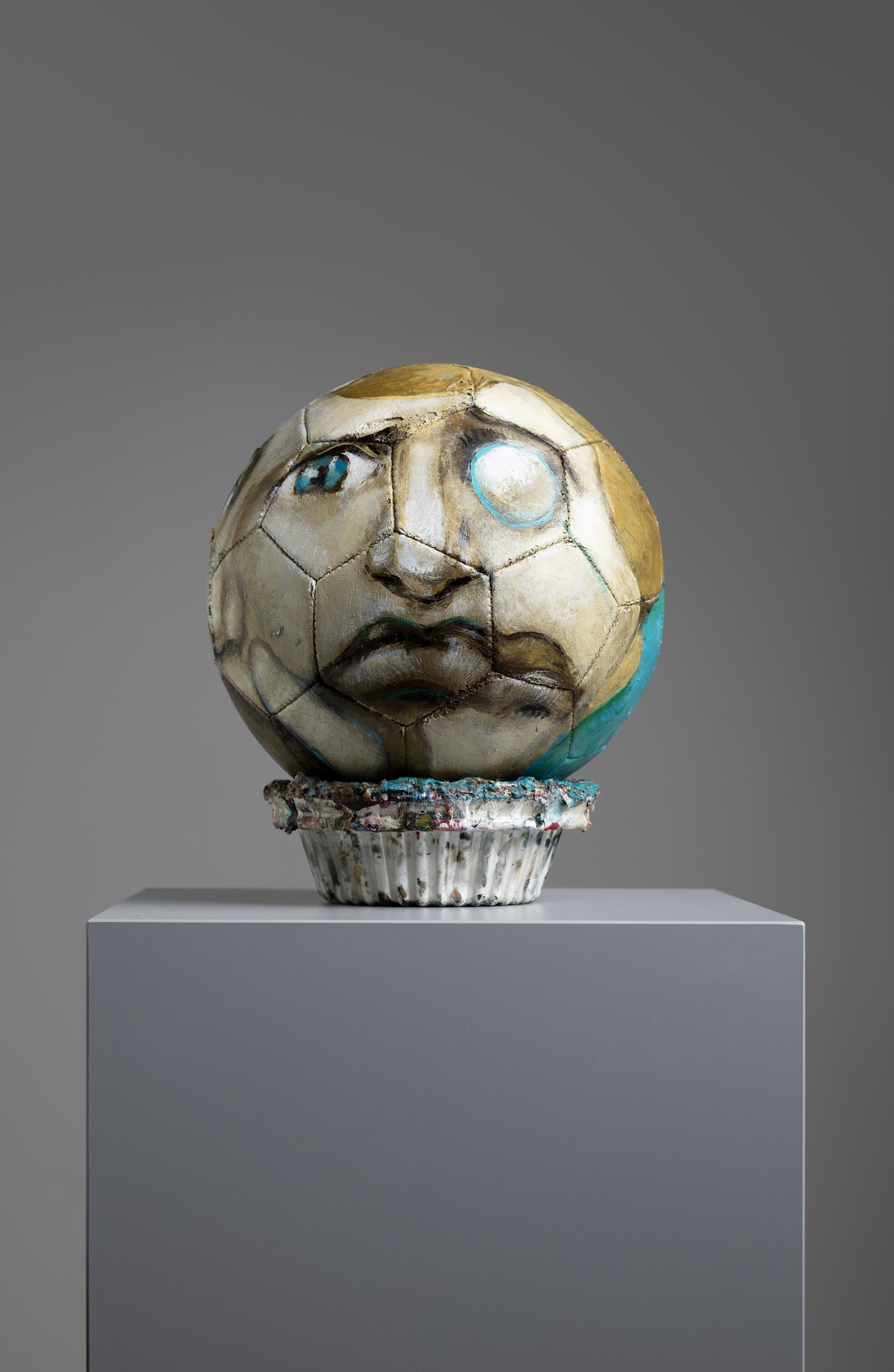
Wes Aderhold: I hope they recognize themselves. Not as an athlete but as a person who’s felt the pressure of being evaluated. You don’t have to play soccer to understand we spend our lives performing. This ball isn’t just about soccer, it’s about the cost of living in public. That’s not an athletic experience; it’s a human one.