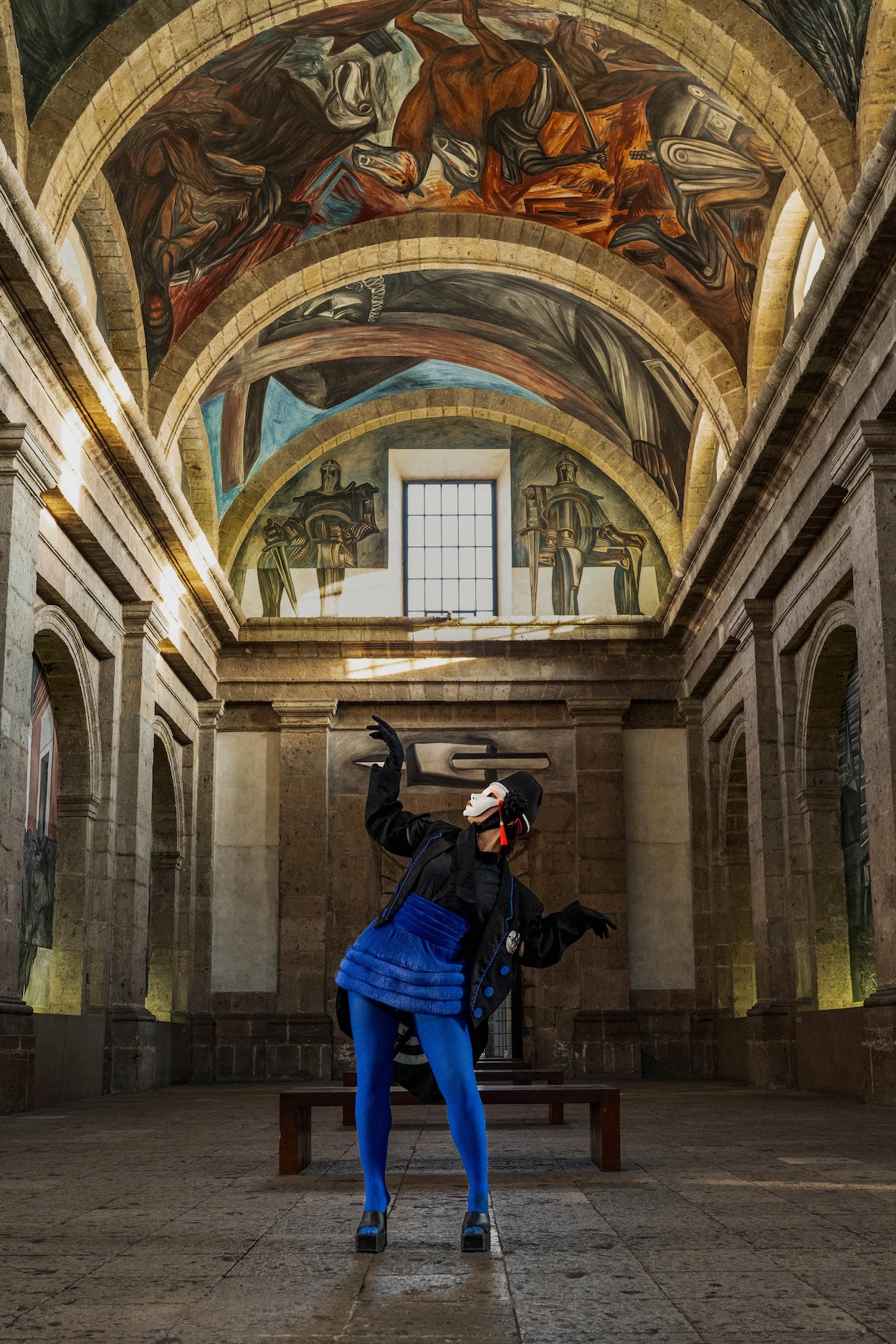
Mexico City–based artist Orly Anan presented the performance piece Vistas de un Hombre en Llamas at Museo Cabañas in Guadalajara as part of Andrógina Fest 2026. Built in direct dialogue with José Clemente Orozco’s El hombre de fuego beneath the museum’s dome, the work used Orozco’s mural and the surrounding architecture as the basis for Anan’s actions.
Vistas de un Hombre en Llamas is a retelling of the myth of Prometheus, the figure of ancient Greece who stole fire from the gods and was punished for it. In her version, the man in flames becomes the center of a world in which human, animal, and plant life are reorganized without hierarchy, shifting the perspective of the piece toward interdependence rather than punishment. The project also places that retelling inside what Anan describes as a kind of future mythology, where mutated DNA becomes a metaphor for expanded consciousness and social life is reorganized around cooperation rather than domination.
Photo by Ernesto Roman.…
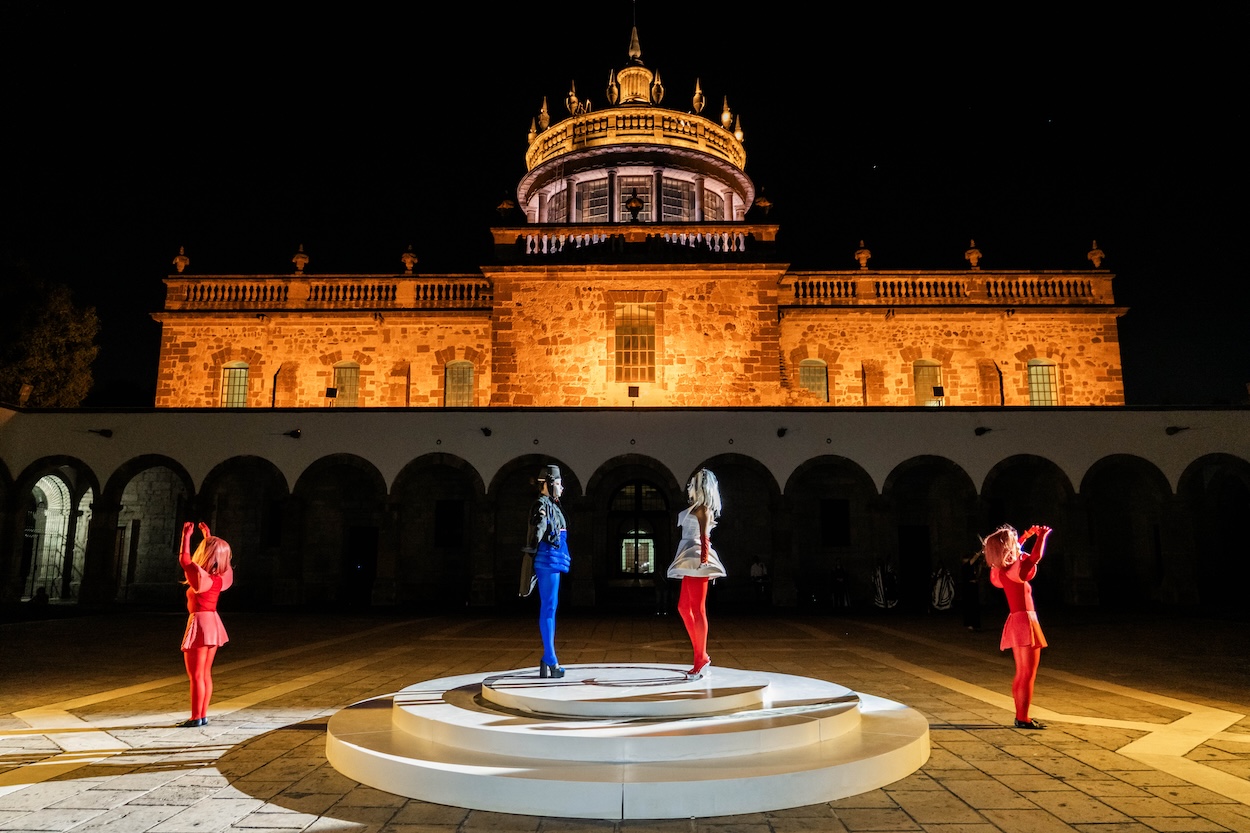
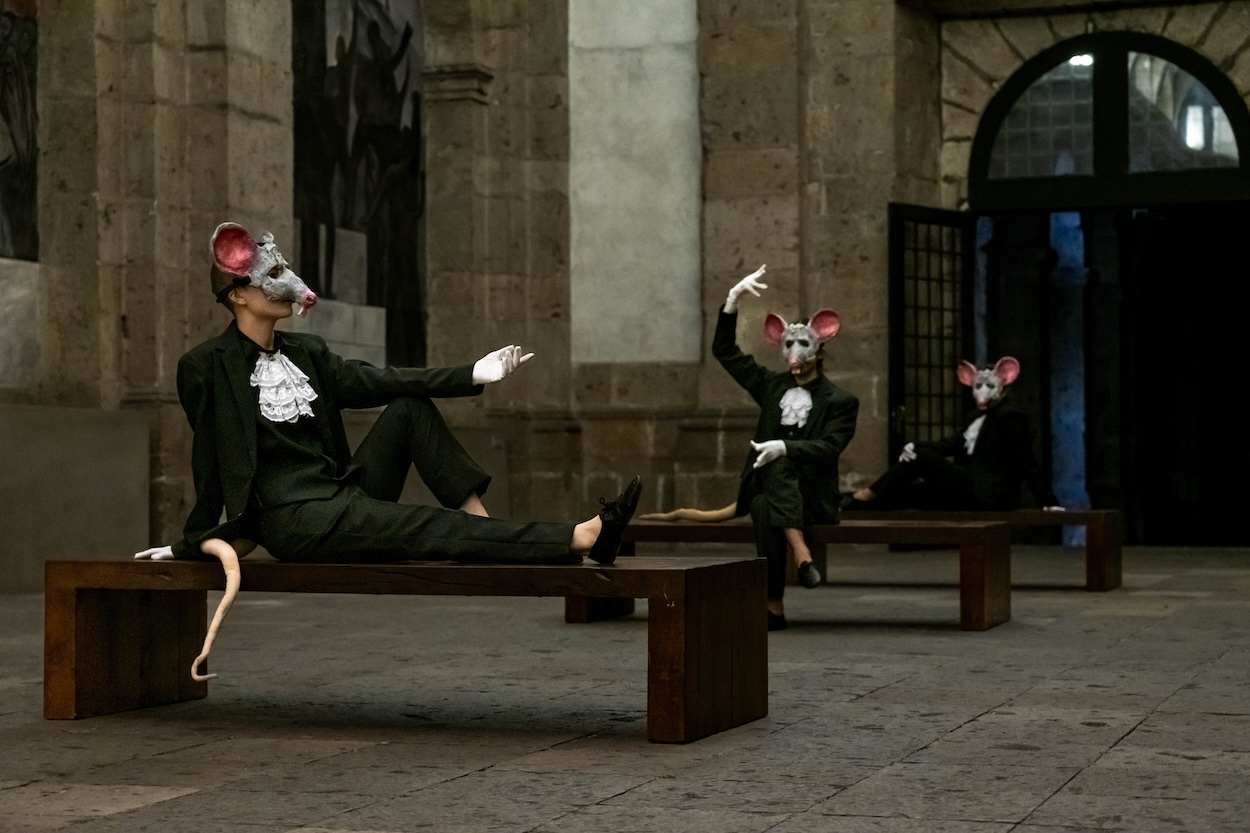
To build out that narrative, the performance moved through a sequence of scenes that began in disorder and gradually shifted into ritual and then into a new social order. It opened with mice rushing beneath the dome before a gong cut through the action and redirected the audience toward the plaza. From there, a ceremonial union, a duel between mirrored figures, and the appearance of a volcano woman giving birth to an ocelot cub expanded the world Anan was constructing.
A spiral platform at the center of the space helped organize that progression, functioning at different moments as an altar, a wedding platform, and a place of birth. The audience moved through the space as the piece unfolded, becoming participants rather than spectators.
Photo by Ernesto Roman.…
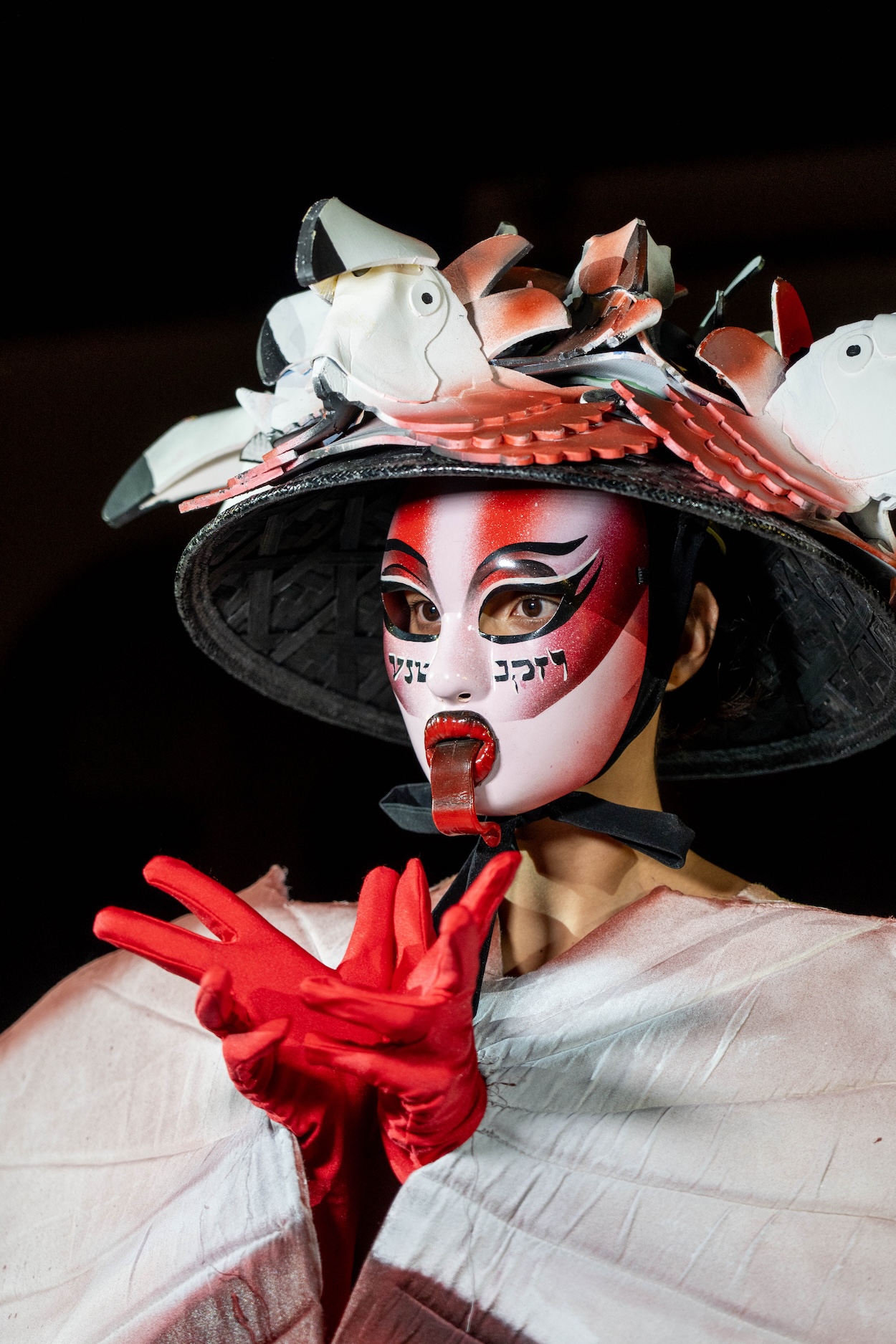
Ritualistic garments played a major role in defining the performance’s visual language. Gray mice darted beneath the dome, horse-headed figures led a ritual procession, swirling skirts marked out a ceremonial opening, and later the piece moved into more surreal territory with goose-headed nurses and black hooded bodies. The imagery shifted between the grotesque, the ceremonial, and the folkloric, while still feeling part of the same imagined world that is undoubtedly a visual signature of Anan’s work.
Just as important as the wardrobe and staging was the setting itself. Anan placed the performance beneath El hombre de fuego, painted between 1937 and 1939, at the center of the 57 frescoes he made for the former Hospicio Cabañas. In the chapel, Orozco’s mural cycle takes up conquest, religion, and social conflict, and El hombre de fuego remains one of its most charged images. Anan put her own symbols of fire, ritual, and renewal into direct conversation with Orozco and the broader history of Mexican Muralism.
Photo by Ernesto Roman.…
Vistas de un Hombre en Llamas gave the Prometheus myth a more hopeful reading, reworking a story that has endured for nearly 3,000 years through Anan’s own visually stunning, symbolism-laden storytelling.