Print Center New York's "New Voices: Design" Spotlights Eight Emerging Printmakers
Curated by Rhode Island's School of Design's Andrew Raftery, the exhibition traces the history of pattern and its resonance in contemporary printmaking.
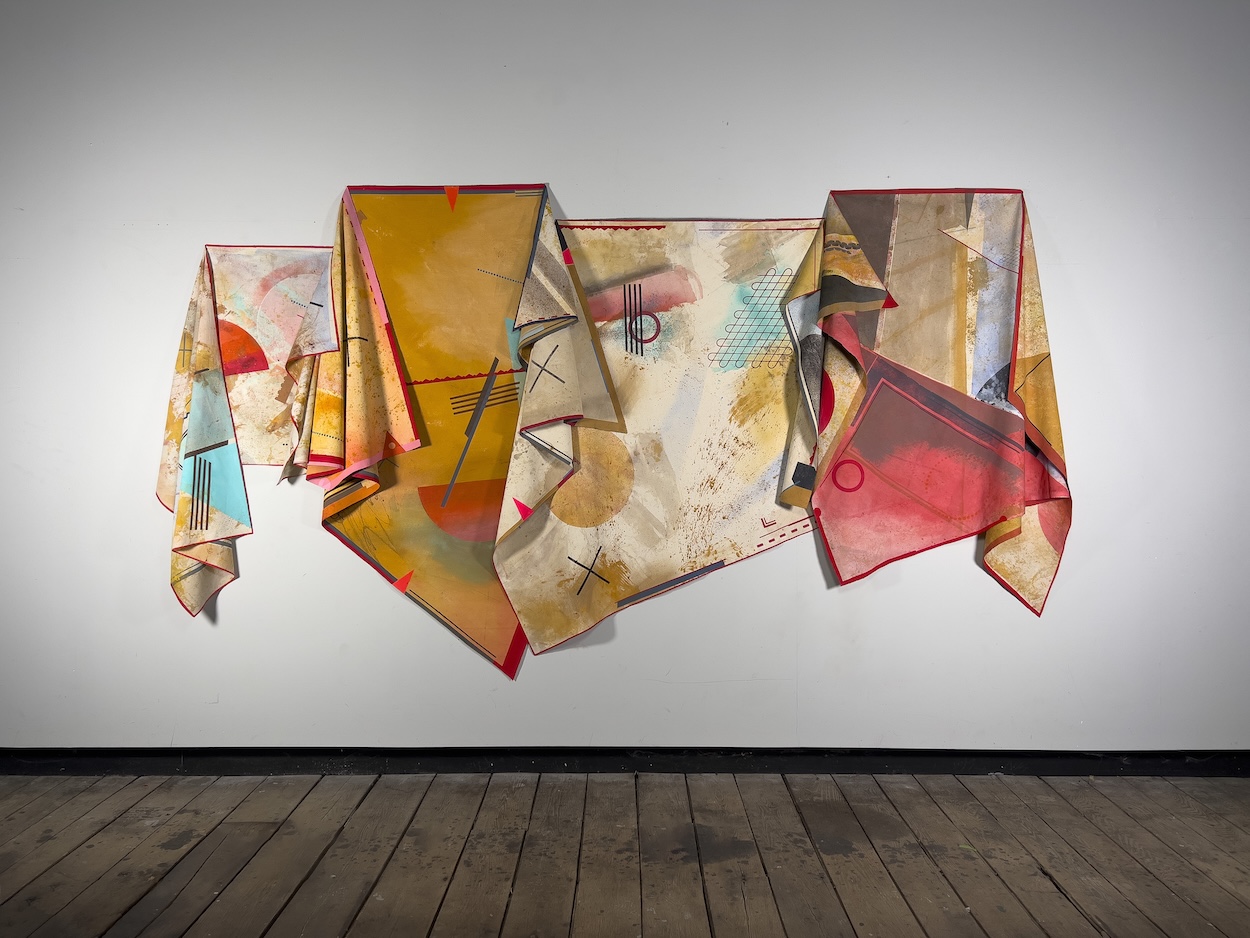
Folding 652 , 2019-2026, Screenprint and paint on canvas and muslin, 66” x 122” x 8” by Amy Yoes.…
Since 2022, Print Center New York’s New Voices program has given emerging artists a platform to develop and present new works, pairing exhibitions with mentorship, public programming, and professional development. For its fourth edition, “New Voices: Design,” the organization handed curatorial direction to Andrew Raftery, a professor of printmaking at the Rhode Island School of Design, who assessed nearly 400 applications to arrive at a cohort of eight artists: Noah Breuer,Zoran Dobric,Johannah Herr,Jazzmen Lee-Johnson, Michael Menchaca,Melih Meric,Anette Millington, and Amy Yoes.
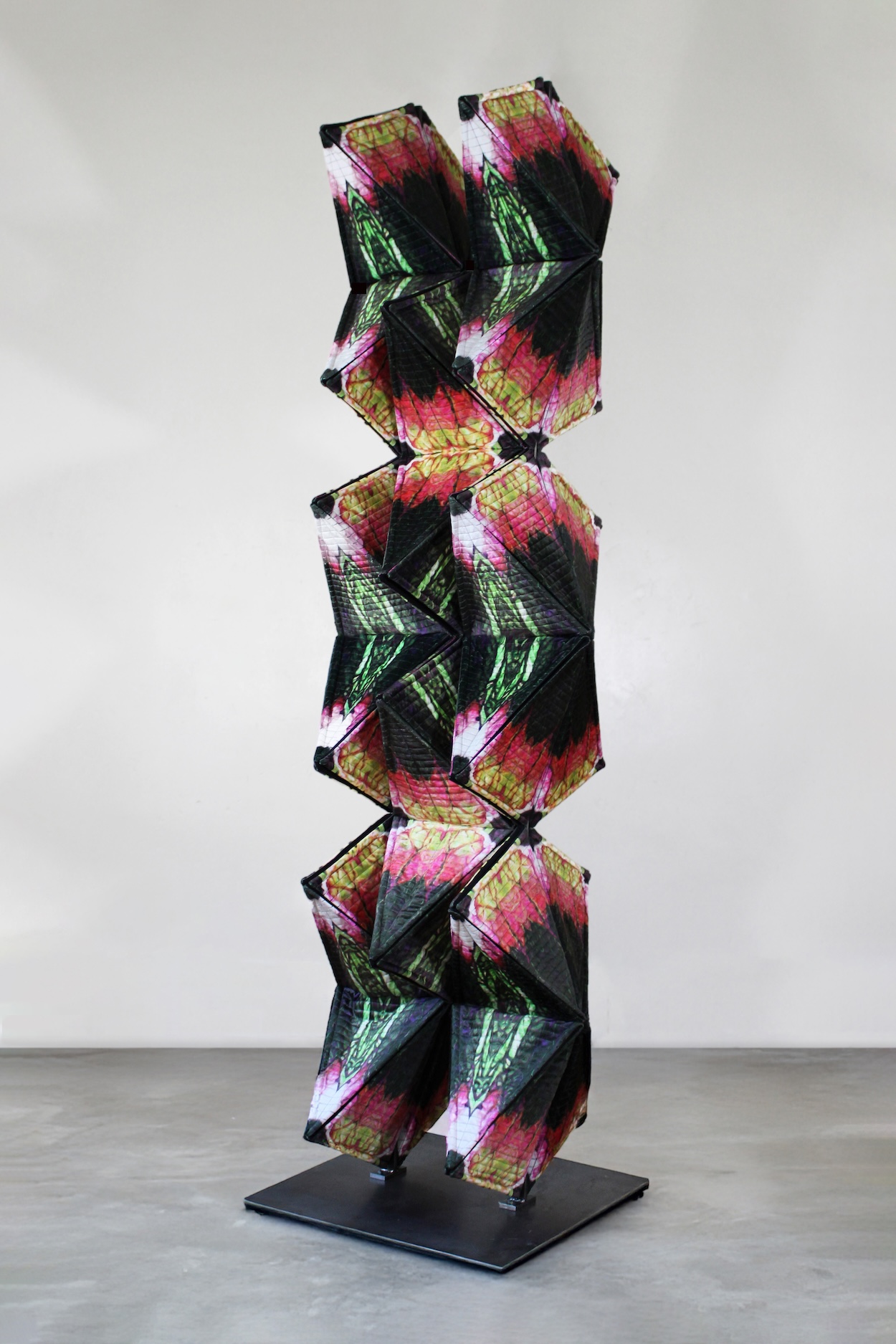
The resulting body of work approaches pattern from many different angles. Dobric’s Crochet Chronicles screenprints a design based on his grandmother’s crocheted doily onto gold metallic emergency blankets, fusing an heirloom motif with a material associated with displacement and crisis. Millington’s sculptural prints, including Flower Tongue, use quilted, digitally printed felt shaped by metal armatures to mimic the textures and symmetries found in plants and the human body. In Tidesweepings, Yoes builds entire compositions from the printed dot itself, halftones, Ben Day dots, and dot matrices, treating it as a shared visual language shaped by more than a century of mass-printed imagery.
Together, the artists trace pattern’s long history and its ongoing relevance to design, printmaking, and culture today. We spoke with Raftery about what drew him to the theme, how he approached selecting from such a large applicant pool, and what he hopes visitors take away from the exhibition.
What inspired you to center pattern as the organizing principle for this year’s New Voices exhibition?
I was searching for a theme that is integral to prints, yet open enough to draw artists from a broad range of art and design practices. Pattern and printmaking have been intertwined since the first Indian block printed fabrics dating to at least the 9th century BCE.
The artists in the exhibition draw from sources as varied as textile traditions, architecture, natural forms, graphic design and personal archives. What particular connections or conversations between the works do you see?
The projects are linked by a sense of discovery. Each artist explored something new—a fresh subject, process or method of installation.
As an artist yourself, how has your own studio practice shaped the way you approached curating New Voices: Design?
My work with pattern in the form of wallpaper started out as a way to alleviate the harshness of the white cube gallery. I quickly came to see the potential of printed patterns to envelope public and private spaces with imagery and color and to deliver content in a way that is both gentle and insistent. I was curious to find other artists who expand their work through pattern.
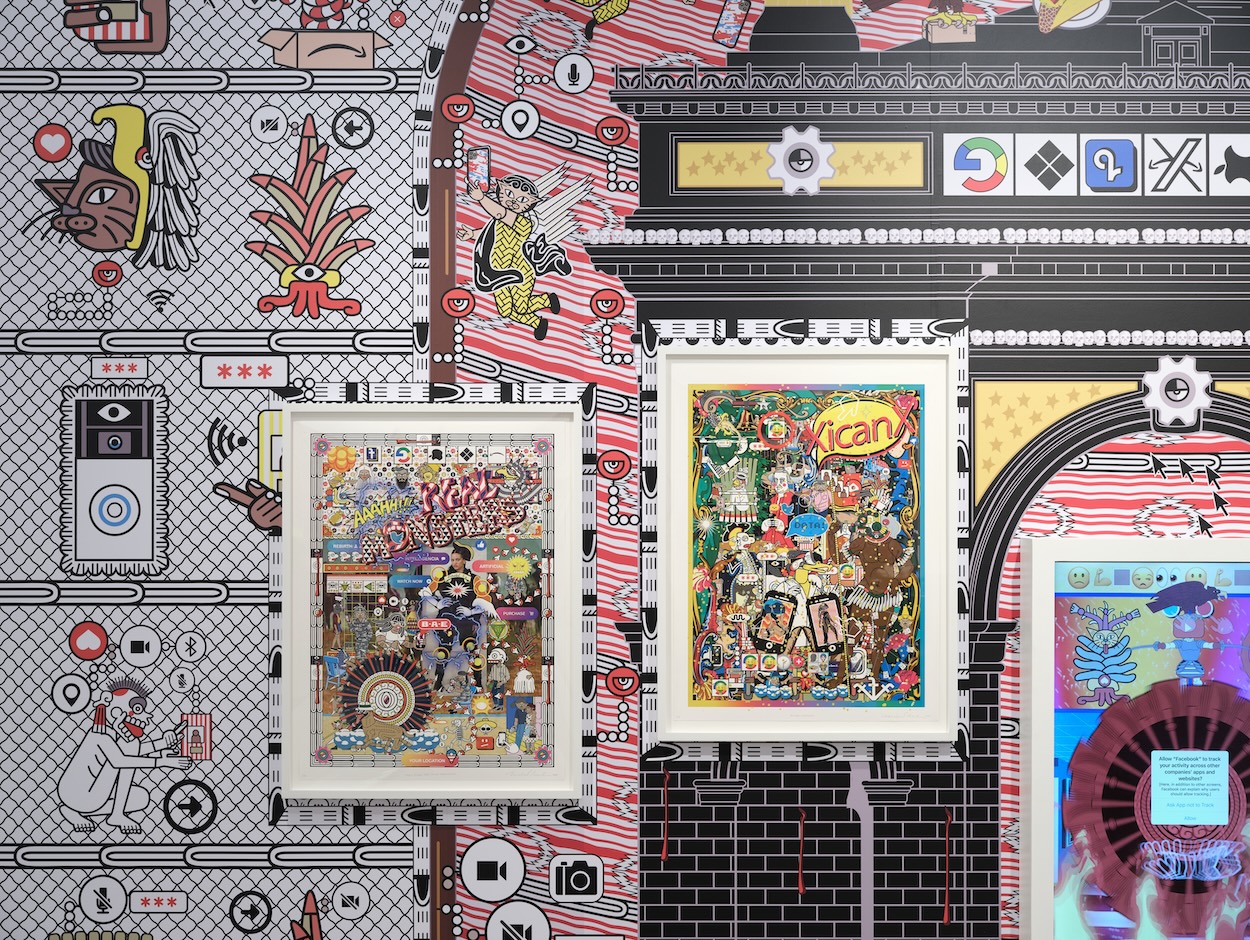
Michael Menchaca, A Caged Sun, 2026. Photo courtesy of Argenis Apolinario and Print Center New York.…
Printmaking has historically been one of the most democratic art forms, allowing images and ideas to circulate widely. How do you see today’s artists expanding that legacy through design, material culture and pattern?
The exhibition moves beyond hierarchies of art often expressed in terms of genre and technique. These barriers lead to arbitrary demarcations separating art, craft, design and decoration. Printmaking is more than democratic. It is inclusive, an umbrella covering everything from a Rembrandt etching to a screen printed broadside. That ethos informs the show by inviting visitors to engage with a dress or chair at the same level as a framed work on paper.
Throughout art history, ornament and decoration have often been dismissed as secondary to fine art. What do you hope visitors reconsider about the relationship between art and design after seeing the exhibition?
It has been wonderful to observe visitors walk into the exhibition and respond to the visual appeal of the work and then slow down to engage with the content. I hope they perceive the potential for patterns and designed objects to carry deeper meaning.
Many of the works in “New Voices: Design” reveal how visual systems can preserve personal histories while also reflecting broader cultural narratives. What did these artists teach you about the storytelling potential of pattern?
Pattern has an inherent sense of order as it proposes its own internal logic. Considered this way, we can say it has syntax and operates as a visual language. The artists in the show make particular choices about emphasis and repetition as they construct meaning. Using pattern, they propose new and incredibly sophisticated ways to tell visual stories using deeply personal motifs and cultural references.
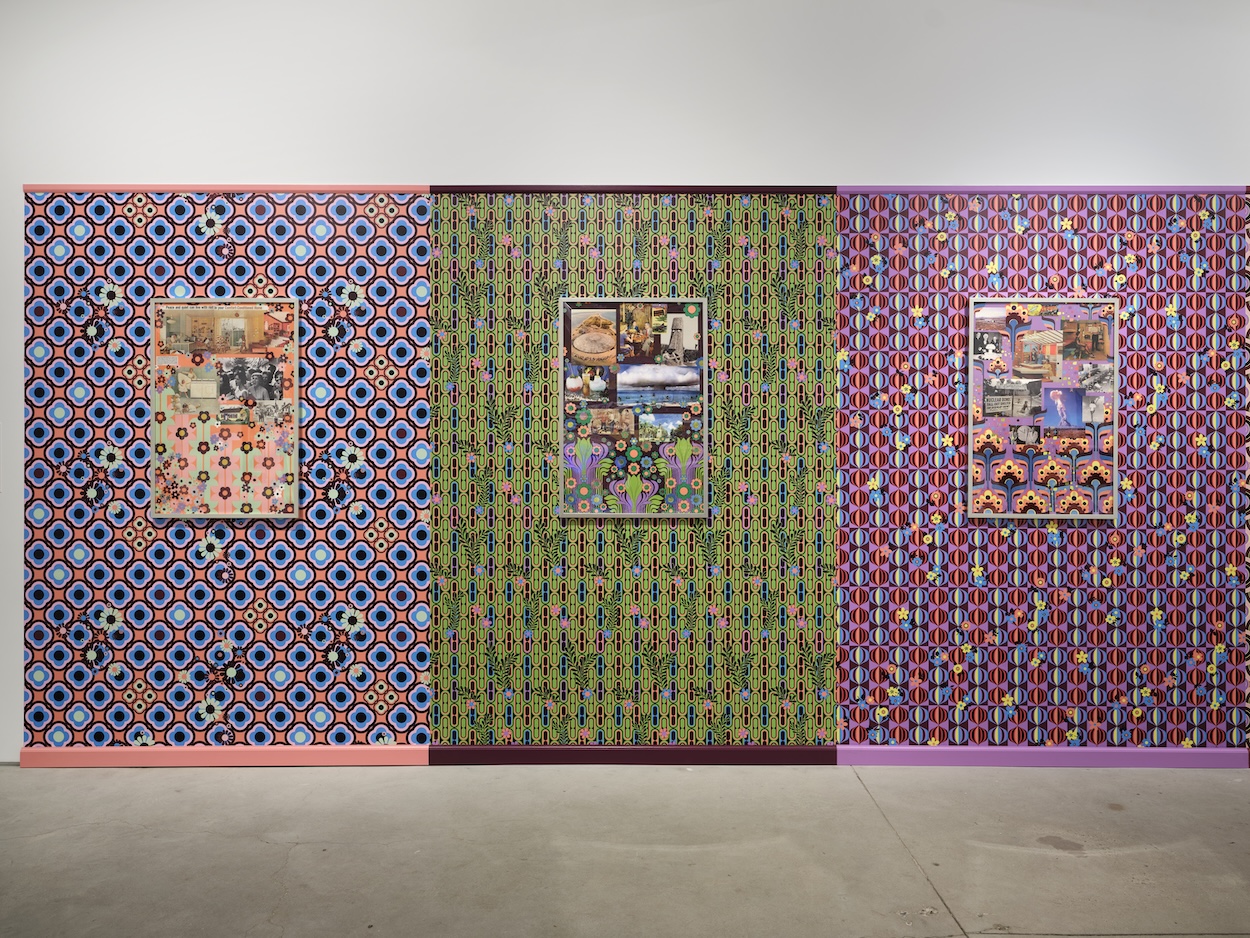
Johannah Herr, American Home Collage series, 2022. Photo courtesy of Argenis Apolinario and Print Center New York.…
Looking across this exhibition, what excites you most about where contemporary printmaking and design are headed, particularly through the perspectives of this new generation of artists?
It is heartening to see that the focus, attention to detail and high level of skill, characteristic of printmakers, operates equally with traditional techniques and in computer-aided work. This ethos is in place even as the artists propose such a wide range of supports and formats for prints, from apparel, chairs, quilts, fabric rolls, wallpaper, sculptural prints and installation. The exhibition is an invitation to broaden our definition of what a print can be even as each work retains its essential relationship to printmaking.