A bell tower has arrived on the Delaware River, and it needs volunteers to finish its song. Let Freedom Ring, a monumental interactive sculpture by American artist Paul Ramírez Jonas, is now installed at Cherry Street Pier in Philadelphia’s Old City, just steps from the Liberty Bell, coinciding with the 250th anniversary of the signing of the Declaration of Independence. The work takes “America (My Country, ‘Tis of Thee)” as both its material and its subject: a 33-bell carillon that plays the melody from top to bottom, leaving the final note silent until a visitor pulls a lever to ring it. We spoke with Ramírez Jonas about monuments, freedom, and what it means to hand the last note to the visitor.
Paul Ramírez Jonas Brings an Interactive Bell Tower to Philadelphia
At Cherry Street Pier, the last note belongs to whoever shows up.
Sofia Quintero June 25, 2026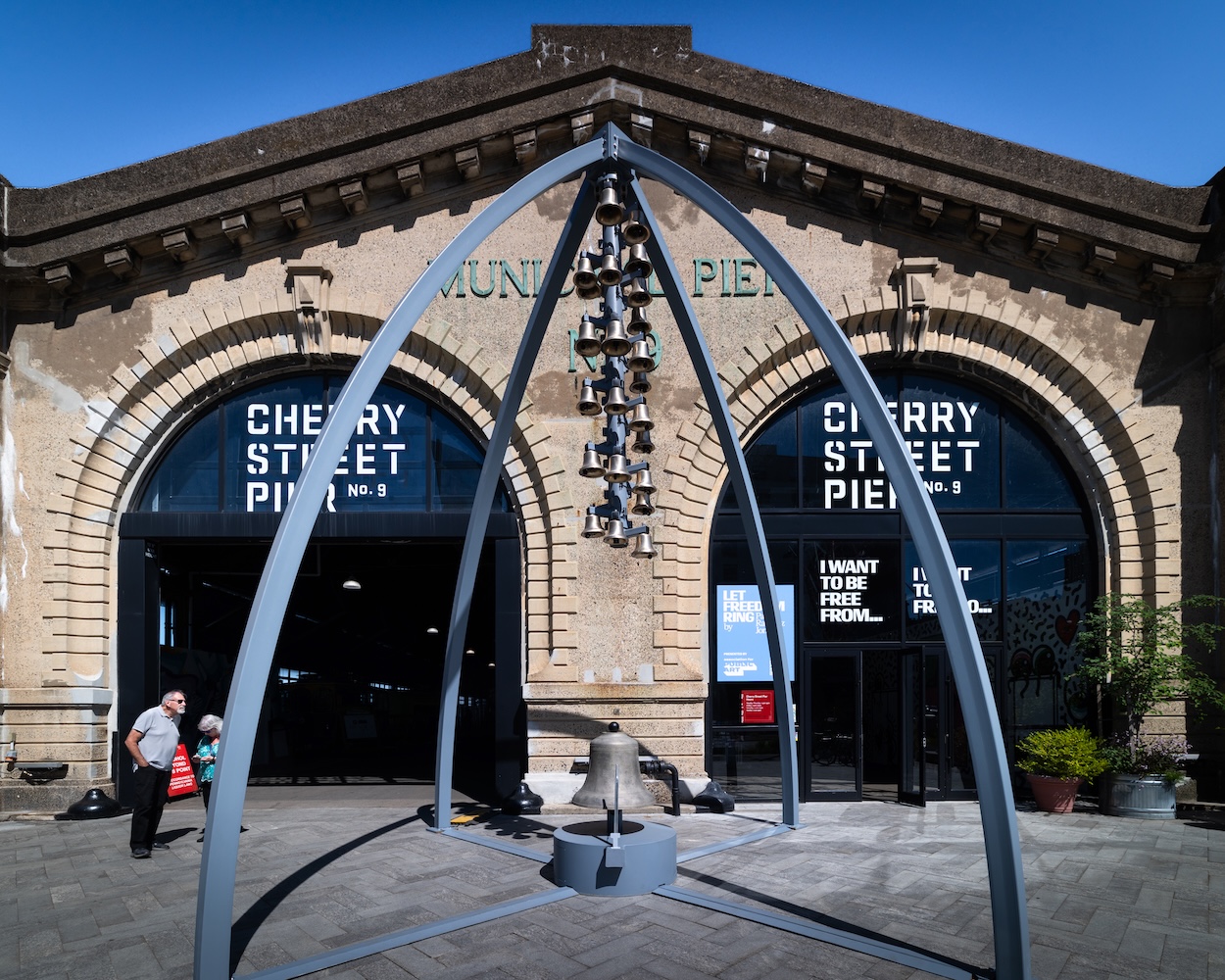
Photo by Steve Weinik.
…
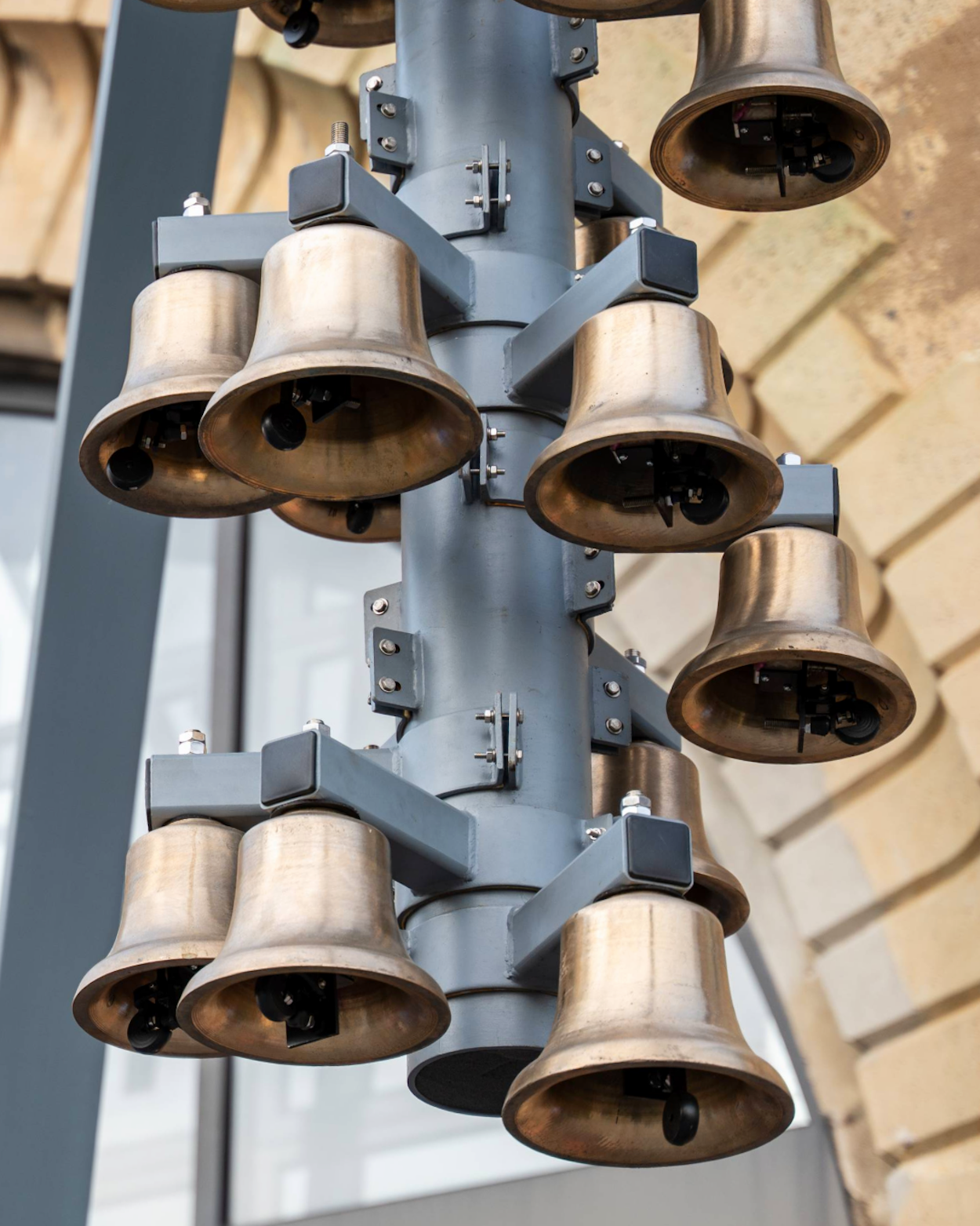
Photo by Andriana Ortiz.
…
Let Freedom Ring asks visitors to complete the final note of “America (My Country, ‘Tis of Thee).” Why was participation so important to the work, and what does it mean to you that the sculpture remains unfinished without public involvement?
Participation is the foundation of democracy, and yet, we still use monumental forms inherited from non-democratic forms of government. These forms inscribe public space with images and words that are immutable—set forever in stone and bronze. I am always trying to re-imagine these forms in such a way that they become participatory. Making a monument that plays one of our original national anthems and leaves it incomplete is such a way. The void is uncomfortable, it urges you to finish it. We may all agree that we need more participation in civic life, in education, in art, but for that to happen we need to create the space for folks to engage—not just talk about it.
The project arrives in Philadelphia during the nation’s 250th anniversary. How did the city’s layered history influence your thinking around the work?
It seems impossible to walk around Philadelphia in any direction without thinking about the origins of our nation. I have always been attracted to history, and even in my 20s I always tried to make work about our shared histories; but it was not until I added participation that history started to become a little more relevant. It is amazing to stand in front of Independence Hall, but what would it feel like to sign the constitution? What if we could go over to Liberty Bell Center and be able to ring the bell? I really enjoy Elfreth’s Alley, because I can walk on the same road as people did 300 and some years ago. Philadelphia truly is the perfect context for this piece.
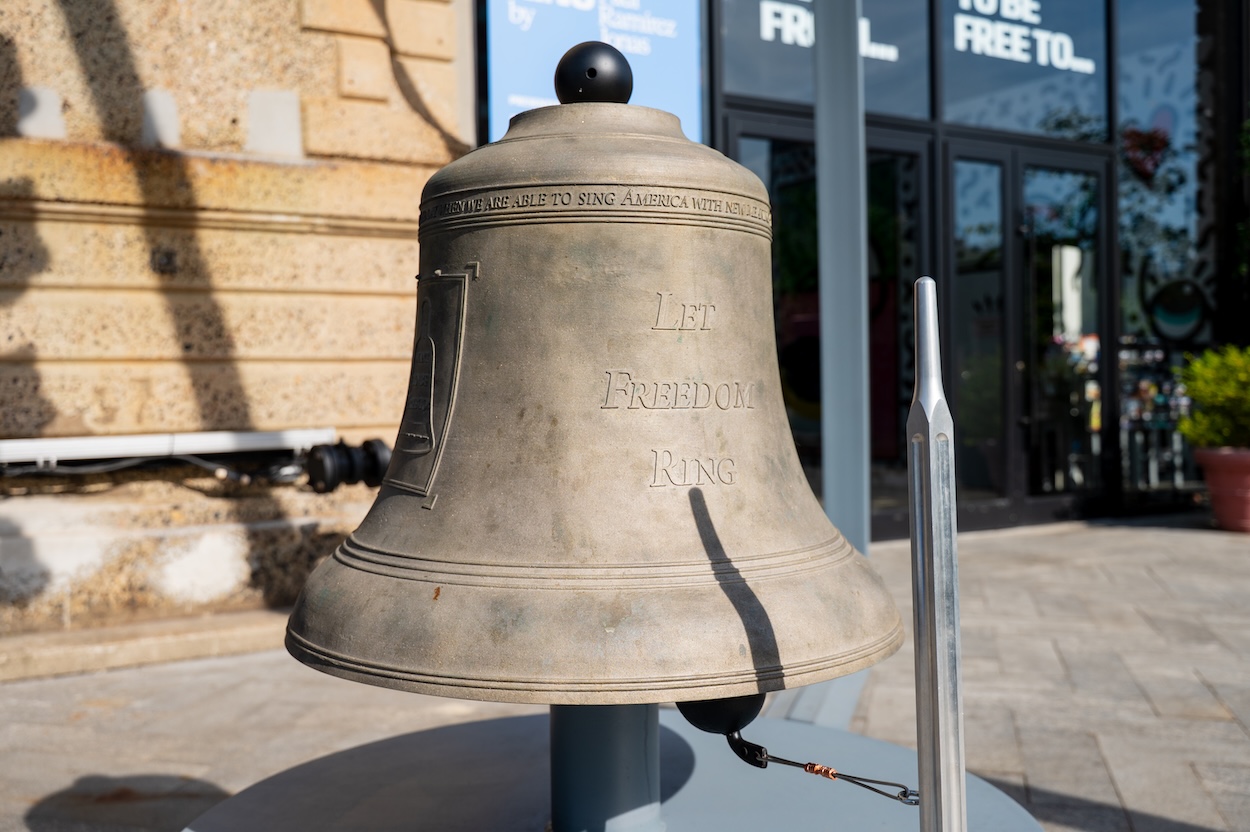
Photo by Andriana Ortiz.
…
Visitors are invited to complete the phrases “I want to be free to…” and “I want to be free from….” What have you learned through previous iterations of the project about the different ways people understand and articulate freedom?
Perhaps not surprisingly that freedom means very different things to people. We all want it, but our lived experiences and our histories shape if we want to be free from something, or free to do something. Racism is the most obvious: it comes up a lot as an obstacle to freedom, but for many it is not even in their radar. On the other hand, there is also a lot of commonality, everyone seems to want to be free from a version of our over scheduled, over worked, over mediated lives. But I really should not edit or reduce what people have to say. Like many of my other works, what matters to me is that the piece be a precise frame, but that within it a multitude of voices can be expressed. What matters is what all of these sentiments together represent, from “I want to be free to be myself” to “I want to be free from violence.”
Can you speak to what it has been like collaborating with the Association for Public Art? How has their long commitment to community engagement in Philadelphia influenced the way Let Freedom Ring has been presented and experienced in the city?
There is no substitute for experience. Charlotte Cohen and Susan Myers have tons of it and were thoughtful, deliberate and careful thought partners. Together we were able to navigate presenting this piece in a very politically divisive time, within the context of the 250th anniversary of our independence, within the context of the city that is the cradle of our democracy. They make it look easy, but it took a lot of planning and sensitivity to find a site and create public programming that allowed the piece to remain open and welcoming to all.
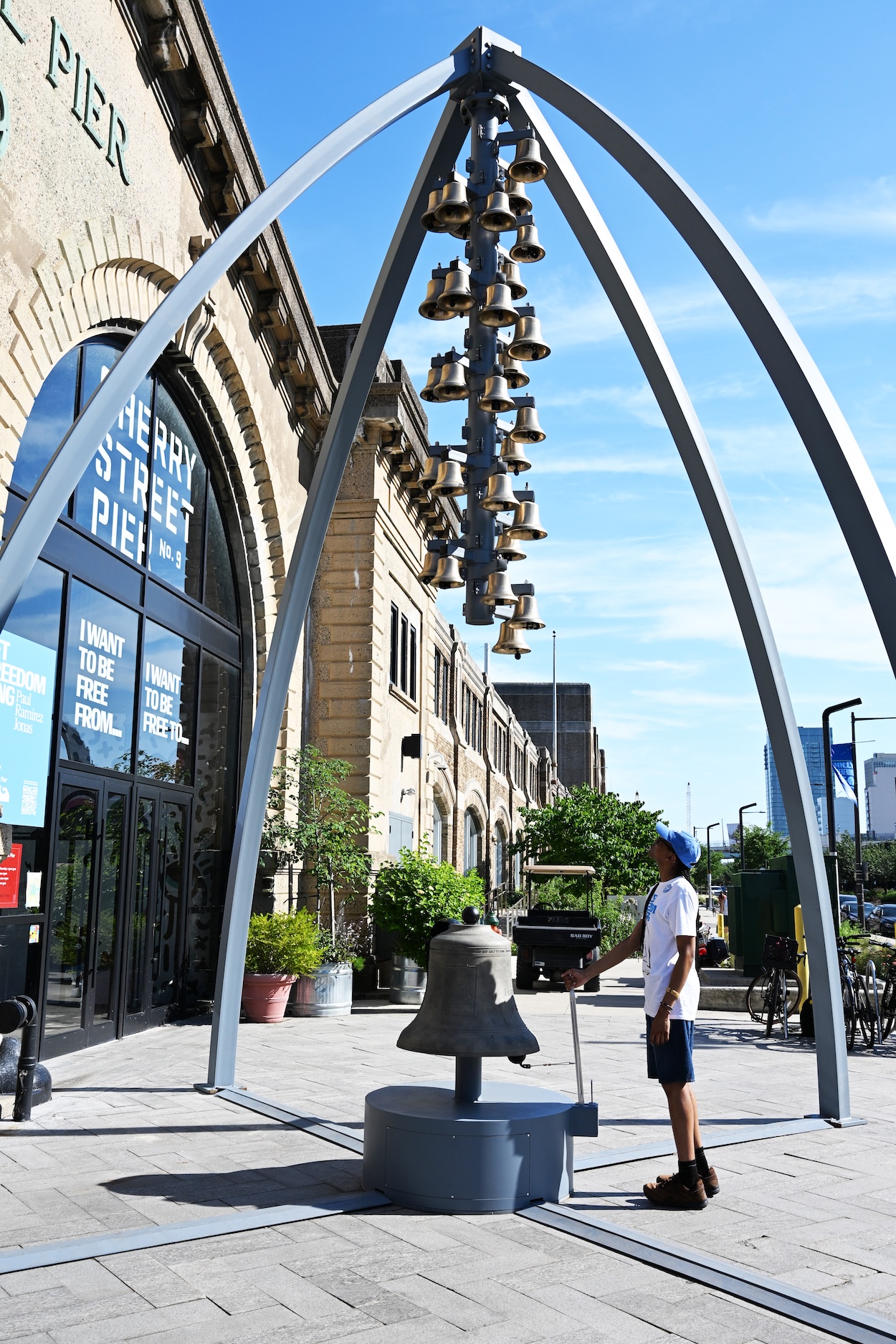
Photo by Julia Perciasepe for Association for Public Art.
…
Much of your practice explores exchange, participation and the relationship between individual and collective action. How does Let Freedom Ring build on those long-standing interests, and what makes this project distinct within your body of work?
Maybe because I like participation my work tends to be iterative. You can only learn how people participate by doing it. You cannot imagine it in your studio. You need to put something out there, let real people participate, observe, and then refine it over and over again. I made my first piece where people strike a sculpture to animate a patriotic song in 1993! It produced fun but did not incite any thoughts. I have made pieces with bells and made sounds that induce self reflection but fail to make you think about how you fit in a collective, or have no historical dimension, or are too abstract, or come out flat. I think in this vein of my work, Let Freedom Ring finally strikes the right note.