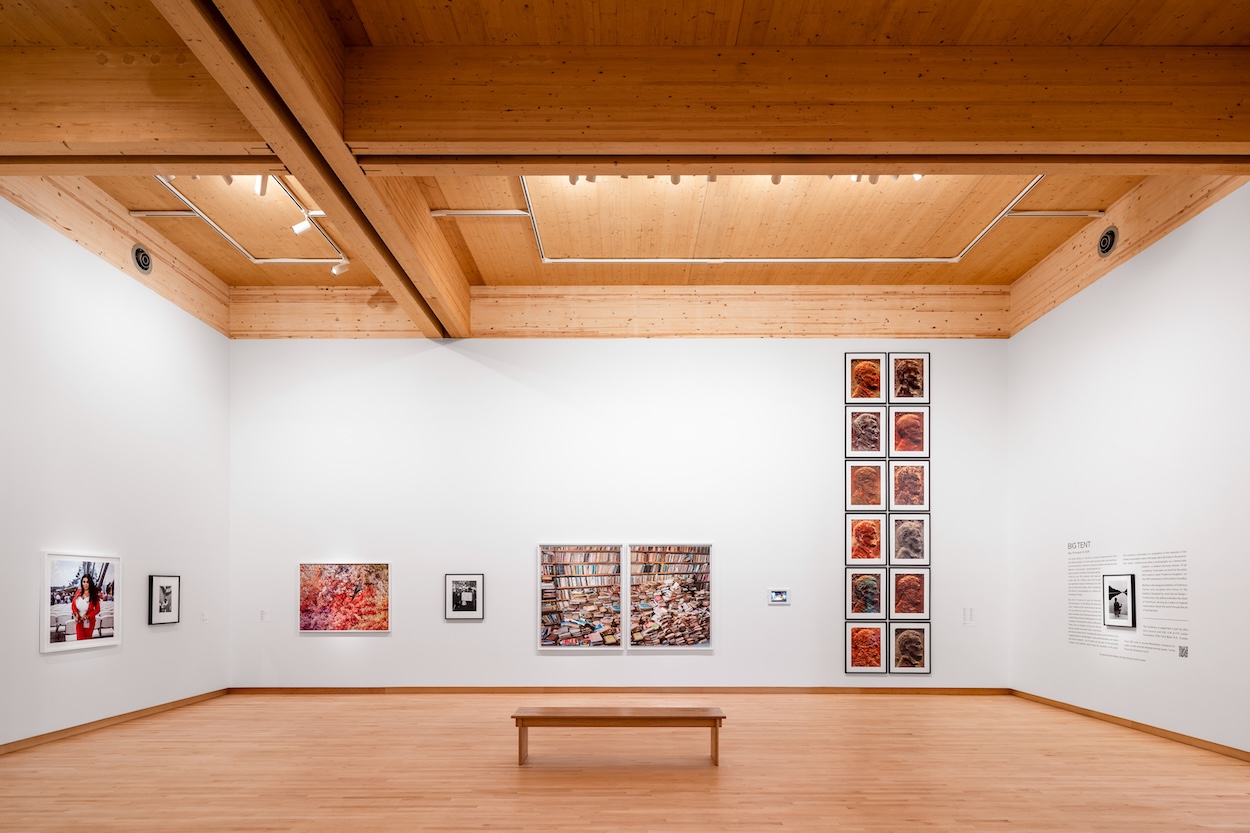
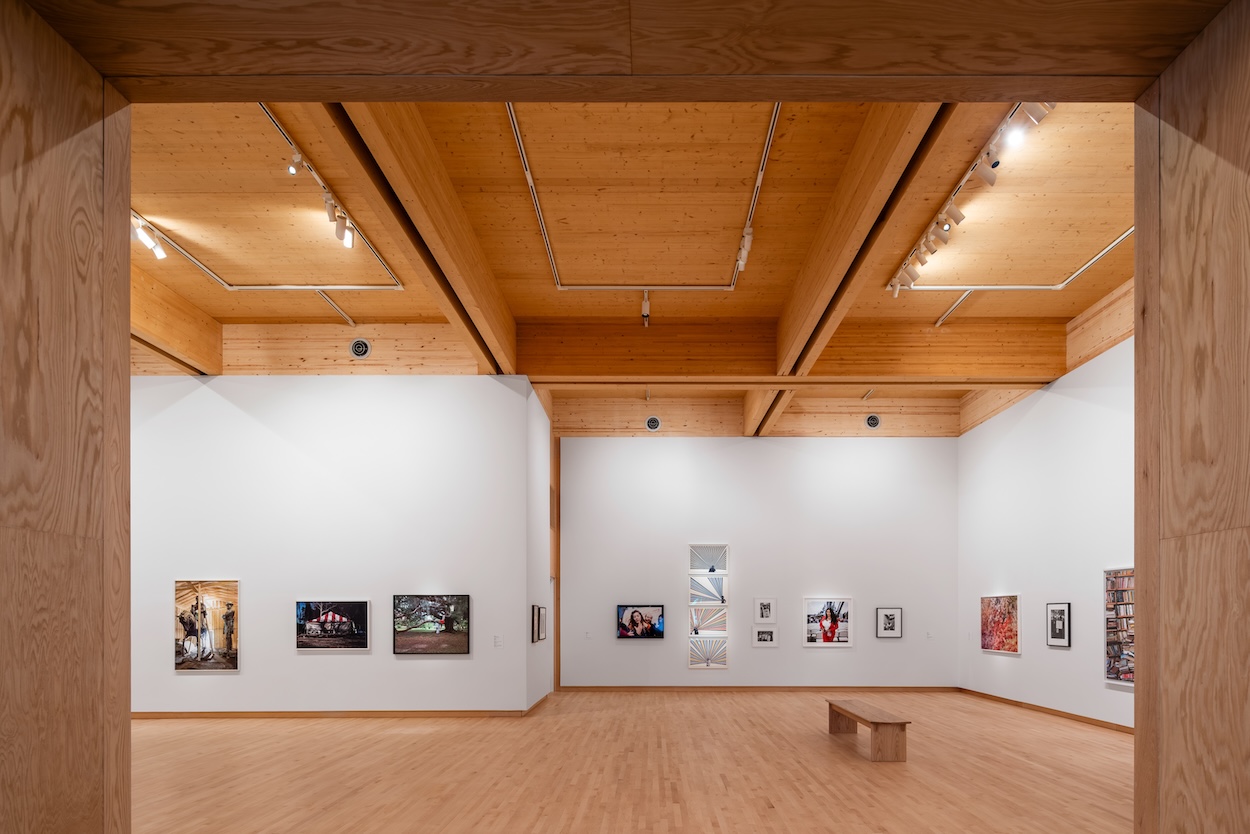
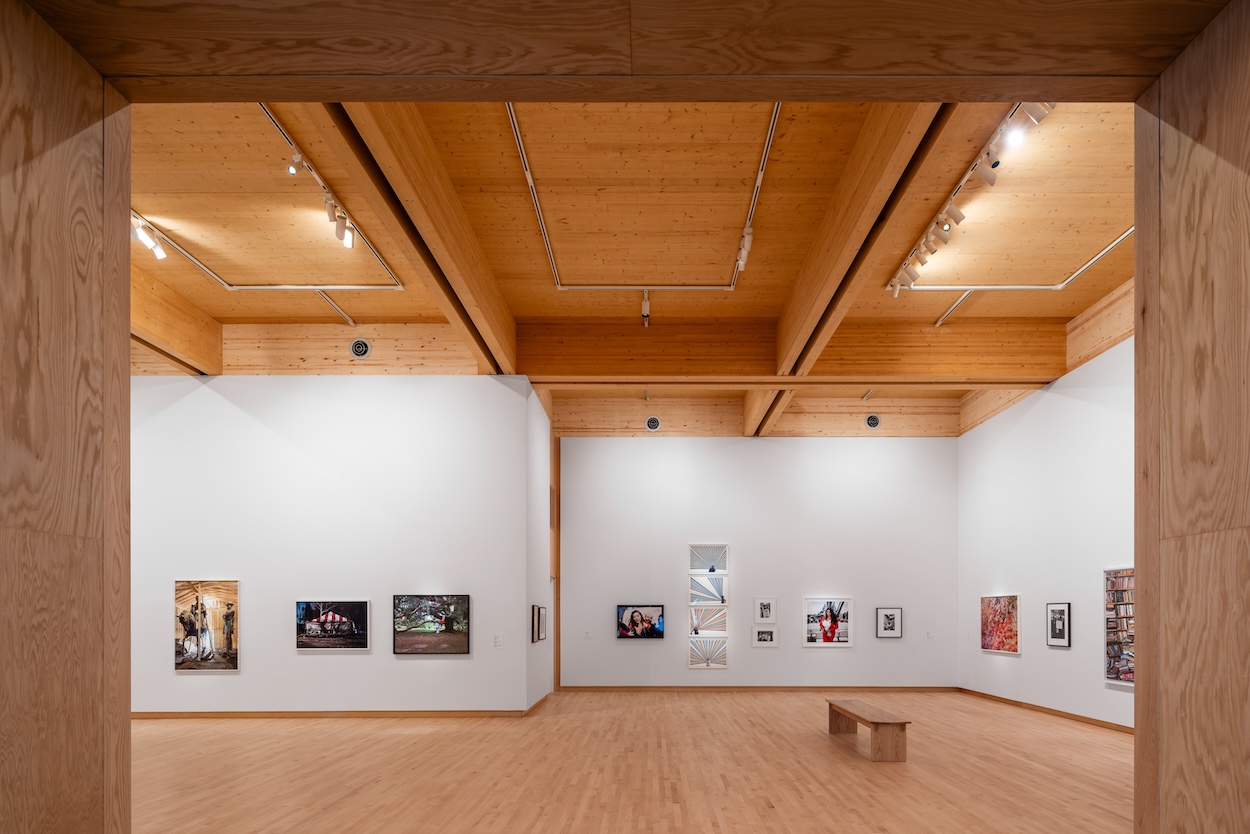
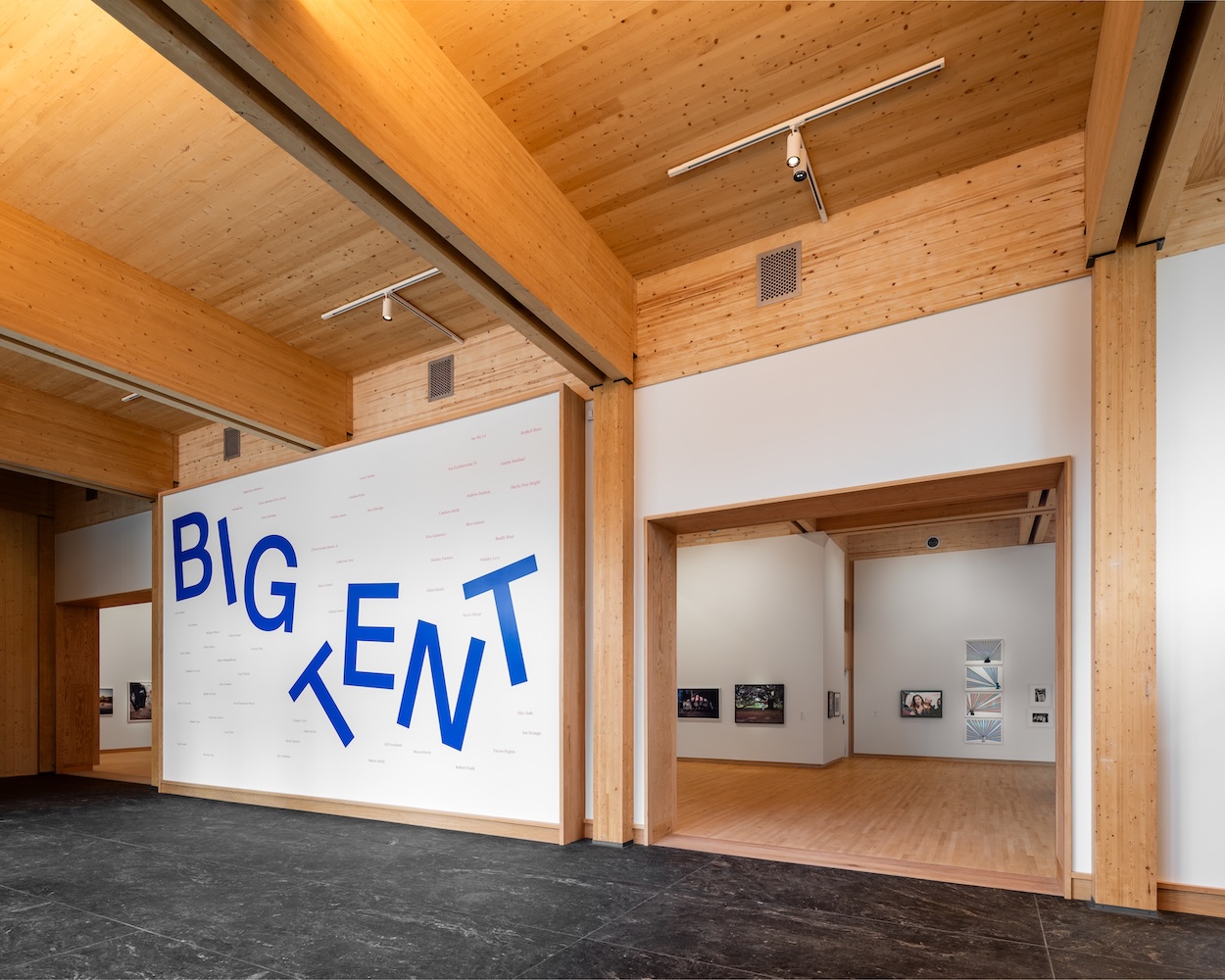
What can photography do for democracy? That is the provocation at the heart of “Big Tent,” the inaugural exhibition at the newly built FotoFocus Center in Cincinnati, and it arrives at a moment when the question feels anything but rhetorical. Housed in a purpose-built 14,700-square-foot structure designed for photographic exhibitions and year-round programming, “Big Tent” brings together over fifty artists, among them Robert Frank, Dawoud Bey, Tina Barney, Gordon Parks, Catherine Opie, and Alec Soth, spanning nearly a century of American image-making.
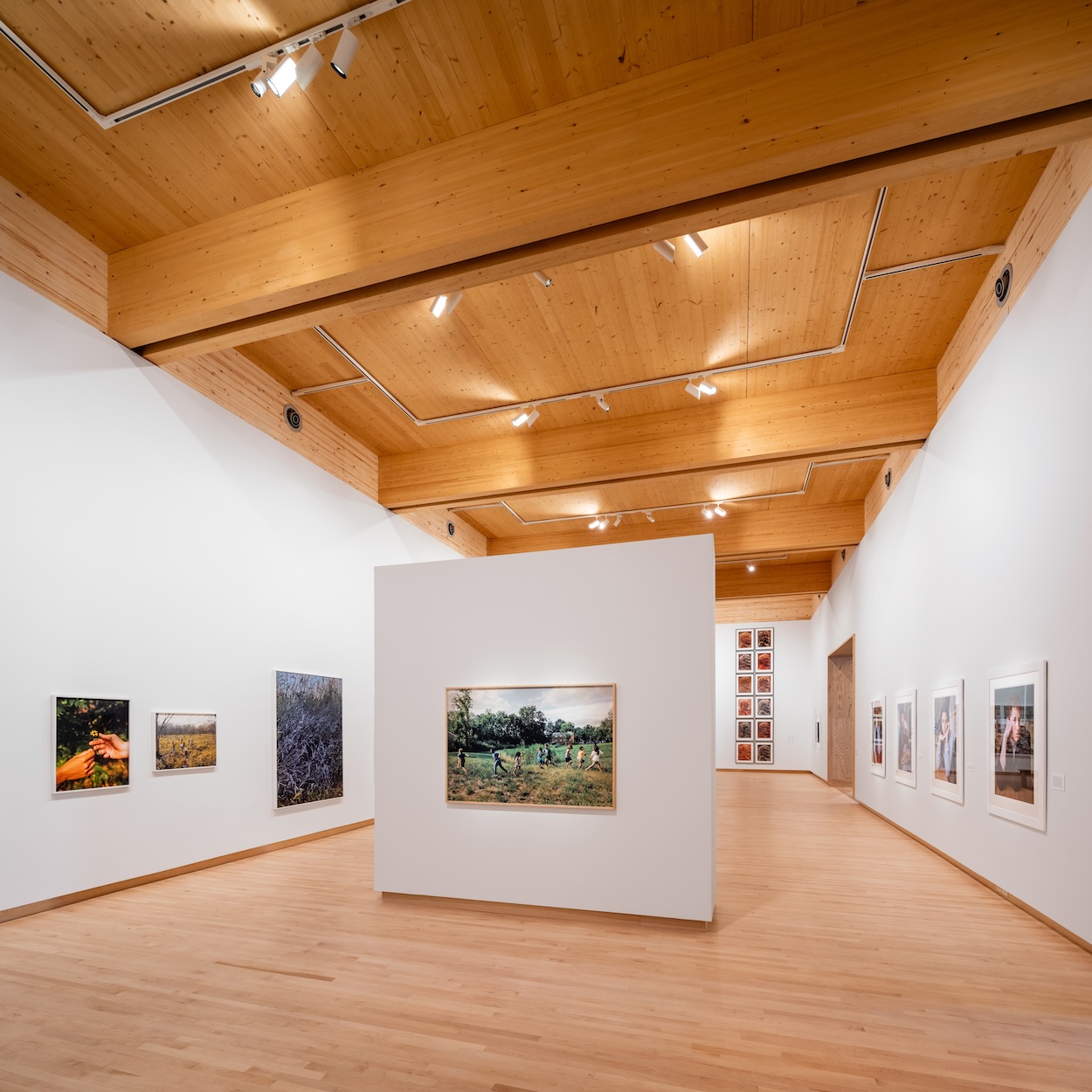
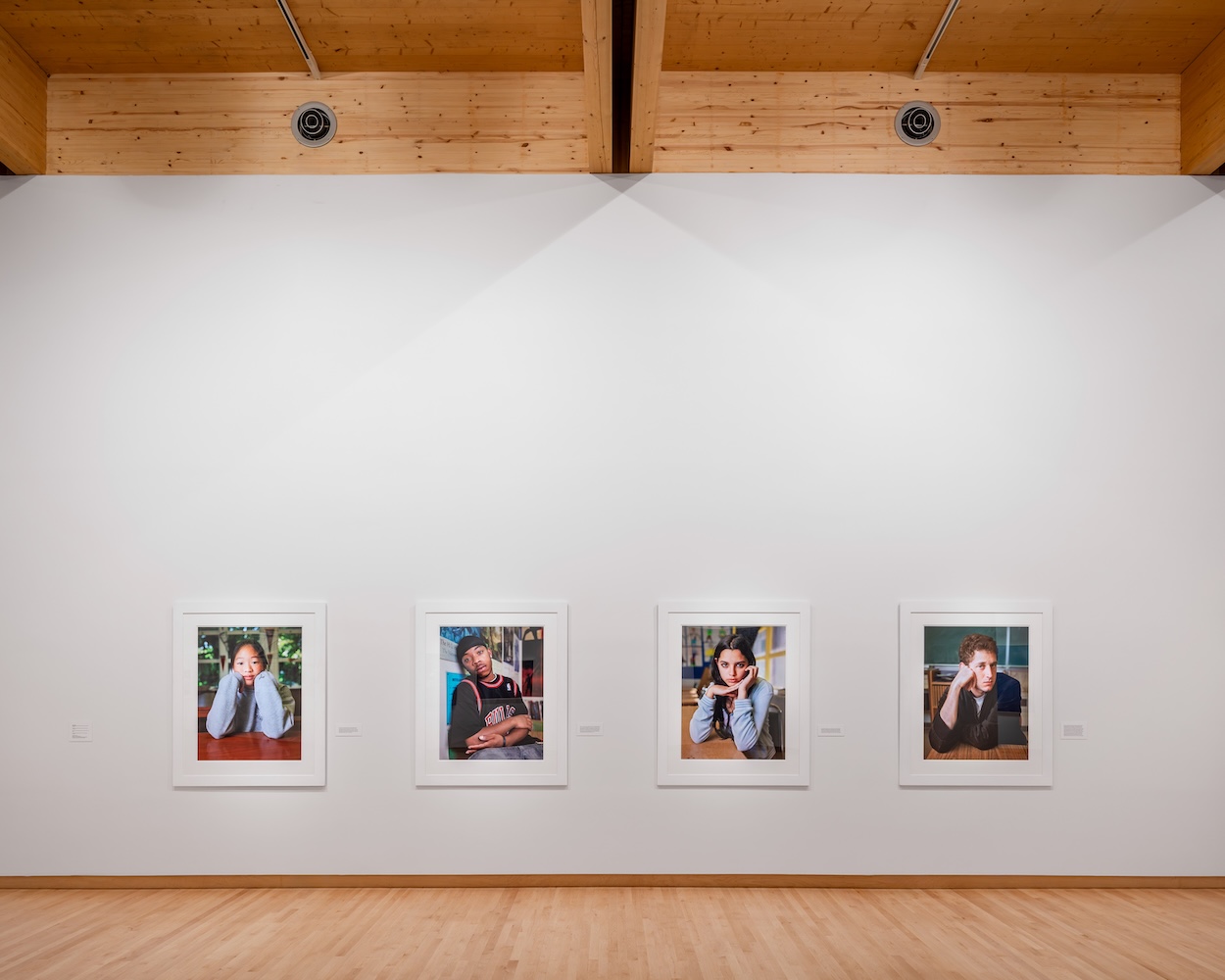
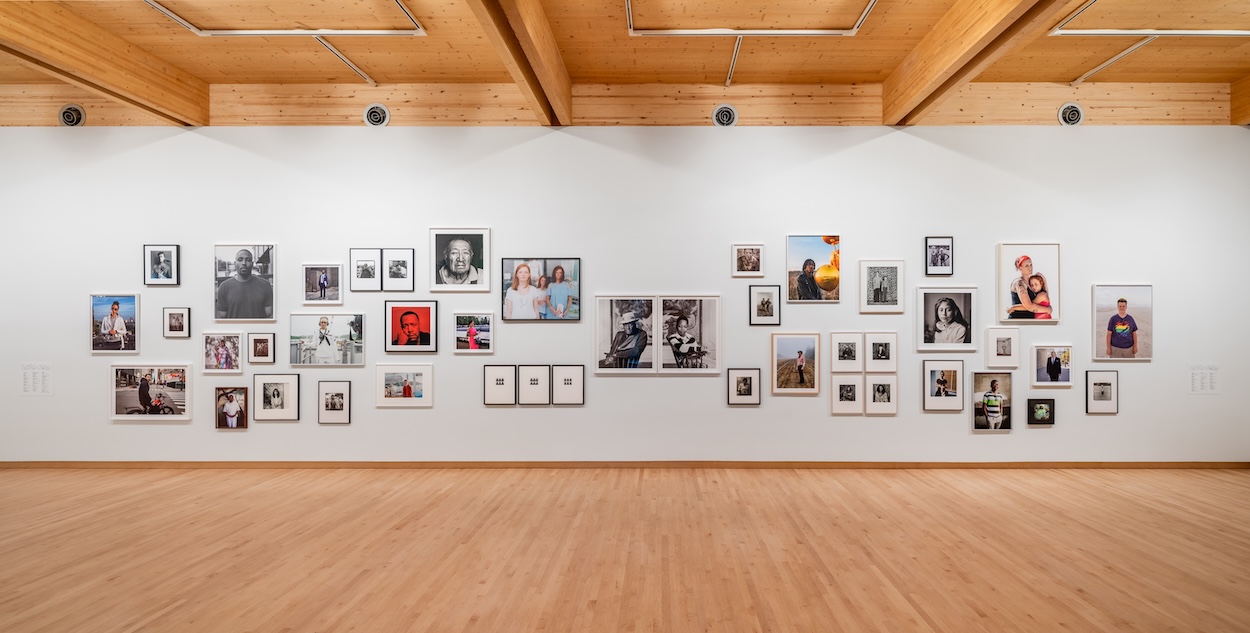
The through-line of “Big Tent” is portraiture: its long, radical history of placing ordinary people at the center of the frame. Partly inspired by Amanda Gorman’s 2017 poem In This Place (An American Lyric), the exhibition moves through cities, landscapes, and communities across the United States, weaving together faces, perspectives, and photographic styles as different as the country itself. The result is diversity far from being a source of division, but the very texture of American life.
Courtesy of Wes Battoclette…
“While ‘Big Tent’ is something of a defiant assertion in the current political climate,” says FotoFocus Artistic Director Kevin Moore, “it is also an accurate characterization of FotoFocus Center, a place where all are welcome and all perspectives matter.” To learn more about the exhibition and the highly anticipated space itself, Surface spoke with Moore and FotoFocus executive director Katherine Siegwarth.
Courtesy of Wes Battoclette…
FotoFocus has spent more than 15 years building a platform for photography and lens-based art across the Greater Cincinnati region. What does it mean to open a permanent, purpose-built home for the organization at this particular moment, both for FotoFocus itself and for the city’s broader cultural landscape?
Kevin Moore: It gives us more of an identity and presence, I hope, especially for audiences living outside of the region. I think because of the nature of our organization—collaborative, ephemeral (biennials), and as funders—we’ve been hard to understand and often confused with FotoFest in Texas. We will look like more of a proper institution now, with year-round exhibitions in a permanent home, and, tangentially, the biennial, the Fall symposium, the Spring lecture.
Katherine Siegwarth: Throughout the last 15 years, what has been most critical about FotoFocus programming is bringing people together for inspired conversations. To now have a facility in which we can augment and expand this practice, especially when so much of our days are mediated through computer and phone screens, is an exciting moment. We have been fortunate in our partnerships with other institutions that have allowed us to make use of their space or coproduce programming, but through the opening of FotoFocus Center, we can now cement ourselves as a pillar of this city in a way not previously possible.
Courtesy of Wes Battoclette…
Tell us about the term ‘big tent’ and how it emerged as the right framework for inaugurating the new Center?
KS: We knew the first exhibition should feel joyous and celebratory, allude to our rich history, as well as speak to the contemporary moment. Kevin had a strong preliminary framework for the exhibition, and once he landed on the title ‘Big Tent,’ things came together quickly.
KM: I’m a news junky, a history junky too. “Big tent” has been bandied about a lot by pundits and political strategists in the last few years as, I think, our democracy is very clearly in crisis. The big tent is a metaphor for coalition building across a broad range of demographics, which is, of course, what democracy itself is fundamentally. From an exhibition standpoint, it seemed appropriate to start with a show that was explicitly welcoming, as that’s the kind of organization we are—an organization that strives to offer a wide range of perspectives on the world by giving a platform to artists of different backgrounds and who communicate in very different ways. Photography is such a messy medium, which is something I love about it. It comes in many forms. And so do audience members, if you think about it. The big tent is both the artists and their messaging and the audience in all its diversity. Also, the first Art Hub, which we commissioned from Jose Garcia in 2014, was literally a big tent. It’s kind of an inside joke to refer to this big, beautiful building as Jose’s new big tent.
Courtesy of Wes Battoclette…
How did you approach building conversations between canonical and contemporary artists—and between vastly different generations, styles, and photographic practices—within ‘Big Tent?’
KM: I’ve curated enough shows by now that I trust my own instincts when it comes to selecting work. I try to do it quickly. But a theme show needs structure and ‘Big Tent’ isn’t quite enough—diversity, ok. How is a show like this structured? Whose work is included? It needed additional undergirding, a narrative, so I turned to poetry and quickly landed on a particular poem by Amanda Gorman, “In This Place (An American Lyric).” I was drawn to it at first because of the place reference, which in my mind was this place, meaning, the new building.
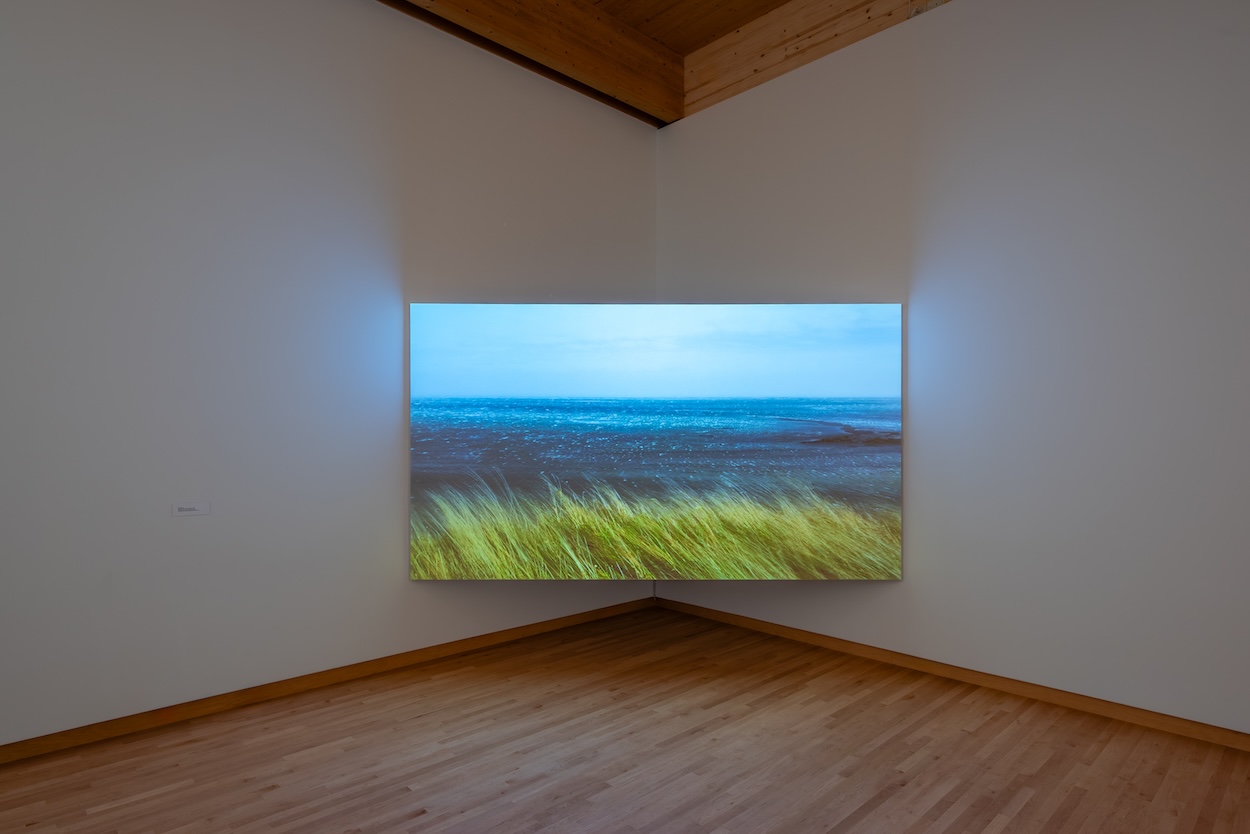
Place is also the point in time, the 250th anniversary of the U.S. In Gorman’s poem, though, place is places around the country: Washington, DC, Charlotte, Michigan, Texas, L.A. Poetry, of course, is made up of images. In Gorman’s poem, there are “golden fields” and “brown floodwaters” and “men so white they gleam blue,” etc. Those images and that narrative is what led me to select very specific and often unexpected works in the exhibition, which also dictated the order of the installation, so that you get a Jill Freedman next to a Moyra Davey, a Robert Frank next to a Trevor Paglen. The visitor doesn’t need to know this or follow the poem literally, but will, I hope, intuit a storyline in the progression of images. An additional technical note: I was also trying to include a lot of artists from FotoFocus’s 14-year history, and looking at regional artists, and artists I wanted to work with in future.
Portraiture appears as a central thread throughout ‘Big Tent.’ What does photography uniquely offer as a democratic medium when it comes to visibility, civic identity, and self-representation?
KM: Please read my essay in the catalogue! It starts with Frederick Douglass, the most photographed person in 19th-century America. Douglass believed that photography was a great leveling medium, meaning everyone could be photographed and thus seen in a real political sense, as the medium had certain conventions—you dressed up, you posed in front of a lush backdrop—and this, symbolically, put citizens of all levels of society on equal footing. And, of course, photography eventually became a medium that everyone could use, such that, today—this is from my essay—everyone is a citizen reporter, wielding cell-phone cameras at every significant social or political event and “publishing”/posting the results immediately. This, of course, has not led to the utopian democracy through photography that Douglass and others had thought it (and later, the internet) would achieve, but has led to a whole host of new problems having to do with excesses of imagery, their manipulation, and potentially toxic influence over populations.
KS: The exhibition pulls together a wonderful range of portraiture in its final crescendo. For an exhibition whose title refers to bringing a myriad and potentially disparate array of voices together, ‘Big Tent’ demonstrates the beautiful diversity possible within this country.
Courtesy of Wes Battoclette…
How closely did the development of the building and the curatorial vision for ‘Big Tent’ evolve alongside one another?
KM: I think of spaces as boxes to fill from a curatorial standpoint. I had been involved with Jose Garcia during the process of designing the building, weighing in especially on the kinds of galleries I’d like to see built. Some pleasant surprises along the way were the shift to the wood-timber structure, the exposed wood ceilings, and the height of the gallery walls. We played around with these features a bit in the installation, running, for example, the Moyra Davey Copperheads grid up the wall to just under beams.
KS: FotoFocus was very fortunate to work with an architect who has a long history with this organization and therefore was very interested in how our ethos and values could be represented within the architecture. To Kevin’s mention of the cross-laminated timber structure, that was an opportunistic challenge! As steel prices escalated worldwide, the architect pivoted, and we were the first in the region to submit a permit for a CLT facility. The bare wood ceilings create a remarkably intimate space, even with the grandeur of 20’ ceiling heights!
But the sense of elevated yet casual speaks to how FotoFocus likes to present itself we are a side for gathering that is both serious and welcoming. Additionally, all the vantage points from our bank of windows speaks to a desire to situate this facility within the Greater Cincinnati region, making it by and for the city: Cincinnati is made-up of 52 distinct neighborhoods and from the Center’s windows, six of those neighborhoods are visible.
Courtesy of Wes Battoclette…
With the opening of the new FotoFocus Center, how do you envision the organization expanding the kinds of conversations, audiences, and programming it can support moving forward?
KS: The new facility allows us to quite literally expand our conversations by hosting exhibitions and programming throughout the year. We’re already excited and discussing the different types of photography exhibitions possible—photojournalistic, fashion, science-based. The facility allows us to be a site of interdisciplinary conversations and therefore host a myriad of photographers, guest curators, and other creatives.
KM: We (myself and guest curators) are able to organize a lot more exhibitions and now have the freedom to make our own choices, whereas before we did shows every two years and in host institutions with their own specific missions and audiences. Sometimes that dynamic led to interesting and unexpected choices. But now we have more freedom and can shape our own audience. That comes with a great responsibility, I realize. My approach is to present great ideas but keep the conversation very open.
What role do you believe photography, and institutions like FotoFocus, can play in shaping civic discourse today?
KS: I still believe in photography’s ability to move someone, to shift opinions, to allow us to see a new perspective. However in this day and age it’s harder and harder to know fact from fiction, “real” photography from A.I., and I think it is critical that institutions like FotoFocus bring together constructive, in-person dialogues. So opportunities are remarkably important in expanding visual literacy while we all consider our constantly evolving realities.
KM: Ask me on a bad day and I will say, cynically, very little. Because I think the noise from podcasts and TikTok and other forms of communication are drowning out more traditional forms of engagement, such as art institutions, books, education more generally. Yet simultaneously, I do think, increasingly so, people are turning to art as an alternative to all the easily digestible yammering they encounter on screens. Art seen in an environment—experienced as an installation—is physical and social as well as intellectual. I think people as biological and social beings still crave those experiences.
Courtesy of Wes Battoclette…
Big Tent brings together a diverse roster of artists under one roof. How did you approach curating a group this expansive, and what does it mean for FotoFocus Center to open its inaugural exhibition with a statement about American identity?
KM: It’s hard to avoid the question of who we are as a nation and as a people at this point in our 250-year history. What are we in the process of becoming?
The exhibition draws inspiration from Amanda Gorman’s 2017 poem “In This Place (An American Lyric),” using it almost as a roadmap through the American landscape. How does poetry function as a curatorial framework for a visual medium like photography?
KM: I was an English literature major as an undergraduate and, when I transitioned to art history as a graduate student, I often made comparisons between words and images, especially in terms of the mechanics of, say, reading a poem or reading a painting. I suppose I still think that way, and/or find it useful or stimulating or refreshing to know how to interpret the world through multiple mediums. I think we’re all in a moment in history when it is essential to know how to assess what’s happening—and certainly photographs of what’s happening—in dynamic and creative ways, especially as we compete with A.I. and other technologies that threaten to assess for us.