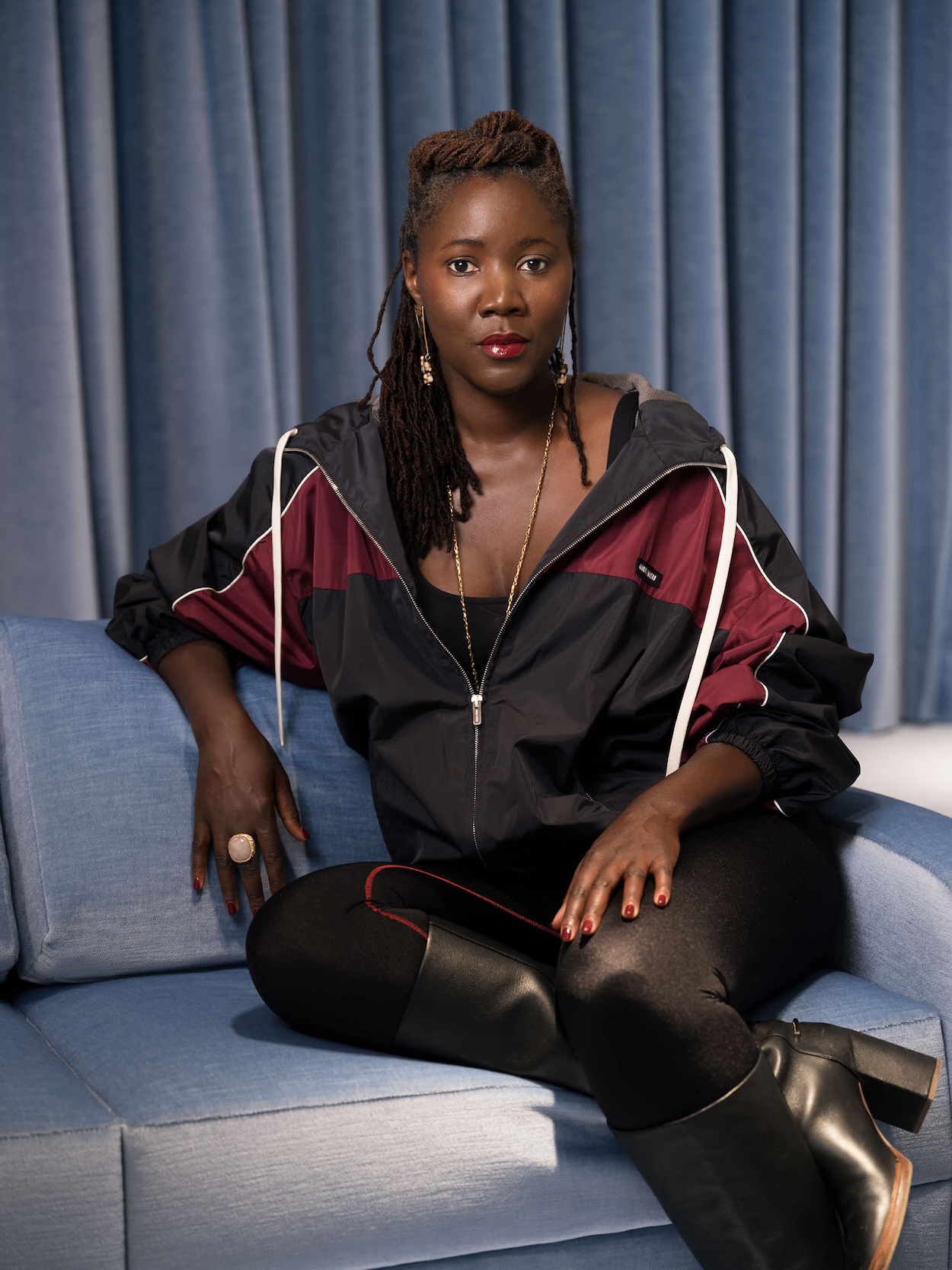
Alice Diop approaches art as an act of service. From documentaries depicting life in working-class Parisian exurbs and refugee hospitals to her breakthrough narrative feature Saint Omer (2022), a poignant exploration of motherhood and memory which earned the Grand Jury Prize at Venice Film Festival, the French-Senegalese filmmaker’s 20-year career has followed a sense of duty to those whom mainstream institutions have historically overlooked.
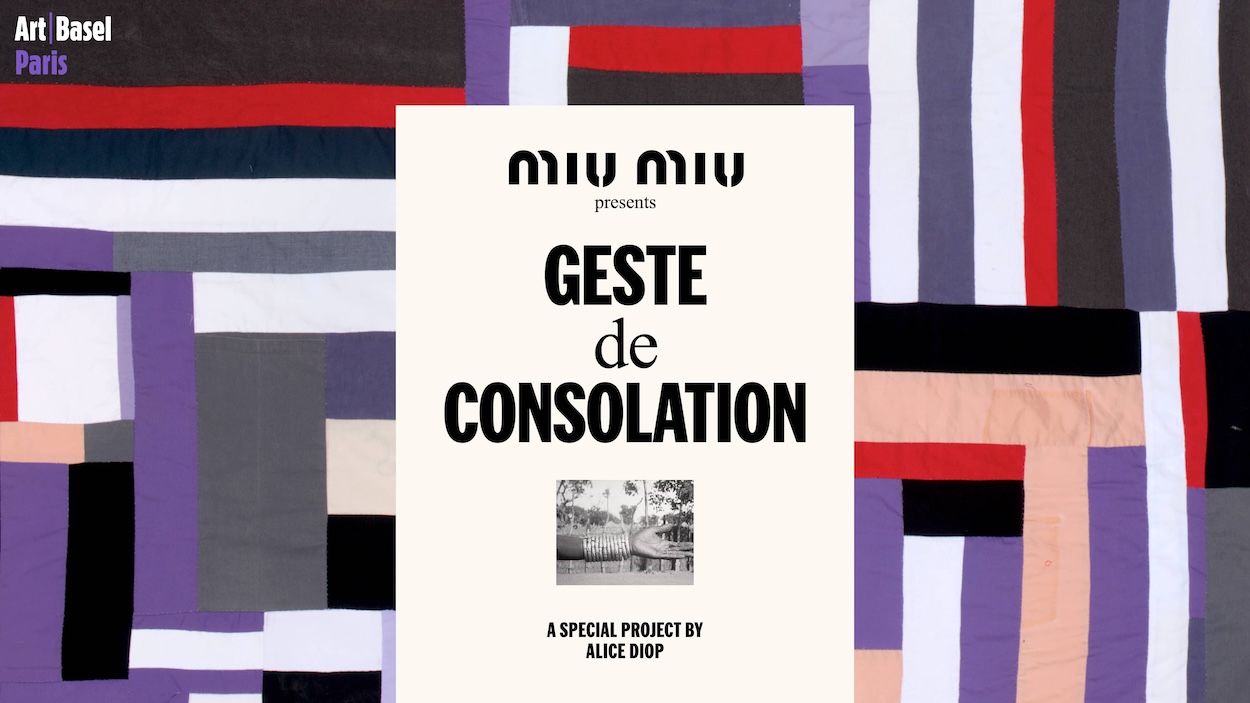
Now, Diop marks her first foray into exhibition-making this October with “Geste de Consolation”—Miu Miu’s official Art Basel Paris Public Program commission—a genre-spanning assemblage of significant artwork by Black women poets, sculptors, choreographers, composers, and more.
Courtesy of Miu Miu…
The creative partnership with Miu Miu began in 2025, when Miuccia Prada commissioned Diop’s short film Fragments for Venus for the house’s Women’s Tales anthology, which also includes original works by Agnès Varda, Claire Denis, and Ava DuVernay. In Fragments, Diop confronts the history of Black women’s portrayals in fine art: a dehumanizing, fetishizing gaze which she seeks to repair through her own lens. “Geste de Consolation” extends this effort into narrativized space at the historic Palais d’Iéna.
Ahead of the October 21 opening, Surface sat down with Diop for a conversation about transitioning from the screen into space, the featured sculptor whose work has never been shown in France, and why artistic resonance transcends representation.
What has it been like to take on the role of curator for the first time?
This is a new adventure. In my own practice as a filmmaker, I’m attentive to sculpture, painting, literature, and poetry, but I don’t see myself as a visual artist. When Miuccia Prada offered me the opportunity, I thought it was very audacious on her part—I had never imagined myself as the curator of an exhibition—but I allowed myself to follow her intuition. Sometimes you have to trust people who trust in you, even if you may not necessarily trust yourself.
How does “Geste de Consolation” expand on the conversation you started exploring with Miu Miu in Fragments for Venus?
I felt I could accept the commission because I always conceived this exhibition as an extension of the film’s intentions. Translating them into space with bodies and physicality, sharing them over the course of a week, opens things that weren’t possible in a short film. It’s been especially joyous to shelter all these extraordinary works of art in the highly symbolic space of the Palais d’Iéna, and to use it as a place where all kinds of viewers can gather and be nourished.
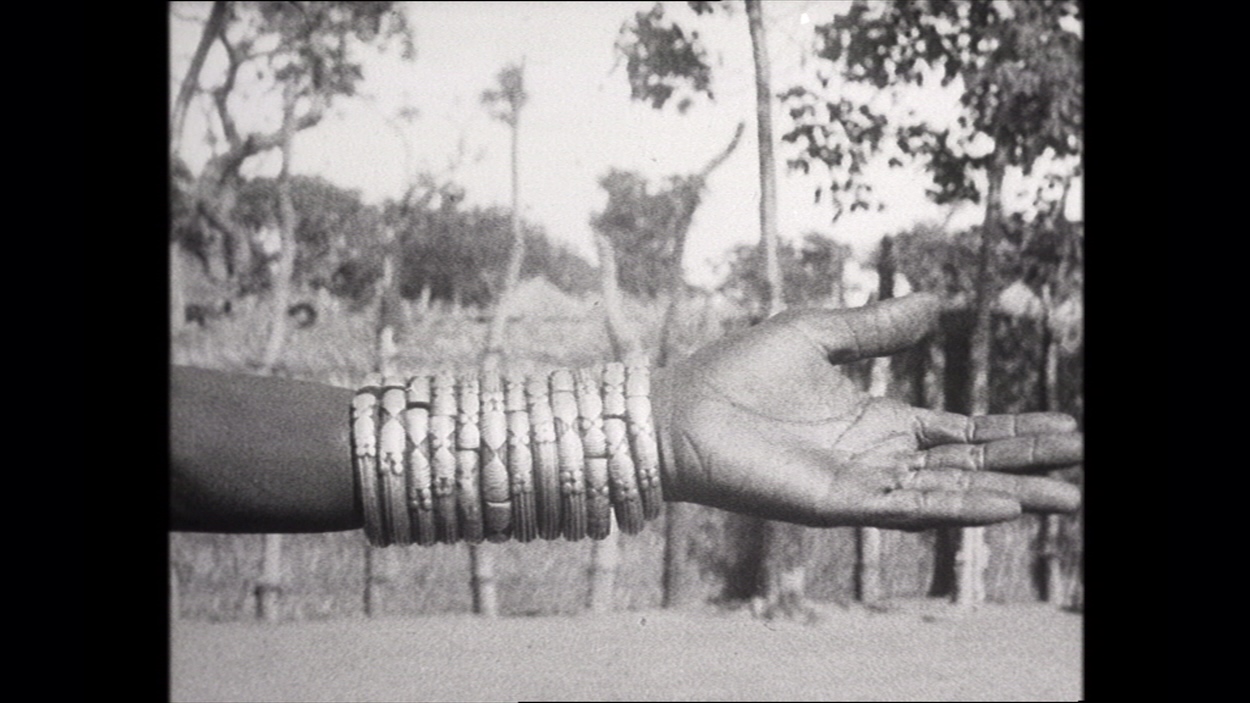
Sénégal en saison sèche, FPA, 1920…
How did you go about selecting artists?
I didn’t approach this as a traditional exhibition; I wasn’t thinking in terms of disciplines. I worked from the notion of consolation, which has been at the center of my work for years. To deploy that notion spatially, I asked some of the Black women artists who inspire me to lend me a work that would serve as a reparation for art history’s fetishizing visions and take viewers on an emotional journey of consolation through the exhibition path. It’s a very subjective journey. I’m not trying to make an exhaustive representation of Black women in art today—it’s specifically artists who nourish me the most at this moment.
Why begin the exhibition with an installation of your own?
I realized that it wasn’t enough to simply use the art that had been offered to me—I also had to think about consolation in my own work. Each of my films has healed something very specific that I wasn’t necessarily aware of as it happened, but that then modifies my way of being in the world. I’m always negotiating this balance between what it does for me to make the films, and what it does for others to see them. That’s how I came to the two-screen video installation of archival images and film excerpts that have shaped me.
Is there an artist you’re particularly excited to feature?
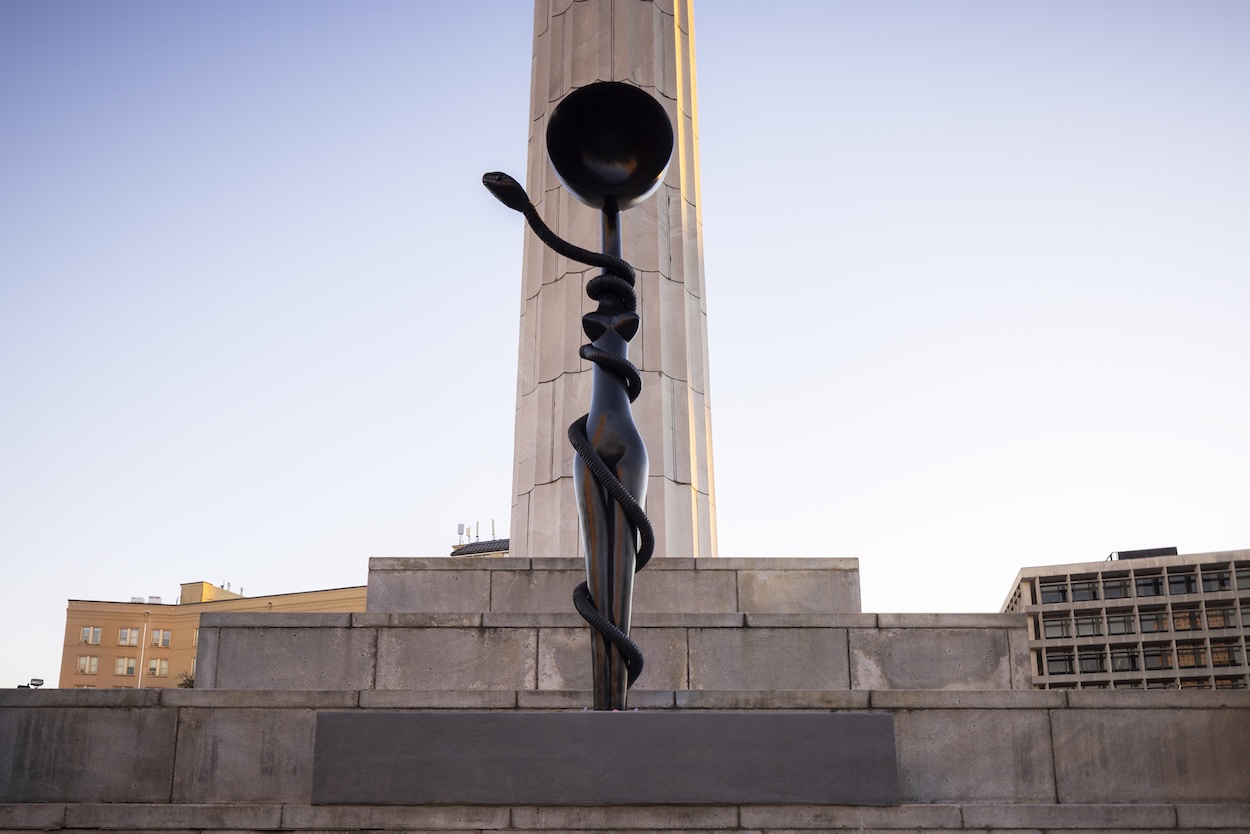
The final piece in the exhibition is a bronze sculpture by Simone Leigh. She won the Golden Lion in Venice, she’ll have a career retrospective at the Royal Academy in London in 2027, and yet her work has never been shown in France. It’s a scandal on the one hand, but also a marvelous opportunity to allow French audiences to discover the monumentality and sophistication of her work.
Simone Leigh, Sentinel (Mami Wata)…
Your work is often described as speaking from the margins. What does that framing miss?
Recently I was at a conference with the thinker and writer Robin Coste Lewis, and someone asked us about this margin. She answered, well, what is the margin? Your margin? So, I’m not talking from the margin; I’m talking from the center of my world. I’m trying to describe my vision, challenge certain things held to be true, and shine light on places people may not generally see. My mission hasn’t changed, but the power to say something from where we stand is tremendously important today, when the danger of fascism is everywhere we look.
Can a work speak to someone whose experience it doesn’t depict?
As a Black woman growing up in Europe, I have spent my life constructing myself out of art, 90 percent of which does not directly represent me, and yet completely concerns me. An artwork can move you, shift you, transform you, whether or not it’s specifically talking about you. I think it’s actually racist to say that a film about a Black woman does not speak to white people. It’s a reductive notion of the power of art, and it’s also a problematic idea of identity. I deeply believe in universality.