Being inspired by your parents’ love story isn’t unusual. What’s less common is the direction that inspiration takes. For Hannah Gottlieb-Graham, President & founder of ALMA PR, her parents’ relationship became a lens onto music, art, anthropology, and research—the same disciplines that now form the foundation of her public relations firm. Working alongside her partner in both life and business, Andrew Samuels, a former corporate lawyer now serving as COO and creative director, Gottlieb-Graham has built ALMA into one of the most respected names in arts and culture PR, earning a spot among the industry’s 50 most influential firms and a client roster that includes the International Center of Photography, the National Academy of Design, and Southern Guild, among others. Surface sits down with Gottlieb-Graham and Samuels to unpack the building blocks behind ALMA’s rise.
Hannah, ALMA’s story opens with your parents’ 50-year relationship and its influence on how you think about storytelling. How directly did that upbringing shape the actual values ALMA operates by day to day?
Gottlieb-Graham: My parents are my blueprint. Growing up in a family of writers and researchers set the stage for me to avidly read, write, ask questions and think anthropologically about everything around me. They’re incredibly culturally attuned; they hosted regular dinner parties with visual artists, dancers, scientists, sociologists, musicians and fellow writers, which I now mimic in my own way in my Cobble Hill home.
Recently I’ve been reflecting on my parents’ roles as professors: the pride that they carried in mentorship landed them both on the excellent teachers list for over 30 years. I remember frequently coming home from school to see my father sitting side by side with a grad student, workshopping a short story that required refinement; or listening to my mother edit papers in the wee hours. They’ve been retired for over a decade and still, on a weekly basis a student reaches out to cite their impact. I carry these memories with me and show up every day with a similar commitment to my own team, guiding their growth.
A few months ago we organized a press trip to visit our client MacDowell, founded in 1907 as the nation’s oldest artist residency program, having hosted the likes of James Baldwin, Faith Ringgold, and Ta-Nehisi Coates on their New Hampshire campus. My father was in residence at MacDowell twice; during the trip I saw his name carved into a plaque in his old studio, where he finished his first novel. What a blessing it is to carry a throughline from one generation to the next. That moment hit me hard and reminded me just how valuable my parents’ contributions have been. It was emotional to stand there looking up at his name, seven journalists in tow, overwhelmed by the creative lineage that I carry.
In terms of the values that we uphold at ALMA, it’s all here in these stories. We value creativity and innovation, passion and impact, community and care. These are all qualities modeled by and learned from my family unit.
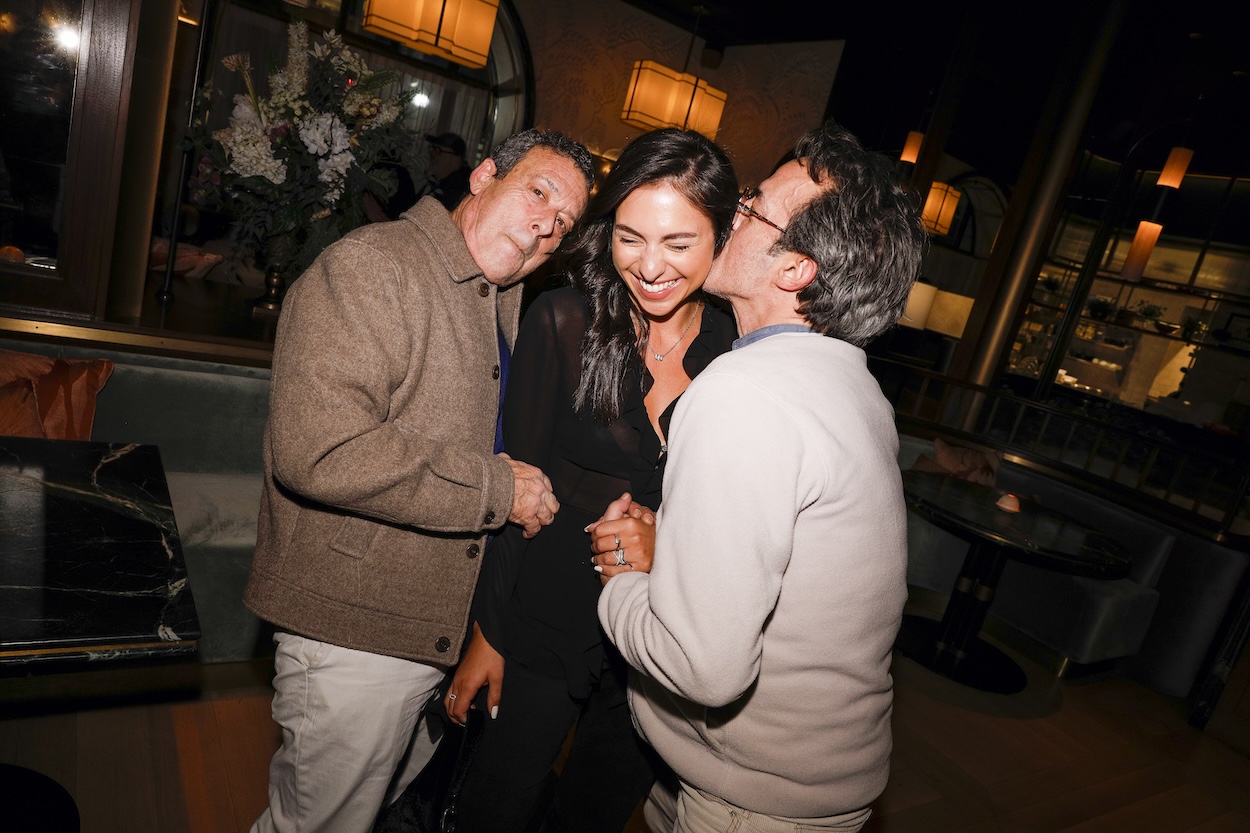
Jack Shainman, Hannah Gottlieb-Graham, and Carlos Vega at the opening of Jack Shainman Gallery in Tribeca.…
When you two first started working together, did you know ALMA would become what it is now, or has the vision evolved significantly since its founding?
Gottlieb-Graham: Definitely not. I believe in ambition without expectation and I think that dichotomy is important; I identify as a planner but I’m also a dreamer. I was taught by my romantic, novelist father that over-planning gets in the way of creativity. I also believe that the most successful entrepreneurs have an innate sense of agility: a chameleon-like discernment that informs their business’ expansion. ALMA has become something entirely different than it was when I first founded it seven years ago; and even so, the vision is the same.
Samuels: I never had any doubt in ALMA’s success. The first time I met Hannah, I spotted her across the room in a boxing gym. If you saw the way she worked the bag, you knew she was a hustler. It’s innate in who she is. So I never had any doubts about that.
ALMA was built on values, incorporating lessons that we both learned in our previous careers: Hannah from her editor and PR experiences and me from my decade spent as a corporate attorney. We identified gaps in those industries—specifically around the lack of mentorship, missed opportunities in client services, and possibilities in building a healthier team environment—and we built the agency as a counterpoint to what we each found missing in our respective roles.
What resulted was a firm environment that stripped hierarchy, invited diverse points of view and prioritized delivering unwavering client support on an intimate scale. That vision has been steadfast. Of course, the way we’ve approached these values has certainly evolved—we’re constantly evaluating industry shifts, challenging ourselves to develop new methods of storytelling, and building arms of the agency around those priorities.
How would you each describe the other’s role in ALMA’s growth?
Samuels: Hannah is an absolute optimist. My training as a corporate lawyer conditioned me to be a pessimist in many ways. I was taught to identify risks, gaps, and potential problems before they arose. Valuable as a lawyer, exhausting as a human.
Hannah balances her optimistic instinct beautifully, shaping everything she does, from how she mentors our team to how she stewards client relationships. She’s deeply solutions-oriented, but never in a way that feels naive; rather, she has an extraordinary ability to see possibilities where others see obstacles and to realize potential in those around her.
Hannah has an extraordinary gift for building trust, inspiring confidence, and bringing people together around a shared vision. Many of the relationships, opportunities, and moments of growth that have defined ALMA began because she was willing to believe in something before there was any proof it would work. She sees the best in people and in many ways, she’s taught me to do the same.
Gottlieb-Graham: I’d place Andrew offerings in two buckets: sensibilities and skillset.
In terms of sensibilities: he’s infused with a lawyer’s precision, quick thinking, and problem solving skills. He has a knack for balancing a powerful, senior framework with charm, warmth, and wit. He lends a strategic approach to everything that comes across his desk. His analytic thinking is an enormous value-add, not just for me but for our entire team of humanities-background storytellers, visual learners, and empaths.
I’ll call out one example in the “skillset” category that I’m grateful for every day: Andrew is an expert at reading people and situations, which was developed from his training as an attorney, constantly gathering information and surveilling reactions. He always sees things before I do, flagging observations as they develop—often a behavior or a potential issue—only for it to surface six months later. He trusts his gut on an instinctual level, so much so that early on in our professional partnership I was a bit afraid of it. I’ve since learned to completely embrace those gut instincts, while developing my own intuition.
To me, a true leader unfailingly humbles and impresses you. Andrew is this person for me; I couldn’t have built the business without his corporate education, experience, saviness, and perspective.
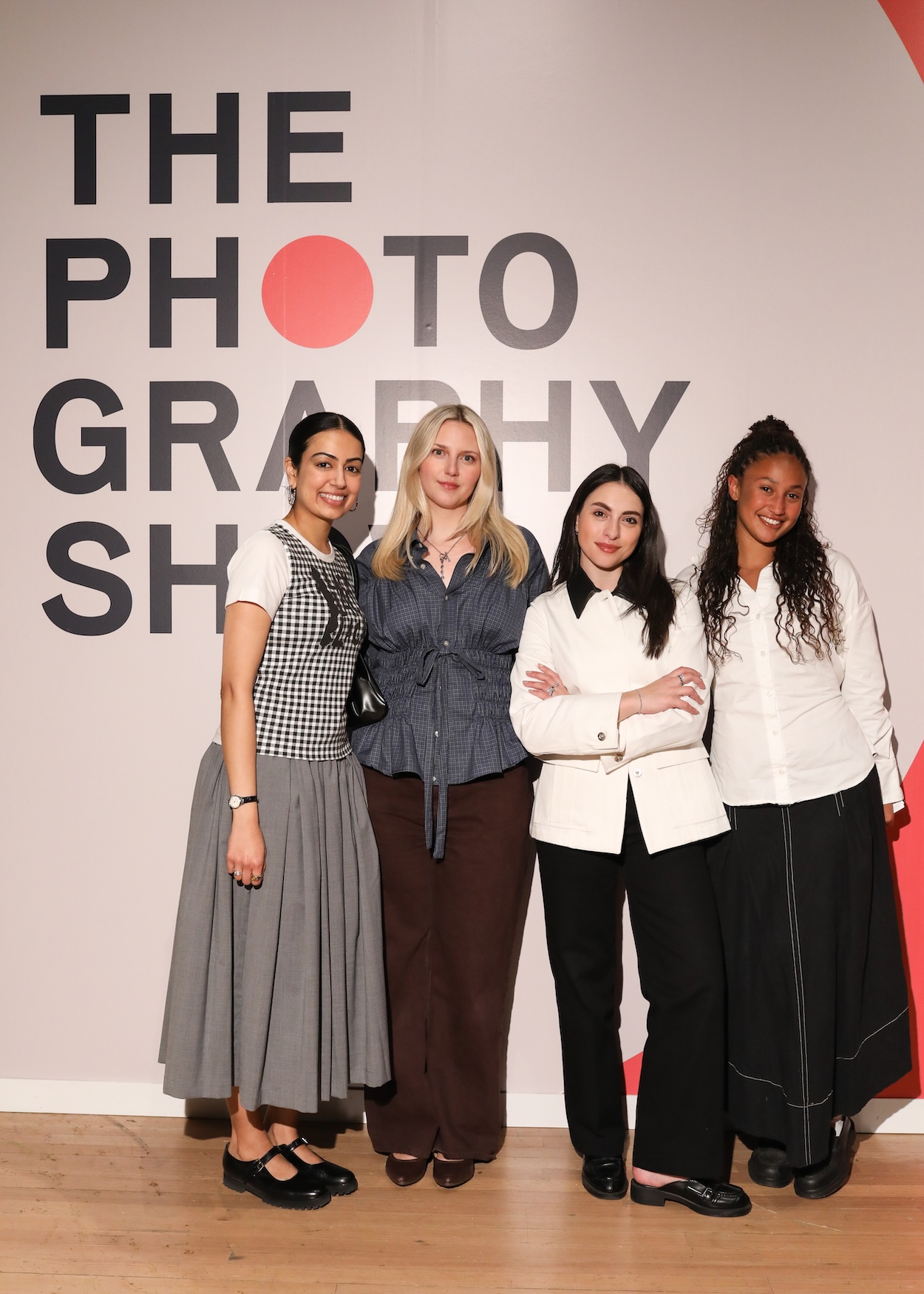
Members of the ALMA team: Sabina-Habib, Emily-Dotsikas, Hannah-Gottlieb-Graham, and Nyla Gilstrap at AIPAD 2026.…
As ALMA has grown, how has the agency’s identity changed from when it was just the two of you to what it is now?
Samuels: We’ve become increasingly intentional about our growth. As we’ve expanded from the two of us into a team with dedicated PR, Design, Digital, and Linguistics departments, we’ve spent a great deal of time thinking about how to build an organization that feels sustainable and remains human.
We’ve always felt that traditional hiring is an imperfect system. As an employer, you’re doing your best to determine whether someone can excel in a specific role. As a candidate, you’re trying to understand whether your interests and skills fit within a company culture that aligns with your values. Yet most hiring processes ask both parties to make that decision through a resume and a handful of interviews. It’s a tremendous commitment on both sides, arrived at through a limited process.
We decided a few years ago that before making a hire, we invite candidates to spend meaningful time with us, often for several weeks. It’s more than shadowing. Prospects work with us in our office, participate in internal meetings, contribute to projects, collaborate one to one with different employees and experience what working at ALMA actually feels like. At the end, we have an honest, two-sided conversation about whether the fit is right. Not just for us, but for them as well.
That process has taught us something fundamental: people drive services, not the other way around. We don’t expand by deciding what departments or offerings we want to build, sourcing people to fill them afterward. Instead we find extraordinary people whose talents and perspectives expand what’s possible for the agency, building services around them. In many ways, ALMA’s evolution from a small PR consultancy into an interdisciplinary studio happened organically through the individuals who joined us. Our Design and Linguistics practices emerged because we hired people whose skills challenged us to think beyond traditional agency models.
We consider our client engagements in a similar fashion. We’re intentional about the work we commit to and the relationships we build, rather than pursuing growth for growth’s sake. We want the work to feel meaningful to our team, valuable to the client and aligned with the kind of agency that we’re building. In that sense, both our staff and our clients have a major hand in shaping what ALMA becomes.
You jointly run both the creative and operational sides of the business. How do you divide instinct versus process?
Gottlieb-Graham: Over the years we’ve had many conversations with fellow founders about the theory that businesses need two key personalities to succeed: a “visionary” and an “integrator.” In our dynamic I’m the visionary, taking an instinct-driven approach to the PR work that I manage. I identify as an “ideas person,” I’m constantly picking up industry intel, generating ideas for placements and partnerships, building relationships, and scheming. I feel most in my power when I’m listening to a client’s need, identifying a possibility, pitching an opportunity, and making it happen.
amuels: Naturally, I’m the integrator and instinct plays a pivotal role in this. Specifically, I lean on instinct to know when to say no. For a younger business, there’s a powerful urge to say yes to everything. Every client, every project and every opportunity feels like something you can’t afford to pass up. The logic seems sound: if you want to grow, you should do more. But in my experience, the opposite is often true. Nothing strains a business more than overextending itself.
For me, integration is really an exercise in discipline. Every yes commits resources, attention, and energy. If you’re not careful, those decisions begin to define your business for you. You lose the ability to shape your identity, refine your point of view and determine what kind of work you actually want to be known for. Maintaining that focus requires the discipline to turn down opportunities that may be good in isolation but aren’t right for the business you’re committed to build.
This is where my background as a lawyer has been valuable. I was trained to analyze downside before becoming enamored with upside. While that can sometimes read as negative, the benefit is clarity. The yeses need to be overwhelmingly compelling. If they’re not, my instinct is usually to stay focused and sustain ALMA’s ability to choose its own direction.
You describe ALMA as an “ecosystem built on trust and care.” What does this look like in practice, both internally and externally?
Gottlieb-Graham: Care is our guiding principle. Our approach is to listen to our clients first—really listen. It’s the reason I named the business “ALMA” (my mother’s name, meaning “soul” in Portuguese) instead of after myself. We’re not here to uplift my career, we’re here to service our clients as thoughtfully and passionately as possible.
I appreciate Andrew’s compliment about building trust; I maintain pride in being the person who does the thing that they promise to do. This comes out just as much internally as externally. I like being the founder who you can learn from and rely on, not the boss who breezes in and out of the office on their own time, making empty promises that are never kept, expecting the staff to do all the work.
I enjoy practicing what I preach—that will never change.