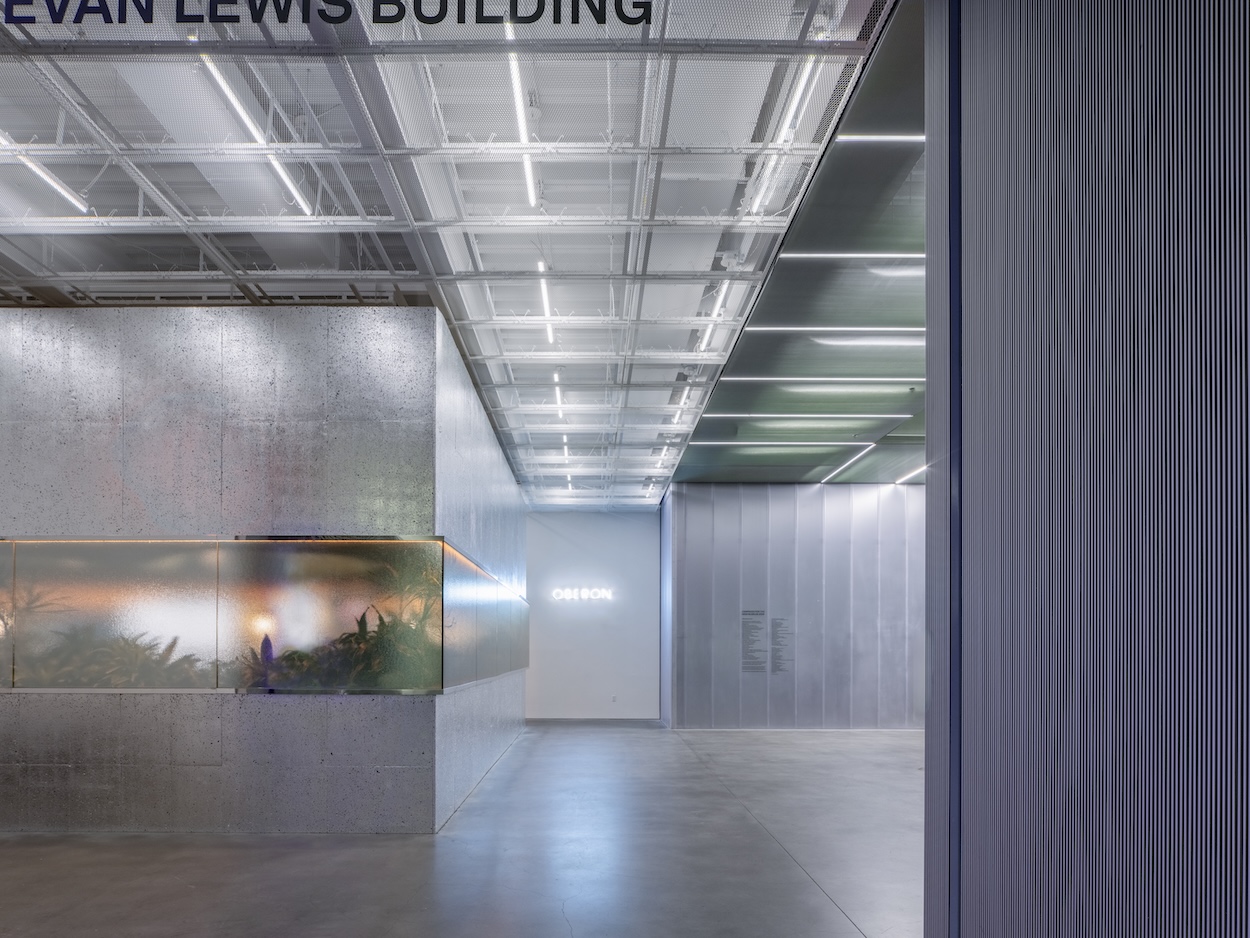
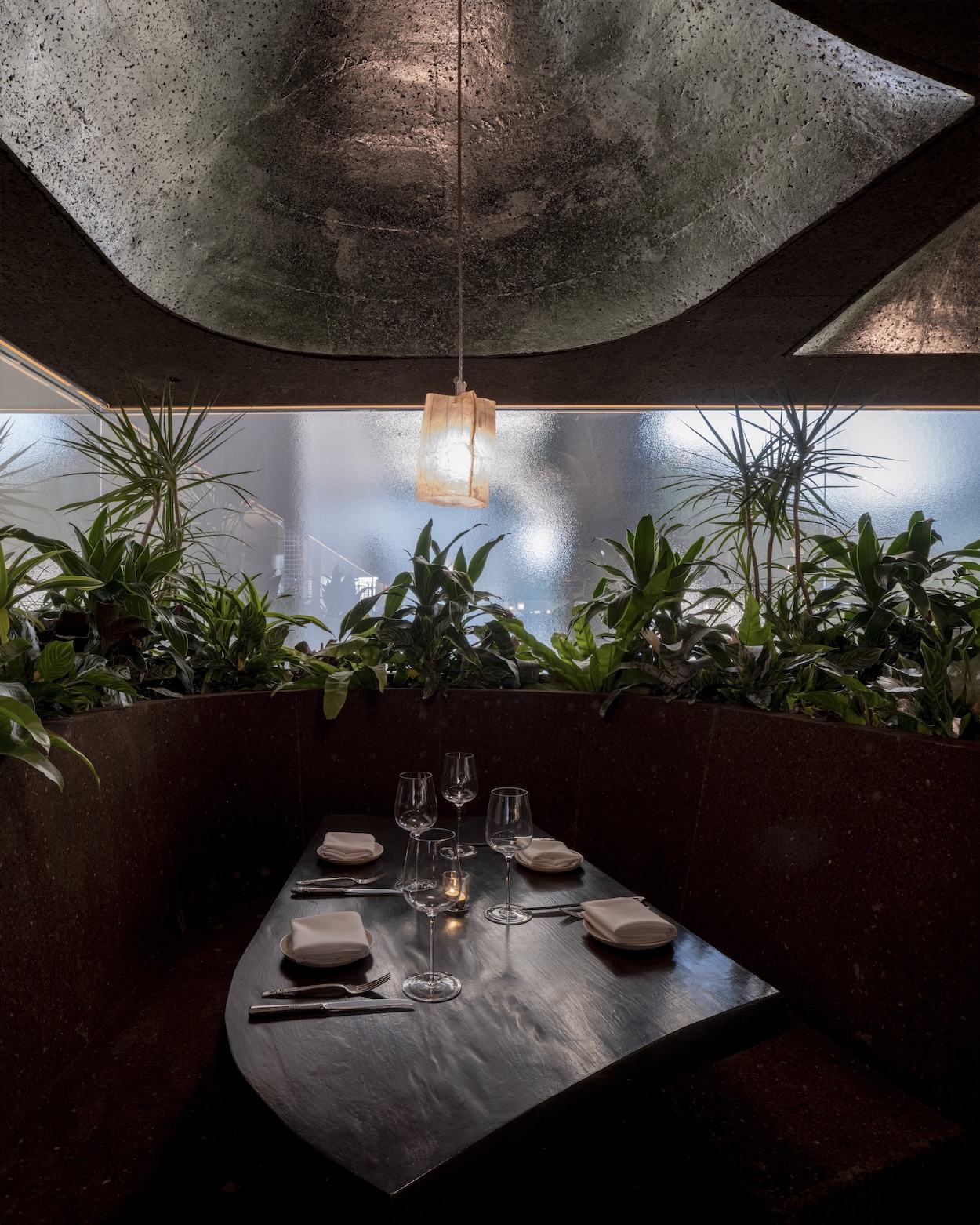
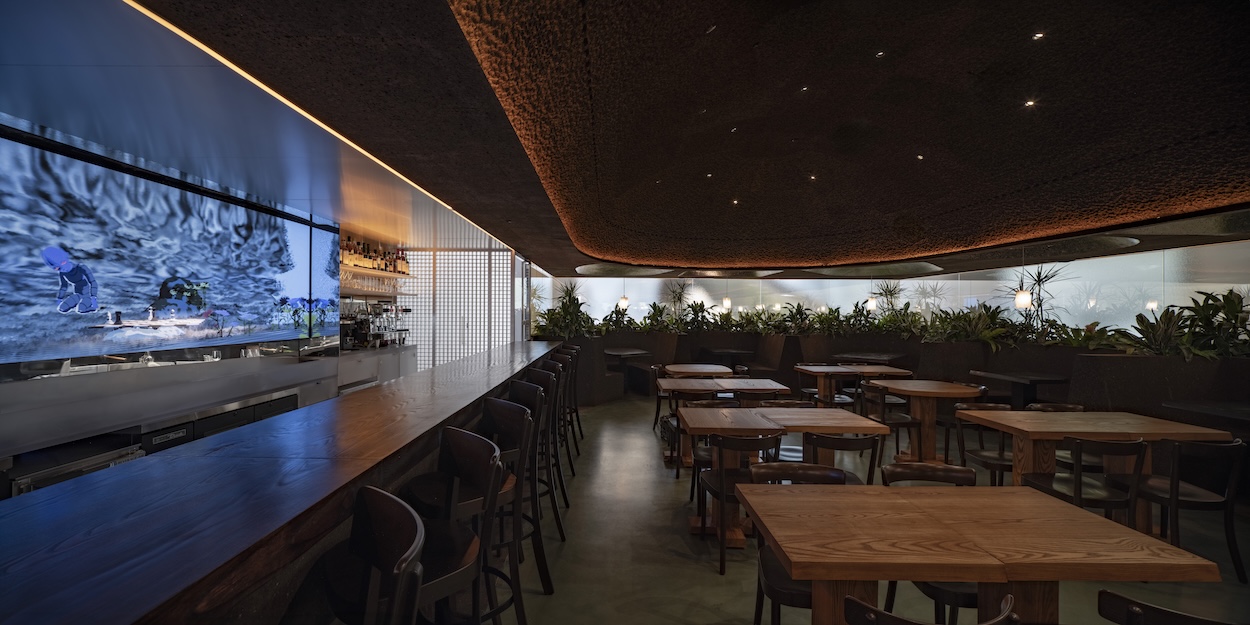
Within the New Museum’s 60,000-square-foot expansion, OMA-designed Oberon represents the contemporary art institution’s first-ever full-service restaurant. Helmed by The Oberon Group (of Rhodora, June, and Rucola acclaim) with a menu devised in collaboration with Salad for President’s Julia Sherman and Ali Ghriskey, Oberon’s recipe is composed of art, design, regional sourcing, and a commitment to sustainability. From artist-commissioned tableware to an engrossing, interactive digital work for the bar by Ian Cheng and furnishings and lighting from designer Minjae Kim, the destination pairs delectable cuisine with visual intrigue.
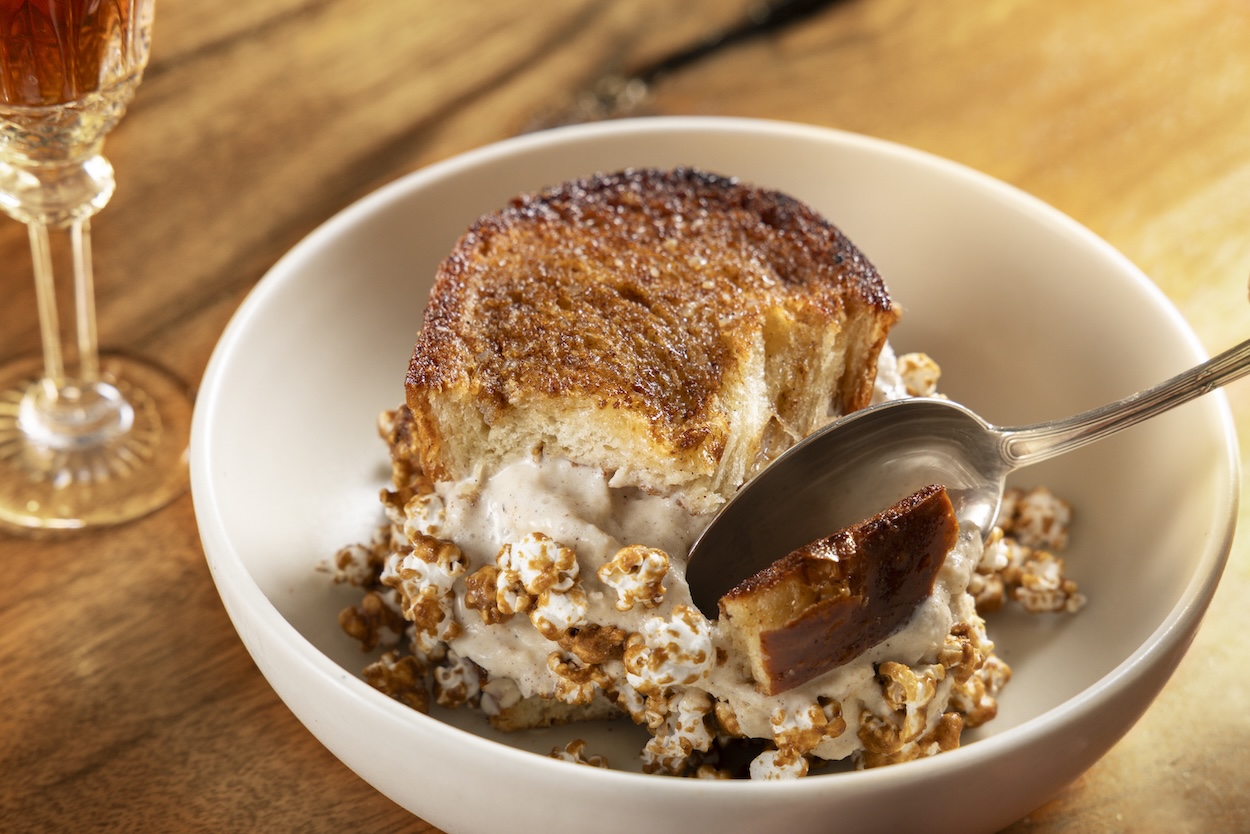
The debut menu will include deviled eggs with fermented chili, as well as black bass crudo with caperberries and peppercorns, chicken rubbed in dehydrated fig leaf, and skirt steak with salsa verde, among many other inspired dishes. Additionally, artist Laurie Anderson designed the parting chocolate. “The menu is a playful, joyful take on abundant, healthy fare. The goal is for it to feel like you’re eating at home—but better. Food that makes you feel good,” Sherman shares with Surface.
Courtesy of Alex Fradkin…
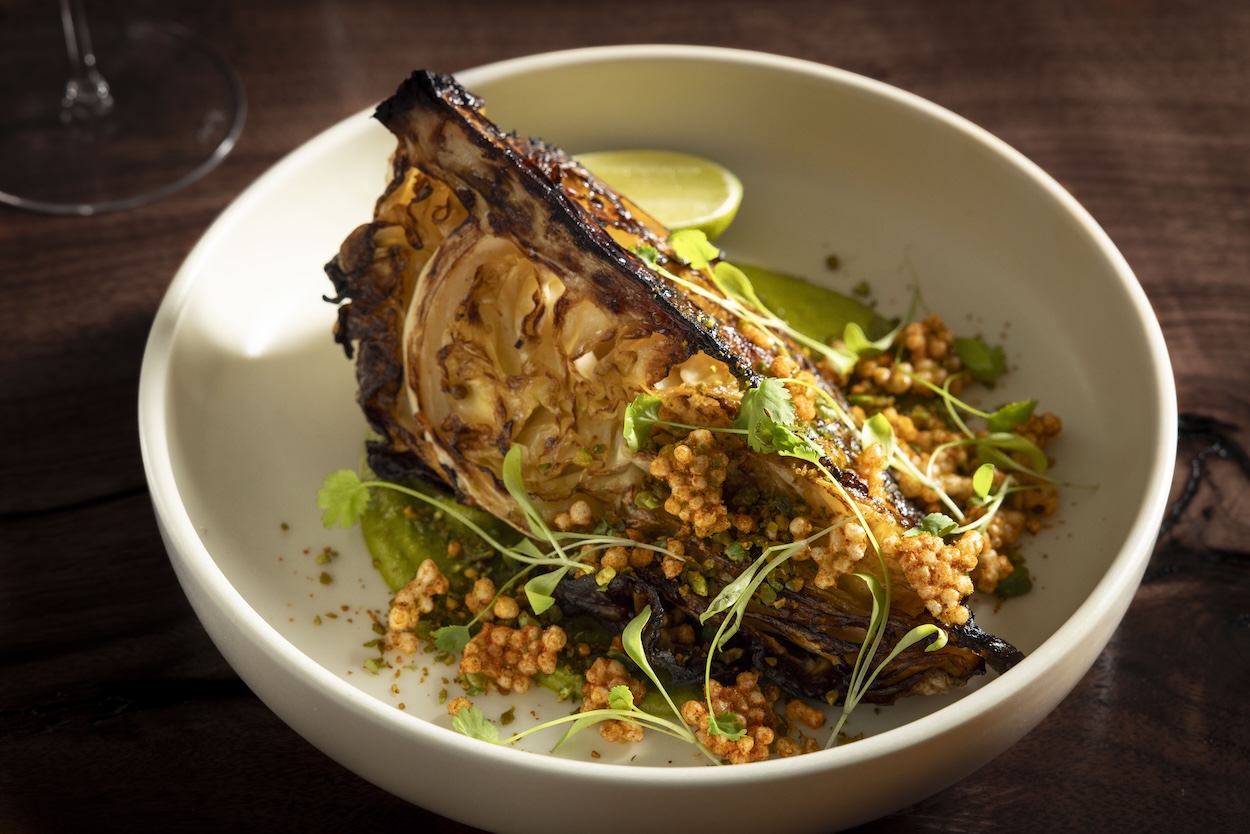
“I’m especially excited about the roasted cabbage,” she continues. “We ferment it for three days, which seasons it all the way through and gives it incredible depth of flavor. Then we roast it until it’s silky and tender inside, with edges that become crisp and papery. It’s served with a spicy green sauce and a crunchy garnish made from puffed tapioca—a wonderful ingredient from the Indian market— dusted with Hatch chile.”
For Sherman, Oberon’s greatest advantage is its built-in audience: museum visitors and museum staff. “If we want to be an amenity to both groups, we have to offer food that feels comforting and healthy—something you can eat midweek and leave feeling great, ready to go back to work or tackle the rest of your day,” she explains. “When I think about how I want to end a visit to a thought-provoking exhibition, it’s with a bowl of chicken soup (Oberon’s comes with a spicy green sauce and avocado), a sandwich (in our case, smoked chicken, watercress, and paprika aioli), or a generous Greek salad made with exceptional ingredients.”
Courtesy of Alex Staniloff…
Sherman—an artist as well as a chef—has worked in museums, and eaten in many, as well. “The challenge is distinguishing ourselves from the museum experience alone,” she says. “Unlike many museum restaurants, we’re open at night, long after the galleries have closed. That gave us more freedom with the dinner menu. While it’s still vegetable-forward and bright, we were able to lean into some of the deeper cuts from our global pantry and make things feel a bit more celebratory.”
With Oberon, Sherman channels the essence of her much loved Salad for President blog and book. “A great example is the shaved cabbage salad with pomegranate molasses and toasted walnuts, coming to the menu this fall,” she adds. “In the book, I call for store-bought pomegranate molasses, but at the restaurant we make our own, which dramatically improves both the flavor and consistency. Maybe it isn’t something I would ask a cookbook reader to do, but we can manage it in a restaurant kitchen easily.”
Courtesy of Alex Staniloff…
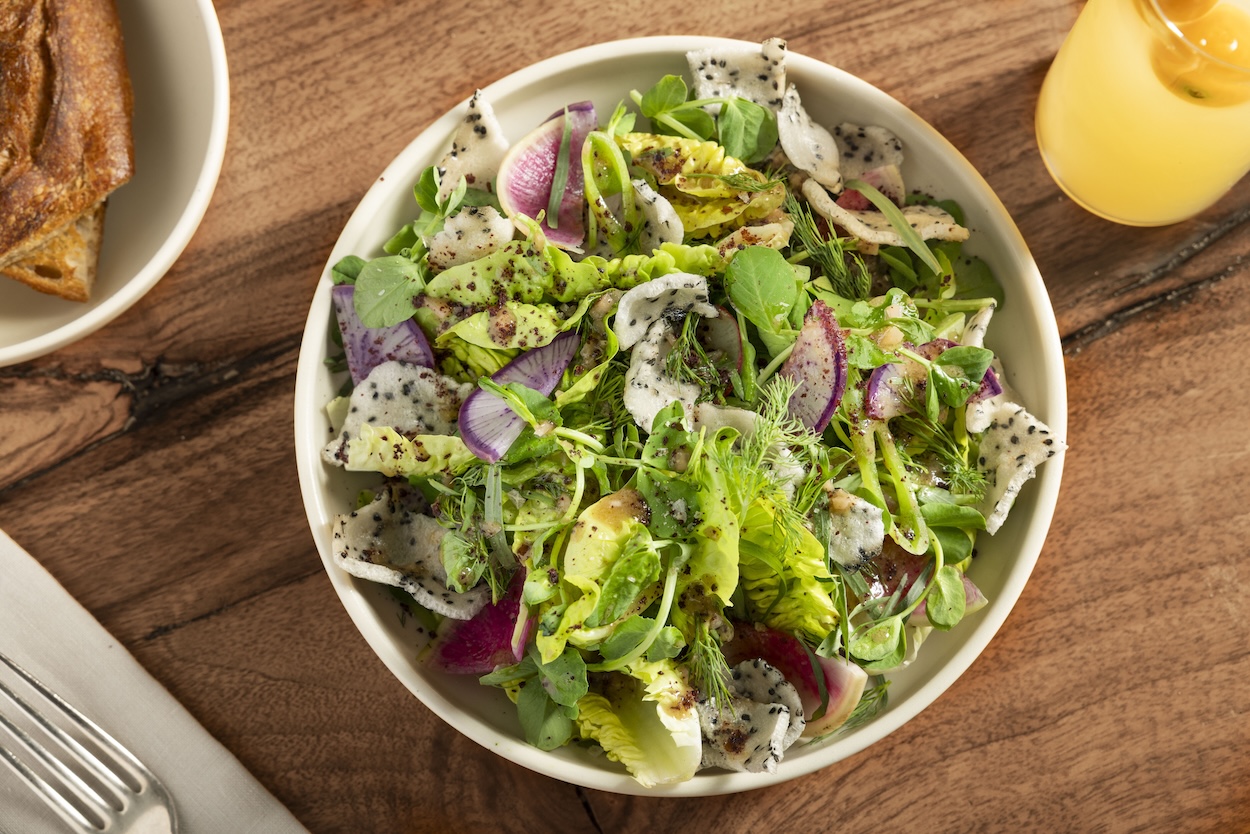
The core of the menu will remain consistent, including a signature Oberon Burger as well as a crêpe cake by special order, while the team continues to think seasonally. For example, there is a salad served with feta and a seeded oil infused with tempered spices like sumac, Persian lime, nigella, coriander, and crispy shallot. “In the winter, it features citrus; in the summer, we swap in tomatoes and stone fruit,” Sherman says. “The structure of the dish stays the same, but the ingredients evolve.”
For Henry Rich, founder of The Oberon Group, Oberon needed to become part of the neighborhood’s social fabric. “The New Museum already functions as a platform for ideas, artists, and conversation, so there was a natural alignment in thinking about how a restaurant could support that community’s mission,” he tells Surface. “From the beginning, we imagined a neighborhood restaurant for the downtown art world where artists, curators, collectors, museum visitors, and New Yorkers could find one another. There are fewer and fewer spaces in New York that encourage in-person interaction.”
Courtesy of Alex Staniloff…
His goal was never to devise a restaurant that felt like an extension of the galleries. “After you’ve spent hours looking at art, the last thing you need is another intellectual exercise disguised as lunch,” he says. “What interested us was creating an environment where art, food, and conversation naturally coexist. The menu reflects that approach. It’s not performative. It’s food you actually want to eat repeatedly.”
“I’ve always thought of our restaurants as ecosystems where different creative voices come together around a shared experience. The design reflects that,” Rich says. “OMA created a space that feels both architecturally rigorous and deeply welcoming. You have these beautiful contrasts between the museum’s industrial materiality and softer elements like renewable and carbon-sequestering cork, plants, warm woods, and intimate seating.”
Courtesy of Alex Staniloff…
Rich hopes people glean that this is, ultimately, a neighborhood restaurant. “Obviously it’s inside the New Museum. Obviously there are incredible artists, architects, and collaborators involved. But if all of that overwhelms the simple pleasure of spending time here, we’ve failed. The restaurants I love most become part of people’s lives. They stop being destinations and start becoming part of the rhythm of a community. That’s what we’re trying to create at Oberon.”