For Greek creative Ria Xenou, architecture has never been about signature; it’s always about sensitivity. Across studios in Athens, Toronto, and now London, Elastic Architects has built its identity on a shared instinct for proportion, material, and the character of a place. From designing Aman Resort properties around the world to hotels in Miami Beach, Dubai, London, and beyond, Xenou discusses what actually holds Elastic’s global voice together, the sculptural thinking behind her design process, and Nammos Maldives, the studio’s most ambitious project yet.
Architect Ria Xenou on the Instinct Behind Every Project
The co-founder and CEO of Elastic Architects discusses proportion, persistence, and what it really means to design in dialogue with a place
Sofia Quintero September 08, 2026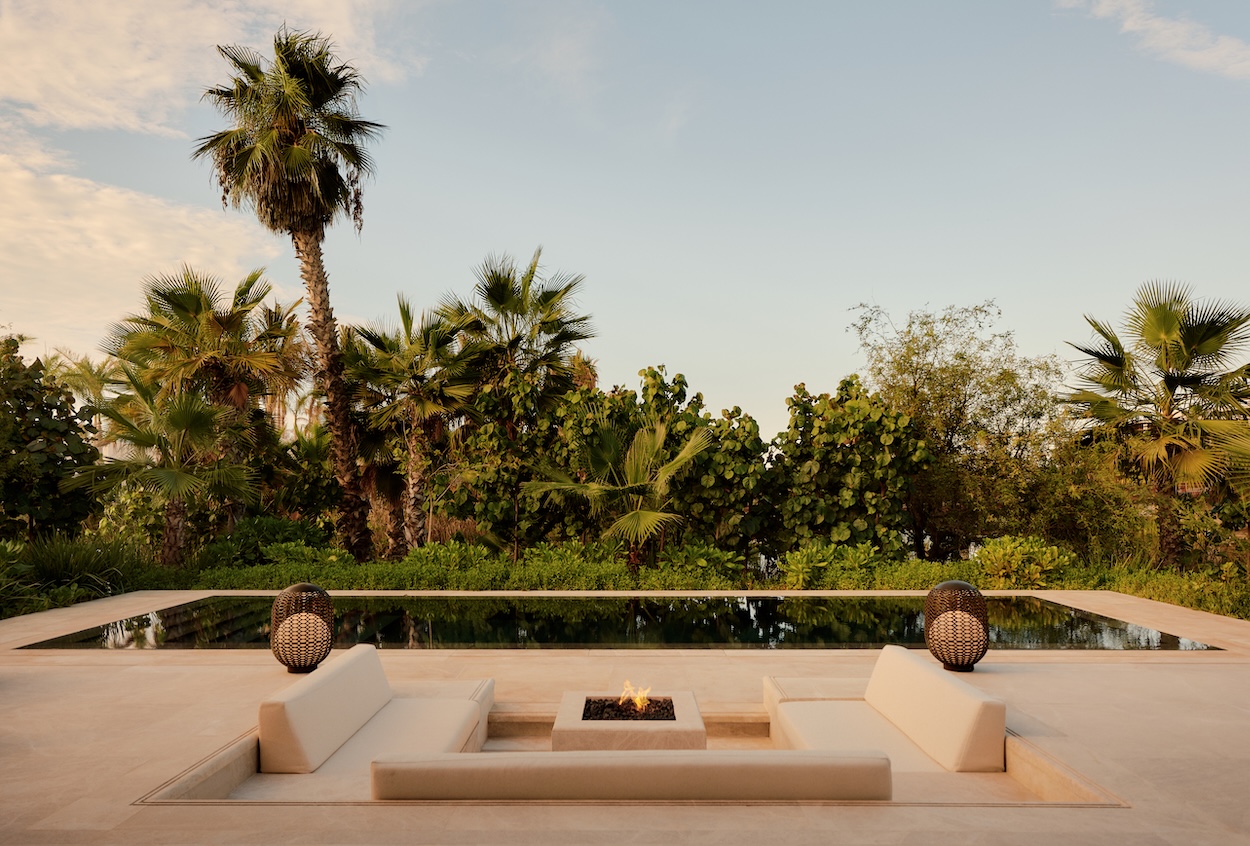
Amanvari. Photo courtesy of Aman.
…
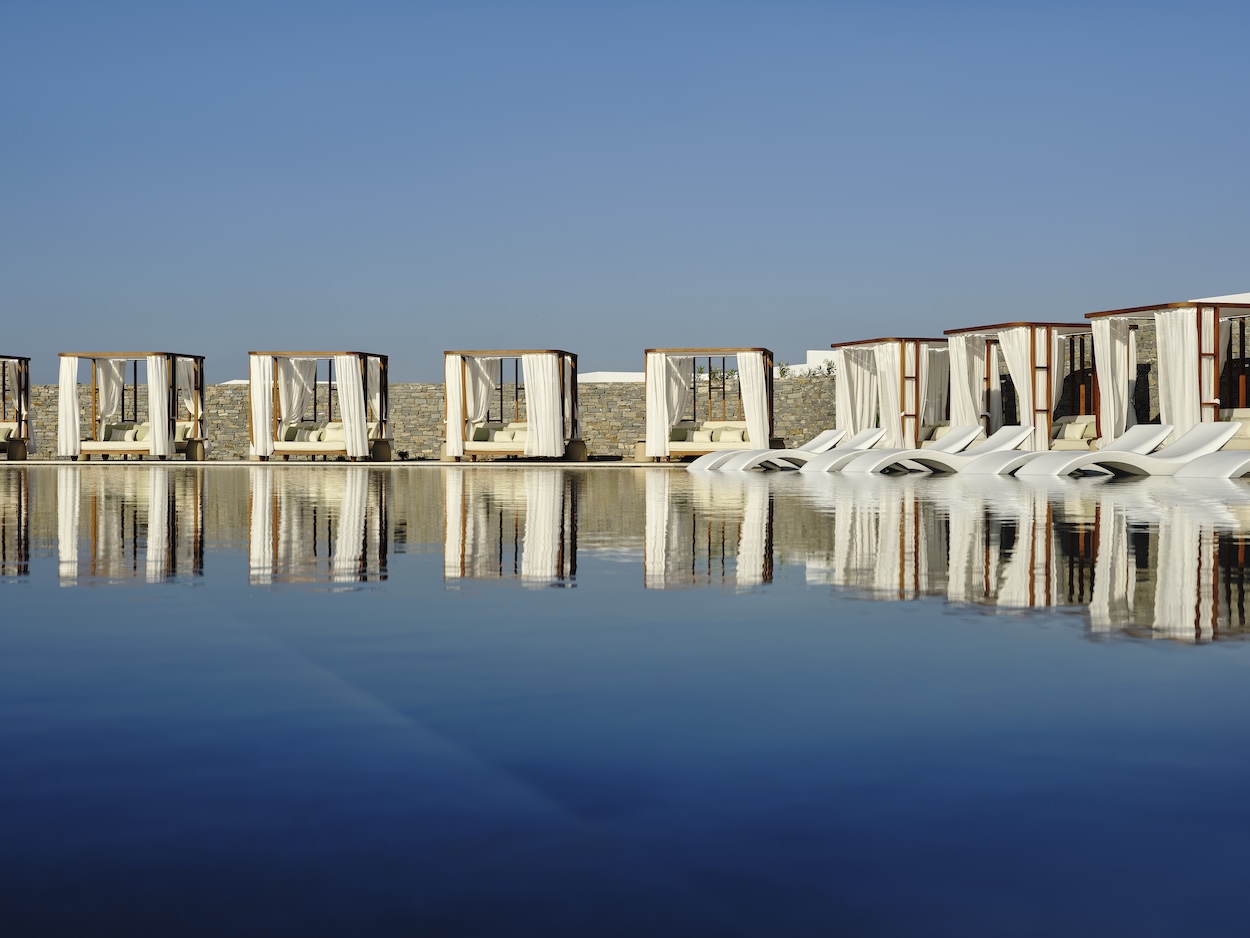
Orosea Paros. Photo by Christos Drazos.
…
Tell us the story behind your background and how architecture and design first became
of interest to you.
For as long as I can remember, I have been drawn to shape, form, and proportion. As a child, I would observe things very closely—forms found in nature, works of art, but also very ordinary, everyday objects—and instinctively recognize when there was something beautiful in their proportions or composition. I began making sculptures from wire at a very young age, something I still do today. In that sense, design was always there, long before I understood it as a profession.
My path to architecture, however, was not a direct one. I first studied civil engineering. Although it taught me a great deal and gave me an understanding of structure that remains valuable to my work today, I knew it wasn’t where I belonged. After graduating, I decided to begin again: I took the entrance examinations and returned to university to study architecture. It was Alexandros Xenos, now my husband and partner at Elastic, who first recognized that connection in me and encouraged me to think seriously about architecture. Suddenly, all the things I had always been drawn to—form, proportion, material, sculpture, the way we perceive and experience space—came together. Architecture gave them a language.
You sent many emails to hotelier Adrian Zecha before he gave you a ten-day challenge to design three villas at Aman Sveti Stefan. What do you think finally made him respond?
I remember being completely focused on what I felt I had to do. It is difficult to explain rationally, but from the very first email I had this absolute conviction that we were the right architects for the project. I had studied the place, the landscape, the local architecture and the site, and I could already see a direction for it. Somehow, I felt the project belonged to us before it actually did. Every time I sent an email and received no reply, I didn’t really interpret the silence as rejection. I simply thought: perhaps I haven’t explained it well enough yet. So I would try again, each time attempting to communicate the idea more clearly. Looking back, I don’t remember feeling fear or even frustration. What I remember is anticipation, and this very strong instinct that I shouldn’t give up.
What finally made him respond? I still don’t really know. Perhaps he was curious; perhaps he was slightly frustrated by my persistence. Most likely, a little of both. But something made him pick up the phone, and I am very happy that he did.
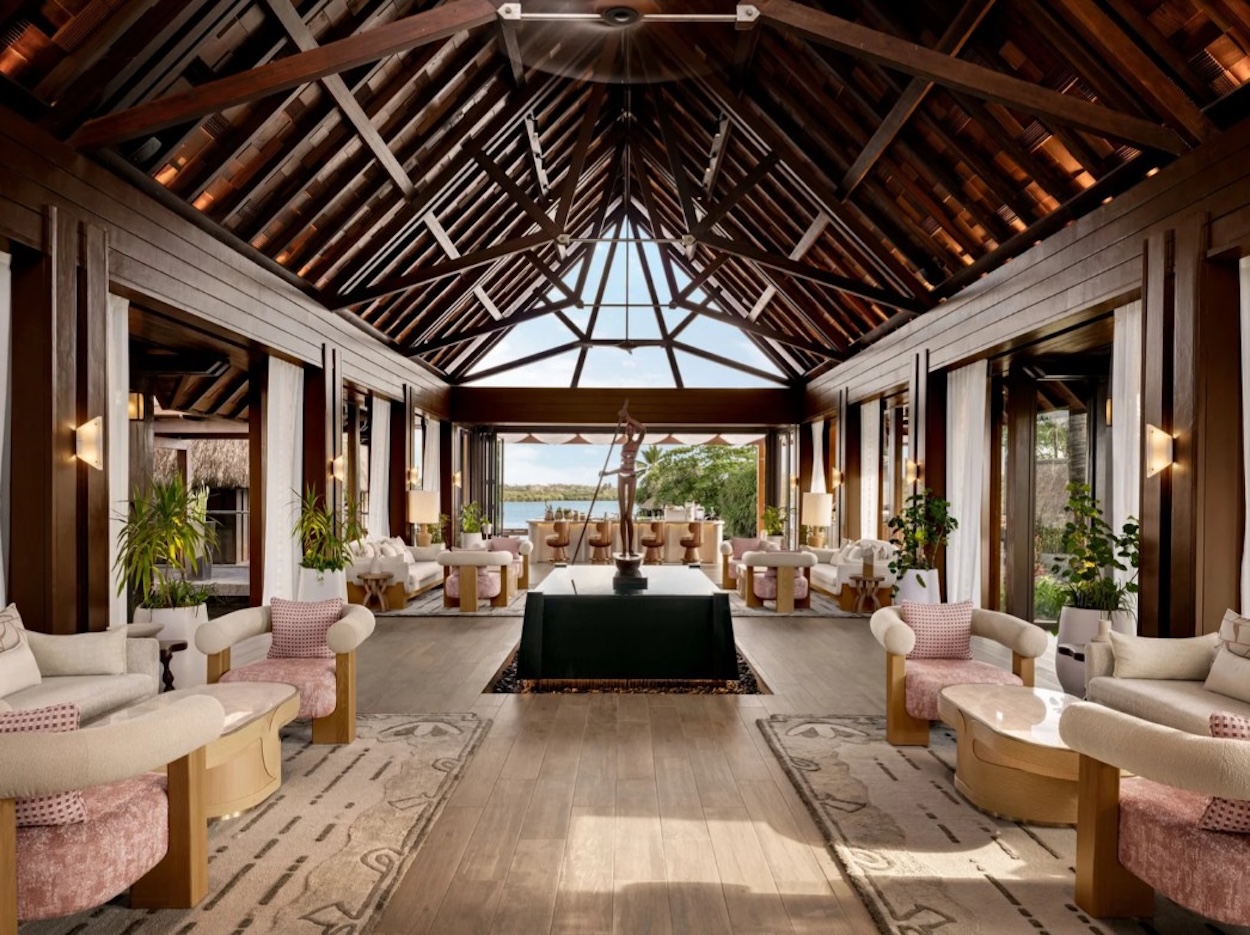
Four Seasons Mauritius. Photo by John Athimaritis & JA Photography.
…
Walk us through those ten days designing the villas. What did you learn about your own design instincts under that pressure?
At the time, Elastic was a team of just five architects, so every single person mattered. I had a strong instinct from the beginning about what the project should be, and the first principle was very simple: we would not remove the existing trees. Some had been standing there for hundreds of years and I felt we had no right to arrive and erase them simply to make room for architecture. Instead, the buildings had to find their place gently between them.
Montenegro has an extraordinary natural presence, so the architecture also needed a very strong sense of place. Villa Miločer, one of the country’s most iconic traditional buildings, was nearby. We found its original drawings and began studying them. We analyzed its proportions, the architectural grid, the relationship between solid and void, between walls and openings, and then began translating those principles into something much simpler and more contemporary.
Those ten days taught me something about my own process that I still believe very strongly. Today, inspiration comes from devotion. I don’t necessarily believe in waiting for the perfect idea to arrive. For me, it comes from staying with a problem—observing, drawing, failing, questioning, and trying again. If the principles behind an idea feel right, I don’t let go of them, I stay with it until the architecture reveals itself.
When you receive a blank project, how do you start creating? What is your process?
I always begin by trying to understand the place. For me, architecture is a dialogue between nature and human life. It is shaped by politics, art, history, and culture just as profoundly as it is shaped by the landscape. So, the first stage is one of discovery. I go deeply into the history of a place and try to understand how its traditional architecture came to be: what conditions shaped it, why people built in a particular way, which materials they used, and how that architectural language evolved over time. Only then can you begin to translate it into an architecture that belongs to today.
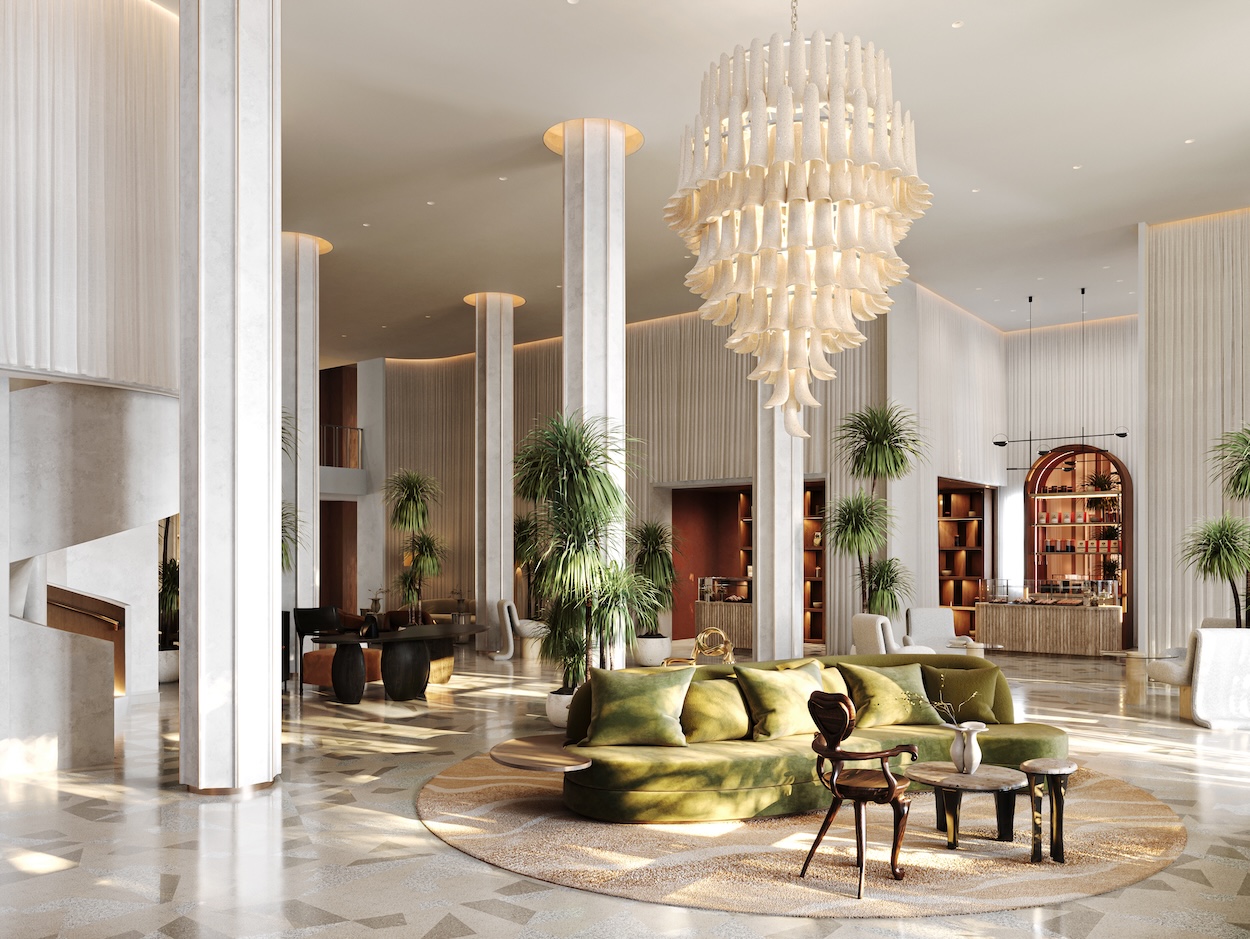
Delano Miami Beach. Photo by Robert Rieger.
…
Elastic grew from a young Athens practice to a 100+ person international studio. What was the hardest transition as you scaled?
It happened so gradually that, in many ways, we didn’t even realize we were scaling. The projects became larger and more complex, and naturally we needed more architects and designers around us. Then one day we looked around and realized that Elastic had somehow transformed from a small village into a city. At the same time, we opened our interior design studio in Toronto with our partner Enrique Mangalingdan, an extraordinary designer who became an important part of Elastic’s evolution.
I think the hardest moment was recognizing that the way you operate as a small creative practice cannot simply be multiplied as you grow. About three years ago, we made the conscious decision to pause. We actually stepped back from pursuing new work for a period because we needed to look very carefully at ourselves: how the studio was organized, how we worked, and, most importantly, how we could continue doing what we love, in the way we wanted to do it, without allowing scale to dilute the quality of the architecture.
Looking back, what part of that original Aman project still shows up in Elastic’s work today?
Two things from that original Aman project remain very deeply embedded in Elastic’s DNA: respect for nature and landscape, and the contemporary translation of a place’s traditional architectural language. Neither, however, is a formula. They cannot—and should not—be applied to every project in the same way. We may be working with an existing building where the relationship with the landscape has already been established, or in a place where traditional architecture is simply not relevant to the conversation. What matters is not to force these principles onto a project, but to understand when they have something meaningful to contribute.
At the end of the day, our architecture is deeply anthropocentric. We design around the human being—not only for guest who inhabits the building, but also the person who encounters it from outside, as part of a landscape, a city, or a community. Architecture is experienced from both sides of its walls.
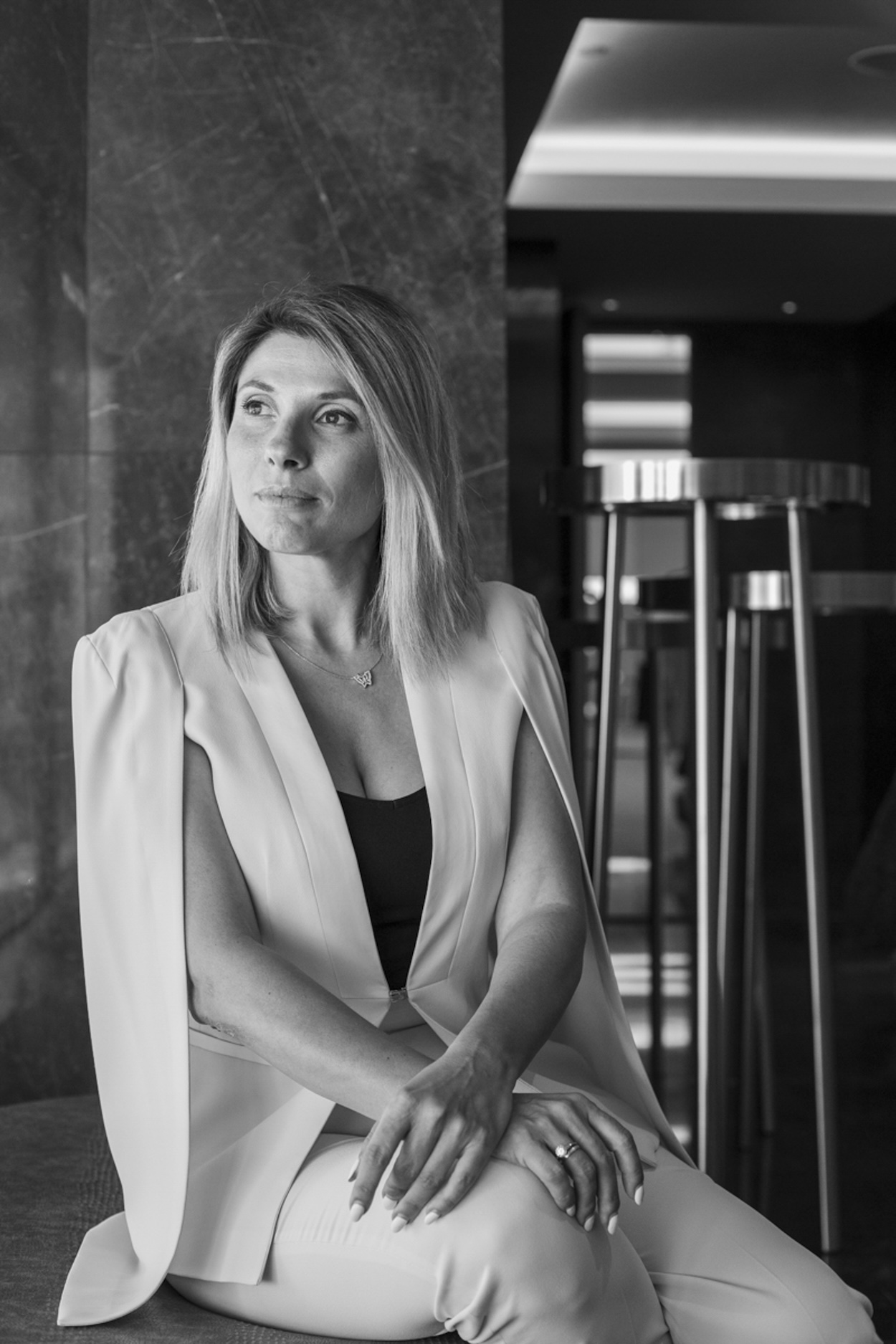
Ria Xenou.
…
How do you keep a coherent Elastic voice across offices with different local sensibilities?
I don’t think of the Elastic voice as a particular form, material palette, or aesthetic. In fact, I would be slightly concerned if you could look at one of our projects and immediately identify it simply because it resembles another. Every place is different, every client is different, and every project deserves the opportunity to develop its own identity.
What creates coherence across Elastic is something less visible: a shared mindset and ethos. Today, that is carried through the personalities of Alexandros and myself in Athens, Enrique Mangalingdan in Toronto, and now Dimos Georgiou in London, where we have just opened our newest studio. We are different personalities and designers, but we share the same fundamental values.
How does a sculptural mindset change the way you approach a hotel lobby versus a private villa?
For me, sculptural is not really about the use of a space; it is about the process of creating it. It goes back to something very fundamental: proportion. Why do we instinctively perceive one form as beautiful and another as somehow unresolved? Sometimes the difference can be incredibly subtle, but proportion still has an extraordinary ability to affect us, even when we cannot explain why. You feel when something is balanced. You feel when a form is right.
That is where the sculptural process begins for me. We compose volumes, remove from them, soften them, adjust their proportions, and consider how they are perceived as you move around them. Material then becomes inseparable from form. There is always a material that feels right for a particular space. And light is perhaps one of our most important materials. We love the play between light and shadow because it can completely transform the perception of a form.
Is there an upcoming project you’re incredibly excited for?
There are several projects we are excited about, but Nammos Maldives is particularly special because we have been involved in it at almost every conceivable scale. The hotel is located on the main island, while seven distinct private islands were created around it, each accommodating a single villa. The project also represents Elastic today very well because it has been developed collaboratively across our studios, with architecture and interiors bringing together the Athens and Toronto teams.