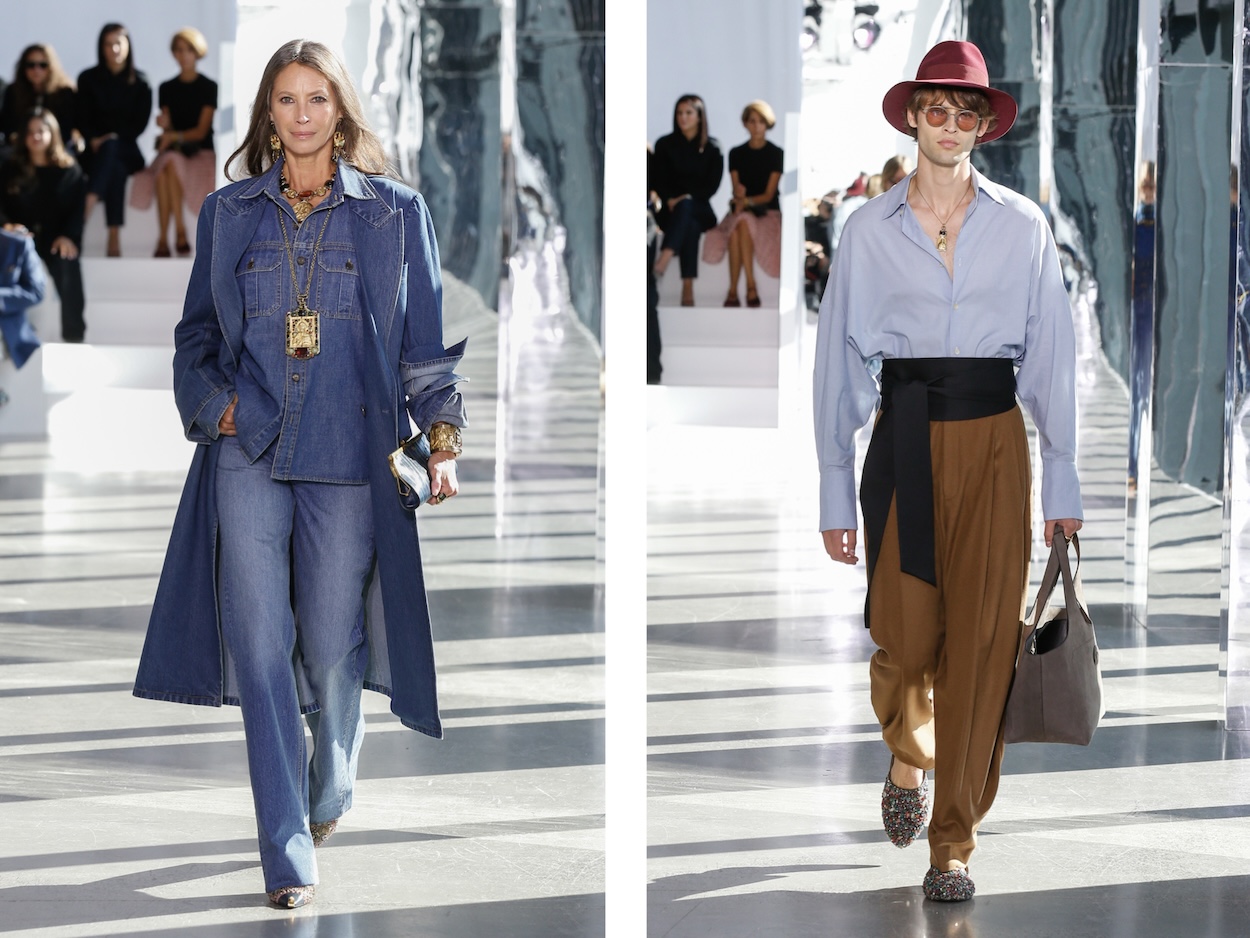
Yesterday’s presentation of “Bengal Byzantine Broadway” marked Sabyasachi Mukherjee’s runway return to New York City two decades after “Snail,” the 2006 collection he brought here as an homage to slow luxury. It opens a multiyear collaboration with The Metropolitan Museum of Art, beginning with high jewelry drawn from the museum’s Byzantine holdings and made entirely in India.
“Snail was about slowing fashion down,” Mukherjee tells Surface. “I was very young, and already uncomfortable with the idea that creativity had to be driven by speed, novelty, and disposability. I wanted to make clothes with memory, labor, and longevity.” Mukherjee went back to India after that debut New York outing and spent 20 years building the brand’s identity, its workshops, and its confidence, so that the difference between the decades comes down to authorship. “Then I was bringing New York a point of view I was still forming. Today, I know exactly what I want to contribute to the global conversation,” he says.
Courtesy of Sabyasachi…
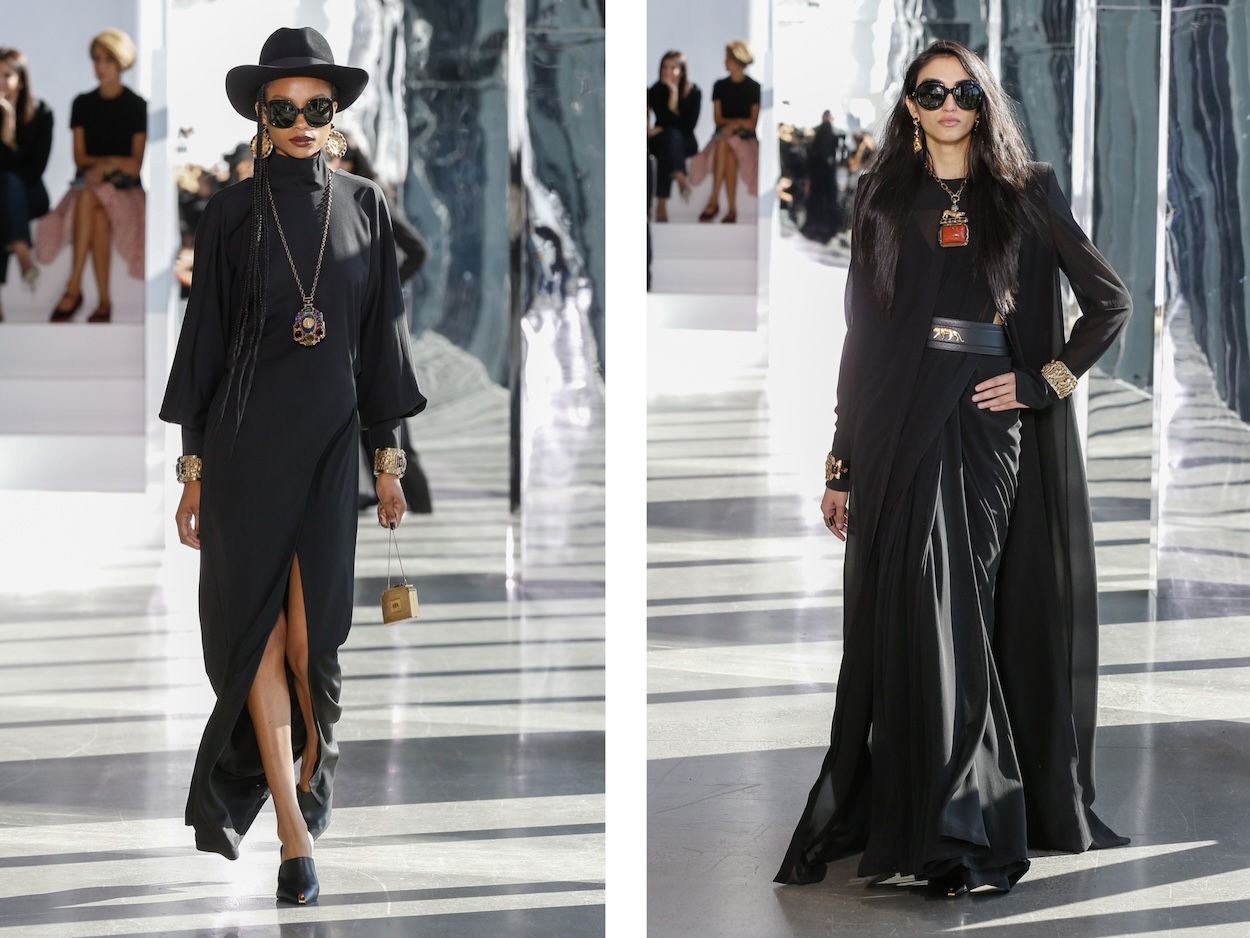
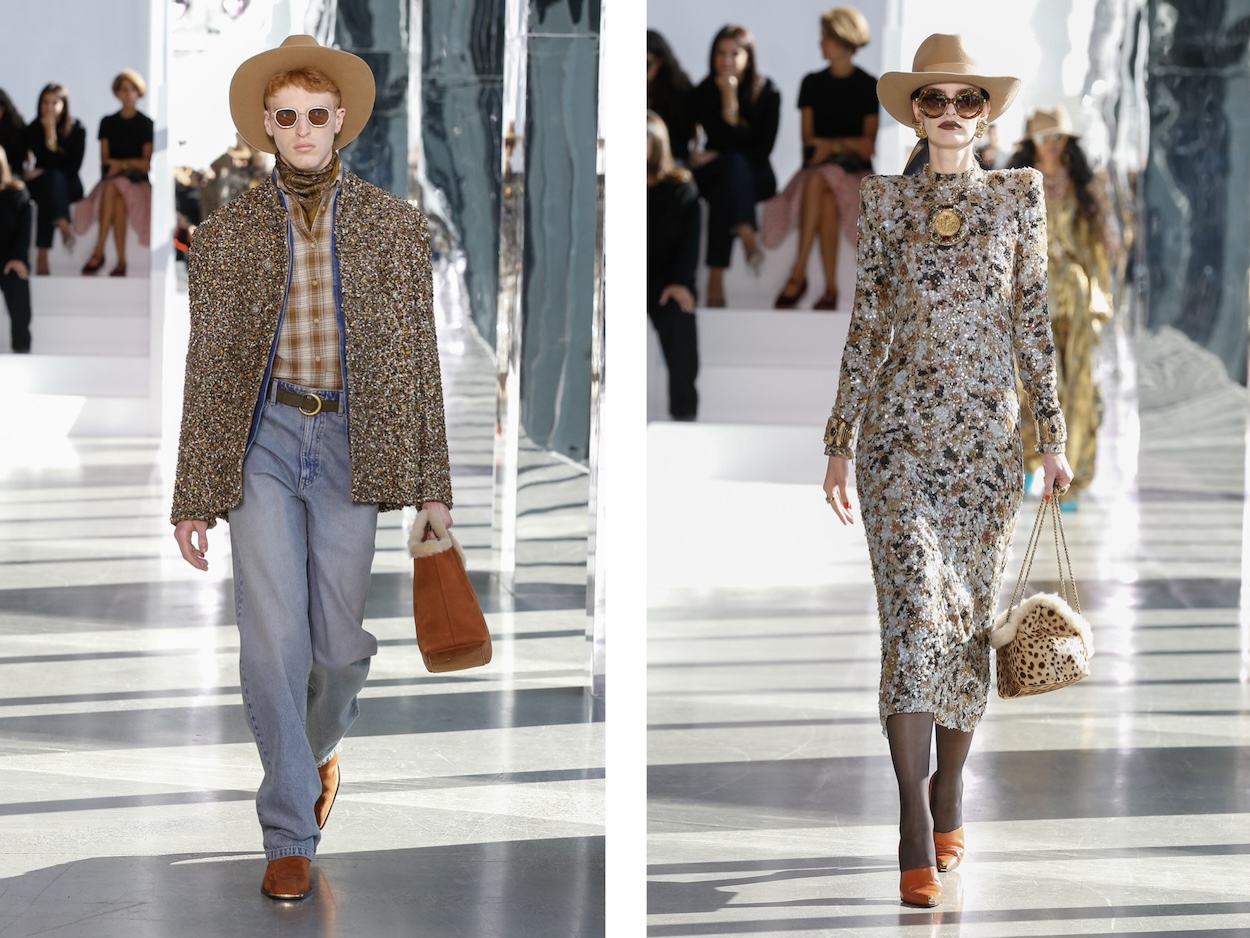
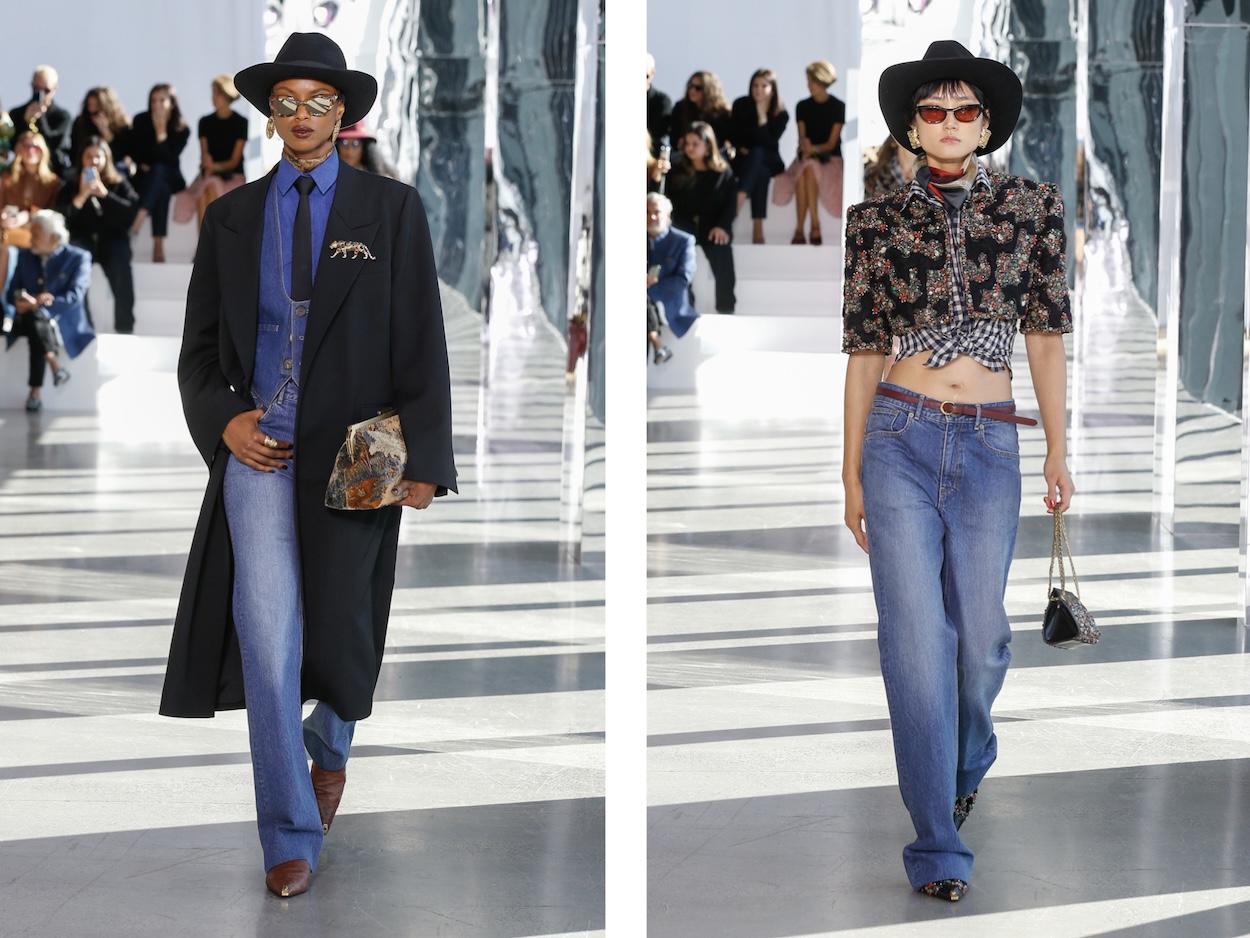
A runway show lasts 15 minutes. The collection took years and a museum’s worth of research. “You cut the footnotes,” he says. “The audience does not need to understand every dynasty, trade route, object, or technique while a model is walking toward them.” A single look might carry a draped cashmere skirt, a cowboy hat, Byzantine gold, a length of Tanchoi silk, Japanese denim, and a sharply built handbag. “The scholarship gives the collection depth,” he says. “The runway gives it life.”
For a New York audience, he says, the edit changes and the identity stays the same. “I don’t believe in designing by postcode,” Mukherjee says. “I don’t want a Mumbai Sabyasachi and a New York Sabyasachi.” The maximalism, the jewelry, the irreverence, and the Indian hand travel intact. What New York adds, in his reading, is permission for contradiction—a bolero jacket over metal-tipped boots, Byzantine gold at the collar of an Edwardian button-down. That freedom, he says, is very New York. The instinct to put unlike things side by side is very Calcutta.
Courtesy of Sabyasachi…
Among The Met’s Byzantine objects he found pieces carrying spiritual, ceremonial, and economic weight at once. Anyone fluent in Indian jewelry recognizes the grammar. “What I felt at The Met was not, ‘this is Indian,’” he says. “It was something more interesting: ‘I know this language.’” Byzantium, in his telling, was a crossroads connected to Greece, Rome, Egypt, Persia, and the trade that stretched through India and eastward.
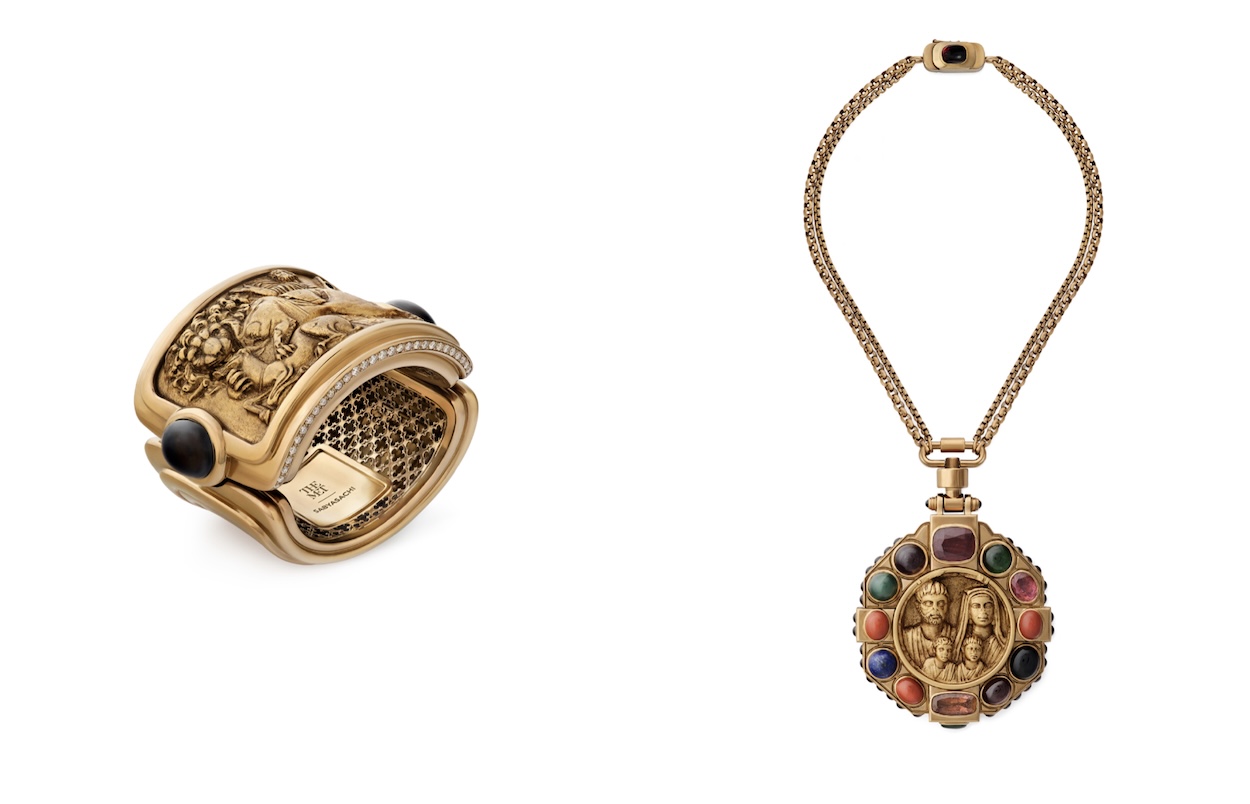
The tiger-claw necklace shows how that recognition turns into an object. Its source is a 12th-century carved panel; its form is one of the oldest in Indian adornment, and the connection between the two was never literal. “You begin with the historic object, but somewhere in the process another memory enters,” Mukherjee says. “When those two ideas came together, the design stopped being an adaptation of an object and became something new. I don’t want to copy history. I want one history to provoke another.” The first drawings came out of the studio in Calcutta and passed through the karigars, the brand’s artisans, in a loop he describes as drawn, made, rejected, redrawn, engineered, and made again. “The bench often resolves something the drawing cannot,” he says, adding that he cares less about who drew the first line than about how many hands it took to make the final line.
Courtesy of Sabyasachi…
The affinity between Byzantine goldwork and Indian workshops surprised him less than the engineering did. Filigree, hand-built settings, carving, and bezel work have cousins across every pre-industrial tradition; the vocabulary shifts by region while the intelligence of the hand carries over. The collection draws on jadau-style settings, tiger-claw settings, and methods from South Indian temple jewelry, alongside Victorian and Georgian references that reached Bengal through its own history. The invention, he says, came in engineering. Sculptural historic elements were built in antiqued 22-karat gold with precision components in highly polished 18-karat; joining the two while controlling their color meant developing new alloys because he kept rejecting the shade. He calls the result Industrial Baroque.
Diamonds appear, both white and brown, sparingly. “Diamonds were never intended to become the hierarchy around which everything else revolved,” he says. “I was much more interested in the democracy of stones.” Tourmaline sits beside garnet, sapphire, spinel, jade, jasper, turquoise, or onyx, each doing a job the composition needs; take one away and the piece changes. Older traditions valued a stone for its color, its symbolism, or its astrological weight; modern luxury, he suggests, has taught customers to read preciousness as a price list, and he wants the jewelry to recover some of that older complexity.
Courtesy of Sabyasachi…
“A drawing is an intention,” Mukherjee says of authorship. “The hand gives it intelligence.” His karigars solve problems of proportion, metal, setting, and carving daily, drawing upon knowledge accumulated across generations, and the brand has spent years building infrastructure around them so that scale creates more room for skilled handwork. He finds something beautiful in an anonymous hand from fifteen centuries ago provoking a living hand in India today. “Culture survives because somebody chooses to continue the conversation.”
Jahangir’s zodiac coin from Agra, a Mughal object in the museum’s holdings, became the starting point for a necklace. There are many more Indian objects he would like to engage, but he has no interest in turning 5,000 years of art into a checklist. The object has to provoke something; the category should follow the idea rather than the calendar.