The women in Anoushka Mirchandani’s paintings are always on the threshold of something. Born in Pune, India in 1988 and emigrating to the United States at eighteen, she has spent the years since building a visual practice rooted in the experience of holding two worlds at the same time: the one left behind, and the one still being learned. Her paintings, mostly of women, created in oil stick and pastel, take on a space between presence and boldness. Now, with her debut institutional exhibition in New York, “Everyone You Love Lives Here,” on view at the FLAG Art Foundation through July 31, and her debut institutional exhibition show, “My Body Was A River Once,” running at the Institute of Contemporary Art San José through August 23, Mirchandani sits down with us to discuss memory, and what it means to paint identity as something always in the making.
The Women in Anoushka Mirchandani's Paintings Are Always Becoming
With two institutional shows running concurrently, the painter reflects on diaspora, visibility, and the female body
Sofia Quintero June 15, 2026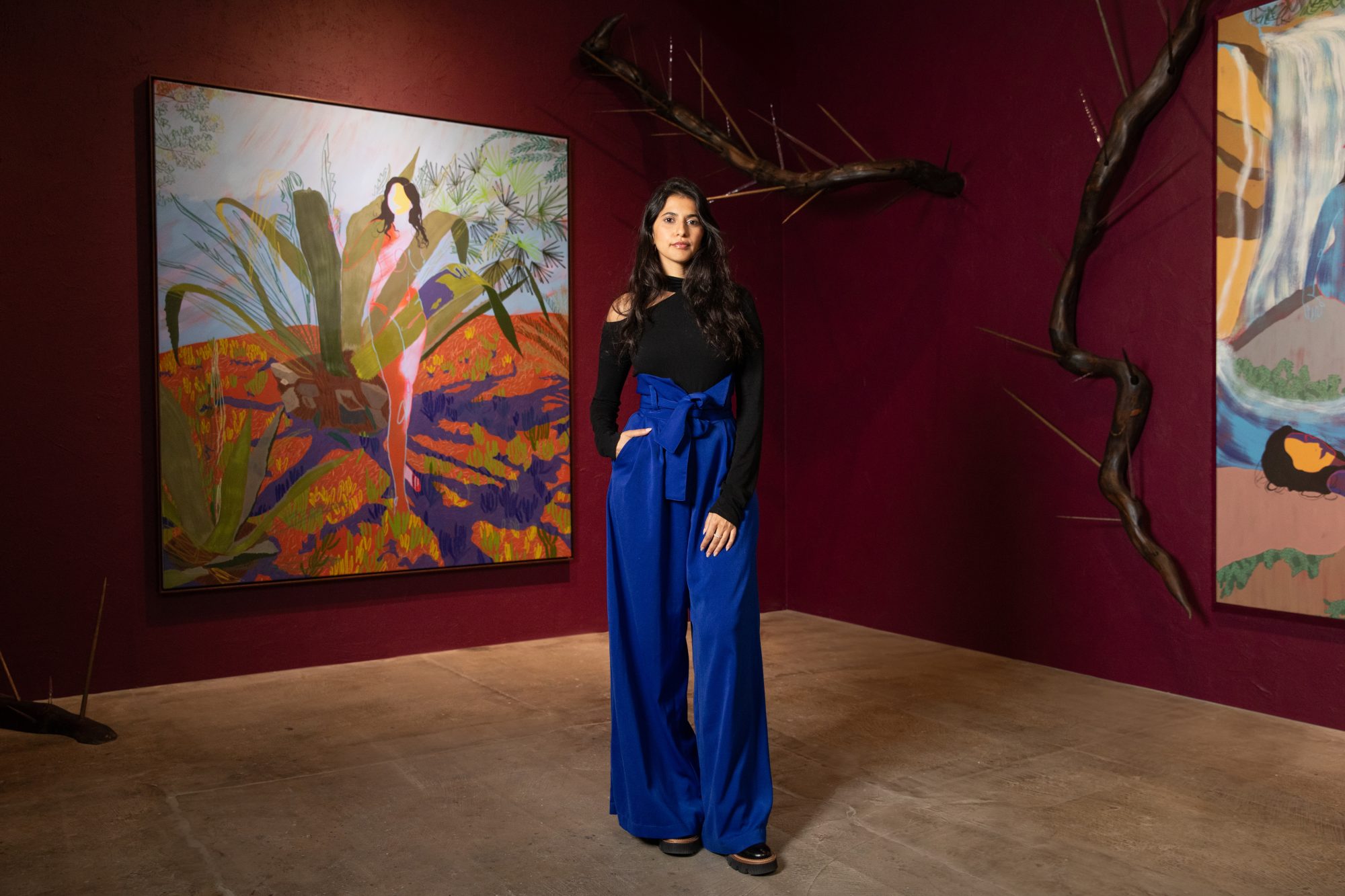
The title of your newly-opened FLAG Art Foundation exhibition, “Everyone You Love Lives Here,” feels both intimate and expansive. What does the phrase mean to you, and how does it connect to the works on view?
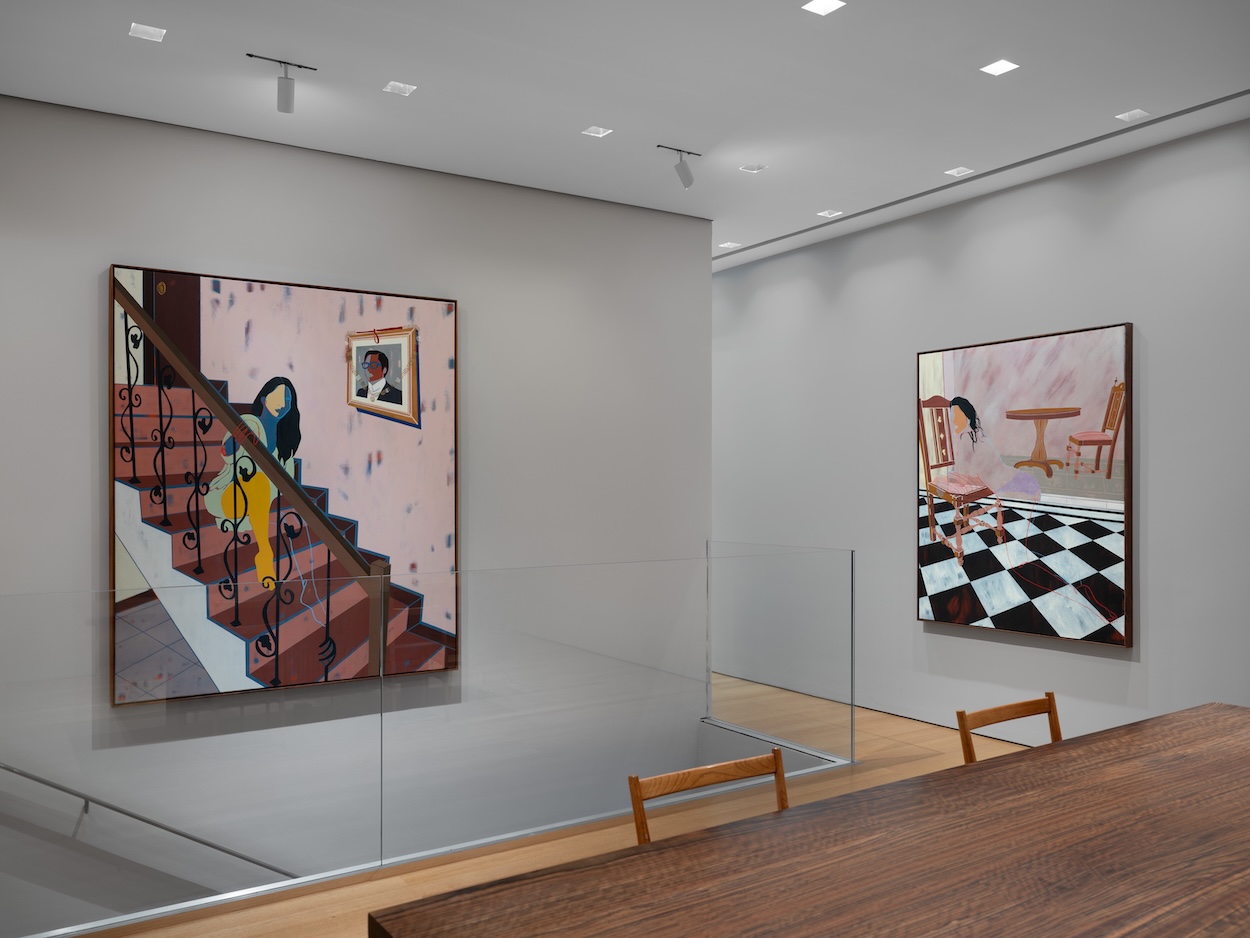
My practice lives between self and archetype, intimacy and anonymity, inviting viewers in and mirroring them back. Foundational elements of my work include family archives, oral storytelling, inherited memory, and daily life. “Here” can refer to a house, a landscape, a painting, a body, or even a state of mind. My work titles are intentionally open, acknowledging that the people who we love continue to exist through the stories, gestures, emotions, and environments that they leave behind. In that sense, the exhibition becomes a kind of shared home for memory, inheritance, and imagination.
This particular exhibition at FLAG unfolds in three asynchronous chapters as we move through different rooms of emotional architecture. It gathers together in a form of cinematic retelling—people, spaces, moments that have bubbled their way to the surface and shaped my understanding of myself and those who came before me.
Across the exhibition, your figures often occupy spaces that feel suspended between the domestic and the mythological. What interests you about these unstable or in-between environments, and how do they shape the atmosphere of the work?
I’ve always been interested in spaces that resist fixed definitions. As someone whose family history is shaped by migration and displacement, I’ve come to think of identity as impermanent and always in a state of reconstruction and negotiation. Often the environments in my works begin with real places—family homes, remembered domestic spaces, as well as outdoor environments of jungles and rivers that I have spent time in. As the paintings take shape, they drift back and forth between real-life and psychological, mythic spaces.
These in-between environments allow me to hold multiple realities and timelines, simultaneously. I want to be held, but not defined. Uncertainty then gives way to possibility, and my figures can exist outside of rigid narratives about identity, culture, or place.
Many of these works draw from personal and archival sources, including family photographs and oral histories. How do these materials inform your practice, and what role does memory play in shaping your visual language?
Memory inherently is fallible; my archive is a place of instability, myth, and transformation. I recently wondered whether I might be able to consider my archive an archive at all, as it’s predominantly visual footage and recorded conversations with my grandmothers and mother. While there are no objects aside from some photographs, there’s a treasure trove of stories and recollections.
As I work with these elusive materials alongside photographic references, the paintings that take shape aren’t direct translations of family history—they’re spaces where memory, imagination, and lived experience intersect.
Visually, this often manifests through layering, fragmentation, and the push and pull of legibility and illegibility, transparency and opacity and porous bodies that live in the interstitial layers of the painting itself.
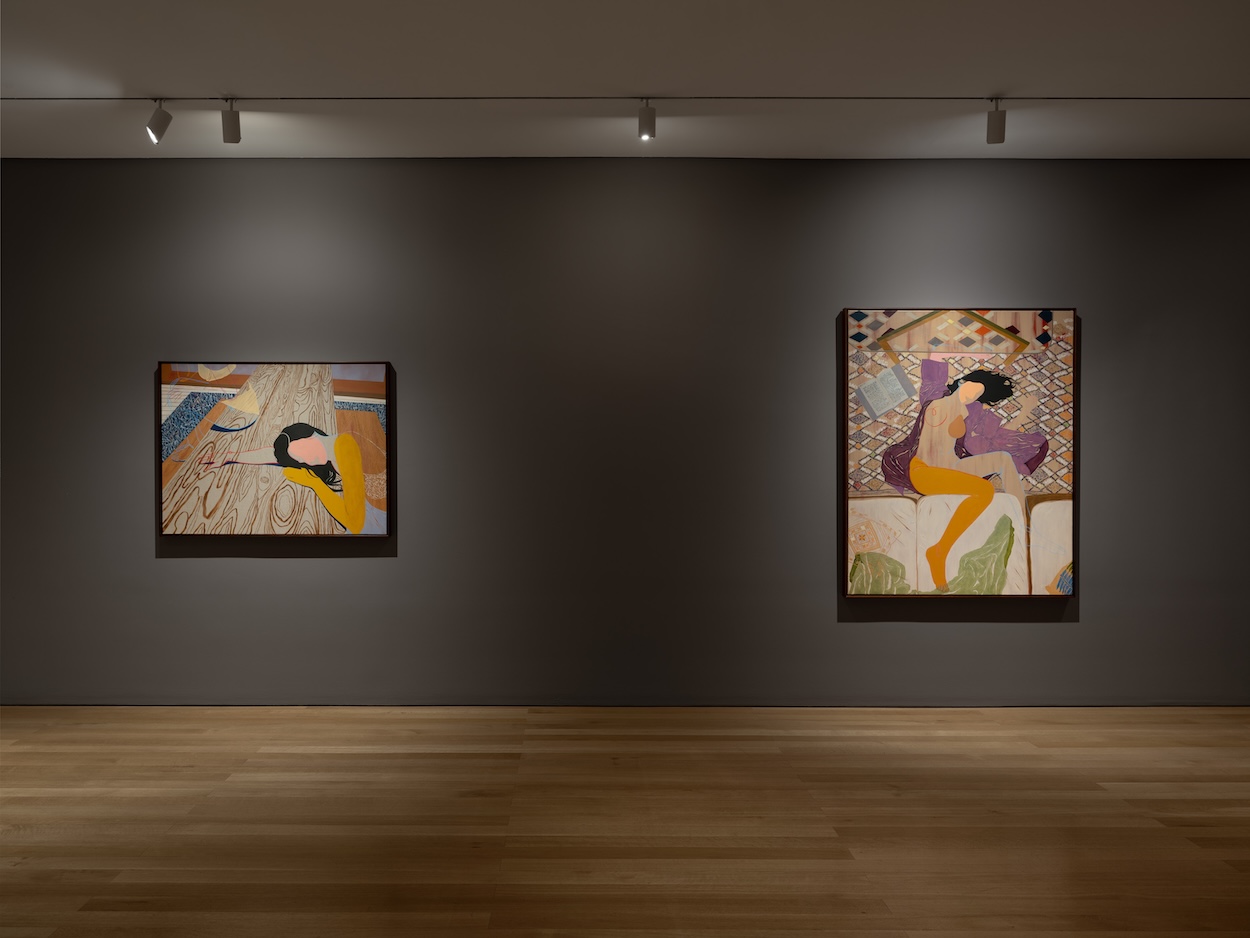
In your paintings, the boundaries between the body and its surroundings often dissolve. Can you share more about your interest in the relationship between people and the environments they inhabit, both physically and psychologically?
I’m always considering what parts of ourselves we reveal and conceal as we move through different environments and contexts. I’m also interested in the idea that we shape environments just as much as they shape us. When the boundaries between a figure and their surroundings begin to blur, I’m often thinking about the ways memory, identity, and place become intertwined. A person carries traces of the environments they’ve inhabited, just as spaces absorb the emotions and histories of the people who pass through them.
Many of the stories that I inherited from my family are stories about homes: homes that were lost, left behind, rebuilt, remembered, or imagined. As I noticed how often stories returned to houses, the home became a recurring protagonist in family memory, beyond nostalgia. Domestic interior spaces and architecture as a result have become emotional rather than merely physical structures within the work.
I care that the paintings suggest that the self is porous and continuously being recreated and reassembled rather than fixed. The figures are not separate from their surroundings; they’re entangled with them.
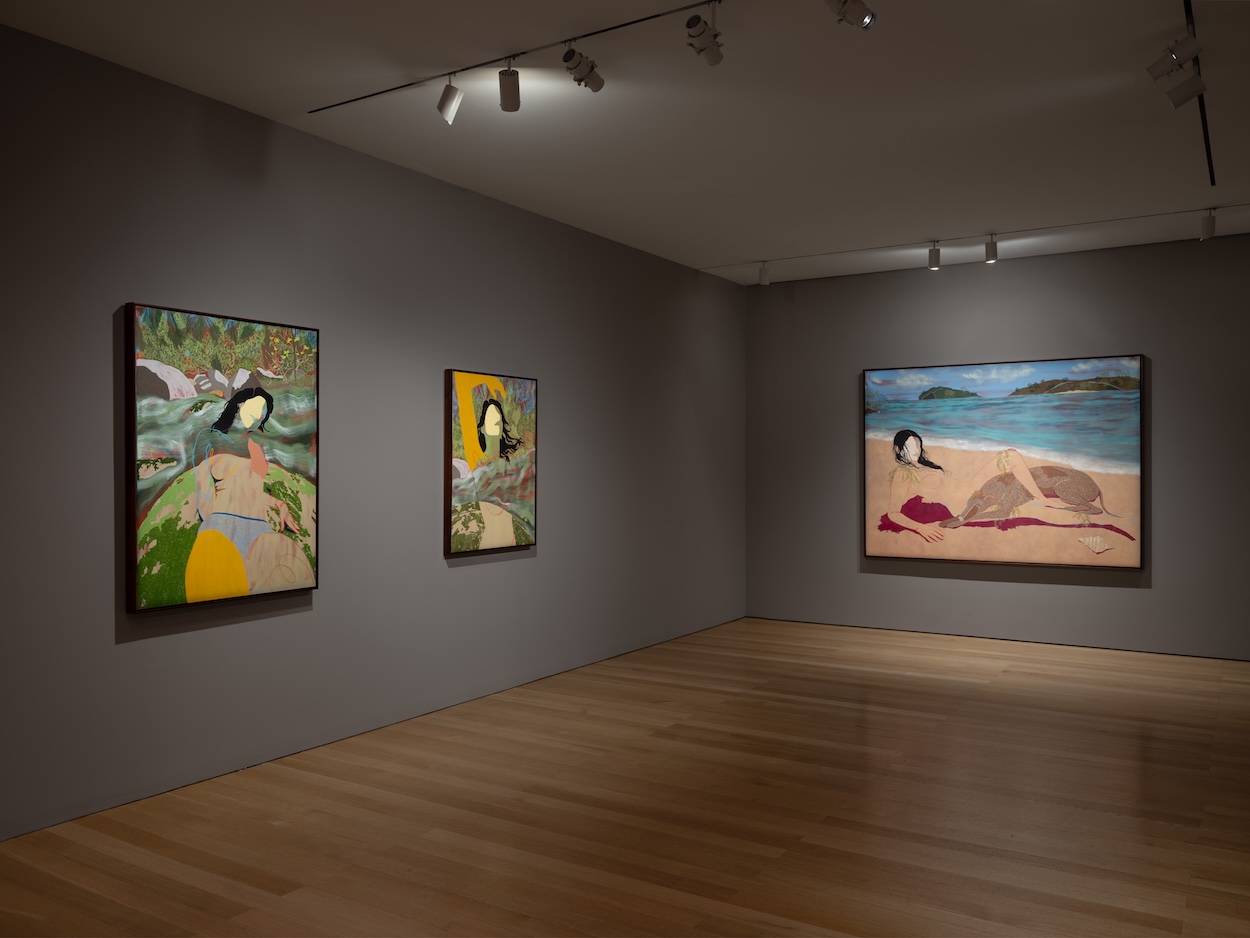
This exhibition places your work in conversation with artistic giants Cindy Sherman, Lisa Yuskavage, and Louise Bourgeois. How have these artists influenced the way that you approach themes of identity, interiority, and self-construction?
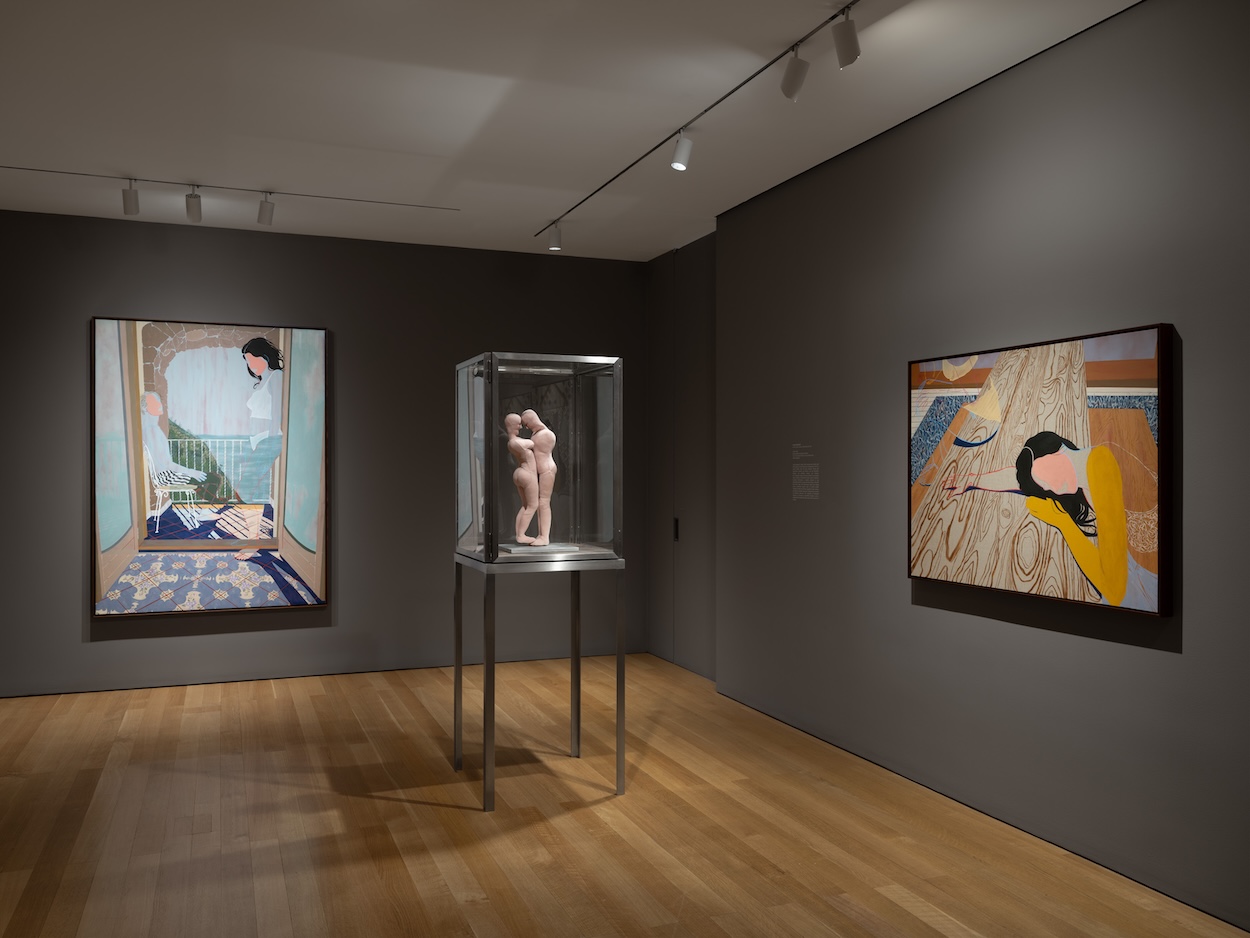
The works of Cindy Sherman, Lisa Yuskavage, and Louise Bourgeois open a pathway for conversations about the historical lineage of female art-making, and specifically themes of the complicated nature of intimacy, identity, and womanhood that evidently continue to repeat themselves across generations. Each of these artists, and specifically the works selected– Sherman’s Untitled Film Still #11, Yuskavage’s Mutualism, and Bourgeois’ Couple–remind me that the body is a site of performance and memory, that intimacy can be parasitic and tender. Each of the works drives me deeper into my own interiority.
As the works live in the gallery rooms in relation to each other, they are powerful reminders to continue to resist definition and perform a recognizable version of a specific identity that is expected and often demanded.
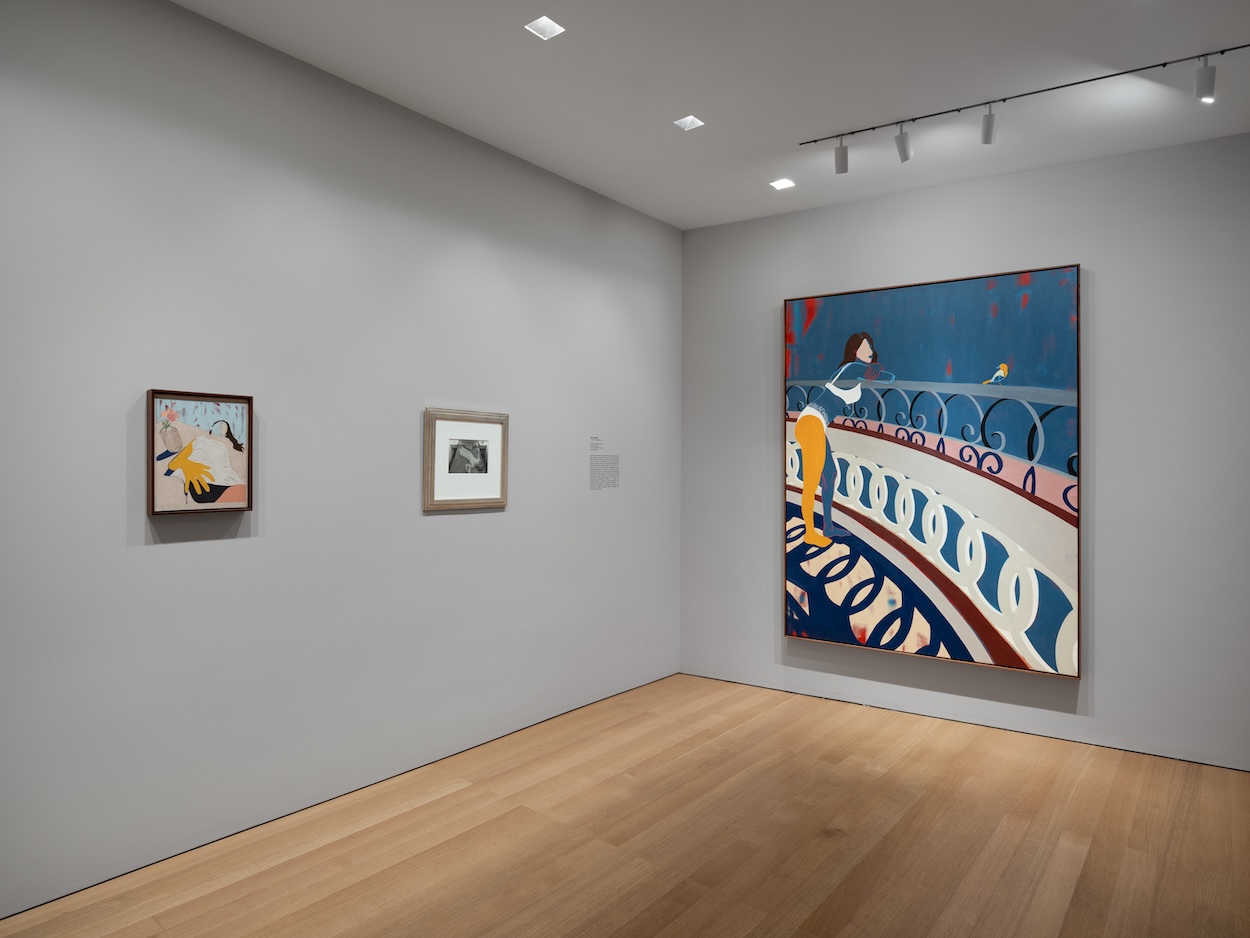
This exhibition arrives at a moment of growing institutional recognition, with presentations at ICA San José and your upcoming Ford Foundation show. How do you see your practice evolving at this stage, and what questions are currently driving your work forward?
While my family archives and my own experiences continue to guide me, I’m increasingly interested in how they intersect with larger ideas around collective memory, identity-making, the body, and the environments we build around ourselves.
Formally, I have been expanding my practice beyond the traditional boundaries of oil painting. For my exhibition at ICA San José, I exhibited my first painted silk installation consisting of seven, 8- to 10-feet-tall silk panels, each uniquely painted and layered to create a passage that allowed viewers to walk through. Additionally, in collaboration with music producer Sanaya Ardeshir, I created a multi-channel audio work which comprised conversations from my family archive, music and field recordings from the Western Ghats in India, and my own vocal utterances inspired by the writings of theorist Fred Moten. I’m curious how archives, textiles, installation, moving images, sound, and storytelling can create more immersive experiences that allow viewers to inhabit these worlds rather than simply observe them.
My upcoming projects include a residency with The Sherman Family Foundation, in collaboration with The Baltimore Museum of Art in Maine, in addition to a residency expedition in the Arctic, followed by a group exhibition at Ford Foundation in August, curated by Dexter Wimberly. I’m certain these environments and opportunities will continue to uncover new possibilities in my practice, and I look forward to sharing them.