In June, the year-long Oulu2026 initiative opened “Climate Clock,” a permanent public art trail on climate change spread across the wider Oulu region in northern Finland. The project is part of Oulu’s year as a European Capital of Culture, the European Union program that each year designates one or more cities to present a year-long cultural program. Curated by Alice Sharp, “Climate Clock” brings together works by Ranti Bam, Rana Begum, Takahiro Iwasaki, Gabriel Kuri, Antti Laitinen, SUPERFLEX, and Tellervo Kalleinen and Oliver Kochta-Kalleinen, with the exhibit running from Kauppurienaukio Square in central Oulu to the Kierikki Stone Age Village in Yli-Ii, the forests of Kiiminki, the coast at Haukipudas, and even the road leading to the local airport.
Finland’s Public Art Trail Addressing Climate Change, ‘Climate Clock’
By Brett Braley-Palko July 07, 2026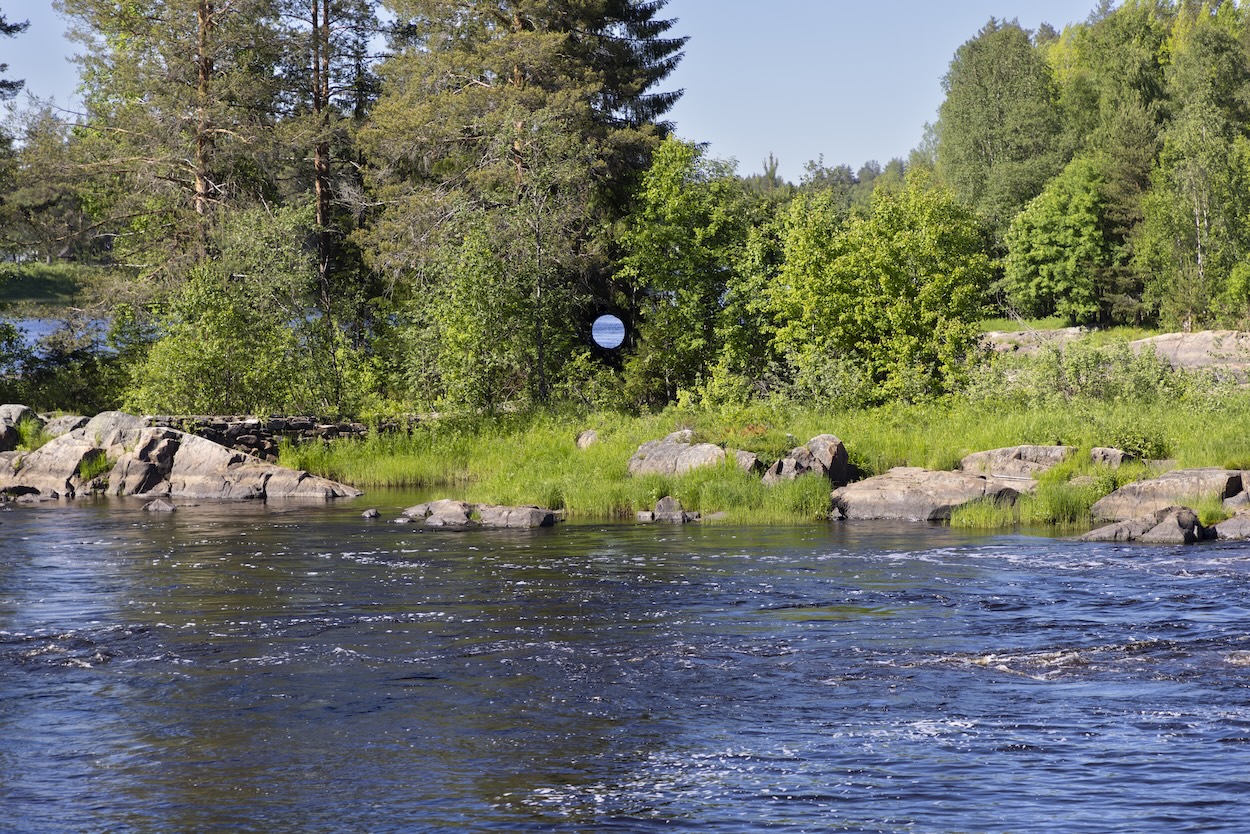
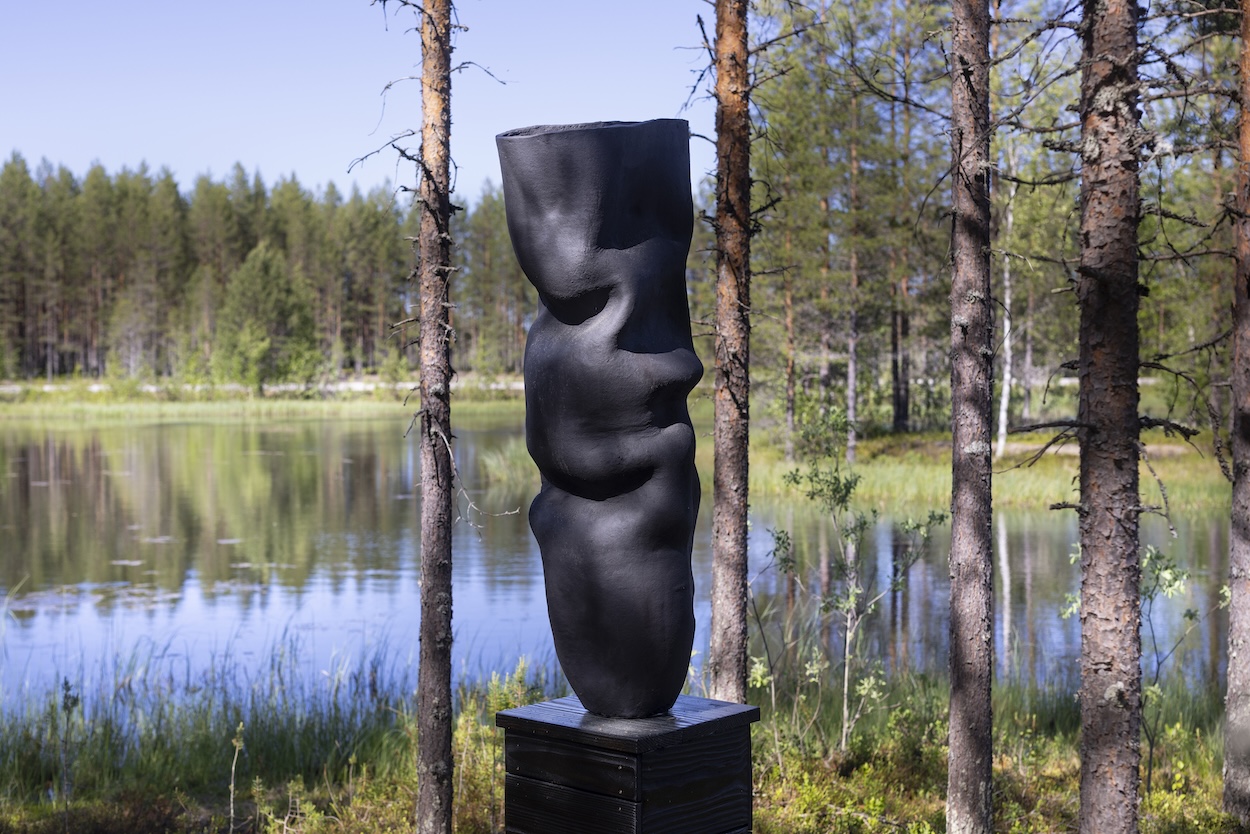
Throughout “Climate Clock,” each of the seven works intertwine art, science, and nature to inspire environmental awareness. In Yli-Ii, a province of Oulu, Ranti Bam’s Ilé-Ìlá A Place That Remembers places eight clay vessels, each 2.5 meters high, among the trees and near the lakeshore at Kierikki Stone Age Village. Bam draws on prehistoric ceramics and Ifá, the Yoruba system of knowledge and divination within the wider context of the Finnish site’s archaeological history. In central Oulu, Rana Begum’s No.1574 Stone rises from Kauppurienaukio Square in the form of five large stone sculptures, with surfaces designed to refract the northern light and recall the shimmer of Arctic ice.
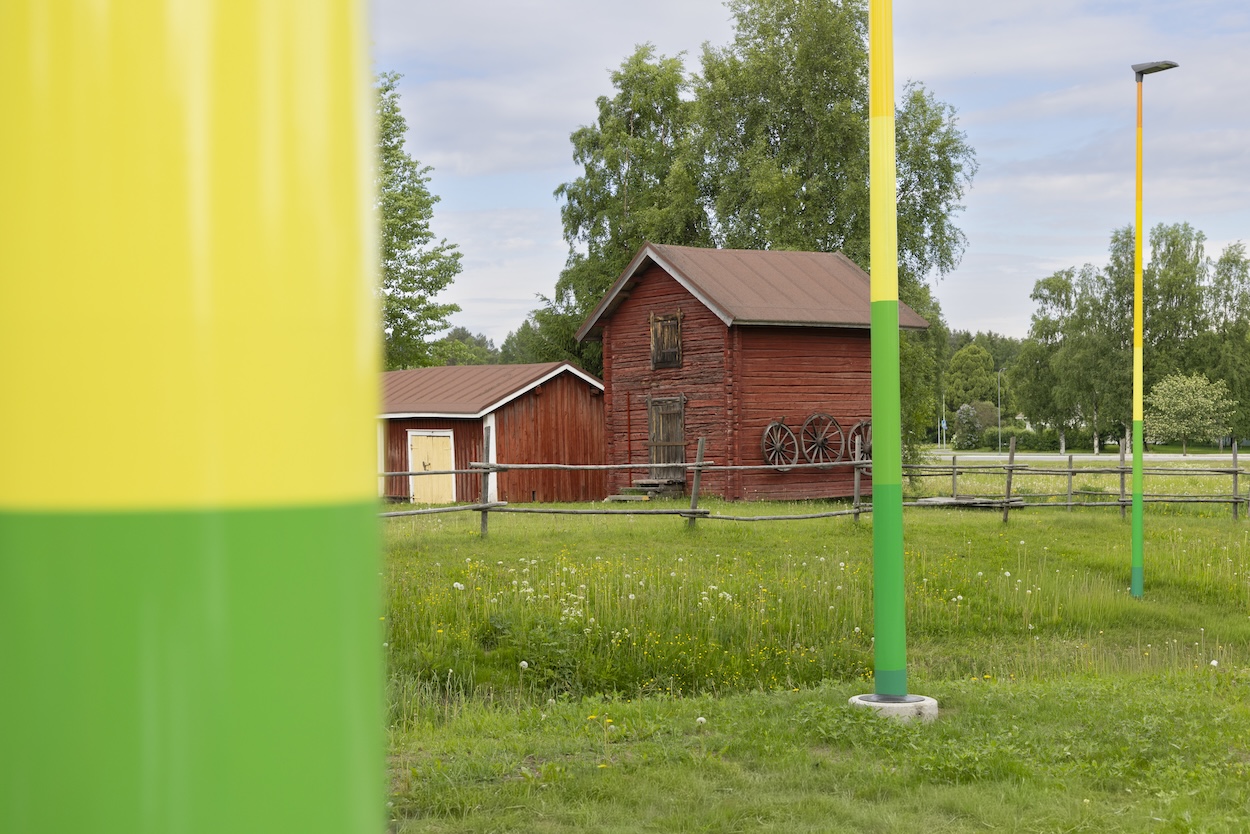
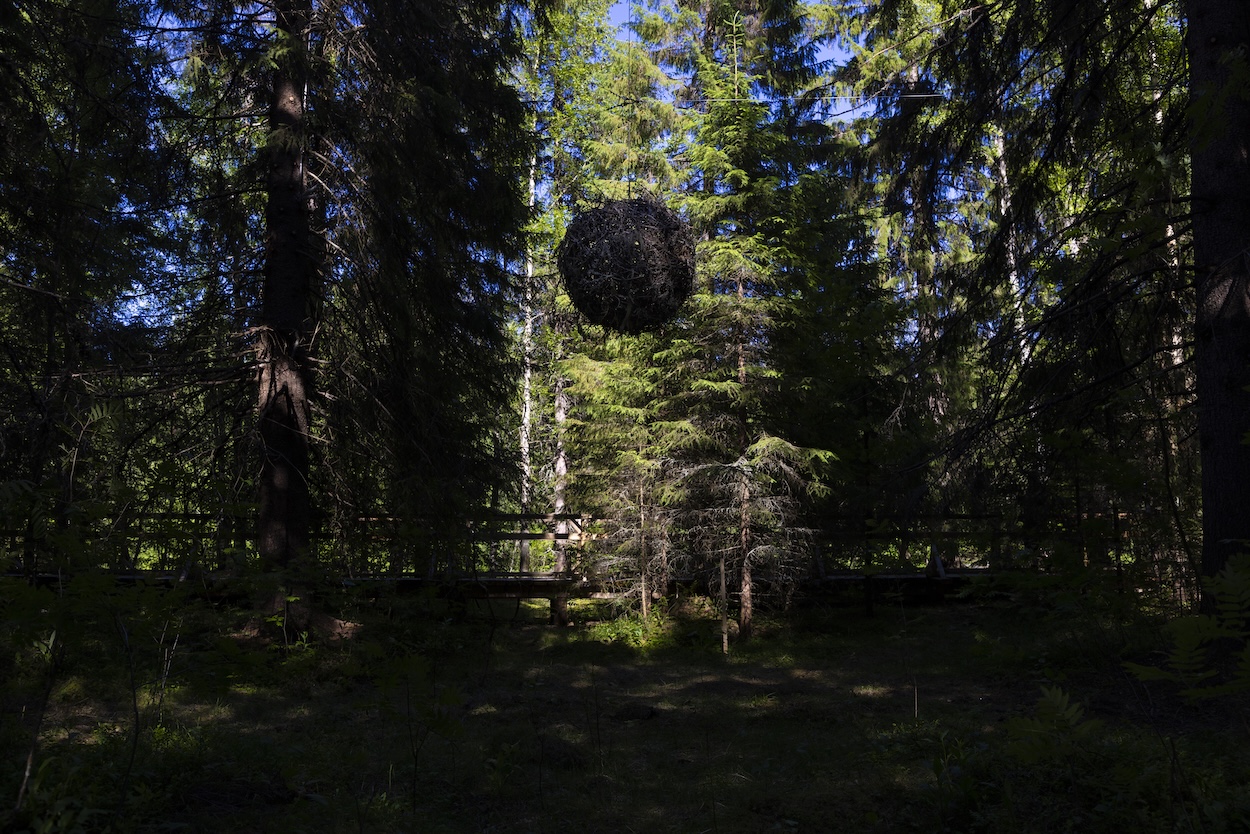
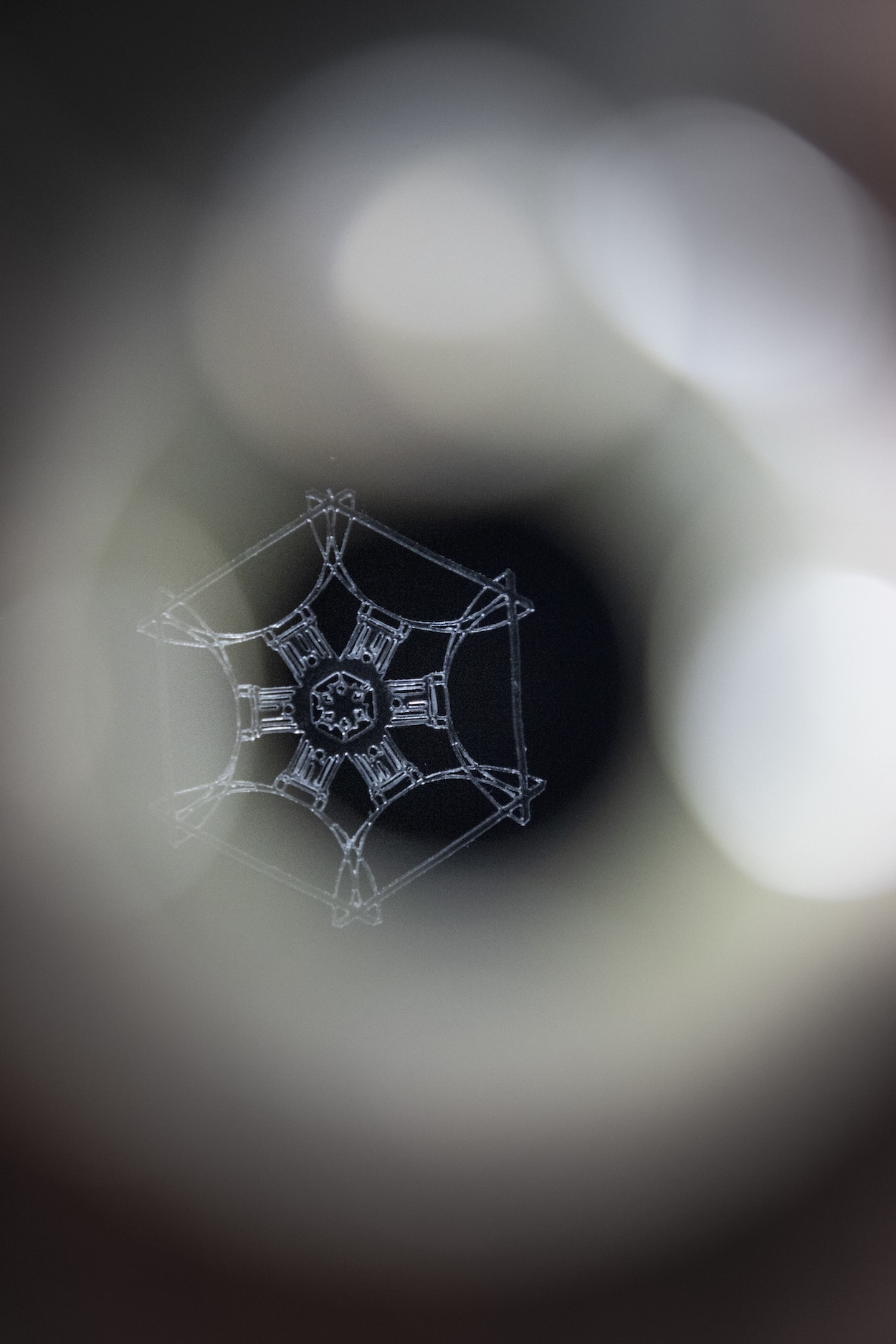
Keeping with the wintry theme, Takahiro Iwasaki’s Architectural Snowflakes: Letters from Heaven sits inside a traditional wooden barrel at Ylikiiminki, where viewers look through small openings at illuminated snowflakes in the dark. While in Oulunsalo, Gabriel Kuri’s Risk Assessing Risk Assessment runs along the road between Oulu and the airport, where lampposts, benches, and rocks have been painted in green, orange, and red, indicative of a risk chart and a stark reminder of the ever-present climate crisis that surrounds us. In Kiiminki, Antti Laitinen’s Olet Tässä (You Are Here) turns its attention toward the forest, where circular openings made from twisted branches frame the landscape and lichen-covered spheres move overhead with the wind.
The remaining pieces integrate the human element into their works, versus solely relying on the natural elements of the region. On the coast at Haukipudas, SUPERFLEX installed Super Kello, a pink marble “fish cube” that speaks one word per hour from a Finnish translation of The Odyssey, voiced by a local fisherwoman, which will take ten years for the full text to be read aloud. Tellervo Kalleinen and Oliver Kochta-Kalleinen’s The Most Valuable Clock in the World was developed with local residents over the past two years, drawing on moving pictures that were contributed from the community. The large clock is organized so that the hour hand focuses on moments tied to Oulu’s annual cycle, the minute hand on everyday life, and the second hand on shorter, more fleeting scenes.
“Climate Clock” is on display now, but if you don’t get the chance to travel to Oulu this year, rest assured the project extends past the European Capital of Culture year, with the works set to enter the Oulu Art Museum collection after 2026.