There is no shortage of architectural splendor in Cartagena, Colombia, from the Spanish colonial balconies of the Walled City, a UNESCO World Heritage Site, to the colorfully saturated façades that define its cityscape. But rather than simply treating the picturesque setting as its backdrop, the Four Seasons Hotel and Residences Cartagena used the city’s historical blueprint as the foundation for the design.
The project, which opened in April after more than 15 years in the making, sits between the Walled City and Getsemaní, the neighborhood known for its street art and vibrant nightlife. Across more than 33,000 square meters, seven heritage buildings were assembled and restored to create a 131-room property that traces four centuries of Cartagena’s past.
Courtesy of Four Seasons Cartagena. …
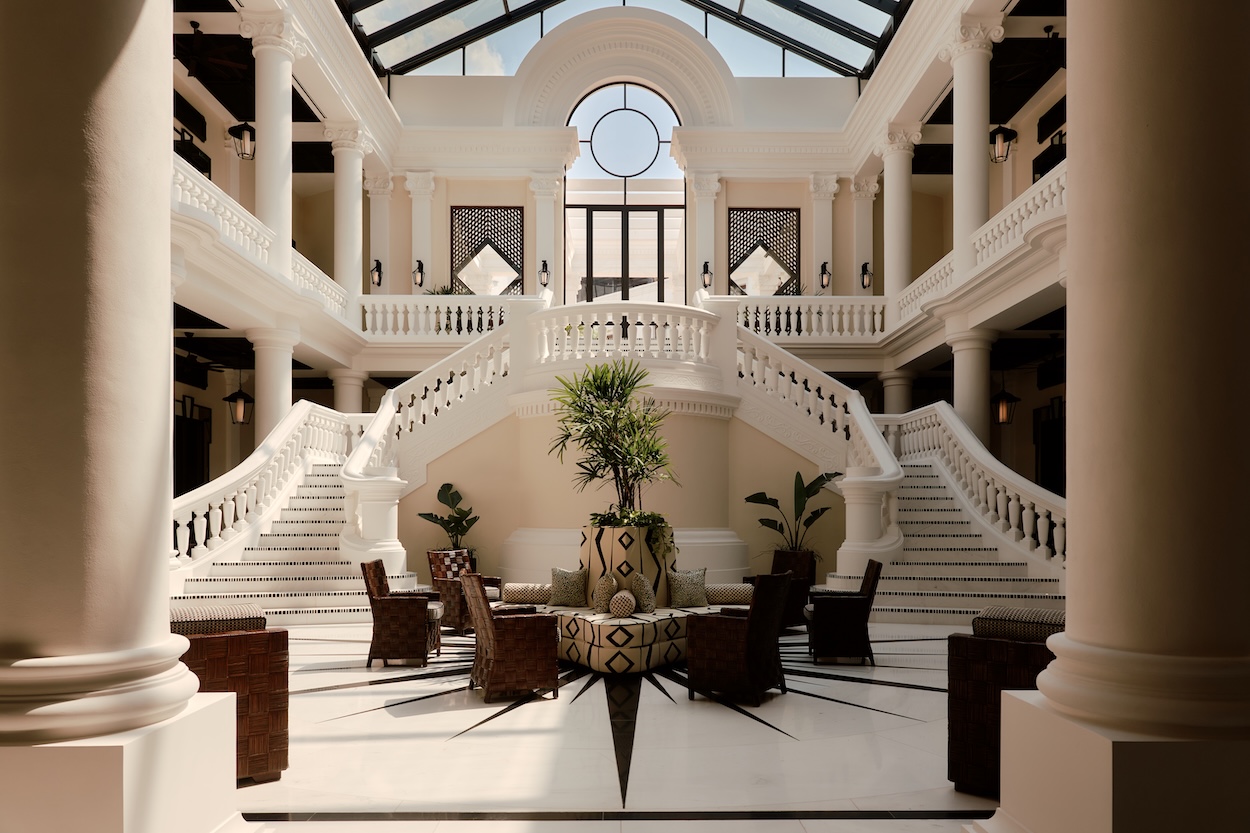
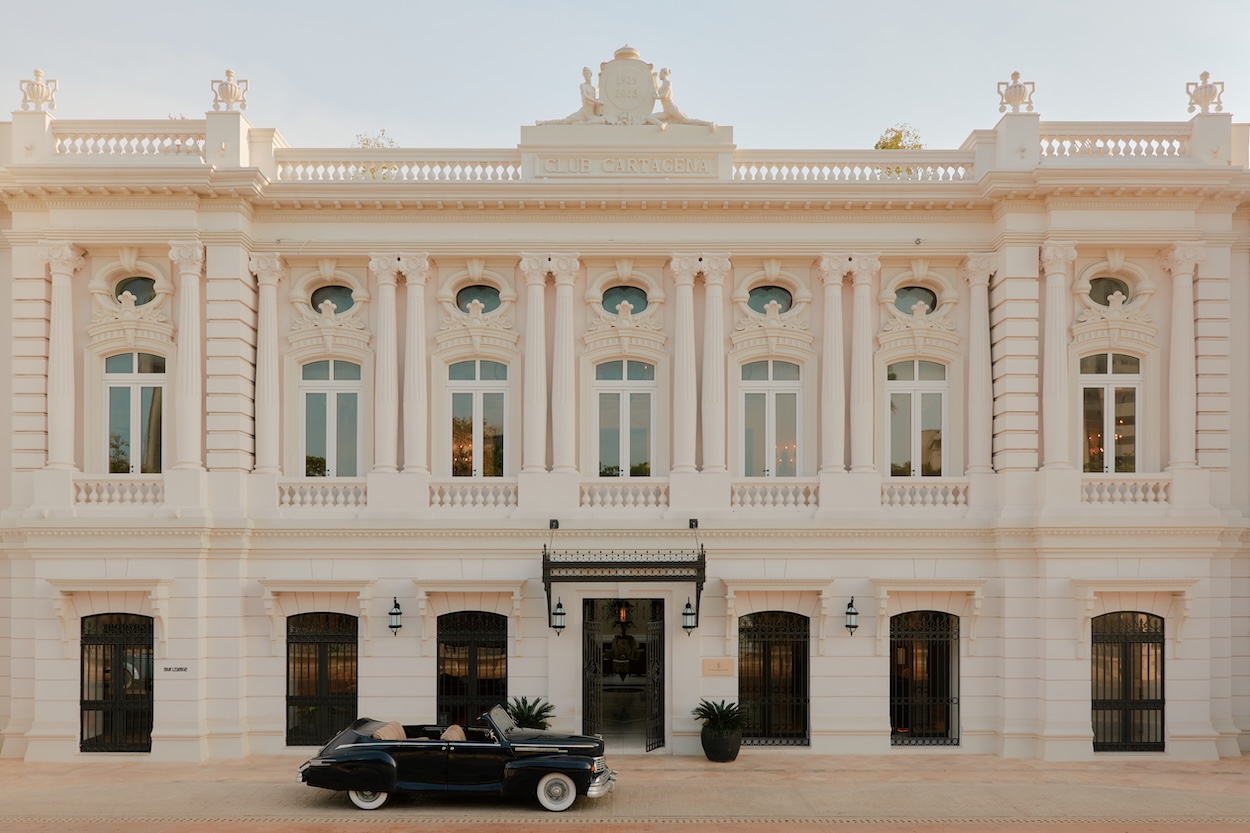
At the heart of it is the former Club Cartagena, a 1925 Beaux-Arts social club designed by French architect Gaston Lelarge, who also worked on the Opera Garnier in Paris. Once the gathering place for Cartagena’s elite, the club has been fittingly transformed into the hotel’s lobby. It now welcomes guests in a dramatic space with a soaring glass ceiling, black-and-white marble floors, and a sweeping split staircase—shaped by another Frenchman, the late François Catroux, for whom the project was among his final works. (Following Catroux’s death in 2020, François Bompard, of SBM Interior Design, completed the concept.)
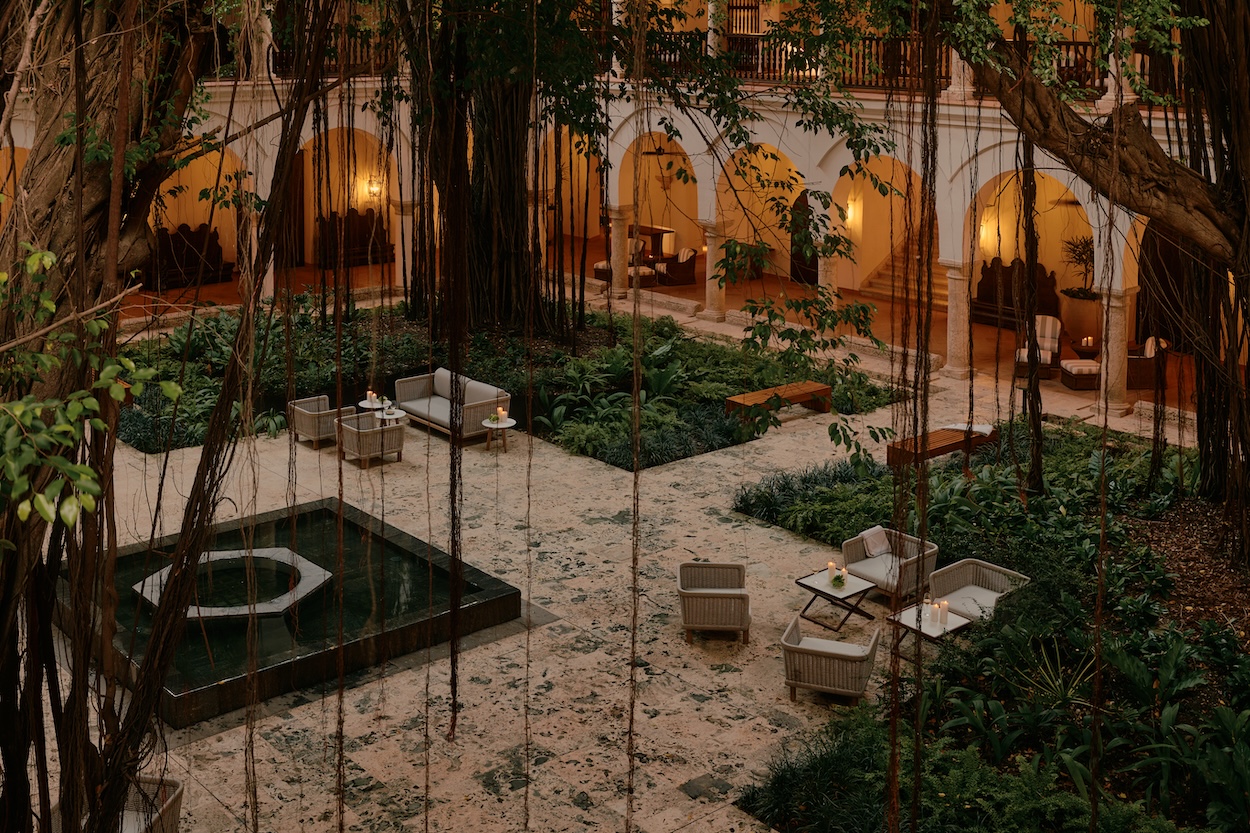
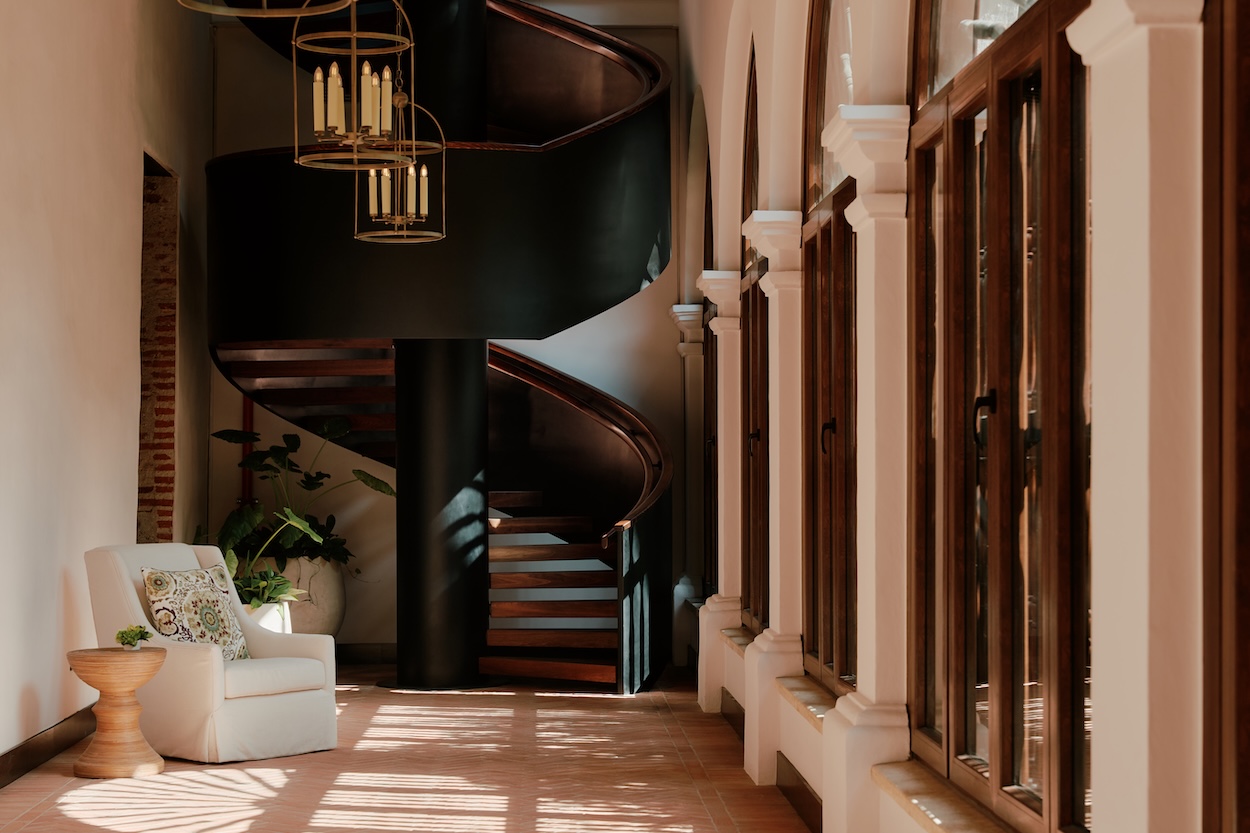
The hotel is divided into two distinct accommodation styles: contemporary rooms, with warm wood details and graphic textiles, and colonial rooms, featuring high ceilings, dark wood cabinetry, and four-poster beds. Eighteen of the 27 colonial-style rooms surround the property’s other architectural highlight: the interior courtyard of a 16th-century San Francisco cloister.
Courtesy of Four Seasons Cartagena. …
A project of this scale could easily have leaned into a generic version of tropical opulence. Instead, the design honors the site’s past without embalming it. During the restoration, fragments of 16th-century frescoes were uncovered; after being removed and restored, they were folded into newly modernized surroundings. In the lobby, original moldings and design details from Club Cartagena were replicated while making room for contemporary amenities (e.g., gift shop). While the historic theaters that once occupied other buildings were reimagined for new uses (see: an event ballroom), their original façades and footprints were maintained.
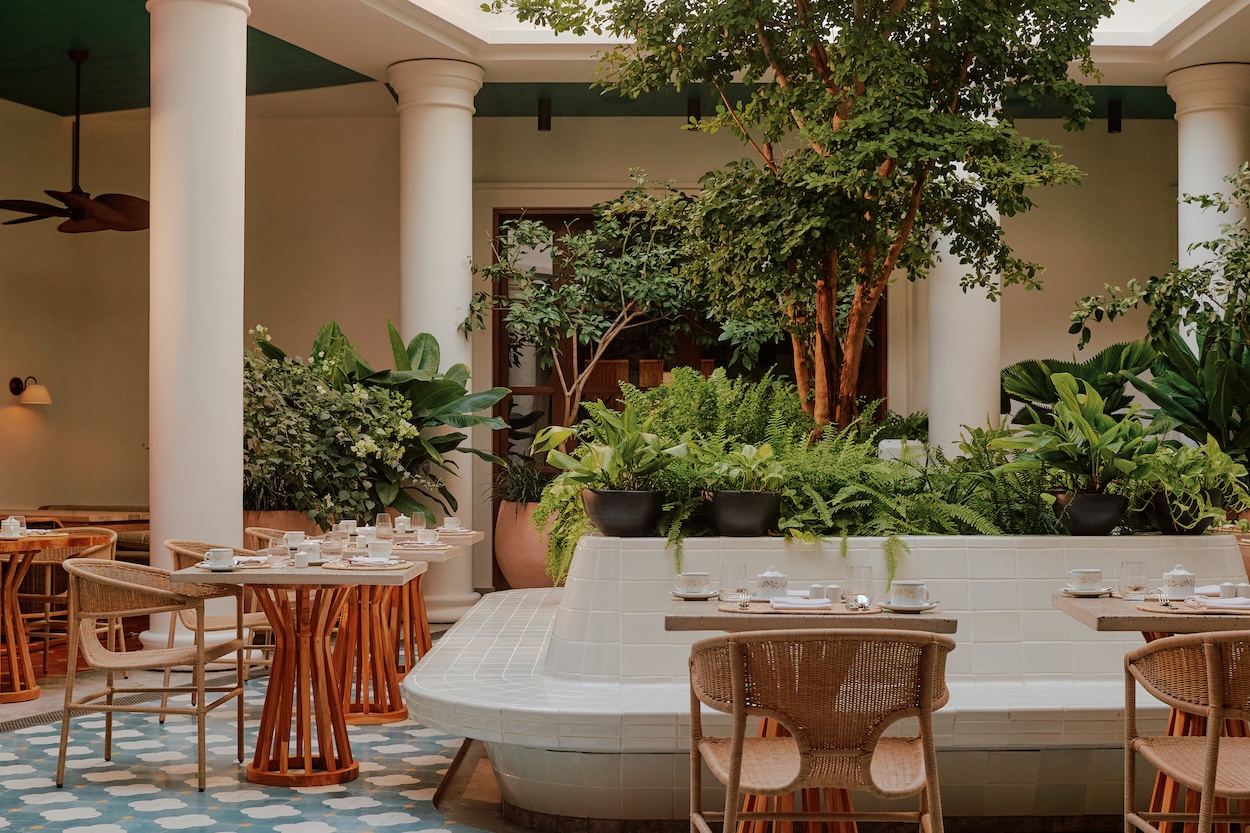
What prevents these seemingly disparate buildings and styles from feeling disconnected is the network of patios and tropical gardens that runs through the hotel. Designed to look as though the vegetation has grown into the site over a long time—helped by the fact that the nursery was started before the property was completed, and some of the courtyard banyan trees being almost 100 years old—the greenery, created by Switzerland’s Enea Garden Design with Colombian landscape architect Carolina Jaimes, acts as connective tissue. It draws guests from the bright-white neoclassical elegance of the lobby to the monastic walls of the former cloister, while showcasing the ecology of one of the most biodiverse countries in the world.
Courtesy of Four Seasons Cartagena. …
Craft was another defining element of the property’s design, helping reconcile the space’s architectural complexity without forcing a single visual identity onto its disparate buildings. Throughout the hotel, furniture, lighting, textiles, ceramics, and finishes were developed with Colombian artists and artisans, giving the property a sense of locale often missing from large-scale hotels. Painter Eloin Rivera created dreamy murals depicting Colombia’s flora and fauna for The Grand Grill, Bar Lelarge, and the presidential suite. Designer Poli Mallarino crafted custom textiles and accents, including rugs, headboards, and rattan seating used throughout the property. Works by artist Miguel Cárdenas appear in the guest rooms.
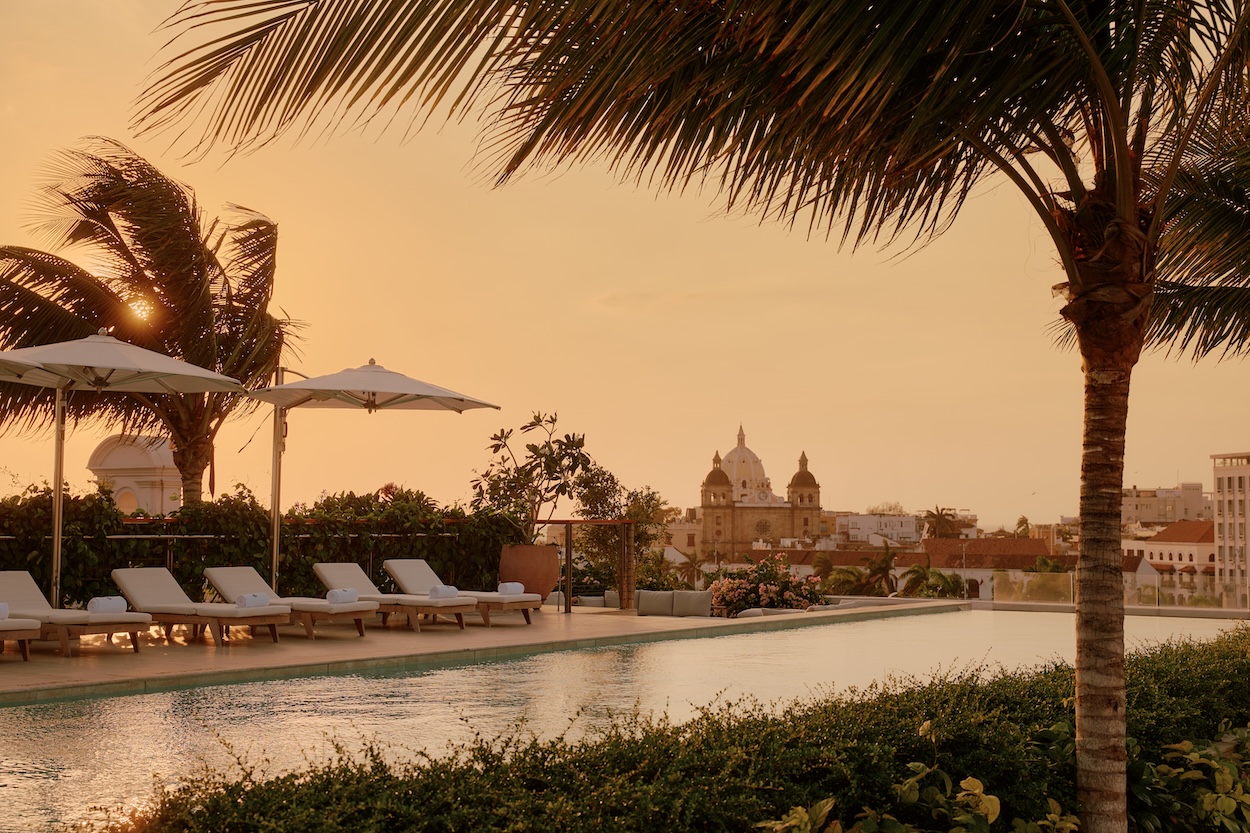
That design philosophy extends to the leisure and dining concepts. The Grand Grill and Bar Lelarge, both from Major Food Group (which marks the hospitality group’s first South American destination), as well as Café Rialto, which serves specialty coffee made from award-winning Café San Alberto beans, are housed within the former social club, preserving the building’s social spirit. Neapolitan pies from Pizzería Della Chiesa, designed by AvroKO, are served inside the exposed brick walls of the former church. On the rooftop, El Palmar offers al fresco dining between two pools and 360-degree views over the sea and the city. Even the spa, designed by Wimberly Interiors, carries a historical echo: It occupies the old convent’s kitchen and service area, continuing the site’s association with well-being and care.
Courtesy of Four Seasons Cartagena. …
Long beloved for its romance and history, Cartagena has, until now, largely been a city of boutique hotels. With the Four Seasons Hotel and Residences Cartagena, it enters a new design chapter, one where history, craft, and contemporary luxury occupy the same room.