Ramesh Nair on The Power of Craft, Feeling, and History
From Hermès to Moynat to Joseph Duclos, the fashion designer and artistic director has built his career on two beliefs: the artisan matters most, and the best ideas are often waiting in a museum
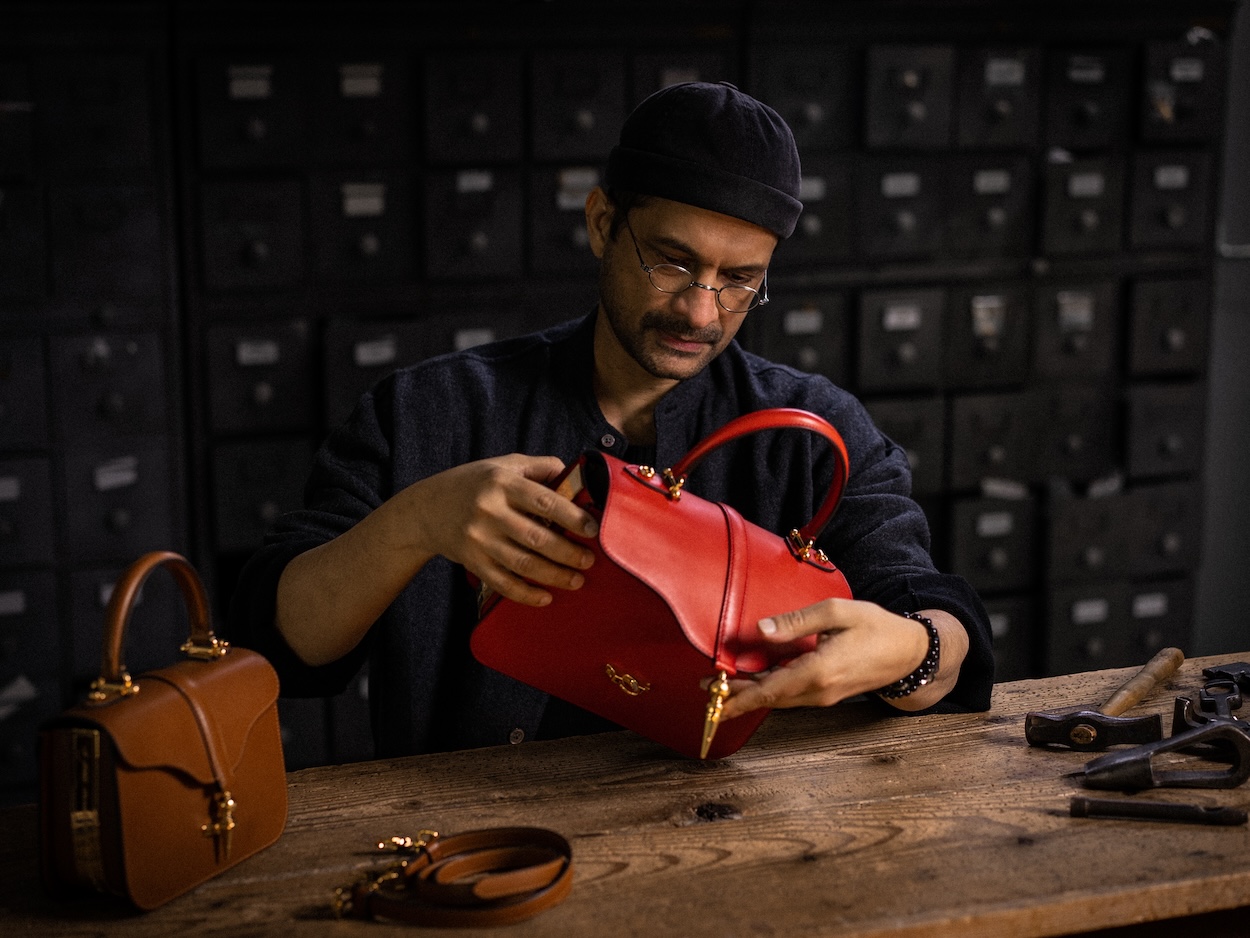
Artistic director Ramesh Nair. Courtesy of Joseph Duclos.…
Trained in ready-to-wear, Ramesh Nair learned craftsmanship working for more than a decade under Martin Margiela and Jean Paul Gaultier at Hermès, where artisans taught him that a sketch alone would get him nowhere; it was all about detail and precision. When Bernard Arnault tapped him to revive Moynat in 2010, he had little more than a monogram, a stack of archival photocopies, and two trunks. However, tapping into Moynat’s substantial past, Nair was able to return the heritage house to grandeur it’s known for today.
A decade later, Franck Dahan handed him something even more challenging: Joseph Duclos, an 18th-century leather house whose tannery had been dormant for over a century. With no archive to lean on, Nair went to museums. He built Joseph Duclos the same way he learned to build a bag: by studying objects, listening to artisans, and letting history do the brainstorming. With that, he turned Joseph Duclos into a house that makes fewer than 600 handbags a year yet finds its way onto the arms of collectors around the world, including first ladies and pop stars.
Nair tells Surface how all of the pieces from his past came together to build Joseph Duclos.
Details of the Diane by Joseph Duclos. Courtesy of Joseph Duclos.…
How did the vision for Joseph Duclos come together? What was your approach?
I ran around in circles for a while. It was a tannery dating back to 1754. That’s an interesting mental challenge. When someone joins Dior, the viewpoints are already laid out in front of them. You have a past behind you. You go to the archives and you have the silhouettes. At Chanel, you have the tweed. The foundation stones are already laid, and laying the foundation stones is the most crucial and most complicated part of building a house. It was the same at Moynat, and the same at Joseph Duclos.
I hung around museums and picked up as many books as I could. I researched what the leathers were actually used for, what Louis XIV was doing, what exactly happened under Colbert. History lessons. I’m something of a history buff, so that helped.
I dug into what a house like Duclos would have made. From 1754 to the early 1800s, most of the leathers were bought by the military, by officers, and their staff. Otherwise, they went into chairs. There were no bags. That’s where my ideas started. We have a couple of old bags around here that we picked up at different auction houses. I studied them, figured out how the metalwork was done, and slowly built things from there.
How do you define material integrity? How does staying true to craftsmanship come through in a finished piece?
It’s a huge part of it, and I wouldn’t even call it brand building. I learned a lesson from Steve Jobs here. There’s a famous idea of his: the customer will never see the inside of the computer, but you know what you put in there. The early Macs were laid out so beautifully inside, for the technician who would open them.
It’s the same with a bag. Nobody will ever see the inner lining unless they take it apart. But as an artisan, there’s a respect for your work and a respect for the craft.
This has been going around in my head for a while, with everything happening in the world: the inequalities, the problems. The artisan can never afford the bag they create. It’s practically impossible. But they still put their best work into it. They respect their work so much that they make something beautiful for someone else. If they can do that, then everyone along the chain can keep that respect for the person who made it. In a way, it’s an homage to the artisan. So, respect for the other really has to come through, and, for me, integrity comes with that.
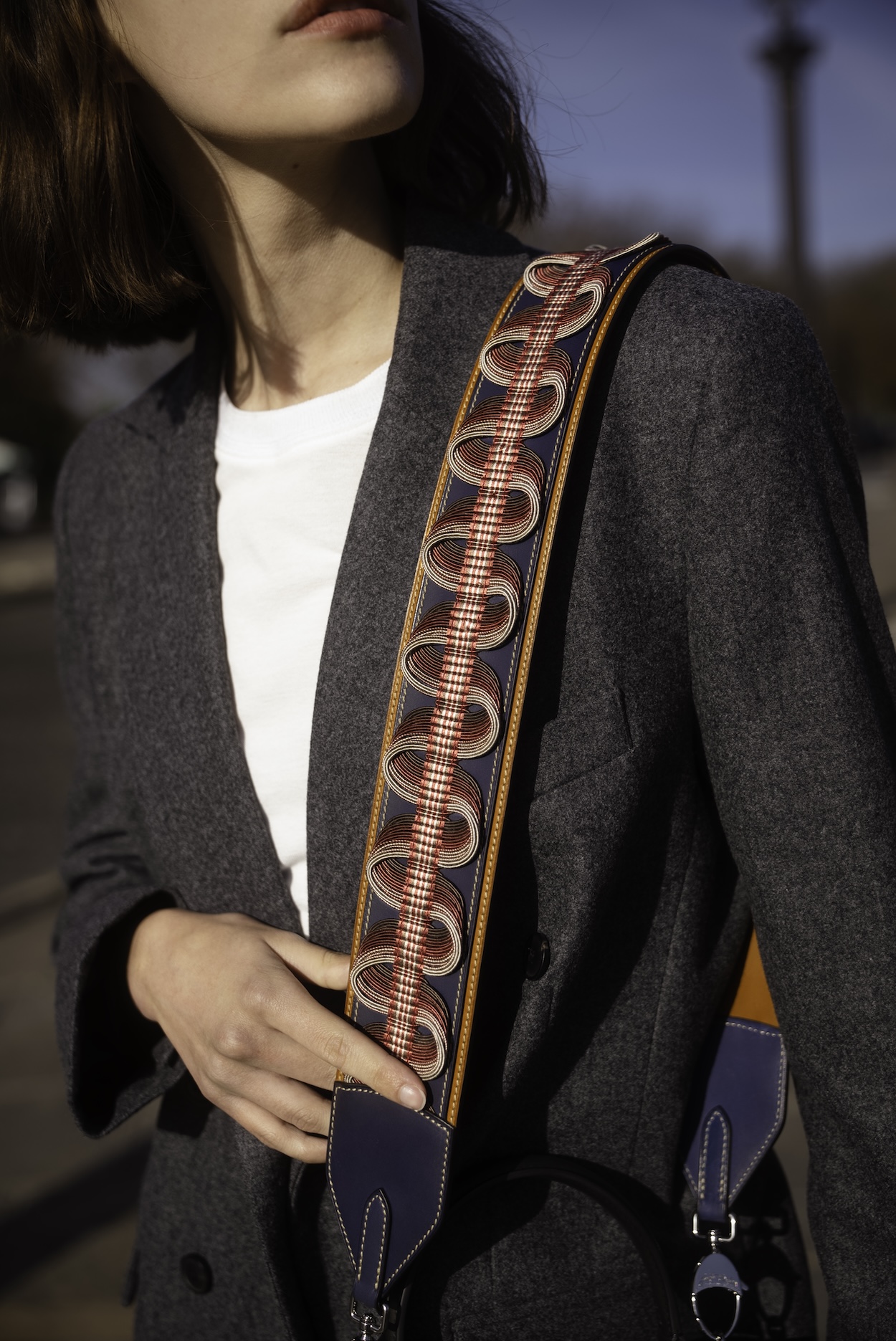
Details of a Passementerie shoulder strap by Joseph Duclos. Courtesy of Joseph Duclos.…
Can you talk about the intricate Passementerie shoulder straps and the detail that goes into creating them?
There’s a small company that makes passementerie, which is the art of making decorative trimmings, edgings, and ornamental details. When Versailles or the Élysée is restored, a few houses like this supply the original passementerie techniques from the old days.
I picked up a few pieces and tried to think of how I could use them, and finally we made straps. They’re amazingly beautiful and extremely hard to make. Our prototype maker makes each one, and it takes her three or four days per strap. It’s a crazy piece of work. Each one uses three or four different leathers, with the back in another leather and another color. We’ve done about 20 designs and color combinations so far, and some are crazier than others. Some are punched by hand. It’s purely artisanal.
Another very recognizable Joseph Duclos detail is the fourragère closure. Tell us about it.
That’s the story of the Diane bag. Everyone loves to compile mood boards. I hate mood boards. I really have a problem with them. What I do instead is collect historical objects.
During COVID, one of the museums that stayed open was the military museum, the Musée de l’Armée. Once I found out that Duclos had supplied the army, and officers wore caps and boots made from Duclos leathers. The first thing I did was go to the military museum and see if they had any pieces.
One of them was the fourragère. They had a military uniform there. An amazing piece of regalia, with feathers. It reminds me a bit of Christopher Nolan’s The Odyssey. Next to this beautiful uniform was a little corner with a statue of Diana the Huntress. And somewhere inside, things started connecting.
The interesting part is that the tannery Duclos comes from, the manufacturer, had a water source called the Fountain of Diane. Things just clicked in my head. I got home and thought, that’s interesting. The sculpture showed her pulling an arrow from a quiver. The whole thing clicked. I drew her, then turned that into an arrowhead, then into something else. Then I thought of a sporran, the pouch worn over a kilt. That’s how ideas come together.
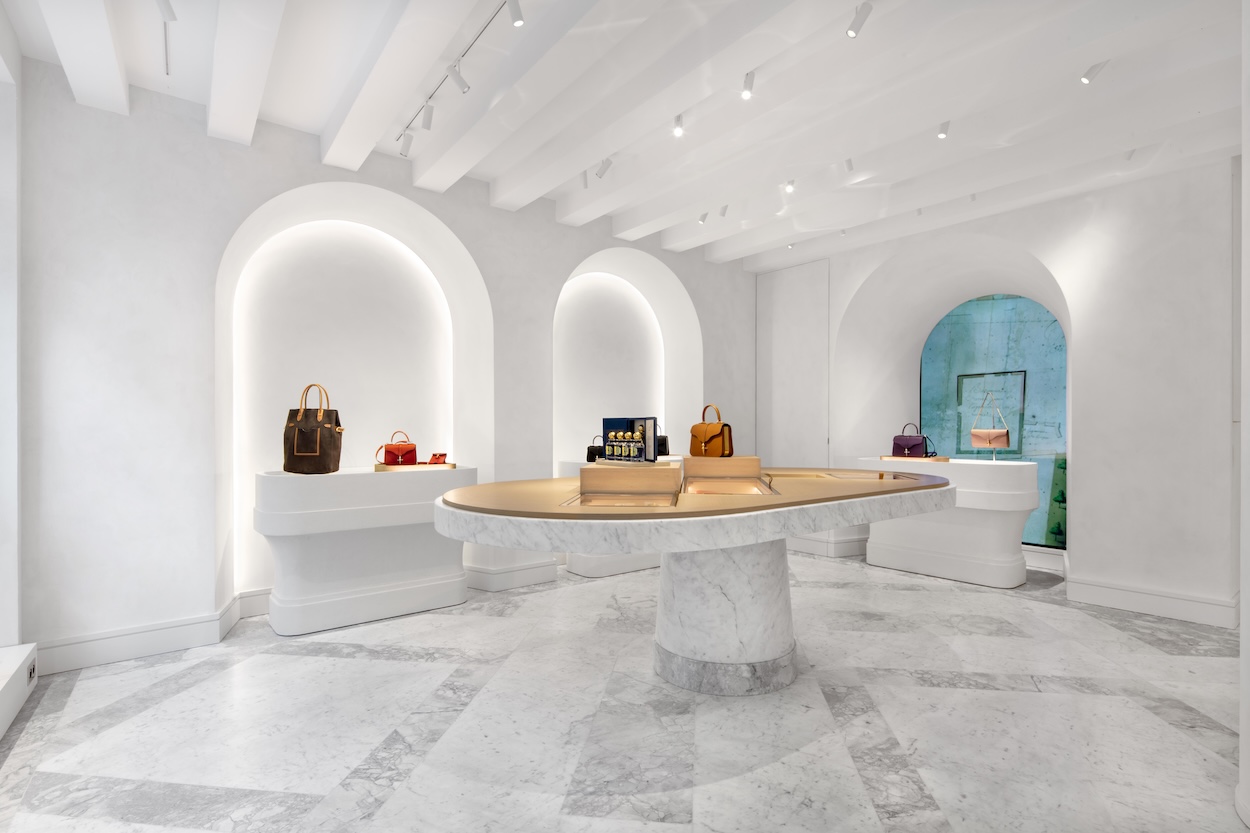
Inside the Joseph Duclos flagship boutique in Paris. Courtesy of Joseph Duclos.…
Joseph Duclos has attracted politicians, singers, and beyond. What draws such a wide range of women to the house?
It’s a feeling. You walk past a store, a bakery, a restaurant you’ve never heard of, and something draws you in, the way you’re drawn to light or to a flower.
Part of it is quality. You can see it the moment you see the bag. The pieces are understated. No monogram, no screaming money. It’s a brand practically nobody has heard of, yet it’s instantly recognizable: the lines, the closures. You can see the quality from far away. That’s a huge part of it.
We’re a community, and the community plays a huge part in who we are. We don’t advertise. We’re not on the front page of 20 magazines. And this isn’t new. It’s how things used to work. Kings and queens would go to an artisan for the very best work. They had representatives who would find the most beautiful pieces and present them to the king, to their patrons. The great artists, Michelangelo and others, worked on the same principle.
Are there other objects you see in the future, natural extensions of the house’s identity beyond leather goods?
We are thinking about a couple of other lines, but again, it’s purely organic. It has nothing to do with what we see in the market, someone launching scarves or someone doing shoes. Not at all. It has to fit our abilities, our production abilities. When you take quality to a very high level, you can’t then come out with something mediocre. Everything has to be top-notch, or you don’t do it.